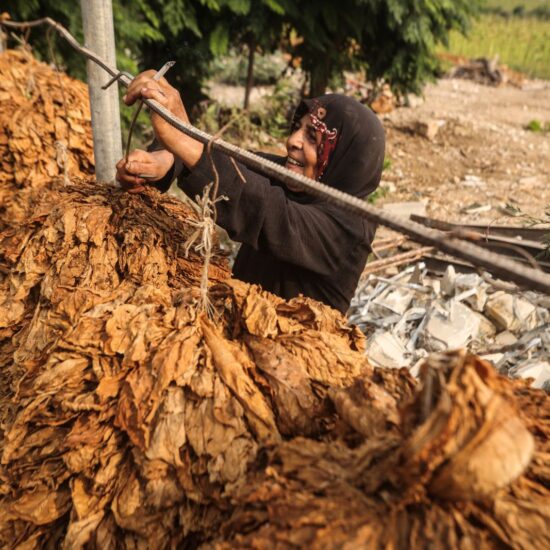
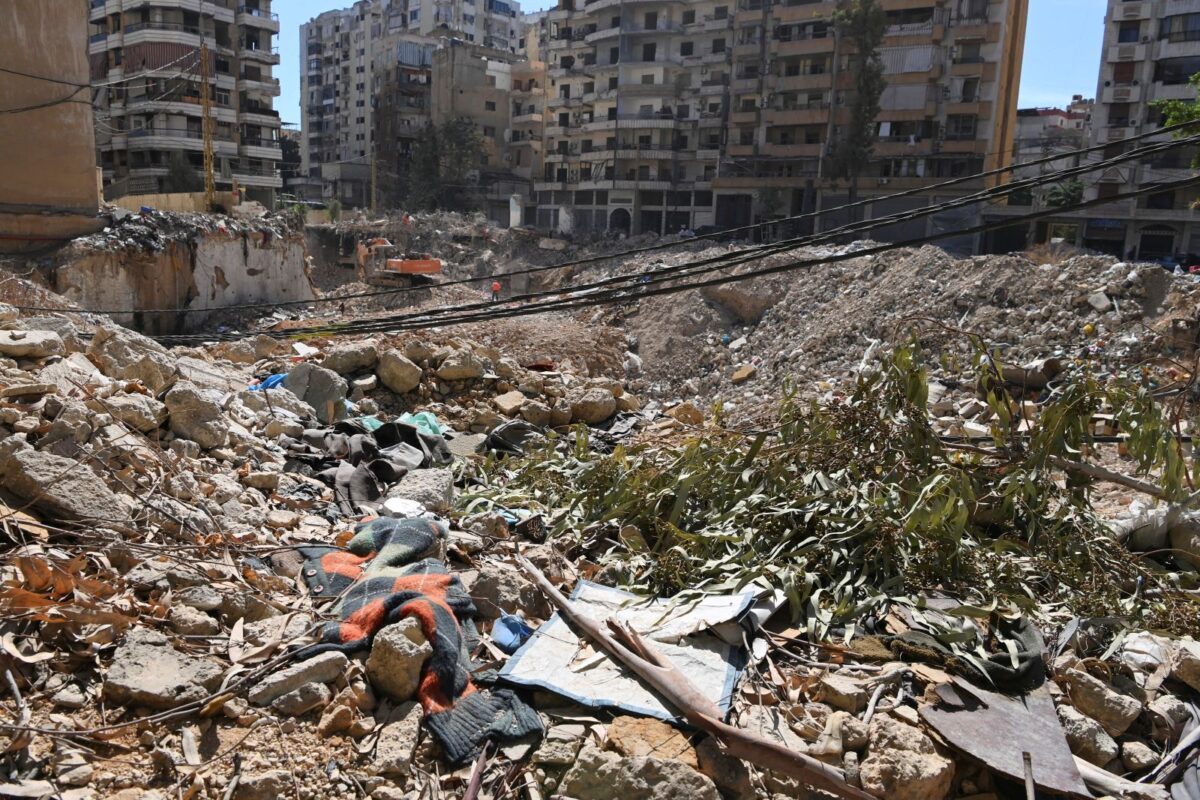
A patterned textile item lies in the foreground of a broad rubble field where reconstruction work is under way in Dahieh, the southern suburbs of Beirut, Lebanon, on September 15, 2026. (Photo by Nadezda Tavodova Tezgor / Middle East Images / Middle East Images via AFP)
Naim Qassem has offered Lebanon a commitment without a limit. In remarks reported on September 20, Hezbollah’s secretary-general acknowledged that “there is absolutely no military balance with the enemy,” then insisted that resistance must continue “regardless of the cost.” He presented steadfastness and the frustration of Israeli objectives as grounds for declaring victory. The people expected to bear that cost deserve an answer: who authorized him to make it unlimited?
No party mandate provides that authority. Neither electoral support nor previous sacrifice gives Qassem ownership of Lebanon’s future. Even those who supported Hezbollah’s wars retain the right to reconsider. Their children did not inherit an obligation to vindicate every decision made before they were born. Supporting Hezbollah is not a blank cheque for war, and previous sacrifices do not authorize the next ones.
Supporting Hezbollah is not a blank cheque for war, and previous sacrifices do not authorize the next ones.
Military imbalance alone does not discredit resistance. Weaker peoples have resisted stronger armies, and occupation does not become legitimate because the occupier possesses superior weapons. But leadership must explain how its chosen methods can improve the position of those it claims to defend. It must identify attainable objectives, compare alternatives and remain answerable when the costs exceed its promises. Qassem’s formulation removes cost from that examination. That is precisely what makes it indefensible.
A destroyed home is not an abstraction. It is shelter, savings, family history and the possibility of returning. A lost school year cannot be restored by a speech. A death cannot be reversed by declaring that the enemy failed to eliminate the organization. When these losses cease to count against a strategy, the people suffering them cease to be its measure.
The homes are not Qassem’s to sacrifice. The South is not Hezbollah’s property. Lebanese lives are not assets that a secretary-general can commit indefinitely to preserve the credibility of his cause.
The political accusation is serious enough without speculating about his mental health. A leader who declares the cost irrelevant betrays the responsibility to weigh it. The betrayal lies in asking a population to accept consequences while denying those consequences any power to change the decision.
There is a psychological danger here. Research on escalation of commitment examines how decision-makers can respond to disappointing outcomes by investing further in an earlier choice, particularly when their own responsibility is involved. Persistence can become a means of defending the original decision rather than correcting it. This is a possible mechanism, not a diagnosis of Qassem.
The dead cannot consent to another war, and their memory cannot substitute for the consent of the living.
Applied to political sacrifice, the trap is devastating. The more people have lost, the harder it may become to accept that the strategy requires revision. Stopping can feel like admitting that the suffering was unnecessary. Continuing then acquires a moral status that protects it from practical examination. But refusing further loss does not dishonor those already lost. It honors the lives that remain. The dead cannot consent to another war, and their memory cannot substitute for the consent of the living.
Nor can silence supply that consent. People may remain quiet because they are frightened, exhausted, dependent on assistance or unconvinced that an alternative will protect them. Others may genuinely support continued fighting. Neither possibility permits a leader to treat an entire community as having accepted unlimited sacrifice. Consent must include the freedom to disagree without being branded disloyal.
Israel remains responsible for its attacks, destruction and violations. Holding Qassem accountable does not transfer responsibility for Israeli actions onto their victims. Nor does rejecting his strategy require pretending that negotiations guarantee safety. They do not. Every proposed course must face scrutiny; none deserves immunity because its advocate invokes resistance, diplomacy or national dignity.
That standard also binds the government. President Joseph Aoun and Prime Minister Nawaf Salam must provide a public account of their objectives, the obstacles they face and the measures they are taking to protect citizens. Their alternative must earn confidence through results. But its difficulties cannot grant Hezbollah permanent authority to overrule national institutions and commit the country to war.
Qassem should therefore be required to answer questions his formula evades. What concrete improvement should Lebanese citizens expect from continuing this course? What evidence would justify changing it? Who can challenge the decision, and through which institutions can the people bearing its consequences make that challenge effective?
These are elementary conditions of political responsibility. Refusing them places an armed organization’s judgment above the lives of everyone affected by it. Lebanon owes no leader the destruction of its future to preserve his account of the past. Qassem may choose what he is personally willing to sacrifice. He has no legitimate authority to make that choice without limit for the rest of us; and the leadership of this country is required to do more than just object to his rhetoric.
Ramzi Abou Ismail is a Political Psychologist, Researcher and Analyst.
The views in this story reflect those of the author alone and do not necessarily reflect the beliefs of NOW.