Hezbollah’s explosives demand tests Lebanon’s state authority
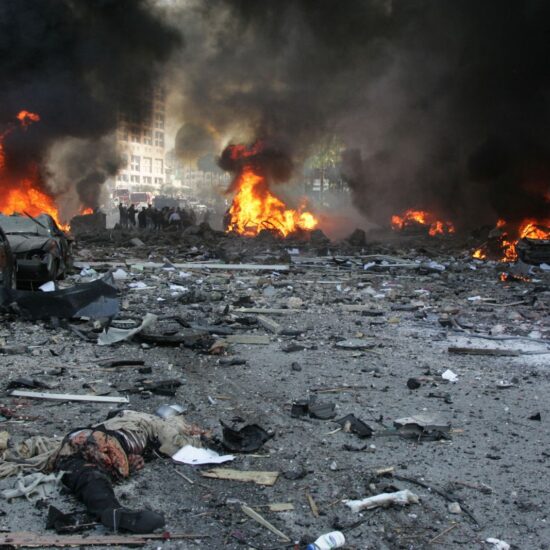
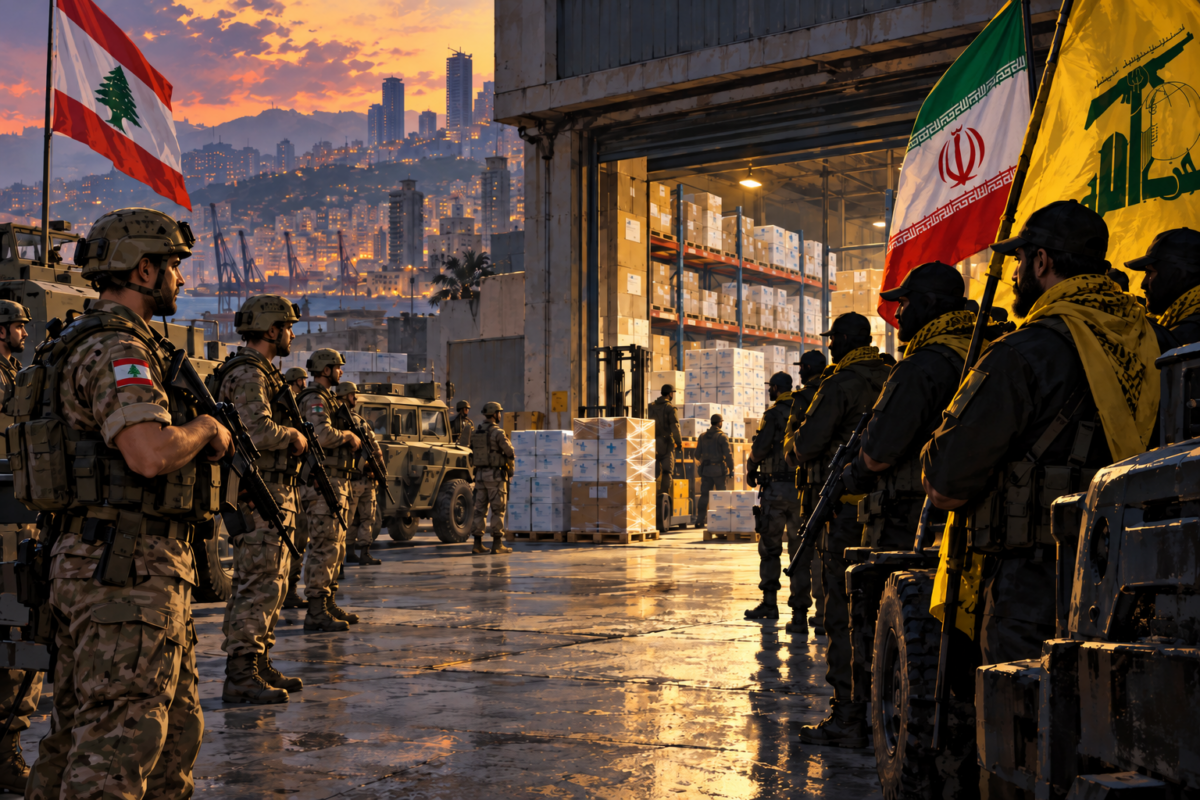
Hezbollah’s demand for the return of explosives seized by Lebanese authorities has sharpened the dispute over who controls the country’s weapons and military operations. The group’s MP Hassan Fadlallah acknowledged that the shipment belonged to Hezbollah, arguing that the materials were intended for use against Israeli forces in southern Lebanon. Authorities had intercepted the vehicle at the Dahr al-Baidar checkpoint and arrested two people, while Prime Minister Nawaf Salam pledged a thorough investigation. The shipment reportedly contained around 780 kilograms of explosives, including TNT and C-4.
By requesting the return of the shipment and the release of those detained, the group has placed its military priorities in direct tension with the government’s stated commitment to bringing weapons under state authority.
The case also presents a test for the government. The seizure demonstrates that security agencies can intervene, but the authorities must now establish the circumstances surrounding the shipment, determine who authorised its transport and ensure that any violations are addressed through the judicial system. Salam’s commitment to pursuing those responsible will carry little weight if the investigation is weakened by political pressure or fails to produce clear results.
Gallery Semaan incident raises questions over law enforcement
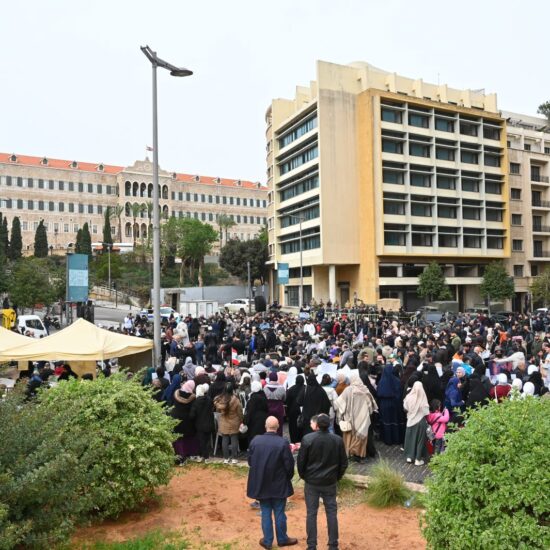
A separate incident in Beirut’s southern suburbs has raised further concerns about the ability of Lebanese institutions to operate without interference. On October 16, judicial police officers carrying out a court-authorized operation to seize medicines suspected of failing to meet health standards were reportedly surrounded by armed men affiliated with Hezbollah in the Gallery Semaan area. The officers had acted following a referral from Health Minister Rakan Nasreddine. The armed men reportedly withdrew after army reinforcements arrived, allowing the operation to proceed.
The incident raises questions about whether judicial orders can be implemented in areas where Hezbollah exercises significant political and security influence. If officers carrying out a lawful operation can be pressured to withdraw by armed individuals, the authority of the judiciary and the safety of law enforcement personnel are placed at risk.
The army’s arrival helped the operation continue, yet the need for reinforcements raises questions about the state’s capacity to protect its personnel and maintain law and order without relying on exceptional deployments.
France hit by nationwide clashes, arson and looting
France has been rocked by widespread unrest after demonstrations over rising living costs and deteriorating public services escalated into clashes, arson and looting across several cities. More than half a million people took part in protests on October 17, while authorities reported mass arrests and injuries among security personnel. Public buildings and businesses were damaged, with a fire severely damaging the historic town hall in Limoges. President Emmanuel Macron condemned the violence and pledged accountability for those responsible. The unrest has intensified pressure on the government as economic grievances, public anger and political divisions deepen ahead of the next presidential election.
In Lebanon
Lebanon to press for halt to Israeli attacks in US talks: A Lebanese military delegation is due to present Beirut’s demand for an end to Israeli attacks at a trilateral meeting in Tampa, Florida, on October 20, as diplomatic efforts continue amid unresolved security tensions.
Rubio urges Aoun not to return seized explosives to Hezbollah: US Secretary of State Marco Rubio has urged President Joseph Aoun to ensure those responsible for transporting explosives seized at Dahr al-Baydar are held accountable, stressing that returning the shipment to Hezbollah should be ruled out.
Qatar pledges support for Lebanon’s electricity sector: Qatar has signaled plans to help address Lebanon’s persistent electricity crisis, with energy-sector support expected to feature in discussions with Lebanese officials.
Lebanon cancels local license of Bank Saderat Iran: The authorities have moved to cancel the Lebanese operating license of the Iranian bank, amid broader scrutiny of financial activities linked to Iran.
UN peace operations official concludes Lebanon visit: A senior United Nations peace operations official has concluded a visit to Lebanon as questions over security arrangements and international engagement remain central to the country’s stability.
US-Lebanon direct flights face obstacles: Efforts to resume direct flights between the United States and Lebanon have encountered difficulties, complicating prospects for restoring air links.
In The Region
Syria and World Bank agree on recovery and reconstruction fund: Syria and the World Bank have agreed to establish a multi-donor trust fund to support the country’s economic recovery and reconstruction. Known as the Syria Recovery and Reconstruction Trust Fund (START), the initiative is designed to provide concessional financing, investment guarantees, technical assistance and capacity-building support.
Egypt weighs support for Saudi Arabia amid Houthi attacks: Egyptian President Abdel Fattah al-Sisi has called for parliamentary authorization to take necessary measures to help defend Saudi Arabia if Riyadh requests assistance. The move comes amid escalating attacks by Yemen’s Iran-backed Houthi movement against Saudi territory and critical infrastructure.
Vance says Washington seeks firm Iranian commitment against rebuilding nuclear programme: US Vice President JD Vance has said Washington wants a clear and lasting commitment from Tehran that it will not rebuild its nuclear programme.
What We’re Reading
Lebanon’s General Amnesty Law Faces Questions Over Implementation After Constitutional Council Ruling In this piece, NOW’s journalist, Rodayna Raydan examines the questions surrounding Lebanon’s general amnesty law following the Constitutional Council’s October 12 ruling. It explores concerns over the law’s implementation, eligibility for detainees, drug-related offences and allegations of political interference in judicial proceedings, highlighting the challenges facing Lebanon’s justice system.
17 October: The Day I Recovered My Freedom — In this piece, that marks seven years since Lebanon’s October 17, 2019 uprising Farid Fakherddin reflects on how the protests challenged the country’s political establishment and changed his understanding of freedom and citizenship. He acknowledges the failures of some figures associated with the movement while arguing that its call for sovereignty, accountability and a different political future remains relevant.
Beirut’s Jewish Memory Comes into Focus at AUB — This article highlights an upcoming public discussion at the American University of Beirut about Nada Abdel Samad’s book When the Jewish Balconies of Wadi Abu Jamil Went Dark. The book revisits the history of Beirut’s once-prominent Jewish community and explores questions of collective memory, identity, coexistence and the changing social fabric of the capital.
Reading Lebanon from the Ground Up — In this piece, Charles H. al-Hayek explores how the history of Dbayeh can help build a more complete understanding of Lebanon’s past. He argues that local histories, family records and community memories offer an alternative to broad national narratives shaped by political and ideological divisions, while warning that the country’s historical heritage is increasingly at risk of being lost.
Washington Cannot Condemn Lebanon’s Military Tribunal While Continuing to Enable It — NOW’s Managing Editor, Makram Rabah argues that the case involving Lebanon’s ambassador to Washington highlights wider concerns about the military judiciary’s treatment of civilians and its vulnerability to political influence. He calls on Washington to link military assistance to human rights safeguards and judicial reform, including ending military trials of civilians, while stressing the need for accountability and stronger state institutions.