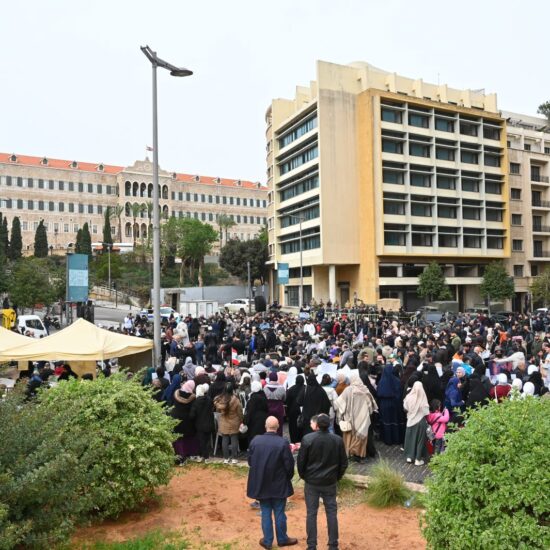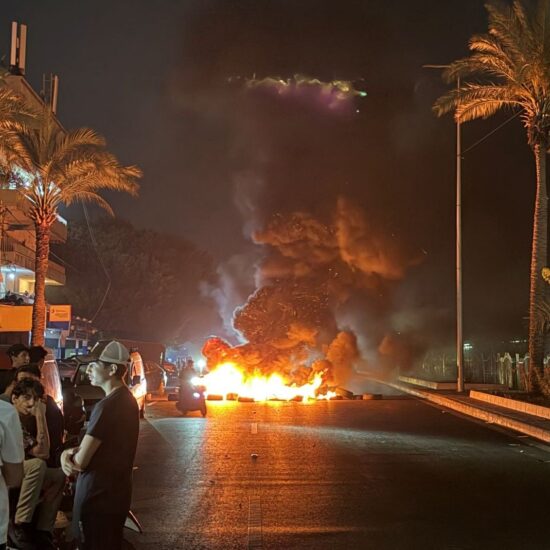
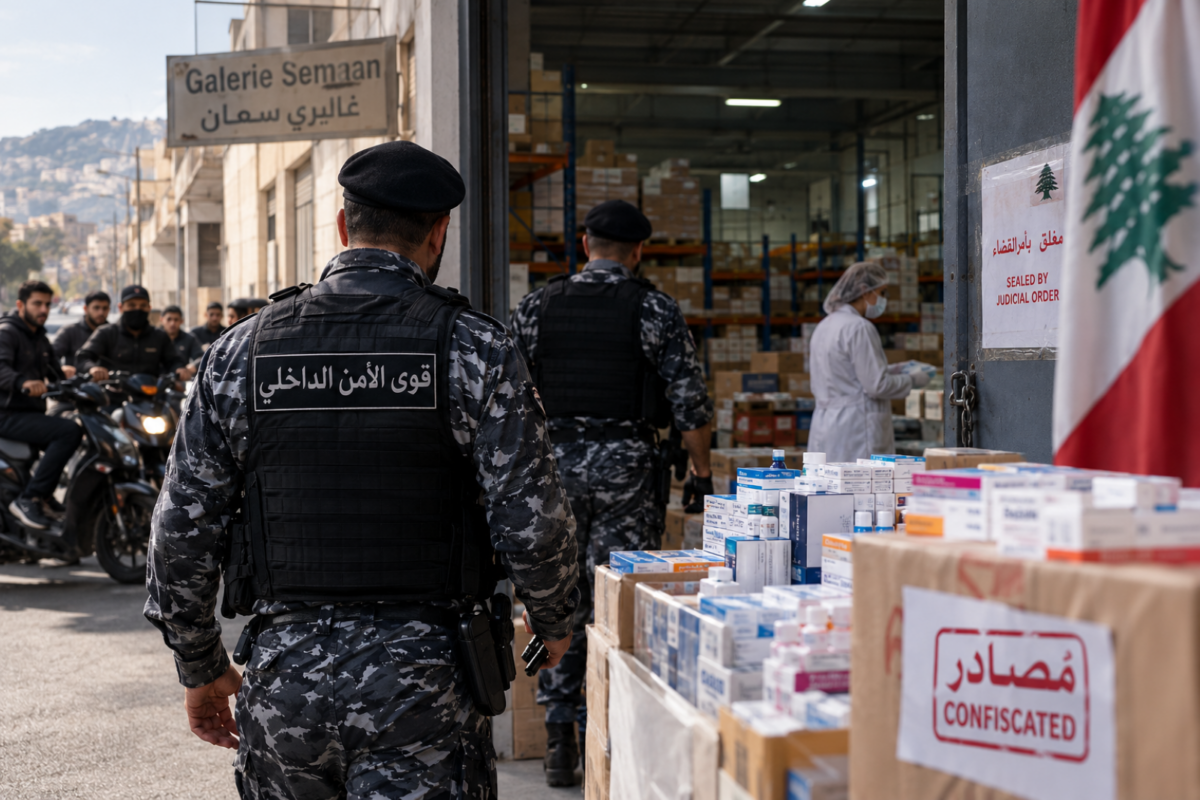
The Lebanese state should not have to negotiate its way into a medicine warehouse. Yet the confrontation in Galerie Semaan on October 16 exposed how easily an ordinary public responsibility becomes a dispute over political territory. According to the Internal Security Forces, young men on motorcycles attempted to prevent officers from entering a warehouse to seize medicines deemed unfit for circulation. The officers continued their work, confiscated the medicines and sealed the premises.
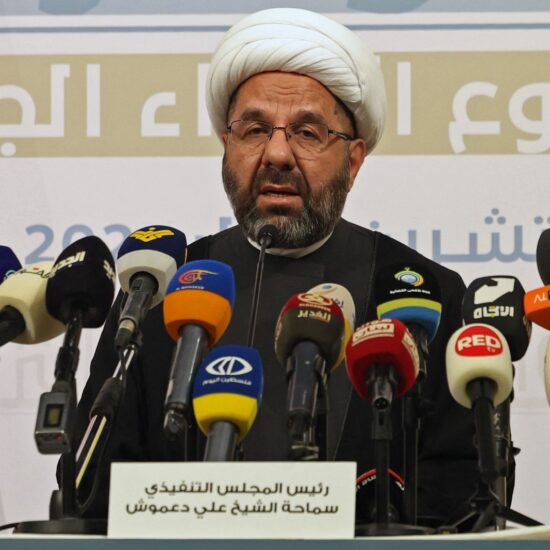
Hezbollah denied any connection to the warehouse or its contents. Its explanation centred instead on procedure: the patrol had entered a sensitive area without following a coordination mechanism agreed between the party and security agencies. The party cited Israeli threats and said the operation proceeded normally after contacts clarified the situation.
That explanation deserves scrutiny on its own terms. Even accepting Hezbollah’s denial of ownership, a question remains: what authority does a political party claim over the conditions under which public institutions perform their duties?
The Health Ministry’s account makes the question sharper. Minister Rakan Nassereddine, who is affiliated with Hezbollah, said the judicial action followed his own referral, based on an internal investigation. The ministry said it had already ordered the medicines delisted because they did not meet Lebanon’s requirements for use and circulation.
The minister deserves credit for acting. So do the officers who completed the operation. This was a case in which public institutions exercised their responsibilities. The difficulty arose when that work encountered a separate claim about how the state should enter the area.
A minister can initiate a lawful process. A judicial authority can instruct security personnel to carry it out. Yet a party can still present the absence of prior coordination as the explanation for a confrontation. The resulting uncertainty concerns who has the final word when public authority reaches the street.
Operational coordination can serve legitimate purposes. Security agencies exchange information, assess risks and take precautions to protect personnel and residents. Israeli threats are real, and responsible planning must account for them. But an arrangement intended to improve safety must leave the decision to proceed with the competent public authorities. If a party can withhold cooperation until its conditions are satisfied, coordination becomes a means of controlling enforcement.
A community’s political loyalties do not make it a party’s jurisdiction
The government should explain where the alleged arrangement falls on that spectrum. Who authorised it? What does it require? Can an operation proceed when Hezbollah objects? The public needs clarity about authority without needing access to confidential operational details. A community’s political loyalties do not make it a party’s jurisdiction.
That distinction is easy to lose in Lebanon. Describing a neighbourhood as belonging to a party can begin as shorthand for electoral support or organisational presence. It becomes more consequential when the description supplies a reason for public institutions to behave as visitors. Residents are then approached through whoever claims to speak for them, even when the state is carrying out a responsibility owed directly to those residents.
The political psychology of this arrangement matters. When a party’s authority becomes bound up with a community’s dignity, an intervention that bypasses the party can be presented as an affront to the people. The merits of the intervention recede. Attention moves from whether medicines meet the required standards to whether the organisation received the recognition it considers due.
This creates a difficult position for supporters themselves. A person can remain loyal to Hezbollah while wanting public health rules enforced without obstruction. Supporting a party does not entail surrendering an independent interest in safe treatment, reliable policing or access to justice. Those interests should remain enforceable when they inconvenience the organisation someone supports.
The medicine case makes that independence unusually visible. A patient’s need for protection does not change according to the political identity of the minister, the warehouse owner or the neighbourhood. The relevant standards must apply throughout the country. Their enforcement should be predictable enough that families need not investigate the local balance of power before trusting the institutions responsible.
There is also a danger in making every successful intervention dependent on a political settlement. When an obstruction ends after calls between officials and party representatives, the immediate calm is welcome. But if the episode leaves the underlying authority unresolved, it can teach everyone involved that intervention requires bargaining. The person able to interrupt a public duty acquires a role in deciding how it resumes.
Avoiding that outcome requires a response more durable than a declaration of victory. President Joseph Aoun and Prime Minister Nawaf Salam should establish that any security liaison remains subordinate to lawful public authority. The circumstances of the obstruction should be investigated, and responsibility established individually. Neither a party label nor a neighbourhood’s identity can replace evidence about who did what.
Hezbollah’s opponents also have a responsibility. Treating the operation as a humiliation of the southern suburbs would reinforce the very assumption they should challenge: that state authority and the dignity of the people living there are opposing interests. Residents deserve institutions that protect them without demanding a change of political allegiance.
Citizens should not have to choose between their political loyalties and the protection owed to them by the state
Citizens should not have to choose between their political loyalties and the protection owed to them by the state. The minister’s referral and the officers’ persistence offer something worth defending. They show that public responsibility can produce action even within a divided political order. Making that action routine would give citizens a practical reason to trust institutions whose usefulness they could experience directly.
The next test is whether another inspection, seizure or judicial order can proceed under clear rules, with no uncertainty about who is entitled to interrupt it. A country cannot promise equal protection while allowing the route to that protection to change at the entrance to a neighbourhood. For the patient waiting for medicine, sovereignty has a concrete meaning. Their right to safe treatment cannot depend on who agrees to let the police through.
Ramzi Abou Ismail is a Political Psychologist, Researcher and Analyst.
The views in this story reflect those of the author alone and do not necessarily reflect the beliefs of NOW.