Two aviation stories kept the Lebanese talking recently. On September 30, President Donald Trump signed a decision lifting restrictions on flights between the United States and Lebanon. The second story was that a technical mission from the International Civil Aviation Organization found that Rafic Hariri International Airport lacked valid certification. The first brought hope. The second brought worry, and it is the more revealing of the two.
The end of an era, on paper
Americans became targets and bargaining chips, and Beirut became the place where the bargains were negotiated. Washington’s answer was to cut off the city.
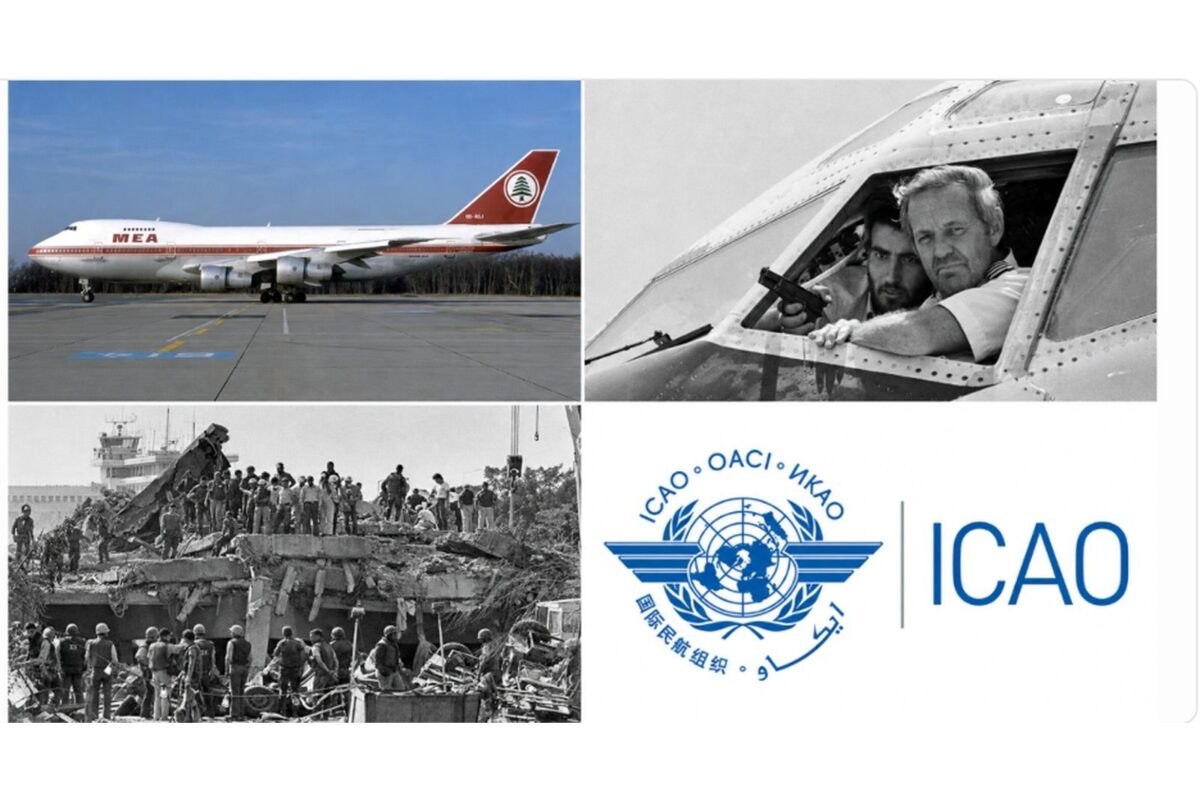
The American ban stemmed from years of suicide attacks, hijackings, and kidnappings. In July 1982, David Dodge, the acting president of the American University of Beirut, was kidnapped on campus. In April 1983, a suicide bomber blew up the US Embassy in Beirut, killing 63 people. Six months later, a truck bomb at the Marine barracks near the airport killed 241 Americans. In January 1984, Malcolm Kerr, the president of AUB, was shot dead on campus. In June 1985, gunmen seized a Royal Jordanian airliner at Beirut airport and blew it up on the tarmac. Three days later, militants linked to what became Hezbollah hijacked TWA Flight 847 and forced it to Beirut, where the crisis lasted 17 days, and the hijackers killed Robert Stethem, a US Navy diver. Americans became targets and bargaining chips, and Beirut became the place where the bargains were negotiated. Washington’s answer was to cut off the city.
For forty years, the American restriction served as a reminder that Lebanon’s airport had once been a stage for a regional agenda run out of Tehran.
Whether a direct flight will actually take off soon is another matter. But the decision itself marks a break with the past. For forty years, the American restriction served as a reminder that Lebanon’s airport had once been a stage for a regional agenda run out of Tehran. Its removal signals that Washington no longer regards Beirut’s airport as a security threat.
It also reminded the Lebanese of a lost golden age. Middle East Airlines received its first Comet jets in 1960 and put a Boeing 747 on the Beirut-London route in June 1975. That year, neither Emirates nor Qatar Airways existed. Trans Mediterranean Airways, founded in Beirut in 1953, was Western Asia’s first all-cargo airline. Between April 1983 and 1985, MEA flew a 747 from Beirut to New York via Paris until the American ban ended the route. Beirut was a regional aviation hub long before the Gulf carriers that dominate the skies today were born.
An acronym enters the living room
Then came the second story, which in Beirut was met with real anxiety. ICAO joined the list of acronyms that every Lebanese now discusses with confidence, alongside the IMF, FATF, and UNIFIL. I doubt many of those debating it knew what the organization was or how technical the issue was.
ICAO is the UN agency responsible for setting global standards for civil aviation. It does not issue airport certificates. National authorities issue them under ICAO standards. The ICAO report sent to the Lebanese authorities last September found that the airport’s conditional certification had expired. It also found that firefighting resources were sized for single-aisle aircraft rather than the wide-body jets used on long-haul routes, and that the airport lacked an emergency plan. The aviation authority lacked enough qualified inspectors to oversee air traffic control licensing, and Lebanon had no fully established, independent body to investigate aircraft accidents. As Reuters reported, ICAO called the matter “serious and time-critical.”
In simple terms, the airport’s conditional certification had expired, and an international organization highlighted the failure.
Why in Lebanon?
The larger part of the answer is trust. The Lebanese do not believe politicians are there to fix problems. So when they hear the airport has a problem, they don’t assume it will be quietly fixed. They assume it will get worse.
In most countries, this would have remained a technical file for engineers and regulators. Few citizens anywhere would debate whether their main airport falls under the firefighting category, and I doubt it would make the evening news. So why did it become a household topic in Lebanon?
Part of the answer is that Rafik Hariri Airport is not just an airport. It is the country’s main international gateway. The Lebanese have managed to normalize all wars and conflicts as long as the airport remains operational.
The larger part of the answer is trust. The Lebanese do not believe politicians are there to fix problems. So when they hear the airport has a problem, they don’t assume it will be quietly fixed. They assume it will get worse.
Rotten beyond the weapons
Hezbollah has also used the airport’s geographic position as a bargaining chip, threatening to close the roads whenever it chooses. But this time, the expired certificate is most likely not the result of Hezbollah’s weapons. It stems from a toxic mix of negligence, incompetence, and a desire for deniability.
It is tempting to link every problem in Lebanon to Hezbollah’s weapons. The airport has been politically charged for decades. In May 2008, a cabinet decision to remove the head of airport security was one of the triggers for Hezbollah’s armed takeover of West Beirut. Hezbollah has also used the airport’s geographic position as a bargaining chip, threatening to close the roads whenever it chooses.
But this time, the expired certificate is most likely not the result of Hezbollah’s weapons. It stems from a toxic mix of negligence, incompetence, and a desire for deniability. The American decision indicated that a chapter that began with suicide bombings and hijackings is closing. Disarming Hezbollah would definitely remove the reason the planes stopped coming in 1985. It would not, however, renew a certificate, train an inspector, or equip a fire brigade.
Khalil Gebara is an academic and researcher.
The views in this story reflect those of the author alone and do not necessarily reflect the beliefs of NOW.