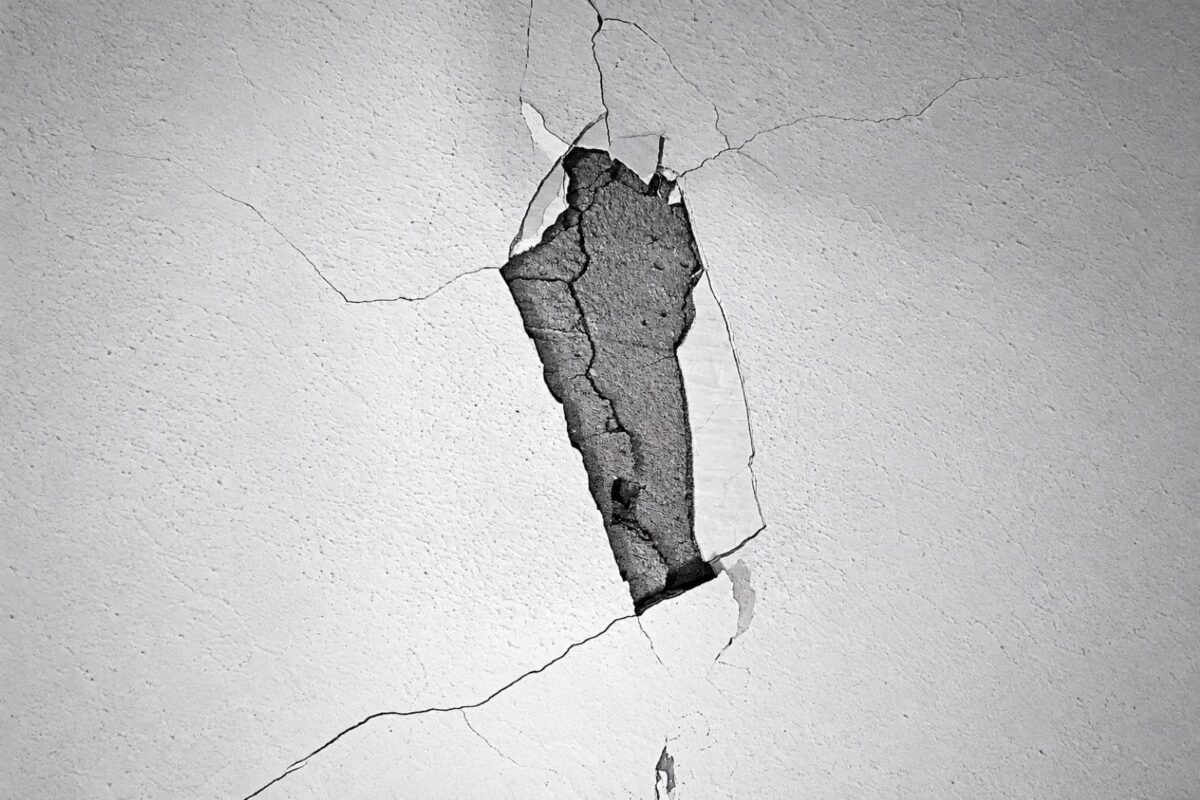
A damaged wall in a Beirut home might seem an unlikely place to find the outline of an entire country. Yet, in the aftermath of the August 4, 2020 Beirut port explosion, visual artist, photographer and filmmaker Fadia Ahmad noticed something familiar in the fractured plaster: the silhouette of Lebanon.
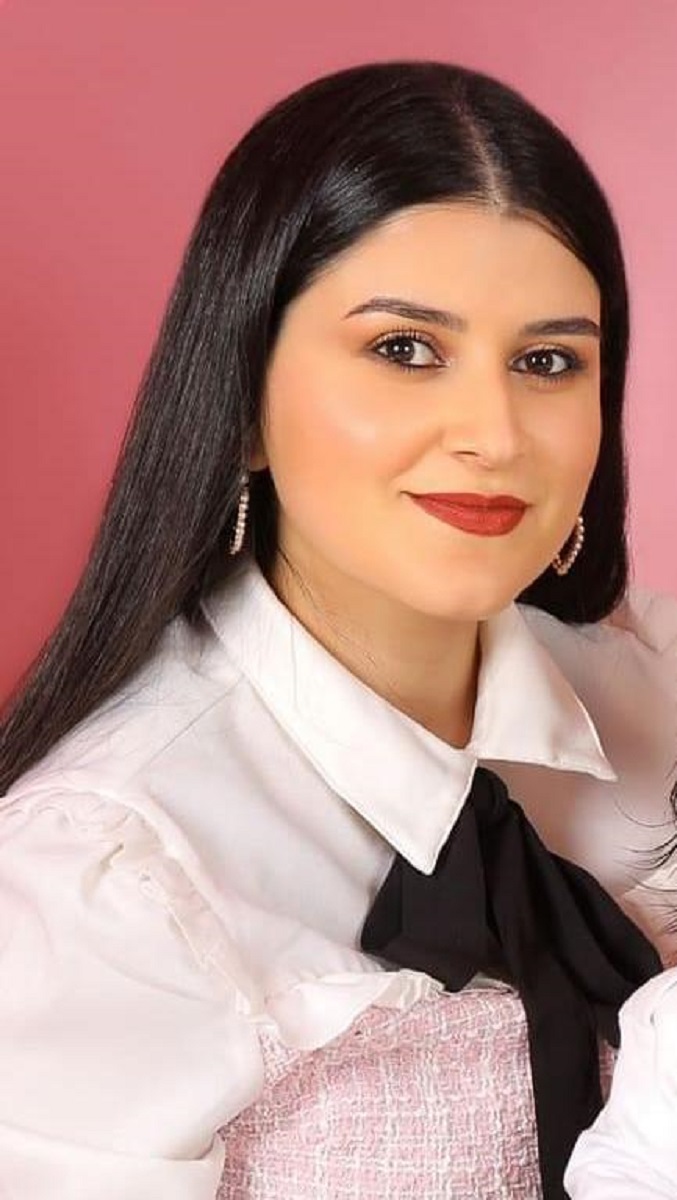
Born in 1975 in Alicante, Spain, where her family sought refuge during the Lebanese Civil War, Ahmad returned to Lebanon in 1991. She later studied at the Institute of Audiovisual Studies (IESAV) in Beirut, where she trained in photography, audiovisual production and filmmaking. Having grown up between different places and cultures, questions of belonging and memory have remained central to her artistic practice.
The photograph of the damaged wall captures many of these themes, transforming the destruction of a personal space into a reflection of a country’s history. It also offers a glimpse into Échos – Echoes, her latest photography book, which brings together more than two decades of work across different places, cultures and moments in her life.
The photograph, captured in black and white, shows a large section of broken wall surrounded by cracked and peeling plaster. The exposed surface forms an irregular shape that resembles the country’s map, turning damage to a private space into an image of a nation marked by successive crises.
For Ahmad, the resemblance was immediate.
“I found it almost impossible. Here was the shape of my country, emerging from the cracks of my own home,” she says.
“I found it almost impossible. Here was the shape of my country, emerging from the cracks of my own home,” she says.
The image brings together themes that run through her artistic practice: the relationship between personal and collective memory, the traces left by time, and the search for meaning in places and details that might otherwise go unnoticed.
Rather than presenting a single narrative, the collection explores how images can speak to one another across time and geography, inviting viewers to draw their own connections.
“Throughout my artistic journey, photography has always been a way of questioning the world around me, and inevitably, questioning myself,” Ahmad says. “I’ve never sought to provide answers through my work. Quite the opposite. I’m interested in raising questions.”
Finding connections across time and place
For Ahmad, bringing together the photographs for Échos – Echoes revealed unexpected relationships between images taken years apart, sometimes on different sides of the world.
Gestures, colors, compositions and emotions began to resonate with one another, creating connections that extended beyond the circumstances in which each photograph was taken.
The book follows her earlier publication, Beyrouth | Beirut, a personal exploration of identity and belonging through her relationship with the Lebanese capital.
Where that first book centered on Beirut and her connection to her roots, Échos – Echoes broadens the focus to consider how people experience the world and their place within it.
Publishing the collection as a book allowed Ahmad to bring these images together and give readers the freedom to move between them at their own pace.
“A book also has a particular intimacy,” she says. “You can return to it years later, and the photographs may speak to you differently, simply because you are no longer the same person who first looked at them.”
That relationship between an image and the person looking at it is central to her understanding of photography. An image does not necessarily carry one fixed meaning, nor does the photographer’s interpretation have to match that of the viewer.
The title itself reflects this openness.
“We all carry echoes within us,” Ahmad says, referring to the places people have lived, the individuals they have encountered and the experiences that continue to shape them.
Some memories remain close, while others resurface unexpectedly, sometimes years later. Photography, she explains, captures a moment that will never happen again, yet allows it to remain accessible, open to reinterpretation.
An echo, she observes, is never identical to its source. It changes as it travels through different spaces.
“I like to think that photographs do something similar.”
For someone who has grown up between cultures, the idea also carries a personal significance. It reflects the experience of belonging to more than one place and carrying fragments of each wherever life leads.
Ahmad’s interest in the relationship between people and their surroundings shapes the way she photographs urban spaces.
She describes cities as living organisms that carry their histories, contradictions, wounds and transformations, alongside the everyday lives of the people who inhabit them.
Her attention often falls on details that might escape notice: a façade, a window, a gesture, laundry hanging from a balcony or the way people occupy a street.
These seemingly ordinary elements can reveal something about the lives unfolding around them, as well as the societies those lives form part of.
“I often find beauty in places where we are not necessarily expected to look for it,” she says. “In an ageing wall, an imperfect structure, the disorder of a street, or the traces that time leaves behind.”
For Ahmad, beauty does not have to be immaculate or immediately recognizable. Imperfection can communicate something that a carefully polished surface cannot.
Cities also bring different realities into close proximity, from wealth and poverty to tradition and modernity, solitude and community. Their streets and buildings become records of how people live, interact and leave traces of themselves behind.
Beirut has had a significant influence on Ahmad’s perspective. Its overlapping histories and communities, and the contradictions that shape everyday life, have informed how she sees urban spaces elsewhere.
Beirut has had a significant influence on Ahmad’s perspective. Its overlapping histories and communities, and the contradictions that shape everyday life, have informed how she sees urban spaces elsewhere.
Yet her interest extends beyond the Lebanese capital. She is drawn to what places reveal about their inhabitants, including the parts of their histories that remain invisible or unspoken.
“Through these echoes are also written part of our history and heritage that has often been erased,” she says.
The photograph of the cracked wall in her Beirut home brings these ideas into particularly sharp focus.
Lebanon’s outline, emerging from the damaged plaster, became for Ahmad a reflection of a country shaped by foreign domination, wars, displacement, political crises and the Beirut port explosion.
Generations have lived with the consequences of these events, carrying their own memories and losses. In the photograph, the country’s history becomes inseparable from the space in which Ahmad lives.
Ahmad connects the photograph to her wider body of work, particularly Beirut, The Aftermath, which she describes as an effort to preserve memory, bear witness to what people have experienced and give space to voices that deserve to be heard.
For her, photographing destruction comes with a responsibility towards human dignity, collective memory and the truth of people’s experiences.
“I have always been sensitive to the beauty that can emerge from imperfection, but I think there is an important distinction between recognizing beauty and romanticizing destruction,” she says. “I don’t photograph suffering to make it beautiful.”
The distinction is significant. The image’s visual impact does not erase the damage it depicts or turn destruction into something desirable. Instead, it makes the relationship between physical damage and lived experience difficult to ignore.
Ahmad also points to the absence of an agreed understanding of Lebanon’s history, noting that the country’s history is not taught in schools in a way that establishes a shared national narrative.
The photograph therefore takes on another meaning: it becomes a reminder that history is not simply something distant, recorded in books or associated with major political events.
“Sometimes, it is written on the walls of our own homes,” she says.
Looking beyond the perfect image
Ahmad continues to work across photography and filmmaking, using both mediums to explore human relationships, identity and how people navigate their lives alongside one another.
Her recent documentary, Together, examines connections between people from different backgrounds and the ways love, trust, differences and the passage of time shape shared lives.
She is also increasingly interested in people’s relationships with themselves, particularly the expectations they place on how they should behave, look and measure up to ideas of beauty and acceptability.
These questions reflect a broader interest in what lies beneath appearances, and in the things that tend to be overlooked in everyday life.
“I am becoming more attentive to simplicity, to what is authentic rather than what is perfect, and to the things we tend to overlook in our everyday lives,” she says.
Ahmad has several projects taking shape, including an exhibition in Paris scheduled to open at the end of November and continue throughout December. A book signing for Échos – Echoes is also planned during the same period.
She does not, however, want to determine in advance where every artistic journey will lead.
“I think curiosity, and the willingness to remain open to what I don’t yet understand, is what keeps me moving forward,” she says.
It is an approach that also underpins Échos – Echoes. The photographs do not demand a single interpretation or offer definitive answers. Instead, they leave room for viewers to bring their own memories, experiences and questions to the images.