As the Jewish High Holidays unfold amid wars still raging across the Middle East, and as Lebanon and Israel take unprecedented steps toward one another — steps that Lebanese authorities still approach with visible trepidation, both regarding normalization with Israel and the recovery of Lebanese sovereignty through Hezbollah’s disarmament — something quieter is also taking place: a renewed curiosity about Lebanon’s own Jewish past.
Indeed, Lebanese voices — academic, journalistic, and diasporic — are increasingly being raised in favor of recovering and restoring the memory of a community that was once a luminous thread in Lebanon’s national fabric, reclaiming it as part of the Lebanese story, and, in some cases, even imagining its possible return.
It was in this climate that a Lebanese journalist recently contacted me. She was researching an article on Lebanese Jewry and had come across my work on the topic over the past decade — namely my 2019 book Lebanon’s Jewish Community and earlier essays on the long history and slow exodus of Lebanese Jews.
Her first question was straightforward: “Take us through an ordinary day in your childhood; what was it like for you growing up Jewish in Lebanon?”
It was a great question — direct, honest, breaking ice and taboos alike.
There was only one problem.
I am not Jewish.
Over the years, I had grown accustomed to the “suspicion” that I was. In academic and Lebanese diasporic circles, the “hunch” usually arose from innocuous, even innocent impulses: a decade spent researching and writing about Lebanese Jews, often with reflexivity, intimacy, and sympathy, combined with an ethnically ambiguous surname shared by Lebanese Christians, Jews, and Muslims alike, made the leap to my supposed Jewishness seem more intuitive and natural.
So I do take the “mistake” as a compliment — especially now, in a time of renewed, uninhibited antisemitism, and as someone from the Near East, where the word “Jewish” is still more often hurled as a slur than used as a casual descriptor.
In my work on Near Eastern minorities, I have often been called “a Jew,” usually as an indictment rather than a compliment. That some now offer it as recognition feels, in these times, like an unexpected grace.
Yet the assumption still surprises me when I look back.
As a child growing up and attending school in a multicultural Beirut, I never saw myself — and was never made to see myself — as anything different from my classmates or other Beirutis of my generation. My childhood friends were a veritable cultural stew: Armenians, Syriacs, Muslims, Christians, Jews, Greeks, Britons, French, Americans, Swiss.
The only time my peers and I might have noticed distinctions among us was on Thursday mornings, “when we all went to school Mass,” while some classmates — presumably non-Christians — were assigned other co-curricular tasks.
Yet even that boundary was porous.
When I was a little older, I realized that some of my Jewish and Muslim classmates did, in fact, attend Mass with the rest of us. One classmate in particular comes to mind: Ali — his real name; I will withhold his surname, as it would no doubt identify him — sat in the same pew as me.
Unfamiliar with church rituals, and perhaps replicating his own religious tradition, Ali innocently mimicked every gesture the priest made: kneeling, theatrically making the sign of the cross, blessing the congregation, raising the chalice, breaking the host. I found it both endearing and amusing, often giving me the giggles in an otherwise solemn, quiet setting and, on occasion, getting us both into trouble.
As I smile while writing these lines, I cannot help marveling at the innocence and openness that the Lebanon of my younger years instilled in children of my generation.
Another feature of that receptive and benevolent society in which my childhood was immersed was my grandfather’s quiet work — revealed to me only many years later.
In the late 1960s and early 1970s, he was a retired Lebanon Sûreté detective. I often met “strangers” at his house — “strangers” whose children I would befriend for a few months before they disappeared and were replaced by a fresh group of similar “strangers.”
They were invariably described to me as “houseguests of your grandad’s, from abroad” — min barra el-balad. They all spoke with a distinct accent, different from the Lebanese variety my family spoke, and they never left the house. Even when I asked boys my age to come outside and play, they would always demur, offering some excuse to remain indoors.
There was another “strangeness” to the affair: the men and teenage boys invariably grew their hair and beards longer, while the girls dyed and cut their hair shorter.
Only years later did I learn that these “strangers” were Syrian Jews whom my grandfather, in collaboration with the Lebanese authorities, was sheltering and then helping move out — first giving them sanctuary for several months in his home in the Beirut suburbs until their appearances had changed and legal documents were prepared for them to transit out of Lebanon, to Israel, Europe, or the Americas.
Almost six decades have passed since those “strange encounters of the Lebanese kind,” and I still wonder what became of the many Syrian Jewish children I had unknowingly and furtively befriended in my grandparents’ home.
Another bittersweet memory of that vanishing Jewish Lebanon concerns one of my mother’s friends, a man with whom she would lose contact after 1967.
Many Lebanese Jews recalled the seamless interweaving of the Jewish, Christian, and Muslim calendars with the broader Lebanese social calendar.
In what must have been the late 1960s, when I was six or seven, my mother used to take us Christmas shopping in downtown Beirut. My recollections of those prewar years are fuzzy and partly reconstructed, but the essence remains clear.
On one such occasion, we stopped at a fabric shop called Cécé in the Souk Sursock district so my mother could say a quick hello to the owner, a former colleague.
During that brief exchange, Cécé confided that he was closing the shop and leaving Lebanon for good: “Because life has become unbearable. They are harassing me a lot” — ʿam ydayʾouni ktir.
When my mother asked, “Who? Why?” — leysh, min? — Cécé blurted out sotto voce: “Because I’m Jewish” — laʾanni yehudé.
Her shock was audible, even to a child: “You, Cécé? Jewish?” — Enta yehudé, Cécé?
Almost sixty years later, I can still hear the dismay in my mother’s voice.
In the cosmopolitan Beirut of that moment, no one knew — or cared to know — who was what. Yet the exchange also marked a turning point already underway, one that my research decades later would document: after 1967, a new — or renewed — tide of Arab-nationalist antisemitism, often accompanied by acts of vandalism and violence, made life unbearable for Lebanese Jews.
A millennia-old native community, one that predated nearly every other Lebanese group in terms of indigeneity, began to be bled out of its homeland.
The forgotten exodus was inexorable.
When I later began collecting testimonies and family papers for Fragments of Lives Arrested, what surfaced most consistently was not any dramatic Jewish exceptionalism, but a sense of ordinariness — an unselfconscious rootedness.
People spoke of the same Beirut routines everyone else lived: morning coffee on the balcony overlooking the Mediterranean or the narrow streets of Wadi Boujmil; the smell of freshly baked kaak and man’oush mingling with the aroma of hamantaschen or challah prepared for Shabbat or the holidays; evening strolls along the Corniche; skiing trips to Farayya in Mount Lebanon; and weekly family gatherings that spilled into neighbors’ homes regardless of confessional labels.
Many Lebanese Jews recalled the seamless interweaving of the Jewish, Christian, and Muslim calendars with the broader Lebanese social calendar. Purim costumes and masks looked not unlike those Christian children wore for Saint Barbara’s Feast — Lebanon’s local version of Halloween, celebrated on December 4.
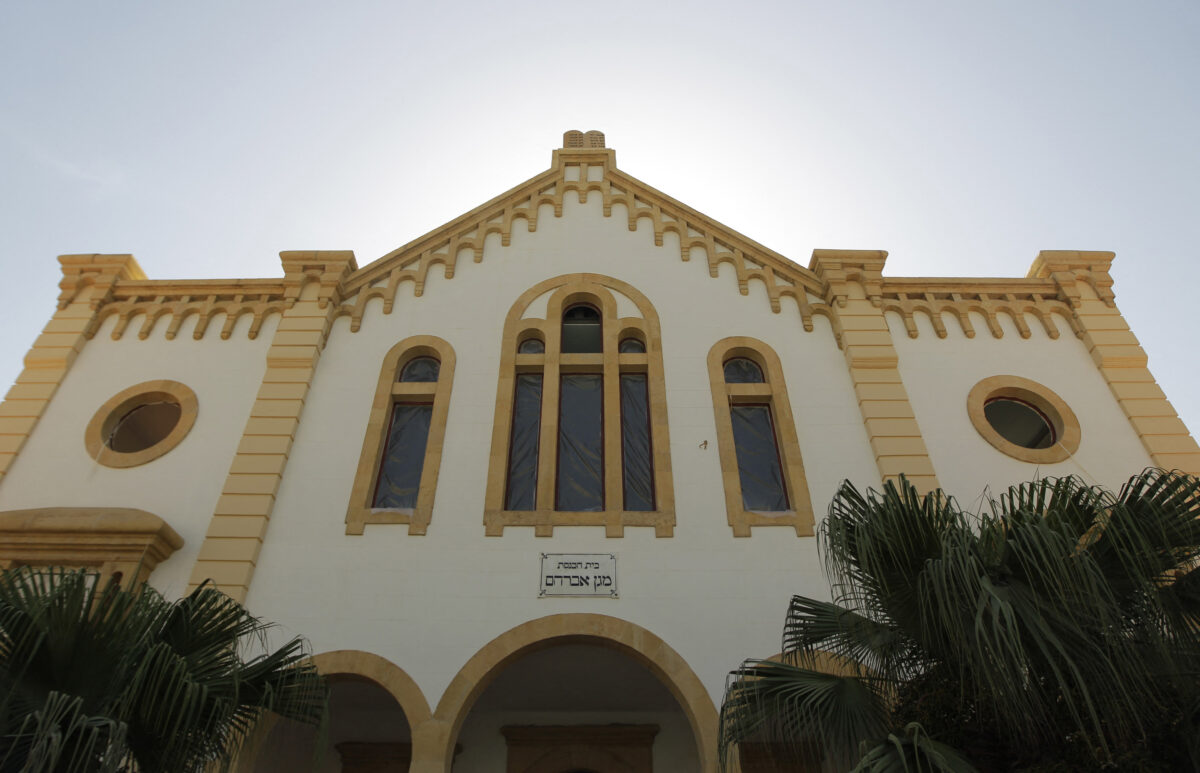
The courtyard of the Magen Avraham Synagogue often served as a neighborhood meeting place rather than a sealed enclave. Children remembered playing in the same streets and courtyards as their Christian, Muslim, Armenian, or Greek classmates. Adults spoke of business partnerships and professional lives that rarely registered religious difference until the later 1960s and 1970s.
What surfaced again and again was the shared texture of daily life: food, language — French mixed with a little Hebrew and a distinctly Beiruti speech form laced with an Aleppan brogue, reflecting the many relatives who had come to Lebanon as Syria became increasingly stifling — and a quiet pride in being simultaneously Lebanese and Jewish.
For most of the people I spoke with, “Jewish life in Lebanon” had simply been Lebanese life with an additional layer of ritual and memory.
The human geography of Lebanese Jewry, mirroring Lebanon’s own complex topography, was likewise far from uniform.
Beirut’s Wadi Boujmil was the densest, most cosmopolitan, and most visible Jewish hub. Home to families such as the Safras, Zilkhas, Abadis, Farhis, Mizrahis, Sassons, Dichys, Eliyahs, and Cohens, it was a veritable beehive of commercial and professional activity that helped shape the city’s mercantile and banking character.
Outside the capital, the picture was more scattered and, in many cases, much older.
In Sidon, names such as Levy, Zeitouni, Srour, and Bassal remained tied for generations to the old Jewish quarter, coastal trade, and the old Yishuv — Jews who remained in the Holy Land after the destruction of the Second Temple.
In the Chouf Mountains, particularly in Deir el-Qamar, families such as the Srours, Zeitounis, Levys, and Koberssys — some carrying attributes such as Dirani, meaning “native of Deir el-Qamar” — had deep roots stretching back centuries. Some later moved to Aley or Bhamdoun, where summer residences and a synagogue, Ohel Jacob in Aley, reflected the classic Lebanese pattern of mountain retreats.
Smaller clusters existed in Tripoli and, earlier still, in places such as Hasbayya, at the foot of Mount Hermon.
In my book, I tried to give voice both to the Beirut-centered stories and to these often-neglected provincial threads.
Beyond geography, the community’s place in Lebanese life was equally distinctive.
In the popular imagination of the mid-twentieth century, Jews were often associated with commerce, finance, the liberal professions, and a range of artisanal and retail trades — textiles, pharmaceuticals, jewelry, printing, and import-export houses that linked Beirut to wider Mediterranean and European markets.
Banking families such as the Safras and Zilkhas became emblematic of Lebanon’s role as a regional financial hub. Physicians, lawyers, journalists, and educators also figured prominently.
Neighbors long remembered quieter associations as well: kosher butchers, the bakery that supplied special breads for Jewish festivals, and spice and sweet shops that served both Jewish and non-Jewish customers.
None of this was unique to Lebanon. It simply mirrored the classic Levantine pattern in which minorities often concentrated in portable, urban, skilled occupations.
What the testimonies repeatedly underlined as distinctive was how thoroughly these personal, professional, and commercial lives were intertwined with those of other Lebanese communities — until the political climate of the late 1960s and the Civil War years made such interweaving increasingly precarious.
Many of the people I interviewed told me small, personal stories that still surface unbidden.
One that has stayed with me is that of a young man who, long after leaving, could still recite with his eyes closed the exact sequence of shops and neighbors along a single street in Wadi Boujmil, including the non-Jewish bakery that used to prepare special loaves for the synagogue on Friday afternoons.
Another is the memory of a Catholic boarding-school student who was awakened every morning before dawn by his dormitory priest, nudged to “wash that sleep off your face and go wear your tefillin for the Shacharit.”
There were quieter recollections: an elderly woman describing the sound of the Magen Avraham Synagogue courtyard on a summer evening; a man who still kept the key to a house that no longer existed; and the repeated insistence, across dozens of interviews, that “we never felt different until someone decided we were different.”
These fragments — ordinary, intimate, sometimes almost banal — are precisely what Lebanon’s Jewish Community tried to preserve.
They are the “lives arrested” of my subtitle: lives interrupted mid-sentence, yet still vivid in memory.
When those I interviewed spoke about Lebanon, the emotional register varied.
Some spoke of uncomplicated longing, saying they “would return tomorrow if the political and security climate allowed.” Others expressed a more complicated attachment — love mixed with the knowledge that the Lebanon of their youth no longer exists.
A number of those who settled in Israel spoke of the painful proximity, “a nearness out of reach,” as they often described it: Beirut is only a short drive away, yet the border remains an absolute barrier, the distance an unbridgeable chasm.
Very few of the people I interviewed still lived in Lebanon itself; those who did tended to live discreetly, under the radar.
One story that captures both the attachment and the bitterness is that of Ambassador Yitzhak Kishk-Cohen, who changed his name to Levanon — Lebanon, tout court — when he moved to Israel.
His mother, Shula Cohen, a well-known Beirut socialite often portrayed as a Mossad agent, had in fact worked closely with the Lebanese authorities and the Sûreté. She maintained ties to the Solh political dynasty — which gave post-independence Lebanon its first prime minister — and other sacred cows of Lebanese politics. Riad al-Solh’s family famously sold large plots of land to the Jewish Agency.
In sum, the Lebanese government of that era — what one might today call the “deep state” — tolerated, and even facilitated, Shula’s activities because they also served Lebanon’s own interests in fending off Syrian designs and irredentist claims.
Later, the climate reversed sharply. Shula Cohen was arrested, imprisoned, and subjected to torture on charges of espionage.
The episode illustrates both the depth of earlier cooperation and the speed with which that cooperation could collapse within Lebanon’s mercantile, clientelist political culture.
The Jews of Lebanon — and others who had made the country their sanctuary — were among the first victims of that intransigence.
As for physical traces today, the most visible remaining sites are well known: the Magen Avraham Synagogue in Wadi Boujmil, restored in recent years but still vacant and unused; the Jewish cemetery in Beirut; the synagogue in Deir el-Qamar; the remains of the synagogue, related structures, and burial sites in Sidon, all desecrated by time and vandalism; and scattered markers in Aley and Bhamdoun.
Beyond the buildings, the traces are thinner: street names that linger in aging memory, family names that still appear in older commercial ledgers, property records, or electoral lists, and the oral recollections of non-Jewish neighbors who remember the community that once lived beside them.
In the book, I argue that the most important “traces” are not only the stones, but the memories themselves — Jewish and non-Jewish alike — now fading with their aging custodians.
All of this is to say that “ordinary life” in the Lebanon of my younger years was anything but ordinary.
It was complex, airy, capacious, and formative in the best sense: we were molded — not to say “formatted” — by the normality of diversity and, in the same breath, by the resentful rigidities and chauvinisms that would later destroy it.
In my case, the most destructive of those rigidities was Arab nationalism and its ancillaries — what Lebanese novelist Amin Maalouf called the “partisans of triumphalist barbarity,” the “children of arrogant tribes” who could not abide our multiple poles of belonging or “subtle, fluid identities.” (1)
The Jews of Lebanon — and others who had made the country their sanctuary — were among the first victims of that intransigence.
“In a slow drip, without much fanfare, the community had begun melting away.” (2)
My own mother’s friend, Cécé, was among those who left in silence, never to return.
In this season of High Holidays, the absence is not abstract.
It is the missing courtyard conversations, the missing aroma of challah wafting through small neighborhoods on a Friday afternoon, the missing neighbors who once shared the same streets and the same Beiruti twang.
It is the knowledge that a community older than many of the other confessional and political formations that later claimed exclusive ownership of the land was driven out not by ancient inevitability, but by opportunism and political choices made within living memory.
The stones remain.
The memories linger.
The people do not.
That is the pointed fact this holiday season makes unavoidable.
And so, I return to the journalist’s opening question: “What was it like for you growing up Jewish in Lebanon?”
I am not Jewish.
I am a Maronite cultural mongrel who attended Maronite and Catholic schools in Mount Lebanon and who was taught to savor the diversity and ecumenism of the 1960s and 1970s.
So I take the assumption that I am Jewish as a compliment — and, in our times, as one of the more generous mistakes anyone can make about me.
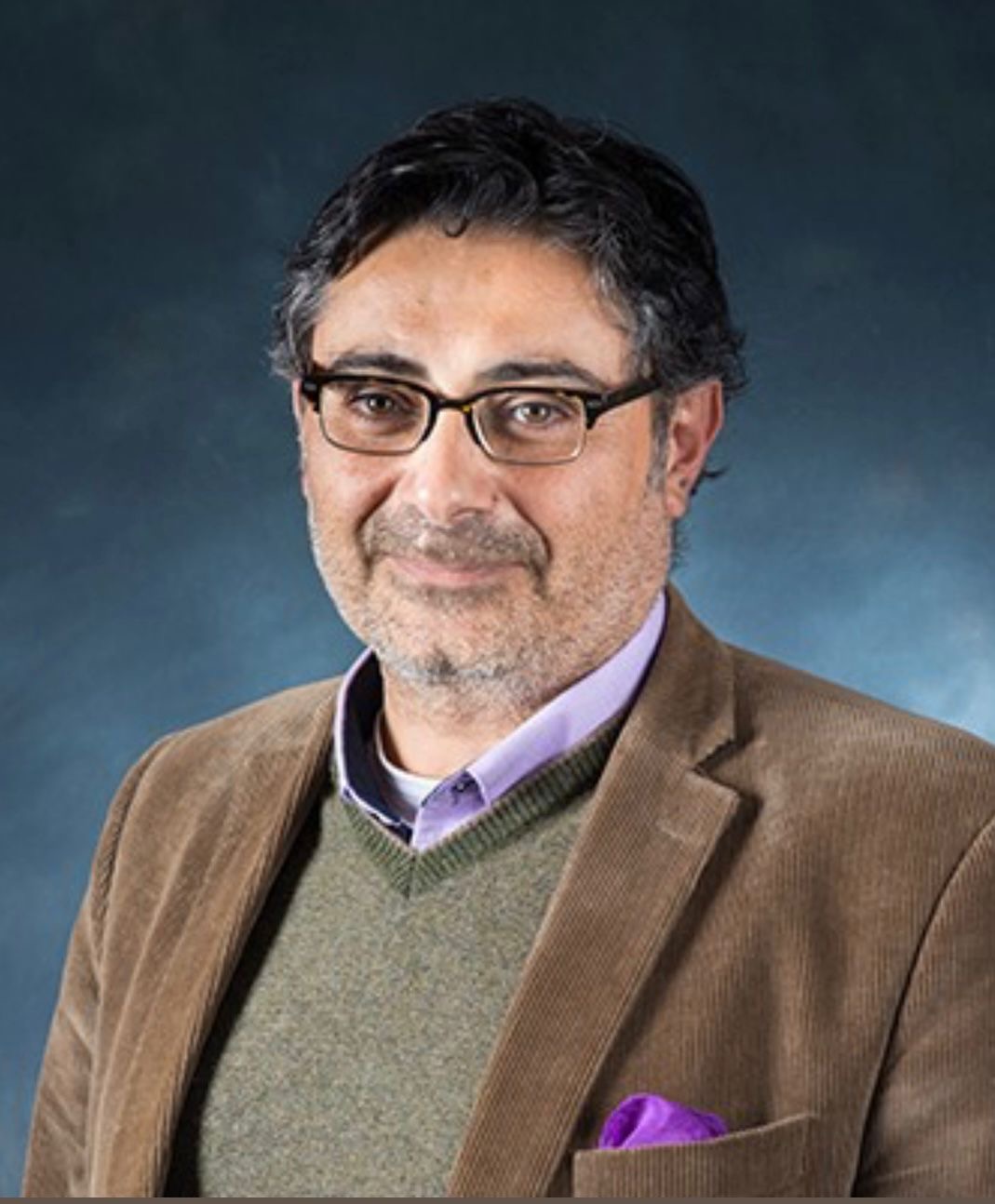
Franck Salameh is a historian, multilingual translator, biographer, memoirist, anthologist, and Professor of Near Eastern Studies at Boston College. His work centers primarily on Levantine minorities and the history of ideas and political thought in the modern Middle East, with a special focus on Arabism, Zionism, Islamism, and minority histories. His most recent books are The Other Middle East (Yale, 2017) and Lebanon’s Jewish Community (Palgrave, 2019).
The views in this story reflect those of the author alone and do not necessarily reflect the beliefs of NOW.
Endnotes
(1) Amin Maalouf, Les Désorientés (Paris: Grasset, 2012), 36.
(2) Amin Maalouf, Les Désorientés (Paris: Grasset, 2012), 36.