In a country where manufacturing businesses often struggle with bureaucracy, economic uncertainty and limited institutional support, building a locally produced brand capable of competing in international markets is no small undertaking. Yet, Lebanese skincare brand Antati is attempting to do precisely that, investing in its own production facilities, developing science-backed formulations and positioning itself as a regional alternative to established international skincare names.
Founded by Toufic Braidy, Antati has built its identity around a particular proposition: skincare should be developed with a better understanding of the people using it, including their skin types, environments and lifestyles. Rather than simply importing established formulations or placing a local label on outsourced products, the company manufactures its range in Lebanon, with ambitions to expand its international presence.
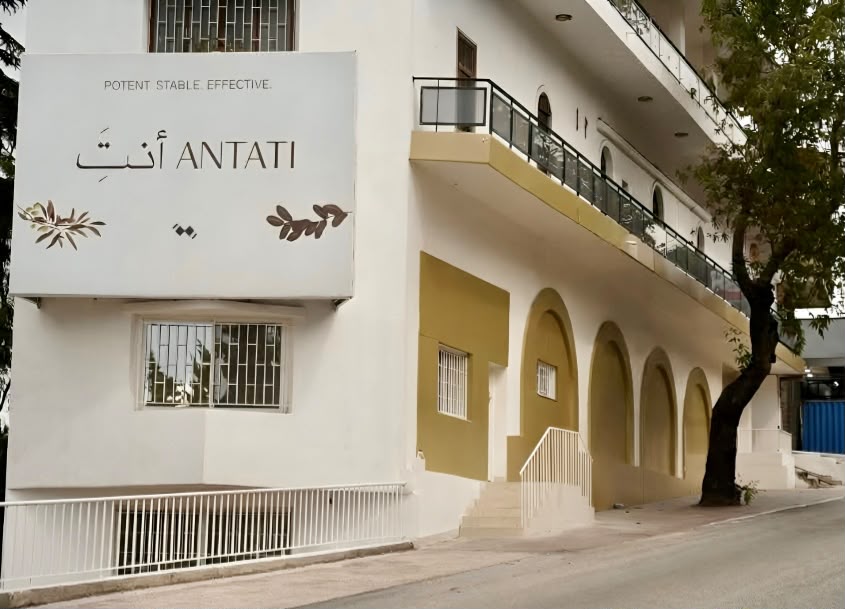
A visit to Antati’s recently opened showroom in Aley and its adjoining laboratory offers a glimpse into the scale of that ambition. Behind the retail space is a 1,000-square-metre production facility, where the company develops and manufactures its products. The investment is also a statement about the potential of Lebanese manufacturing, challenging the perception that locally produced skincare cannot meet the standards required to compete internationally.
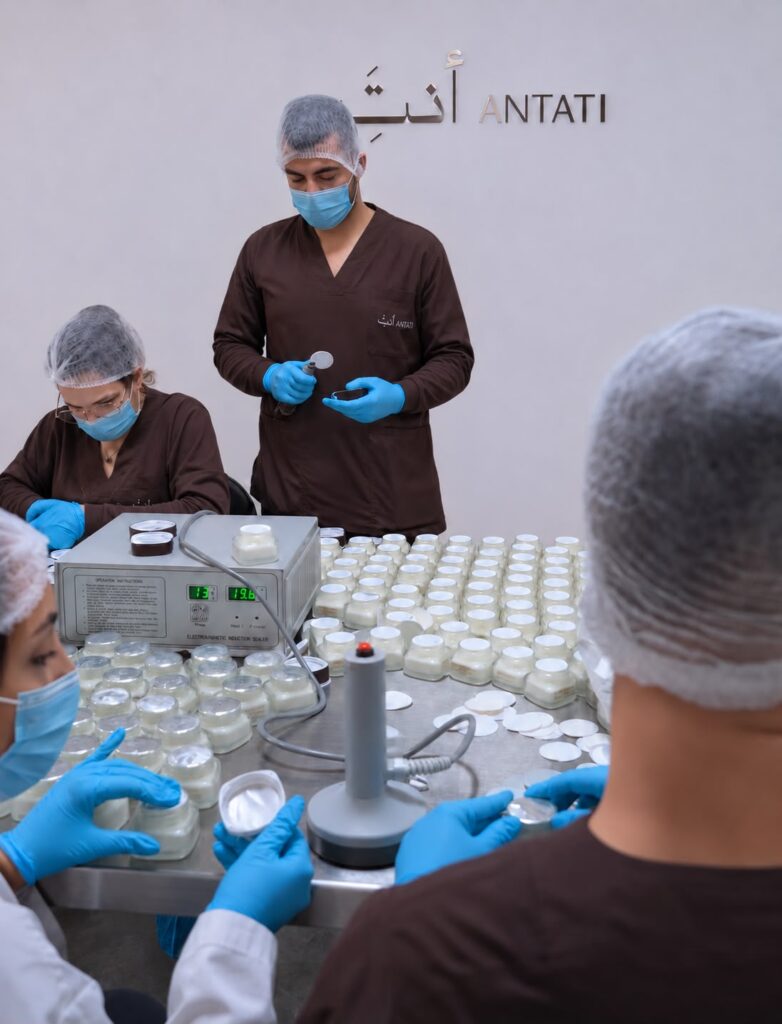
For Braidy, the idea behind Antati began with what he perceived as a gap in the global skincare industry, particularly when it came to products developed for consumers across Southwest Asia and North Africa (SWANA).
He argues that many established Western skincare brands have traditionally developed products around different skin characteristics and environmental conditions, with insufficient consideration for the needs of consumers in the Arab region.
“We do not have the same type of skin. We do not have the same type of environment. We do not have the same type of guts. We do not eat the same things,” he told NOW.
Braidy said an audit he conducted five years ago indicated that 92 percent of consumers in the market he was examining were using traditional Western skincare brands, including La Roche-Posay, Avène and Estée Lauder.
He saw an opportunity to develop an alternative that combined scientific research with a greater understanding of regional skin concerns, including pigmentation, sensitivity, acne and the effects of heat and sun exposure.
His ambition was not simply to create another beauty label, but to develop a brand that could serve consumers across the wider SWANA region while remaining rooted in Lebanon.
“I am more than proud to be Lebanese. I want to create jobs in Lebanon,” he said, explaining that local production was central to the company’s founding philosophy.
From four products to a growing production facility
Antati’s development has been considerable since its early days. The company initially launched with four products, operating from a small laboratory space it rented from another facility while navigating the licensing requirements needed to establish its own production operation.
Braidy said he had initially anticipated annual growth of between five and 10 percent. Instead, he reported that the business grew by 186 percent between 2024 and 2026, attributing the expansion largely to increasing customer demand.
That growth has allowed the company to reinvest in its operations, expand its product range from four to 13 products and establish its own 1,000-square-metre laboratory in Aley.
The company’s marketing strategy has also played an important role in its development. Rather than relying exclusively on conventional advertising, Braidy says much of Antati’s growth has come through word of mouth, with existing customers recommending products to relatives, friends and colleagues.
He described the pattern as customers sharing their experiences with family members and friends, who then become interested in trying the products themselves.
For Braidy, these recommendations are particularly valuable because they reflect consumer confidence and the experience of using the products rather than simply responding to an advertising campaign.
The strategy also fits into his broader vision of building a relationship between the brand and its customers. Antati places considerable emphasis on direct engagement, product consultations and helping consumers understand which formulations are appropriate for their individual skin concerns.
The company is also developing its physical retail presence, rather than depending entirely on online sales or distribution through large beauty retailers.
I am more than proud to be Lebanese. I want to create jobs in Lebanon
Braidy said he favours a model similar to that of international brands such as Kiehl’s and Aesop, where customers can visit dedicated stores and receive guidance from people familiar with the products.
“I am a firm believer that the experience of skincare needs to be face-to-face,” he said, explaining that customers should have the opportunity to meet skincare specialists, ask questions and receive recommendations.
He does not see Antati being widely distributed through major retailers such as Sephora in the immediate future. Instead, he wants to establish standalone stores in selected markets, where the company can retain greater control over the customer experience.
The recent openings in Aley and Zahle form part of this strategy, with further expansion planned within Lebanon, including a potential store in Tripoli. Internationally, Braidy identified cities such as Dubai and Baghdad as possible markets for future standalone locations.
A Lebanese product with international ambitions
Antati’s international ambitions are already taking shape, with the United Kingdom among the markets in which the company has established a presence.
Braidy said the decision to expand into the UK was influenced partly by his own presence there, allowing him to maintain direct contact with customers.
The brand’s Halal certification is another element of its international positioning. According to Braidy, the certification process considers not only the ingredients used in the finished products but also the sourcing of raw materials.
He sees this as an important distinction for consumers seeking skincare products that align with their ethical and religious requirements.
The brand also positions itself within the clean beauty market, emphasising formulations that avoid unnecessary additives and potential irritants. Its products are marketed as vegan and cruelty-free, while its manufacturing operation places importance on internationally recognised production standards.
For a skincare company, these considerations are particularly important. Products applied directly to the skin require careful attention to formulation, ingredient sourcing, manufacturing processes and quality control.
During the visit to its laboratory, the investment in production infrastructure was particularly striking. It demonstrated that the ambition behind Antati extends beyond packaging and branding, with the company seeking to build its own manufacturing capacity in Lebanon.
Braidy said the facility operates according to Good Manufacturing Practices (GMP) and ISO standards. The company has also recently secured its industrial licence following a lengthy process.
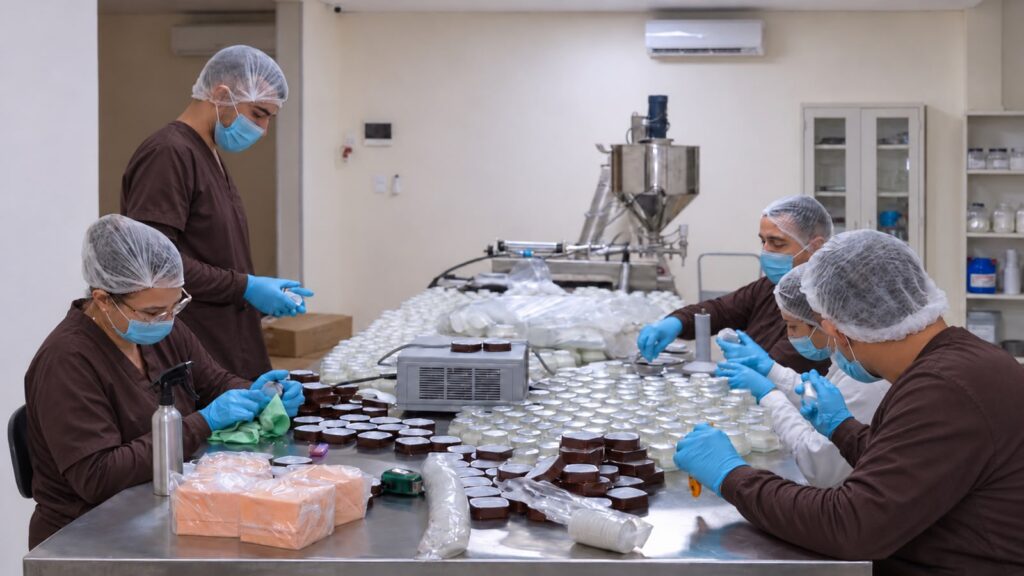
The objective is to demonstrate that Lebanese-made skincare can be developed and manufactured to meet the expectations of international consumers, rather than being viewed as a less competitive alternative to imported products.
Manufacturing in Lebanon: ambition versus bureaucracy
However, building a manufacturing business in Lebanon has brought its own challenges.
Braidy identified the lack of digitalisation across public institutions as one of the main obstacles facing the company, particularly when exporting products.
“I am a firm believer that the experience of skincare needs to be face-to-face,” he said, explaining that customers should have the opportunity to meet skincare specialists, ask questions and receive recommendations.
He explained that businesses seeking to export cosmetic products must obtain documentation from several ministries, including Health, Industry and Economy. Each institution has its own procedures, requiring physical visits and paperwork that he believes could be handled through a centralised digital system.
The process, he said, can take several days and creates unnecessary delays for businesses attempting to operate efficiently and access international markets.
“This is one of the biggest hurdles,” he said, arguing that public institutions should be facilitating economic activity rather than creating additional obstacles for manufacturers.
Obtaining the necessary industrial licence for Antati’s new laboratory was another lengthy process.
Beyond administrative difficulties, he also expressed concern about the level of regulatory oversight in Lebanon’s cosmetics industry. He called for stronger inspections, updated lists of prohibited ingredients and greater enforcement against manufacturers that do not comply with appropriate safety requirements.
His argument is that stronger regulation would benefit consumers while also protecting legitimate manufacturers that invest in research, production facilities and quality standards from competitors operating with fewer safeguards.
For a country attempting to revive its productive economy, this is an important distinction. Promoting locally made products is not enough if businesses are not supported by an effective regulatory framework that guarantees quality, protects consumers and allows manufacturers to compete fairly.
Braidy believes Lebanon has the potential to develop a stronger manufacturing sector, but says this requires a government that recognises the importance of businesses investing in local production and creating employment.
More than a Lebanese skincare label
Over the next three to five years, Braidy’s priority is to expand Antati’s physical presence both within Lebanon and internationally, while continuing to develop its product range. The company is also looking to introduce three additional products by the end of 2027.
For him, the objective is to establish Antati as a recognised skincare brand in its own right, rather than one that relies solely on its Lebanese identity to attract consumers.
Antati’s investment in its laboratory, its focus on the SWANA market and its plans for international expansion offer an example of what locally developed businesses can attempt when they invest in production, research and long-term growth.
Ultimately, the ambition is not simply to put a Made in Lebanon label on a skincare product. It is to demonstrate that a Lebanese-made product can stand alongside international competitors on the strength of its formulation, quality and manufacturing standards.