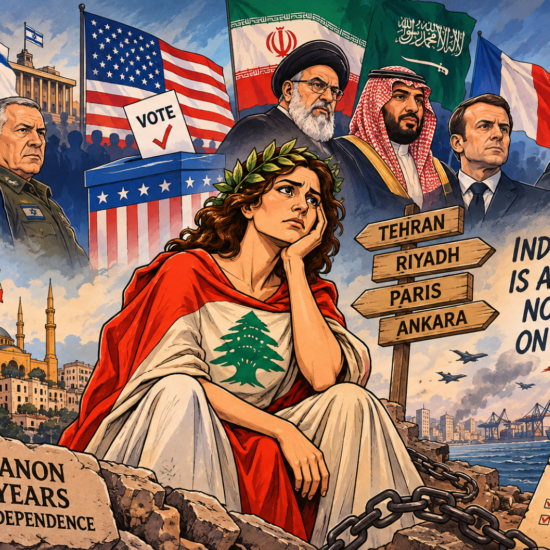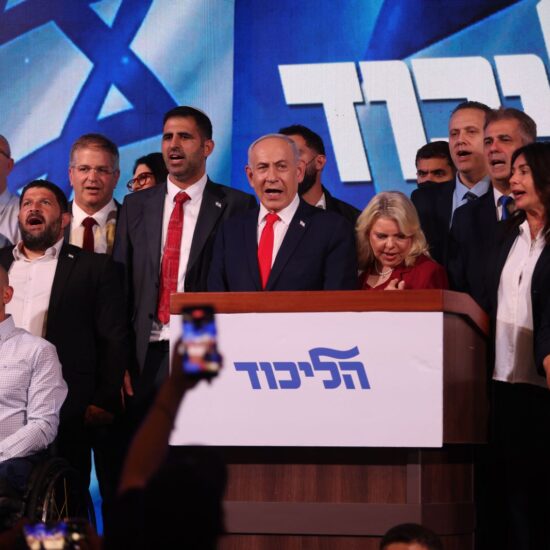
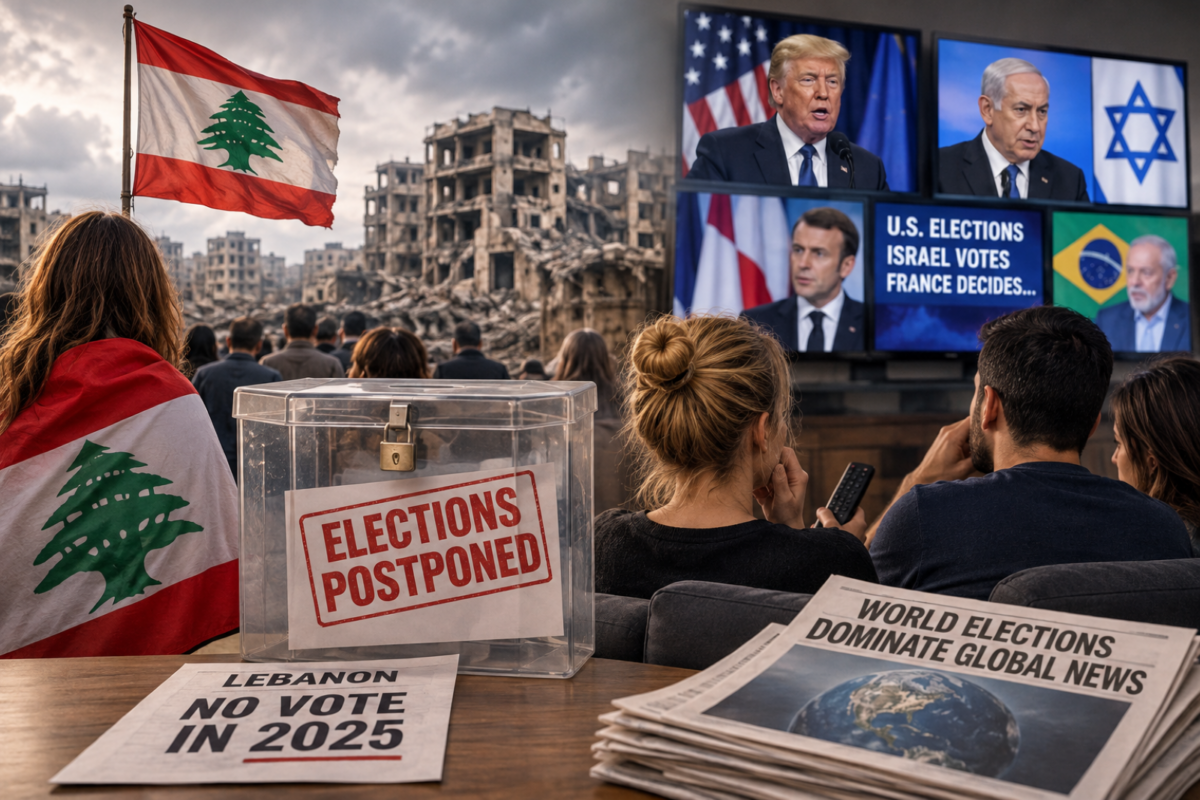
Much attention in Lebanon has been devoted to the Israeli and American elections, with many self-appointed experts putting out dubious analysis to connect each election to our currently sorry state of affairs. However, no one thought to mention that we were supposed to have parliamentary elections in Lebanon this year, but they were postponed due to the war. As a result, millions of people in Lebanon were denied their political right to elect new representatives, especially after more than three years of war, destruction, and a worsening economic crisis. However, no one seems alarmed that we didn’t vote this year.
Whatever political hope raised by the October 17 protests and the rise of the “change” bloc, have been paralyzed since Hezbollah hijacked the country into two destructive wars. Self-professed advocates of reform and change found themselves enforcing Hezbollah’s moral binary, which split the country into “patriots” and “traitors”
Whatever political hope raised by the October 17 protests and the rise of the “change” bloc, have been paralyzed since Hezbollah hijacked the country into two destructive wars. Self-professed advocates of reform and change found themselves enforcing Hezbollah’s moral binary, which split the country into “patriots” and “traitors”. This has led to the stifling of public debate around the war and its causes, and as a result no genuine opposition to Hezbollah has emerged. Even a new government couldn’t prevent Hezbollah from once again initiating a war with Israel. This is an indictment of progressive and leftist forces in Lebanon.
On the other hand, the political establishment doesn’t appear in a hurry to change anything. Walid Jumblatt continues to vacillate between criticism of Hezbollah and supporting it, with no clear explanation as to why. There were some misguided and shortsighted attempts to drive a wedge between Nabih Berri and Hezbollah, to deprive it of broad communal support, all of which failed. Hezbollah’s traditional Christian opponents, especially the Lebanese forces, have failed to advance any meaningful obstacle to Hezbollah. Instead, they allied with them in last year’s Beirut municipal elections to safeguard narrow communal interests which don’t appear to benefit anyone.
However, one would find no shortage of enthusiastic discussion of foreign elections. France, Israel, Brazil, and the United States appear to occupy more time in people’s minds than their own country. Take the Michigan Senate race, for example: some self-appointed Lebanese experts were alarmed at the prospect of a “Muslim Brotherhood” member becoming a senator, whereas others were more enthusiastic in their support for the “pro-Palestine” candidate, as if a displaced Lebanese who lost their home would recover it if said candidate won. This is nothing but another disappointing display of nonsensical tribal and ethnic instincts from a failed state.
Free and fair elections, ones which bring about momentous change, can only take place in a society which is open to debate and reform.
Free and fair elections, ones which bring about momentous change, can only take place in a society which is open to debate and reform. Americans engage in messy and spirited debate every election season, and from this mess one group or the other successfully advances its interests. Unlike the farce of politics in Lebanon, American political groups have tangible policy agendas on which they run, and the voter has no shortage of information on which to base their choice. In comparison, Lebanese voters have little access to information that can help them make an informed and conscious decision upon voting.
In the same way that Lebanese racists post about “immigrants in the West” because they can’t practice their own xenophobia, leftists and Hezbollah supporters hold up pro-Palestine politicians in the West as proof that “they are on the right side of history”.
I believe this absorption with foreign elections is a distraction, a way to escape the bleak prospects that face Lebanon, especially in the coming weeks and months. It’s also a convenient way to project our own identitarian anxieties without risking offense against other Lebanese. In the same way that Lebanese racists post about “immigrants in the West” because they can’t practice their own xenophobia, leftists and Hezbollah supporters hold up pro-Palestine politicians in the West as proof that “they are on the right side of history”. In the meantime, no one is indignant that their politics are only a spectator act.
Mohammad el-Sahily is a student and activist. He tweets @moesahily.
The views in this story reflect those of the author alone and do not necessarily reflect the beliefs of NOW.