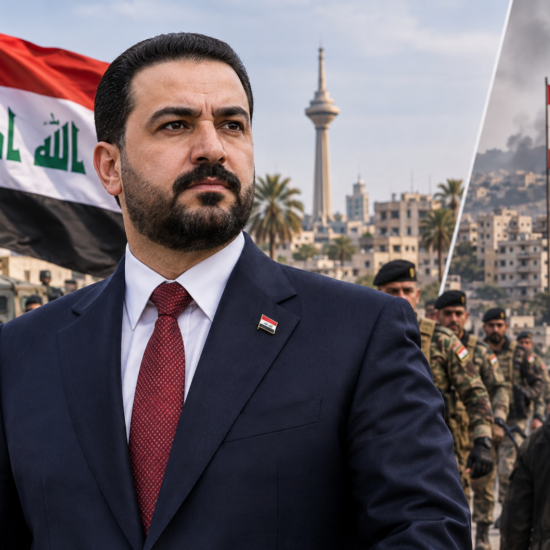

Lebanon marks another Independence Day with part of its territory under Israeli occupation and its government still unable to exercise exclusive authority over weapons and decisions of war and peace. Hezbollah maintains an armed organization beyond state control. Meanwhile, traditional leaders are seeking the protection that will secure their political survival. Independence remains hostage to both foreign occupation and the bargains that prevent the Lebanese state from governing.
The confrontation between Iran and the United States exposes the cost of our hesitation. Tehran is seeking to circumvent the American naval blockade and sustain oil exports to China, pursuing policies that risk further regional escalation. Lebanon’s authorities, meanwhile, continue to proceed cautiously over implementing their own disarmament decisions. As Iran pursues its interests regardless of the consequences for its neighbors, Beirut must assume responsibility for protecting Lebanon from being drawn further into that confrontation.
The weakening of Hezbollah and the fall of the Assad regime disrupted the arrangements through which much of Lebanon’s old establishment secured its influence. These leaders now face a choice between accepting institutions that limit their power and finding protection that allows them to preserve it.
The obstacle is political. The weakening of Hezbollah and the fall of the Assad regime disrupted the arrangements through which much of Lebanon’s old establishment secured its influence. These leaders now face a choice between accepting institutions that limit their power and finding protection that allows them to preserve it. The danger is that too many will choose the latter.
Some still need Hezbollah’s parliamentary support and its ability to influence government decisions. They therefore have an interest in keeping it politically indispensable, even when doing so obstructs disarmament. Others are looking to emerging regional alliances for a replacement patron. Their search may take them in different directions, but it serves the same purpose of securing their position inside Lebanon through power acquired outside its public institutions.
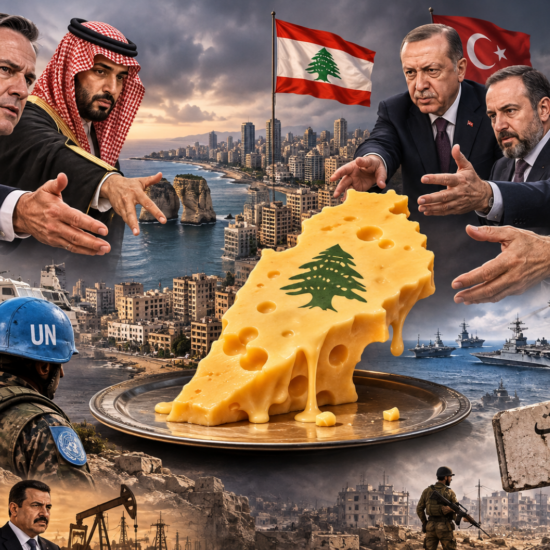
This is where Hezbollah’s survival strategy meets the establishment’s ambitions. Political leaders can offer cover, compromise and delay. Hezbollah can offer votes and influence. Each concession postponing state control over weapons gives the party more time to reorganize. Each politician who treats its armed power as a useful bargaining asset makes that task easier. Lebanon risks seeing an opportunity to restore sovereignty negotiated away by leaders concerned with recovering their own authority.
The arrests between Batroun, Bsharri and Koura give that concern immediate relevance. According to L’Orient Today, prosecutors initiated proceedings against five men identified as Hezbollah members, and seized documents reportedly listed weapons in several areas, including Koura. The detainees gave contradictory accounts and denied plans to attack Christians. The investigation must establish their purpose and whether the evidence points to a wider armed network. The government must ensure that political connections cannot restrict its scope or determine its outcome.
Yet the political force needed to sustain such action remains missing. Those claiming to support change have failed to build a common programme and the parliamentary discipline required to confront entrenched interests. The government consequently faces organized resistance without an equally organized constituency supporting the implementation of its decisions. The old establishment retains access through longstanding staff, advisers and ministers backed by traditional parties. Public agreement on sovereignty must translate into coordinated votes, scrutiny and sustained pressure when those networks obstruct it.
Bkerke has a historical responsibility in precisely such a moment. In September 2000, Patriarch Nasrallah Boutros Sfeir and the Maronite bishops called for Syrian withdrawal, five years before it happened
Bkerke has a historical responsibility in precisely such a moment. In September 2000, Patriarch Nasrallah Boutros Sfeir and the Maronite bishops called for Syrian withdrawal, five years before it happened. They recognized that the country needed an authoritative national position while the outcome was still uncertain. That example matters today because Lebanon again needs institutions capable of gathering people around the sovereignty of the state.
Bkerke should now use its authority to help build that support. Its attention to minor internal matters, and the impression of business as usual, fall short of the gravity of the crisis. A sustained initiative bringing political and civic forces together behind exclusive state authority would give practical meaning to its historical role. Every community’s security depends on whether the government can enforce the law and protect citizens across the country.
Hezbollah must surrender its weapons and dismantle its independent military and security structures. Its leadership has no right to expose Lebanese families to another war. The government must publish a clear implementation timetable, empower the Army to carry it out and protect the judiciary from political interference
Hezbollah must surrender its weapons and dismantle its independent military and security structures. Its leadership has no right to expose Lebanese families to another war. The government must publish a clear implementation timetable, empower the Army to carry it out and protect the judiciary from political interference. Parliament must hold ministers accountable for progress and obstruction alike.
Whatever government emerges in Israel, Lebanon needs a single authority pursuing full Israeli withdrawal, the return of displaced families and the deployment of the Lebanese Army across its territory. These objectives require a government whose negotiating position is supported at home and whose decisions bind every party.
The old establishment must be denied another bargain at Lebanon’s expense. We must organize behind the government’s exercise of sovereignty and insist that it acts before Hezbollah’s next reckless decision brings another war. This Independence Day calls for the courage to enforce decisions already taken and recover the authority to decide our country’s future.
Farid Fakherddin is a Lebanese businessman and Board Member of the Lebanese Private Sector Network (LPSN).
The views in this story reflect those of the author alone and do not necessarily reflect the beliefs of NOW.