
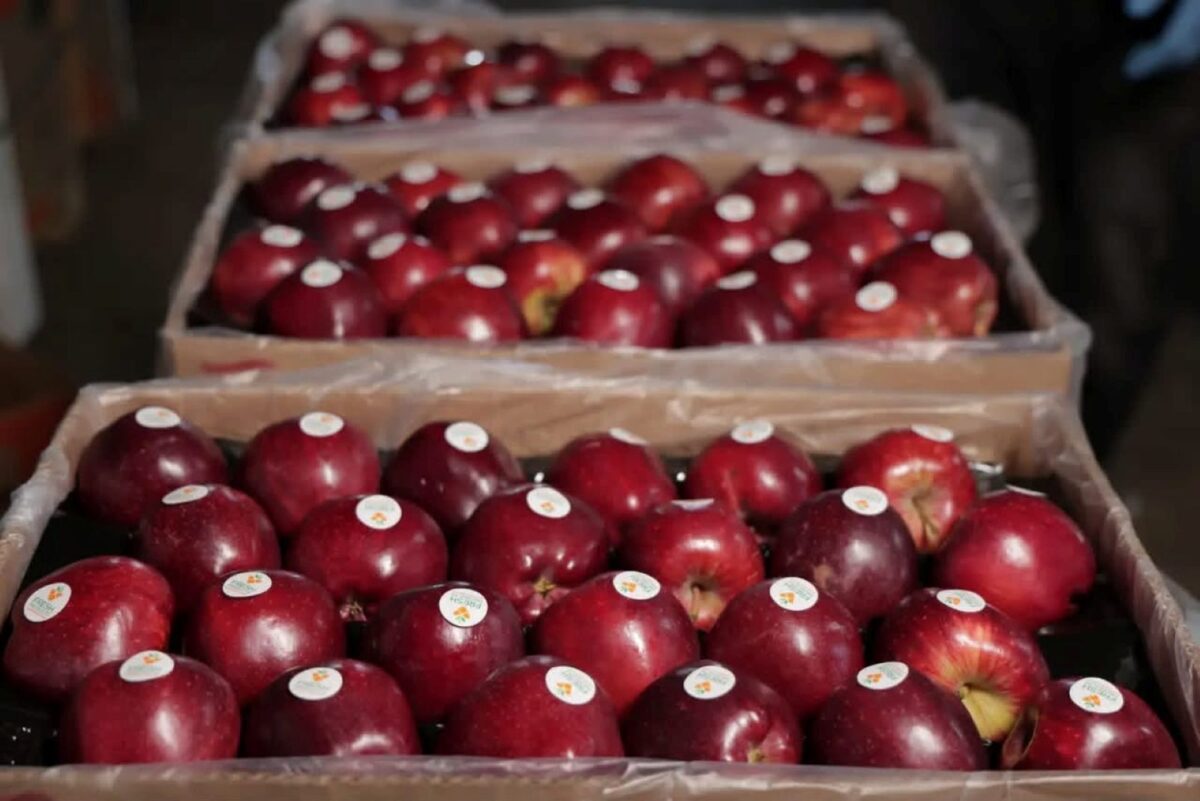
Photo credit: René Moawad foundation Sadder project
Lebanon’s apple sector is facing a familiar problem: a substantial harvest, limited market opportunities and farmers struggling to secure a profitable return for their produce. But as the country continues to grapple with agricultural and economic challenges, a new initiative led by the René Moawad Foundation is attempting to change how Lebanese apples reach international markets.
Through its SADDER project, which is supported by the Kingdom of Netherlands, the foundation has helped open export opportunities in the United Kingdom and several West African markets. While the initial shipments remain relatively small, the initiative seeks to address longstanding weaknesses in Lebanon’s agricultural sector, from traditional cultivation methods and limited varieties to inadequate sorting, packaging and export infrastructure.
Lebanon’s apple production was estimated at between 150,000 and 200,000 tones in 2026, according to Michel Moawad, a founding member and current Executive Director of the René Moawad Foundation, Lebanon (RMFLB). The Ministry of Agriculture has put this year’s harvest at approximately 200,000 tones. Yet absorbing this production remains a challenge, with limited domestic demand, competition and difficulties accessing markets that offer better commercial returns.
For many farmers, the problem is not simply producing enough apples, but finding buyers willing to pay a price that makes harvesting and selling worthwhile.
Speaking to NOW, Moawad explained that the SADDER project aims to rebuild the agricultural value chain, starting with the requirements of international markets and working backwards towards the farms themselves. This involves identifying potential markets, studying their requirements and ensuring that production, handling and packaging meet the necessary standards.
“The main idea is to work on the whole value chain, not just on part of the value chain,” he said, arguing that the sector remains vulnerable when one stage of production is weaker than the others.
Following market studies and the establishment of commercial links, the pilot project succeeded in sending shipments to the UK, the Democratic Republic of Congo, Ivory Coast and Togo. Moawad described the initial exports as proof that Lebanese apples can reach these destinations when the necessary requirements are met.
“We have proven the feasibility now,” he said. “We have a market. It’s a high-margin market, and apples can arrive there if worked out.”
However, moving beyond a successful pilot will require more than identifying new buyers. It means addressing the weaknesses that have historically prevented Lebanese agricultural products from competing more widely abroad.
Beyond traditional varieties
One of the sector’s main difficulties is its limited diversification. According to agriculture engineer and international consultant Ghassan Feghali, Lebanese apple production remains heavily concentrated around two traditional varieties: Golden and Starking.
Feghali, owner of Liban Village cooperative, which specializes in handling, sorting and exporting local produce, including apples, cherries and peaches, believes this dependence limits the sector’s ability to respond to changing international demand.
“You can’t be limited to two varieties only. You need to expand the range. You need to diversify,” he told NOW.
International retailers offer consumers a much wider selection, including Gala, Pink Lady and Red Delicious. Lebanon’s reliance on a narrower range of varieties also creates difficulties for farmers, particularly when large quantities become ready for harvesting within a relatively short period.
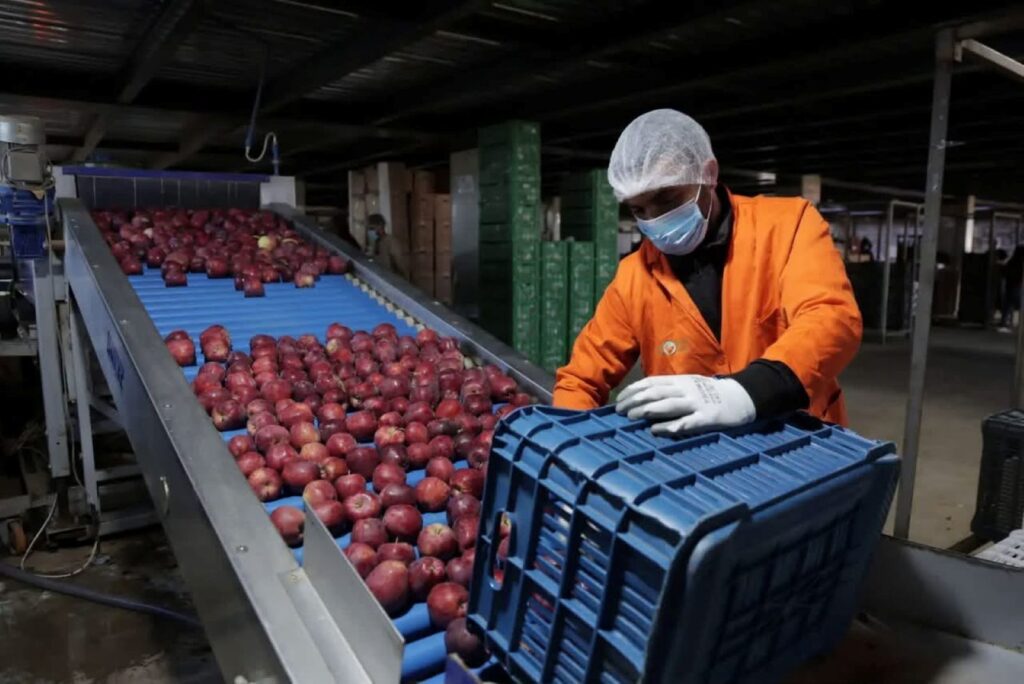
Photo credit: René Moawad foundation Sadder project
Introducing varieties with different harvesting seasons could spread the workload over several months, reduce pressure on agricultural labor and allow producers to serve a wider range of consumers, Feghali argued.
The challenge also lies in the condition of existing orchards and the cultivation methods used. Although Lebanon benefits from favorable climatic conditions, particularly in its mountainous agricultural areas, these advantages do not automatically translate into internationally competitive production.
Feghali pointed to orchards containing trees that are 50, 60 or even 70 years old, arguing that renewing plantations with more suitable cultivars could improve productivity and produce more uniform fruit.
He also highlighted the need to improve agricultural practices, including pesticide management, harvesting techniques and the handling of apples after they leave the tree.
Through its agricultural programmes, the foundation has been working with farmers to introduce improved cultivation methods and internationally recognized standards, including GLOBALG.A.P., which establishes requirements for good agricultural practices.
Feghali said more than 550 apple farmers had received coaching to help them meet international requirements, particularly concerning pesticide use and production practices.
Such standards are increasingly important for exporters seeking access to markets where food safety, traceability and pesticide-residue limits are closely monitored. Without the appropriate certifications and documentation, even good-quality produce can struggle to enter higher-value markets.
The infrastructure gap
Improving production at the farm level is only part of the challenge. How apples are handled, sorted and packaged after harvesting can determine whether they qualify for export.
Feghali identified inadequate post-harvest infrastructure as one of the industry’s most significant obstacles. He argued that Lebanon lacks sufficient modern facilities capable of handling large quantities of apples according to international sorting, grading and packaging requirements.
He estimated that existing facilities suitable for preparing apples for export can handle only around 5 to 10 percent of national production. He also said a substantial proportion of Lebanese apples is exported without proper pre-sorting, with fruit often moving directly from orchards to markets.
Traditional handling methods, manual sorting and inadequate transportation can result in bruising and other defects, reducing the proportion of produce that meets premium-market specifications.
According to Feghali, only around 15 to 20 percent of Lebanese apple production currently qualifies as premium-quality fruit. He believes this proportion could be significantly improved through better agricultural practices, improved handling and investment in appropriate infrastructure.
His proposed solution includes establishing a centralized, modern packing facility in the Lebanese mountains that could serve several agricultural areas. This would allow producers to benefit from standardized sorting, grading and packaging rather than relying on a limited number of small facilities.
The SADDER project is attempting to address part of this problem by supporting investment in existing private-sector facilities.
Moawad explained that the foundation has been visiting private-sector premises, including Liban Village in Amchit, to identify the upgrades required to meet international standards. It plans to co-invest with private companies to improve their capacity to sort apples by size, color and variety, as well as upgrade packaging and other post-harvest processes.
Feghali has direct experience of the benefits of such investment. He said Liban Village obtained BRCGS certification approximately two years ago with support from the foundation’s programme.
The certification, which requires facilities to comply with internationally recognized food-safety and operational standards, has helped the cooperative access export opportunities that would otherwise have been more difficult to pursue.
Feghali described international certification as a passport for Lebanese agricultural products to reach foreign markets, where buyers increasingly require evidence that produce has been handled, sorted and packaged according to established standards.
His experience demonstrates how technical support and investment can help Lebanese producers become more competitive. However, he cautioned that these improvements remain limited compared with the scale of national production.
Connecting farmers to international markets
Beyond improving production and infrastructure, the foundation’s approach seeks to give farmers more predictable access to buyers and better prospects of earning a return on their investment.
Moawad said the foundation intends to expand its work through contract farming, creating arrangements under which growers who follow the required specifications and production practices have a clearer route to market.
The model builds on the foundation’s previous work with other Lebanese agricultural products, including avocados, grapes, cherries and potatoes.
Moawad explained that the programme began in 2017 with a small shipment of potatoes from Akkar before expanding to other products and regions. The experience provided a basis for extending the same approach to apples and potentially other agricultural products.
The project also involves cooperation with public institutions. Moawad highlighted the upgrading of the agricultural laboratory at Fanar, which he said had previously lacked the necessary specifications to serve exporters’ testing requirements.
The improvements allow exporters to have samples tested locally rather than sending them abroad, reducing logistical complications and additional costs.
For Moawad, developing the sector requires coordination between farmers, exporters, private companies, the Ministry of Agriculture and organizations supporting agricultural development.
A government role that cannot be overlooked
While initiatives led by foundations and private businesses are helping address some of the sector’s shortcomings, the long-term development of Lebanon’s agricultural exports cannot depend on individual projects alone.
The Ministry of Agriculture has also outlined measures to support the 2026 apple season, including efforts to open new markets, connect farmers with exporters, facilitate international trade links and address logistical difficulties.
Feghali acknowledged that the ministry has been attempting to assist the sector within its limited financial resources. However, he believes further investment and stronger coordination are necessary, particularly when it comes to modernizing packing infrastructure and opening additional international markets.
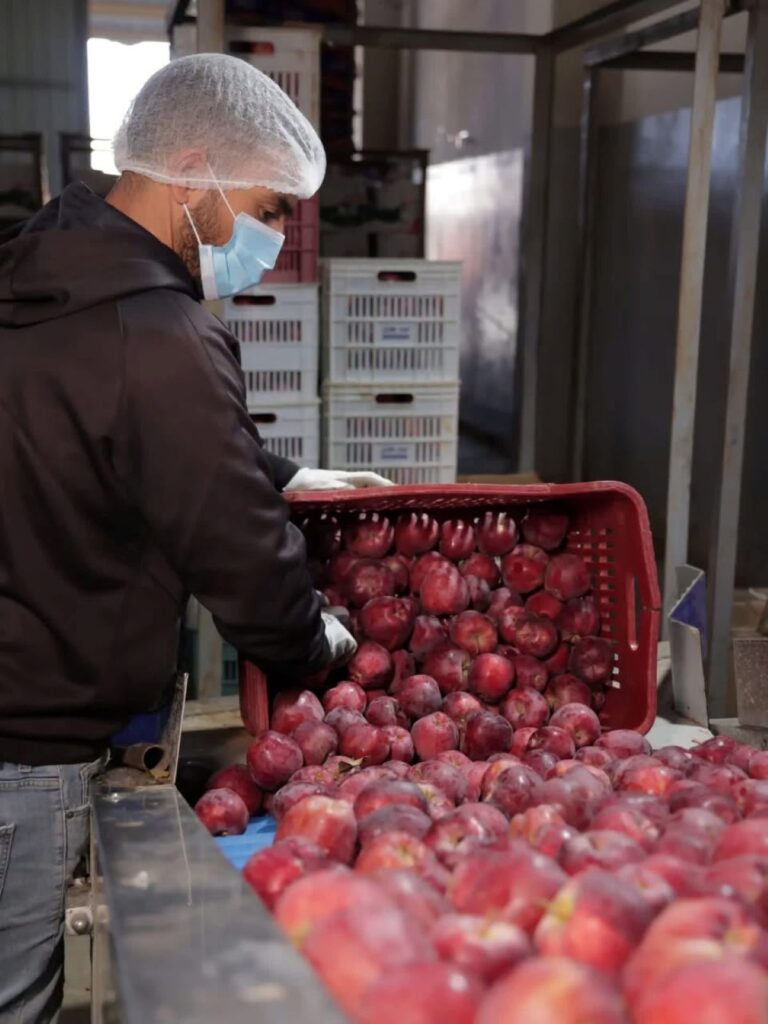
Photo credit: René Moawad foundation Sadder project
India, for instance, could represent an opportunity for Lebanese apples, but Feghali said additional documentation and trade arrangements would be needed to facilitate access.
The initial exports under the SADDER project demonstrate that Lebanese apples can reach markets beyond their traditional destinations. But turning these shipments into a sustainable export industry will require a much broader transformation.
More farmers will need to adopt improved agricultural practices, diversify varieties and meet international production standards. The country will also need modern packing and storage facilities, reliable transportation and stronger commercial agreements with international buyers.
Moawad views the current phase as the beginning of a longer process that must expand to include more farmers and private-sector partners while strengthening the entire value chain.
“Lebanon’s apple sector does not lack agricultural potential. Its challenge has been turning that potential into a competitive and sustainable industry,” he said.