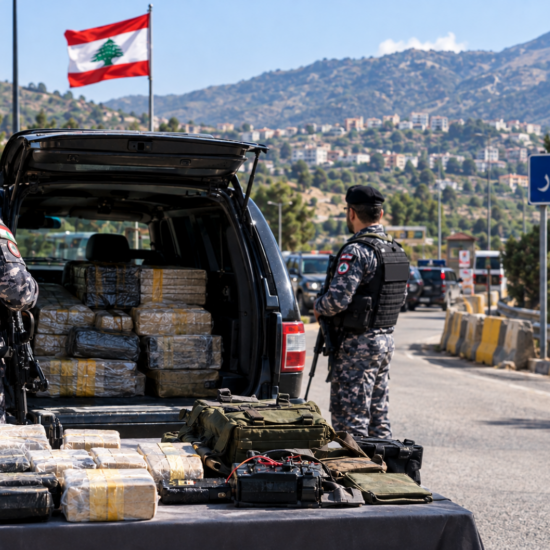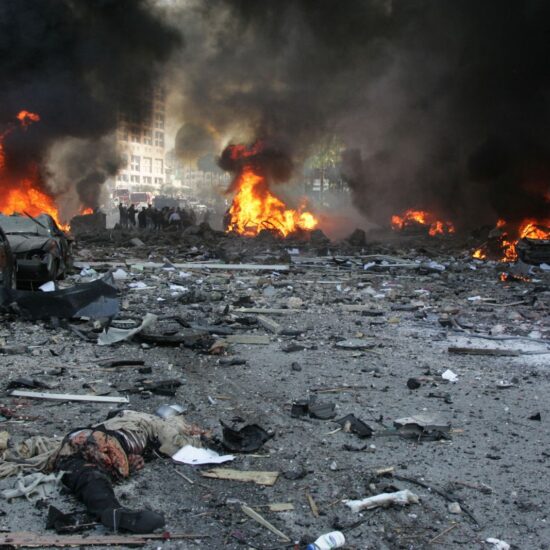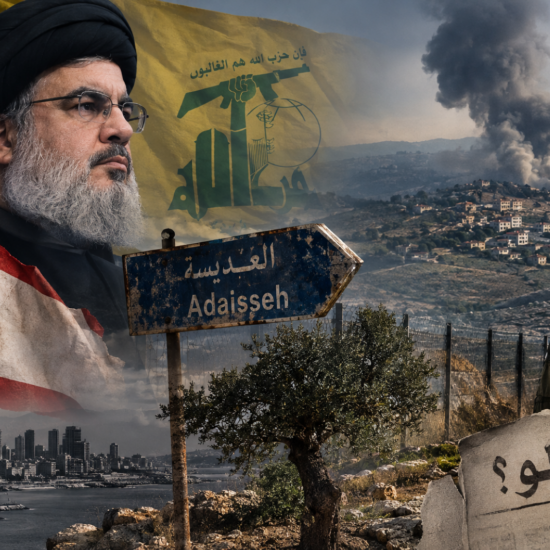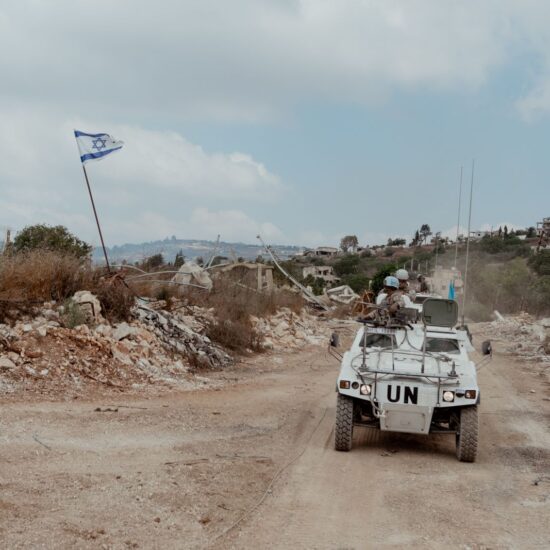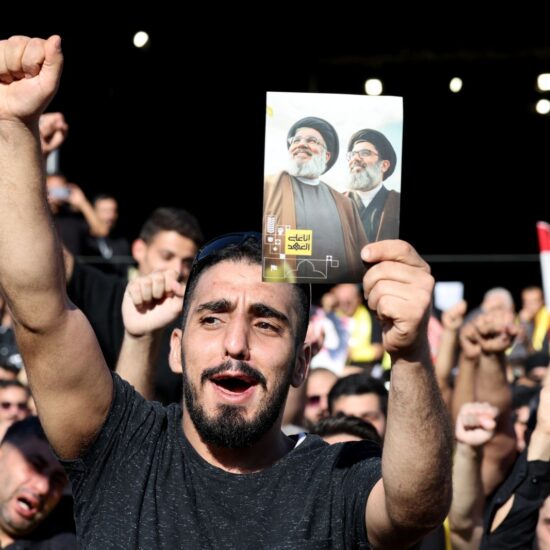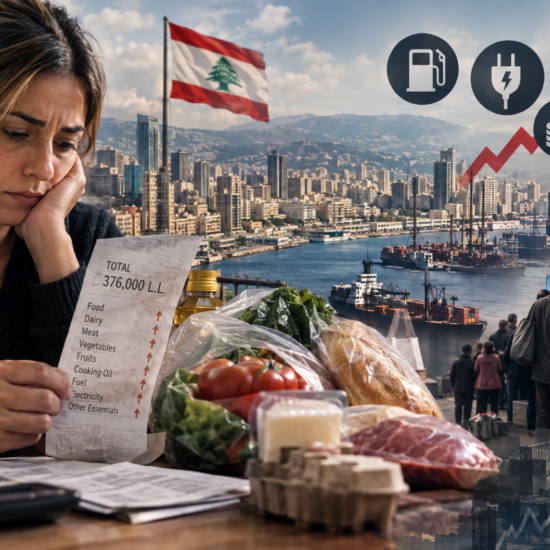
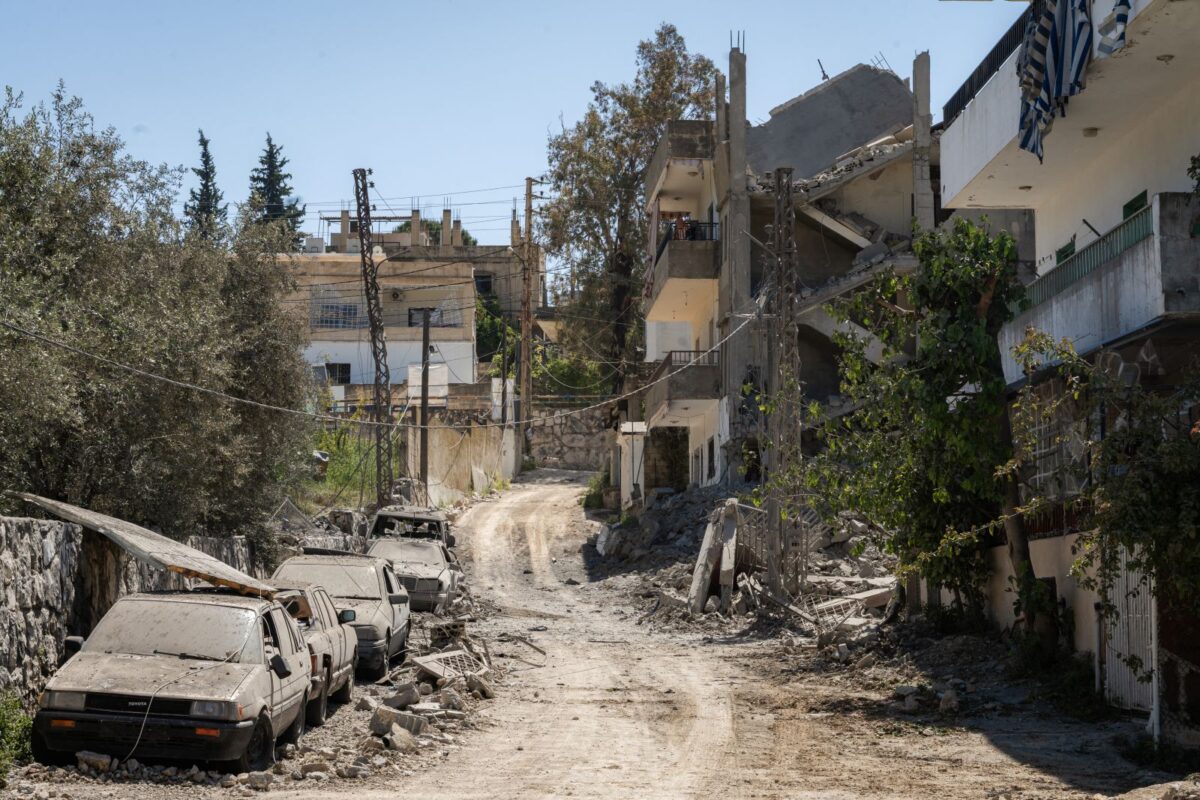
A street lined with damaged buildings and vehicles is seen in the village of Harouf in the Nabatieh district of southern Lebanon on May 14, 2026. Despite the ceasefire announced on April 16, the Nabatieh district continues to be targeted by Israeli attacks. (Photo by Silvia Casadei / Middle East Images / Middle East Images via AFP)
Next month I turn fifty. I was born in the second year of a war, and I have never lived through a stretch of calm long enough to call it a habit. So when Sheikh Naim Qassem said over the weekend that resistance is the only road to liberation, I felt I had standing to answer. What follows is imagined. His positions are the ones he stated. My answers are mine.
Qassem: Resistance is the only path to liberating the land. Lebanon’s experience proved it can liberate land and people.
Me: In May 2000, the south was liberated. That same year, I left Lebanon. As the Israeli occupation ended, I watched something else take its place: the domination of Hezbollah and Nabih Berri, under Syrian tutelage and with Iranian sponsorship behind them. I didn’t flee the occupier. I fled what replaced him. Liberation from one master isn’t freedom if it hands you another. Then came 2006, Syria, and two more wars in three years, and home kept moving further away.
A road that never arrives isn’t a road. It’s a treadmill.
Qassem: There is no military parity with Israel. But we continue, whatever the price.
Me: Thank you for the honesty. When the leader of the militia says there is no parity, “whatever the price” stops being a slogan and becomes a question: who pays? Last week, Prime Minister Nawaf Salam told Parliament what the last three years of war have cost: more than 8,000 lives and a bill that will exceed $20 billion and may pass $27 billion. Those numbers have names, and I know some of them. A price set by one man and settled by everyone else isn’t resistance. It’s a bill sent to people who never ordered the meal.
Qassem: Israel still strikes and still holds Lebanese ground. Diplomacy hasn’t removed it. Only resistance did in 2000.
Me: That’s your strongest argument, and it deserves a real answer. The prime minister himself admitted that the attacks haven’t stopped and that Israel hasn’t withdrawn from all Lebanese territory. But look at what the arms achieved: they didn’t prevent two wars, and they didn’t protect the lives and homes those wars destroyed. Meanwhile, a state negotiating with an armed party outside its control negotiates with one hand tied behind its back. You can’t ask the state to win at the table while you keep deciding on the battlefield.
Qassem: A prolonged situation, whether days or months, isn’t defeat.
Me: Time is a weapon only for those who aren’t spending it. I have spent mine: more than a quarter of a century abroad, looking at home from a distance and unable to return and live there. Not because I stopped loving it, but because it became a place burned by wars, corruption, hatred, and violence. You call it steadfastness. I call it the erosion of a country, one year at a time, and I am one of its exiles.
Qassem: Palestine is the central cause, and we must support it by every means.
Me: Support it, yes, the way the other Arabs do: politically, diplomatically, humanitarianly. Not more. Arab states stand with the Palestinians without being asked to burn themselves down for it. Lebanon is not the guarantor of the Palestinian cause, and no one gave the party a mandate to make it so. Support, not sacrifice. No Palestinian is freer because a Lebanese child is killed.
Qassem: So what is your alternative?
Me: Peace. I know how that word sounds here, so let me make it concrete. Golda Meir, Israel’s former prime minister, is credited with this line:
“We will only have peace with the Arabs when they love their children more than they hate us.”
I agree, because peace means thinking of our children’s future, not making death their vocation. That is the choice Egypt made in 1979 and Jordan in 1994, and the choice the UAE, Bahrain, and Morocco made in 2020 with the Abraham Accords: their people’s future over permanent confrontation. The result wasn’t surrender. It was flights, trade, students, and governments investing in their own children rather than in endless war.
Peace, done properly, is not a gift to Israel. It is a negotiated package: full Israeli withdrawal, the release of Lebanese prisoners, and the return of the displaced, the very items the prime minister listed as unresolved. It is also the door to reconstruction. He told Parliament the state cannot rebuild alone and needs Arab and international funding, and that funding follows one condition: a state that alone decides on war and peace.
So ask what Lebanon would look like if we loved our children more than we loved the war. We would have a state with a monopoly on arms, a rebuilt port, banks that function, and a generation that stays.
Sheikh Naim, I’m not asking you to love Israel. I’m asking you to love Lebanon’s children more than you love the fight. I have looked at my country from abroad for more than a quarter of a century, and I would like to look at it from inside. The price has been paid. Let it finally buy something.
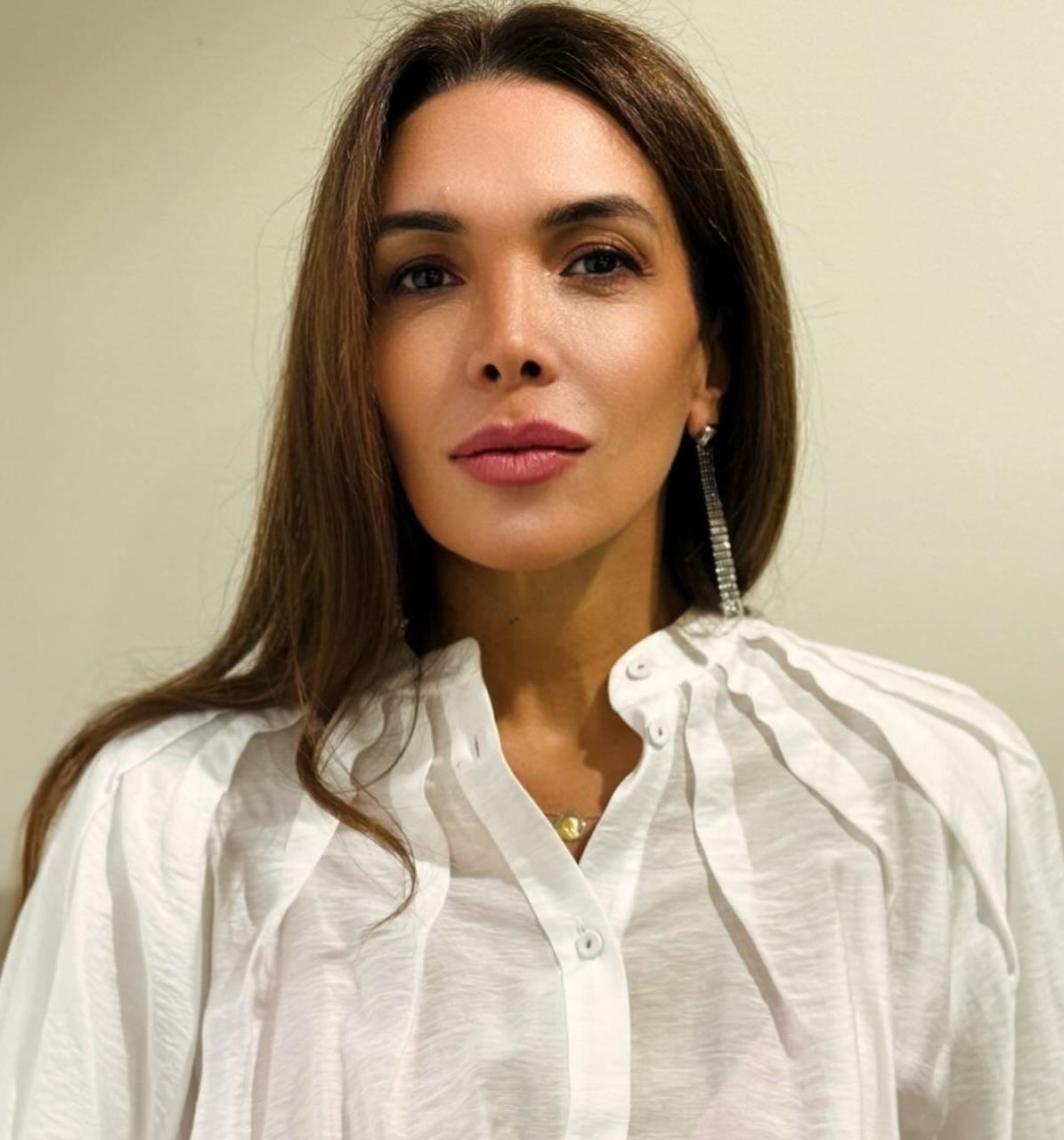
Elissa E Hachem is a journalist and political writer specializing in regional affairs and governance. Former Regional Media Advisor at the U.S. State Department’s Arabic Regional Media Hub, with broad experience in strategic communication across government and private sectors.
The views in this story reflect those of the author alone and do not necessarily reflect the beliefs of NOW.