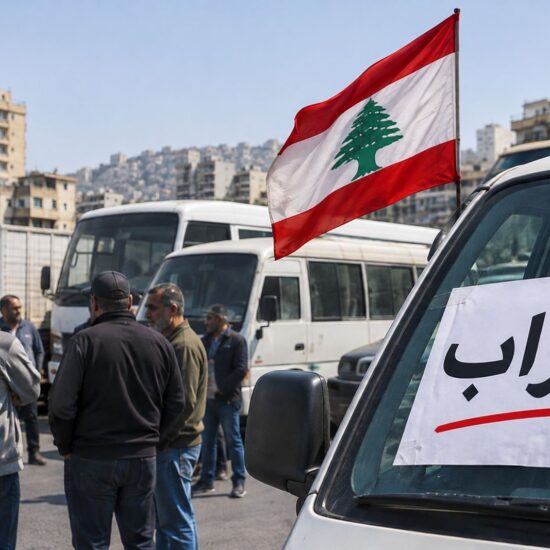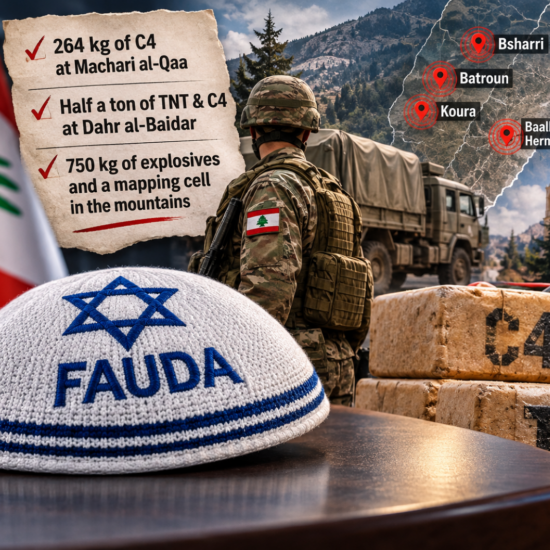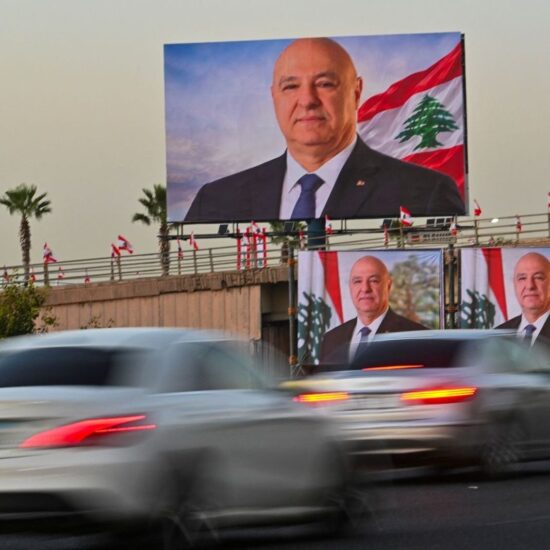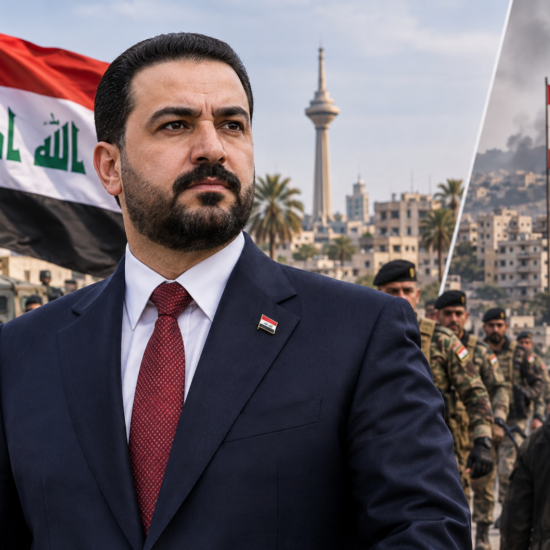
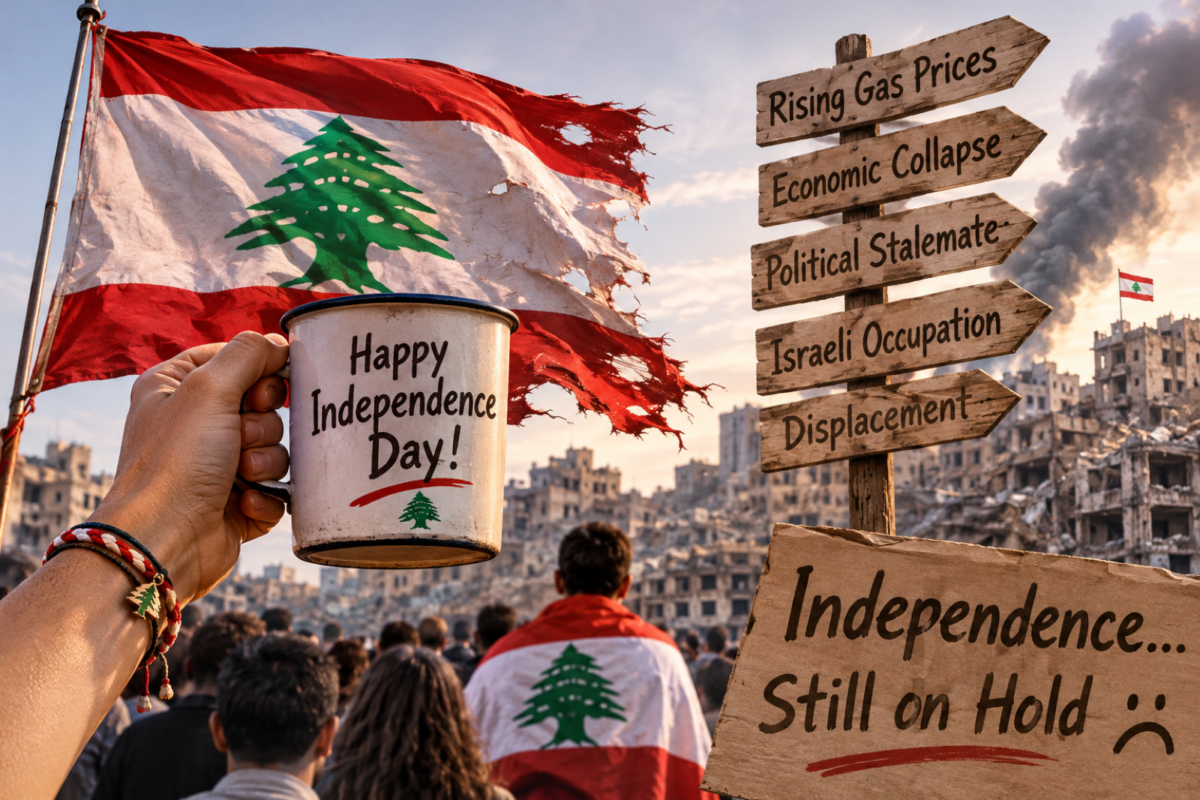
As is the case every year, many Lebanese resorted to memes and sarcasm to commemorate Independence Day. After three years of exhausting and destructive war, people sought to make light of their situation with allusions to any of the ongoing calamities our country is experiencing. However, reality is starting to look inescapably grim for the majority of the public: increasing gas prices at the door of winter, economic freefall, political stalemate, and the continuing Israeli occupation of South Lebanon, which has displaced hundreds of thousands of Lebanese citizens. Understandably, Independence Day is sounding increasingly like a morbid and heartbreaking exercise.
The success of the pro-Hezbollah camp and its supporting chorus of “resistance supporters” lies in co-opting notions fundamental to the definition of a nation’s character. It was a mistake to have let this co-optation continue without opposition to its increasing comfort with the suppression of certain critical opinions about the ongoing war.
We have been inundated, over the past three years, with increasingly absurd and idiotic notions of sovereignty, independence, and “dignity”. The latter word, so prominent in lyrical pronouncements about “what is more dignified”, has gradually become an instrument of intimidation to be wielded against alleged traitors and spies. The success of the pro-Hezbollah camp and its supporting chorus of “resistance supporters” lies in co-opting notions fundamental to the definition of a nation’s character. It was a mistake to have let this co-optation continue without opposition to its increasing comfort with the suppression of certain critical opinions about the ongoing war.
When it comes to determining the direction of foreign policy, it amazes me that we are comfortable with the hijacking of our foreign policy process. Lebanon’s fragility has made such a process easy. Critics of direct Lebanese-Israeli negotiations have a common refrain: Israel is trying to force the Lebanese government to sign a peace agreement. They cite the failure of the May 17 agreement as proof of Israel’s intention. However, these same people fail to see that our foreign policy is indeed being hijacked, this time by a Lebanese militia which explicitly serves a foreign country that is not Israel.
Critics of direct Lebanese-Israeli negotiations have a common refrain: Israel is trying to force the Lebanese government to sign a peace agreement. They cite the failure of the May 17 agreement as proof of Israel’s intention. However, these same people fail to see that our foreign policy is indeed being hijacked, this time by a Lebanese militia which explicitly serves a foreign country that is not Israel.
On Independence Day, the Iranian embassy spent the occasion reposting Hezbollah channels and their rhetoric against the Lebanese state. In any self-respecting country, such a diplomatic mission would have been shut down, especially that of a country which is so blatantly interfering in our domestic affairs. Previously, when Western officials made similarly insulting statements, activists and media figures criticized them harshly, but no such criticism was extended to the Iranian embassy. Years of similar gestures by visiting Iranian officials have always been swept aside. Why do the advocates of such political parties expect us to accept the parameters they set?
Even when it comes to events beyond our immediate surroundings, emancipatory and independent political labor is increasingly being defined in terms which do not apply to our domestic political context. As a consequence, the same talking points used to demonize critics at home are twisted to fit some meta-narrative of global liberation. Even my phrasing of these sentiments renders me liable to being called a reactionary. How would it be possible to even conceive of independence under conditions of intellectual atrophy and political alarmism? Par for the course, our self-appointed cultural custodians aren’t alarmed by the erosion of public debate.
The principal point of “independence” as an idea is the ability to steer one’s destiny as one fits. If we are to achieve harmony within our own borders, policies will become a contest at the ballot box, as should be the case in a liberal democracy. By subscribing to these rules, we accept the outcomes we don’t prefer and celebrate those we do, playing by the same rules. However, one can’t help but detect the proliferation of narrow and tribal thinking, and it is bound to lead to the same destruction that it has always led to, burning future generations.
Mohammad el-Sahily is a student and activist. He tweets @moesahily.
The views in this story reflect those of the author alone and do not necessarily reflect the beliefs of NOW.