The current talk of peace between Lebanon and Israel is not emerging in spite of the war. It is being produced by it. Without the violence of the present conflict, there would be no negotiations, no demands for disarmament, and no serious discussion of normalization. What is now taking shape is not a diplomatic breakthrough but the political translation of military force. Lebanon has been here before. In May 1983, after invasion, siege, and negotiation under foreign military pressure, it signed an agreement with Israel meant to end the state of war and establish a framework for normal relations. That effort collapsed. What is unfolding today is a second attempt. Israel has made clear that this new attempt will center on Hezbollah’s disarmament and the establishment of peaceful relations with Lebanon.
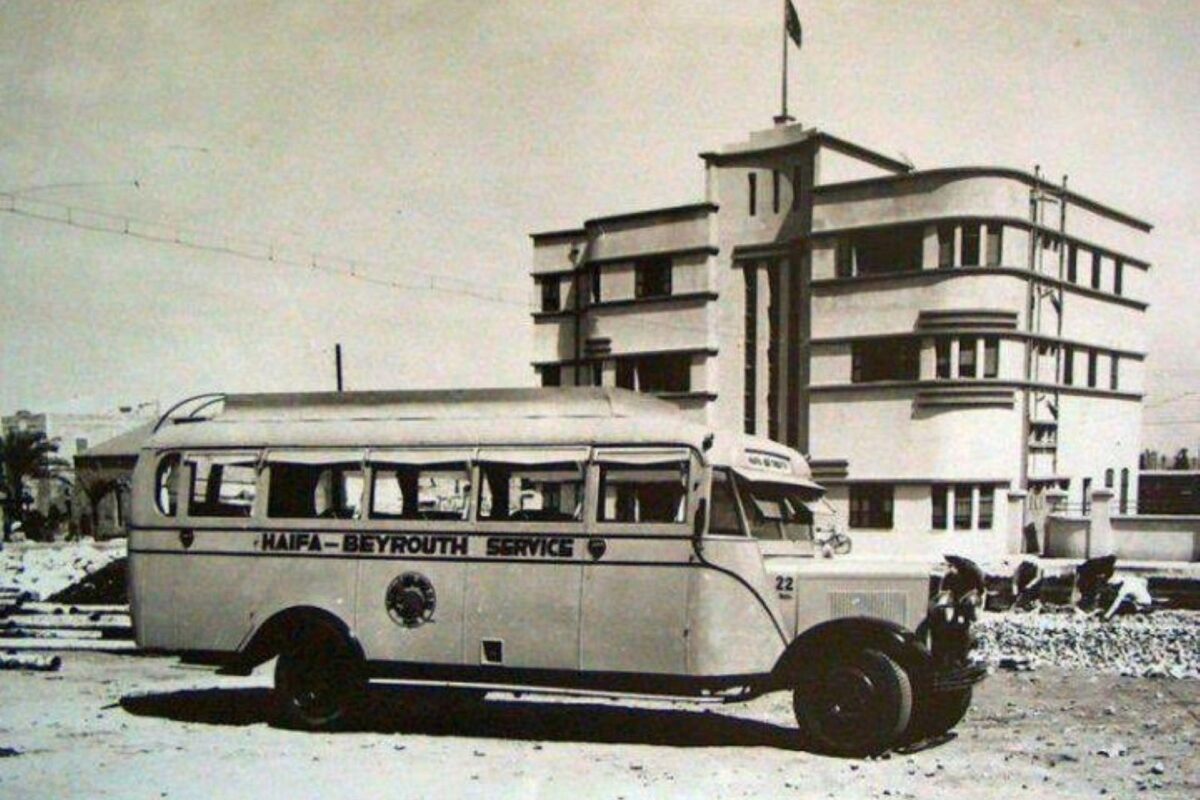
The failure of 1983 is often invoked as proof that such an outcome is impossible. That reading mistakes history for fate, based on the over abused logic of “history repeats itself”. It doesn’t. The May 17 Agreement did not fail because peace with Israel was inherently unattainable. It failed because the Lebanese state that signed it could not enforce it, because the country’s internal divisions turned it into a symbol of surrender, and because Syria possessed a decisive veto over its implementation. The agreement tied Israeli withdrawal to Syrian withdrawal, Damascus refused it, and Lebanese factions rejected what they saw as an imposed settlement. Ultimately, the state collapsed under the pressure. The text remained, but the political order required to sustain it did not exist.
Some of those conditions have not disappeared. The Lebanese state remains weak, society remains fractured, and Hezbollah, though badly weakened, still exists inside the country. But the comparison with 1983 turns on a more decisive fact: the forces that made May 17 fail are no longer what they were. In 1983, an agreement with Israel could be broken because the Lebanese state was weak while the camp rejecting it was strong. Syria held an active veto over Lebanon’s political future, Hezbollah did not merely survive but would later rise into the central armed force of the postwar order, and Iran’s regional axis was expanding rather than contracting. Today, that equation has changed sharply. This does not mean Hezbollah has disappeared. It means the conditions that long allowed it to operate uncontested are eroding. Hezbollah has been militarily and politically degraded, Lebanon has formally banned its military activity, Syria no longer occupies Lebanon or exercises the same veto, and Iran is itself operating from a position of greater strain after the recent war. The old weaknesses remain, but they no longer empower refusal in the same way. They now narrow the capacity of Hezbollah and its backers to turn social presence and armed legacy into an effective political veto. That shift is inseparable from the war itself, which has altered the balance of power inside Lebanon in ways that diplomacy alone never could.
The contrast with 1983 is therefore structural, not superficial. The earlier agreement failed because Lebanon’s weak state faced a rejectionist camp stronger than it was and backed by Assad’s Syria, which occupied Lebanon and could directly veto any settlement it opposed. That world is gone. There is no longer an Assad regime in Damascus capable of dictating Lebanon’s political ceiling. More than that, Syria itself is no longer positioned on the same side of the question: instead of mobilizing to block accommodation with Israel, post-Assad Syria has entered U.S.-mediated security talks with Israel and appears, at least in the longer term, more interested in stabilizing that front than in sabotaging it. Hezbollah remains, but in far weaker condition and under mounting pressure, while Lebanon approaches the current talks with little leverage and Israel continues to negotiate from the advantage produced by war. This asymmetry is what makes a second attempt possible.
The terms now being advanced reflect that imbalance. Israeli officials have been explicit. The objective is not merely to restore quiet along the border but to reshape the security and political environment that produced the conflict. The disarmament of Hezbollah is central to that goal. So too is the creation of a security buffer in southern Lebanon. Israeli leaders have also indicated that the return of hundreds of thousands of displaced Lebanese to their homes in the south will be contingent on meeting Israeli security conditions. These are not proposals designed to be negotiated between equals. They are conditions advanced from a position of advantage, with the expectation that they will be resisted rhetorically but difficult to block in practice.
This is why the language of imposed peace must be reconsidered. In 1983, the accusation that the agreement was imposed was sufficient to undermine it, because the forces rejecting it retained the power to prevent its implementation. Today, the same accusation may carry equal emotional force, but it does not necessarily carry the same political effect. An agreement can be widely perceived as illegitimate and still be implemented if the actors capable of overturning it are weaker and the actors enforcing it are more determined. Historical precedent suggests that in post-conflict settings, the terms set by victors often go largely unchallenged. They are not accepted without protest. They are accepted because the alternatives have been narrowed.
This does not guarantee success. The Lebanese system remains fragile. Hezbollah retains some influence. Public opposition could still destabilize any agreement that appears to formalize defeat. The history of Lebanon is not one of smooth transitions but of abrupt reversals. Yet the present moment cannot be understood as a repetition of 1983. It is better understood as its continuation under different conditions. The first attempt failed because Lebanon’s fragmentation defeated the agreement imposed upon it. The second may go further for precisely the same reason. Lebanon is still weak, still divided, still marked by competing loyalties. But those conditions no longer necessarily favor rejection. They may now favor a settlement shaped from outside and accepted within not because it resolves the conflict in principle, but because it reflects the balance of power that the war has produced.
If this effort fails, it will not be because Lebanon and Israel have never tried to cross this threshold. It will be because even after a war that has reshaped the strategic landscape, the forces capable of blocking such a settlement remained strong enough to do so. If it succeeds, it will not be a sudden breakthrough. It will be the political conclusion of a conflict that has already decided much of the outcome.
Edward Tashjian is an MA student at the University of British Columbia (UBC), focusing on politics and intelligence dynamics of the Cold War in the Middle East, with a particular focus on Lebanon and Syria and the role of Armenian political parties and organizations within these contexts. He is the founder and director of Badmatidaran, a digital platform dedicated to Armenian history.
The views in this story reflect those of the author alone and do not necessarily reflect the beliefs of NOW.