In Lebanon, few issues are as sensitive, or as easily misunderstood, as Hezbollah’s weapons. The conversation often collapses into a blunt demand: disarm the group and restore the state. But reality is far more complicated. Hezbollah’s arsenal is not merely a stockpile of rockets and rifles that can be handed over through a political agreement. It is bound up with identity, belief, history, and a sense of protection that many within its community still feel the state cannot provide.
That is why any serious discussion of disarming Hezbollah must begin with a basic truth: this is not a technical problem. It is a political and psychological one. And if handled carelessly, it could push Lebanon toward internal conflict rather than stability.
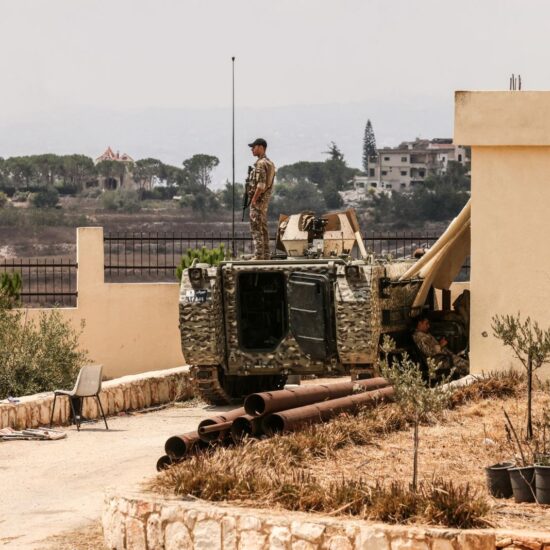
For many Lebanese, especially within Hezbollah’s support base, weapons are not simply about power. They are about survival. The memory of Israeli occupation, repeated wars, and a weak central state continues to shape how people think. When the state failed, the armed group stepped in. Whether one agrees with that role or not, it created a lasting perception: that the armed party protects when the state cannot.
So if the goal is eventually to remove those weapons, the first step is not confrontation. It is replacement. The Lebanese state has to prove, in concrete terms, that it can do the job better.
That means strengthening the army, yes, but not only with equipment or funding. It requires a political commitment to allow the military to operate as a truly national institution, not one constrained by internal divisions. It also means building a broader sense of trust: that the state will show up in times of crisis, enforce security fairly, and treat all communities equally. Without that trust, calls for disarmament will sound hollow, or even threatening.
But even a stronger state will not be enough on its own. Hezbollah’s weapons are also rooted in ideology. The idea of what the group calls “resistance” is central to how it sees itself and justifies its existence. It is not merely strategy. It is a belief system.
This is where many political approaches fall short. They treat the issue as if it can be solved through pressure or negotiation alone, while ignoring the deeper narrative that sustains it. In reality, change will require reshaping that narrative.
That does not mean attacking the idea of resistance head-on. That would likely backfire. Instead, it means redefining it. What if “protection” or “resistance” were understood not as the role of one group, but as a national responsibility? What if defending Lebanon became something carried by the state and supported by all its citizens?
For that shift to happen, it cannot come from outside the community. It has to emerge from within. Voices inside Lebanon’s Shiite community, religious figures, intellectuals, and public thinkers, will play a key role in opening space for this conversation. Change in a belief system is always gradual, but it is possible when people feel they are not being attacked or dragged into war, but invited to rethink.
Alongside this, dialogue remains essential. But it has to be real dialogue, not symbolic meetings that lead nowhere. Past efforts failed because they lacked direction. A new approach would require clear steps: defining what happens first, what follows next, and what the end goal looks like.
Disarmament, in this sense, should not be understood as a single moment, but as a process. It could begin with limiting how and when weapons are used, then gradually reducing their role, and eventually integrating what remains into a national defense framework. Slow, careful progress is not weakness. It is the only way to avoid collapse.
Of course, Lebanon cannot solve this issue alone. Hezbollah is also part of a wider regional dynamic, particularly linked to Iran and the ongoing conflict with Israel. As long as tensions remain high in the region, the argument for keeping weapons will persist.
This means that any internal progress will likely depend, at least in part, on a calmer regional environment. Even small steps, such as reducing cross-border escalation, can create space for internal change. But Lebanon should be careful not to let its future be decided entirely by external powers. The goal should be to align regional realities with a clear national interest, not surrender to them.
There is also a more practical layer to consider: people’s daily lives. Hezbollah is not just a military actor; it is also a provider. It offers jobs, services, and support in areas where the state is often absent. For many families, this network is essential.
If disarmament is seen as taking all of that away without offering alternatives, it will be rejected immediately. That is why economic development is not a side issue. It is central. The state needs to invest seriously in regions like the Beqaa Valley and southern Lebanon, creating opportunities that make people less dependent on Hezbollah’s political or military structure.
Over time, as the state becomes more present and more reliable, the social environment that sustains armed groups can begin to shift.
Still, one principle must guide everything: avoid turning this into a sectarian battle. The moment the issue is framed as one community against another, the risk of conflict rises sharply. Lebanon has seen this before, and the consequences were devastating.
The conversation must remain national. It is not about targeting a group or weakening a sect. It is about building a state that works for everyone.
In the end, the question is not simply how to disarm Hezbollah. It is how to build a Lebanon in which such weapons are no longer seen as necessary.
That is a much harder task. It requires patience, honesty, and a willingness to deal with uncomfortable realities. But it is also the only realistic path forward.
Anything else, whether forced disarmament or endless avoidance, risks leading Lebanon back to a place it cannot afford to return to.
Ibrahim Rihan is a Lebanese journalist and writer focusing on Arab and international affairs. He is particularly interested in U.S., Saudi, and Egyptian policies in the Middle East.
The views in this story reflect those of the author alone and do not necessarily reflect the beliefs of NOW.