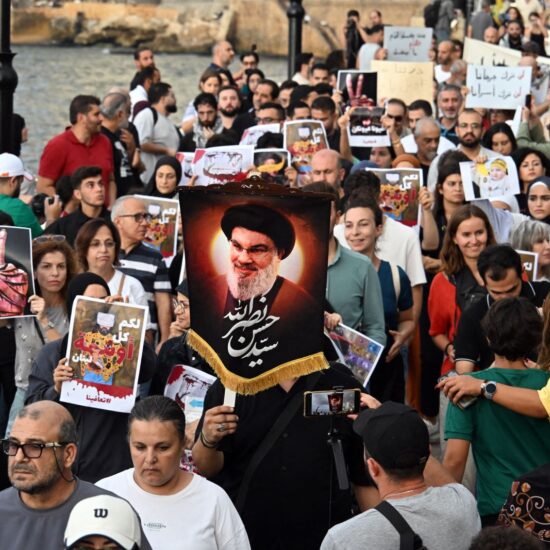
The United States has sharpened its designation of Hezbollah, explicitly identifying the Lebanese group as an Iranian proxy linked to the Islamic Revolutionary Guard Corps’ Quds Force, while Prime Minister Nawaf Salam on Friday brought Lebanon’s parallel effort to restore state authority into focus during a visit to the South. The U.S. Treasury’s move does not create a new legal designation for Hezbollah, which Washington has already designated as a foreign terrorist organization and specially designated global terrorist group, but explicitly cites the group’s relationship with Iran’s Quds Force as the basis for the redesignation. Washington also sanctioned 10 individuals accused of operating a regional cash-transfer network that allegedly moved hundreds of millions of dollars for Hezbollah outside the formal financial system.
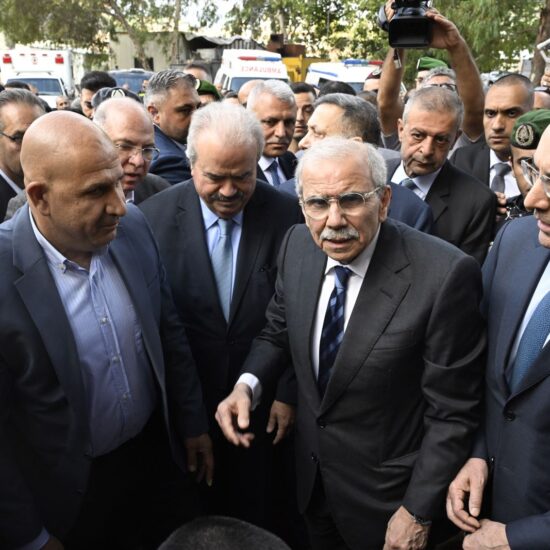
The announcement comes as Salam visited the Lebanese Army’s South Litani Sector Command in Tyre, where he stressed that a capable Lebanese state requires a strong and unified Army. Salam said the Army’s presence in the South represents more than a military deployment, describing it as central to restoring state authority and Lebanon’s sovereignty over decisions of war and peace.
In Lebanon
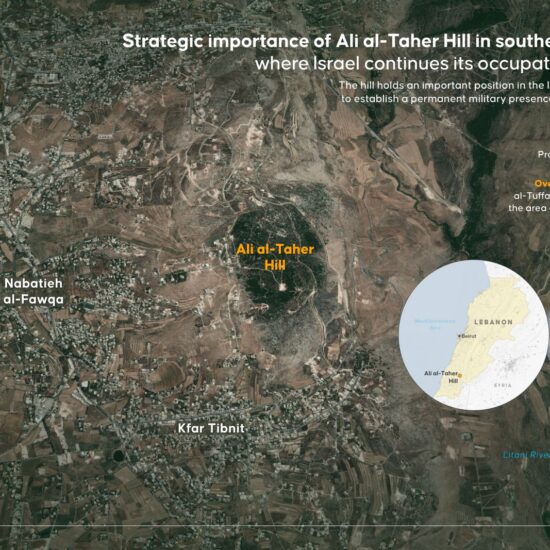
Israeli strikes intensify in southern Lebanon: Israeli strikes and artillery fire intensified across southern Lebanon, with Ali Taher among the main targets. Reports said the area was hit by powerful missiles and white phosphorus shells, while Israeli forces also shelled and set fire to property in several southern towns.
Lebanon’s economy set to contract: The World Bank projects Lebanon’s economy will shrink by 6.4% in 2026 as the latest war reverses the fragile recovery recorded in 2025. The contraction is attributed to weaker consumption, the collapse in tourism, disrupted supply chains, insecurity and prolonged displacement, while inflation is projected to reach 17.5%.
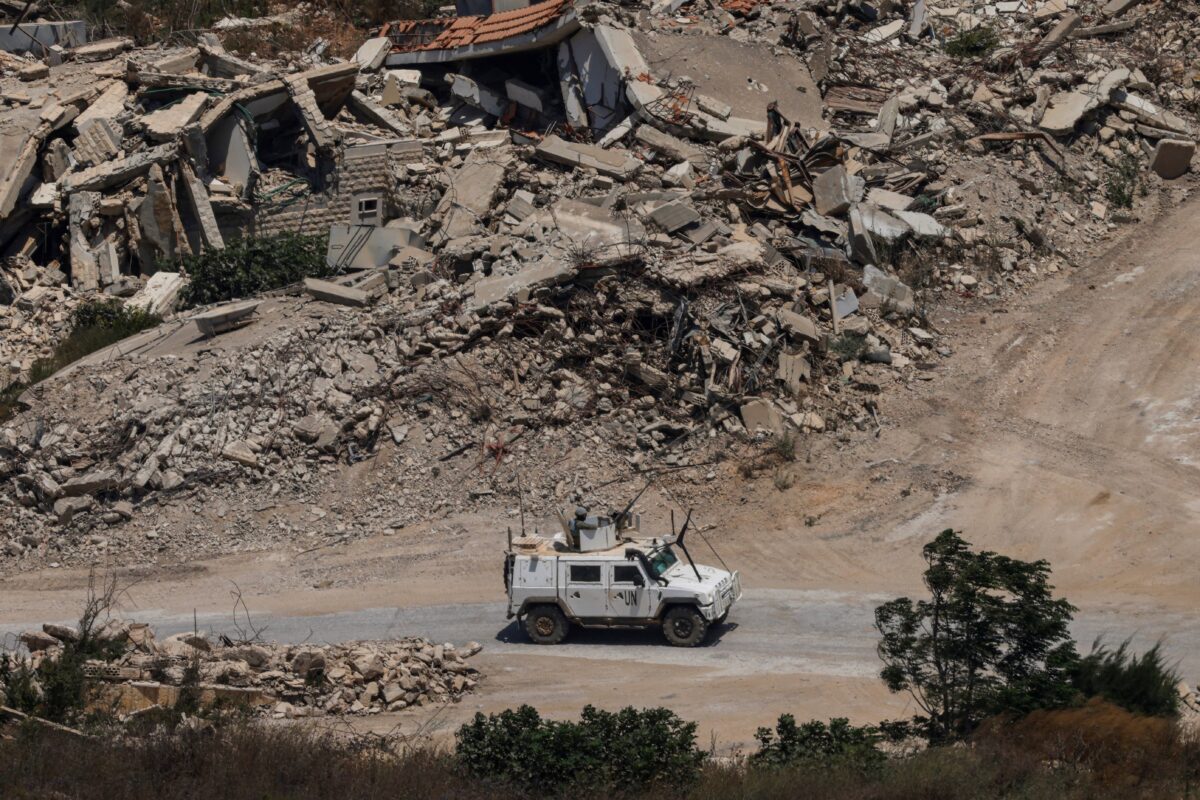
Haykal in Rome: Army Commander Gen. Rodolphe Haykal is in Rome for talks focused on support for the Lebanese Army and Italy’s potential role in southern Lebanon following the end of UNIFIL’s mandate. Discussions around a possible post-UNIFIL arrangement remain unresolved, with questions over the structure, mandate and authority of any future international presence.
Army stresses readiness: Army Commander Gen. Rodolphe Haykal has continued to stress the institution’s unity and its readiness to carry out its missions in the South. The Army has said it is prepared to deploy in occupied areas following an Israeli withdrawal, while emphasizing that its role remains tied to protecting Lebanese sovereignty and territorial integrity.
Lebanon insists on Iranian ambassador’s expulsion: Lebanon is maintaining its position that Iran’s incoming ambassador, Mojtaba Amani, should leave the country after Beirut revoked his credentials. The dispute dates back to March, when Lebanon declared the diplomat unwelcome, but Tehran rejected the decision and insisted that its ambassador would remain in Beirut.
Aoun meets Pope Leo XIV: President Joseph Aoun met Pope Leo XIV at the Vatican on August 20, with discussions focusing on Lebanon’s political and security situation and the U.S.-brokered agreement involving Lebanon and Israel. The Holy See expressed concern over difficulties in implementing the agreement and reaffirmed its support for efforts toward a just and lasting peace.
Lebanon seeks UNIFIL extension: Beirut is pushing for an extension of UNIFIL’s mandate as efforts to secure Hezbollah’s disarmament continue to stall. President Joseph Aoun and other Lebanese officials are seeking to preserve the international force’s presence while Lebanon works to strengthen the Army’s role in the South.
Canada pledges $50 million for Lebanon: Canada announced more than $50 million in additional assistance for Lebanon as it condemned what it described as Israel’s “unlawful invasion” of the country. Ottawa called for respect for Lebanese sovereignty and territorial integrity while announcing humanitarian and development support.
In the Region
Syria-Israel talks: Syria says it held talks with Israel under U.S. mediation aimed at de-escalating tensions. Damascus said the discussions focused on reducing escalation and keeping Syria out of the wider Israel-Turkey confrontation, with Syrian officials indicating that talks could resume.
Turkey issues Netanyahu arrest warrant: Turkey has issued an arrest warrant for Israeli Prime Minister Benjamin Netanyahu and other Israeli officials over alleged genocide related to Israel’s war in Gaza. Ankara had previously issued warrants against Netanyahu and other senior Israeli officials.
Lebanon-Kuwait ties: Lebanon’s ambassador to Kuwait says Beirut is seeking to deepen cooperation with Kuwait, including in the health sector and the possibility of facilitating the recruitment of Lebanese doctors and nurses.
Iran rejects new U.S. sanctions: Iranian Foreign Minister Abbas Araghchi dismissed Washington’s threatened new sanctions as a sign of desperation, saying the measures would not defeat Tehran. The comments come as the U.S. prepares additional economic pressure on Iran and diplomatic efforts continue.
What We’re Reading
Lebanon’s Shadow Passports: Forgery, Proxy Networks, and the Collapse of Oversight: NOW Lebanon investigates allegations surrounding forged passports, recycled identities and covert travel networks operating through Lebanon. The report examines how weaknesses in state oversight and Lebanon’s passport system may have enabled individuals linked to Hezbollah, the IRGC and other regional networks to move under false or fraudulently obtained identities. It also looks at the broader security implications of weak institutional controls over identity documents.
Lebanon’s Rural Nostalgia: Fact Or Fiction?
Charles H. al-Hayek challenges the romanticized image of traditional rural Lebanon that has become increasingly popular through social media, tourism and food culture. Drawing on historical sources, including an 18th-century peasant poem and accounts of rural life, the article highlights famine, poverty, disease, debt and land dependency. It argues that the modern image of a simple and idyllic rural past often overlooks the much harsher reality experienced by Lebanon’s rural communities.
A Letter from Moshe Yair to Sheikh Naim Qassem
NOW’s Managing Editor, Makram Rabah uses satire to respond to Hezbollah Secretary-General Naim Qassem’s citation of an alleged Israeli writer named Moshe Yair. The article points out that the writer and the article attributed to him could not be verified and uses the episode to criticize Hezbollah’s reliance on unverified sources and political narratives. It ultimately argues that the controversy reflects a broader struggle over truth, propaganda and the party’s relationship with the Lebanese state.
Hezbollah’s Pinocchio Track: A Party Built on Lies That Will Never Confess
Elissa El Hachem examines what she describes as a long history of fabricated narratives surrounding Hezbollah, beginning with its founding and extending through its military and political role in Lebanon and the region. The article argues that the party has repeatedly used claims of resistance and victory to justify its weapons and political influence. It also looks at Hezbollah’s opposition to Lebanon negotiating directly with Israel while highlighting its own previous involvement in negotiations.
The State Is Not Absent. It Is Selective
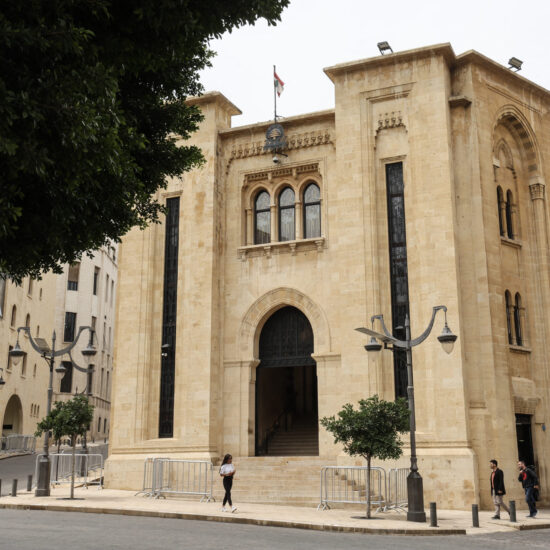
Ramzi Abou Ismail argues that Lebanon’s recent legislative activity challenges the idea that the state is simply too weak to act. Parliament’s abolition of the death penalty, passage of a new media law, general amnesty and banking reforms demonstrate that institutions can produce major decisions when political conditions allow. The article argues, however, that state capacity becomes weaker when decisions threaten powerful political or financial interests, making Lebanon’s problem one of selective state authority rather than complete absence.