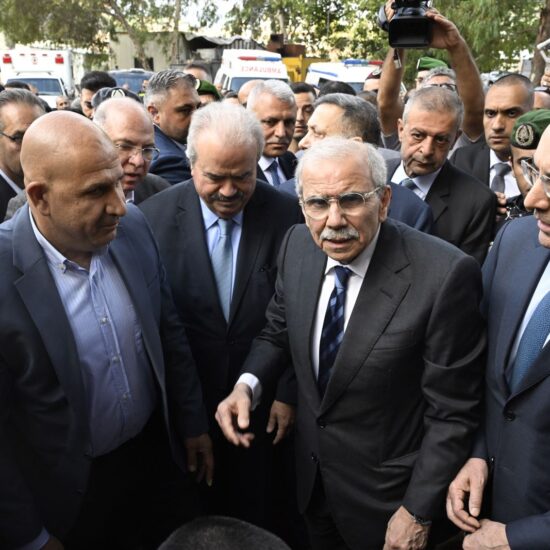
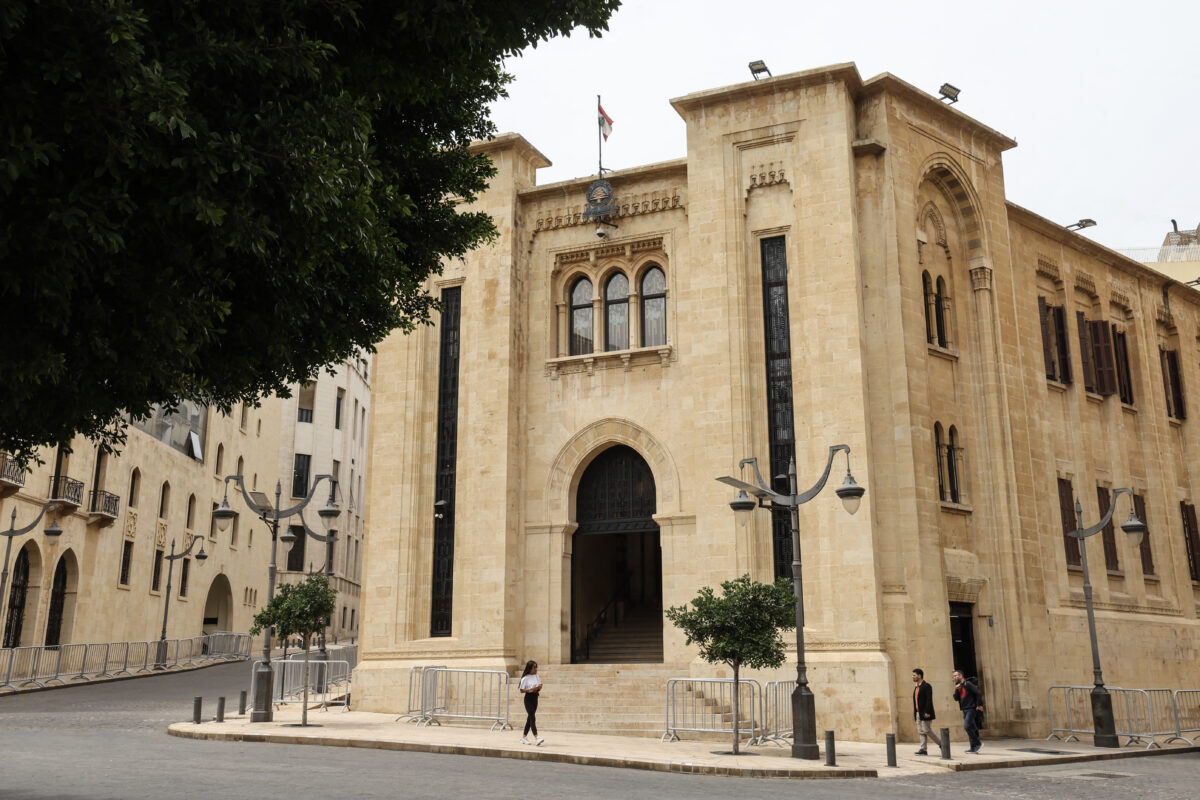
Nawaf Salam’s government secured renewed parliamentary confidence this week, winning 68 votes against 12, with two abstentions, after two days of heated debate. Hezbollah MPs walked out before the vote, while the Amal Movement backed the government, creating a notable split in the parliamentary positions of the two main Shiite political forces. The debate put Hezbollah’s weapons, the state’s monopoly over arms, Israeli withdrawal and the future of southern Lebanon at the center of Parliament’s attention.
Lebanon’s Parliament renewed confidence in Prime Minister Nawaf Salam’s government this week, with 68 MPs voting in favor, 12 against and two abstaining following two days of heated debate.
The vote exposed a significant political divide. Hezbollah MPs left Parliament before the confidence vote and did not participate, while MPs from the Amal Movement voted to renew confidence in the government. The Free Patriotic Movement voted against Salam’s government.
The outcome gives Salam another parliamentary mandate while leaving Hezbollah outside a vote that ultimately produced a comfortable majority for the government. More importantly, the debate demonstrated how the question of Hezbollah’s weapons has moved increasingly into the center of Lebanon’s formal political debate.
Salam reiterated that his government’s priorities include establishing the state’s monopoly over weapons, securing an Israeli withdrawal from southern Lebanon and rebuilding areas affected by the war. He also defended the negotiations with Israel, arguing that Lebanon’s position would be stronger at the negotiating table if the country were united behind the state and its institutions.
The exchanges in Parliament were particularly heated. Lawmakers questioned Hezbollah’s role in the war, the destruction in southern Lebanon and the continued absence of full state control over areas not occupied by Israel. Hezbollah MPs, meanwhile, accused the government of failing to confront Israel and defended the group’s role in confronting Israeli forces.
In Lebanon
Lebanese Army receives new US ammunition shipment: The Lebanese Army received 70 containers of ammunition under a US military assistance program, as Washington continues to support the Army at a time when Beirut is seeking to expand its role across the country.
The delivery comes amid increased international attention on the Army’s ability to assume greater responsibility in southern Lebanon. Strengthening the military has become central to Beirut’s efforts to demonstrate that the state can provide security while gradually reducing reliance on parallel armed structures.
The shipment also comes as Lebanon seeks international backing for the Army ahead of the expected end of the UNIFIL mission.
Prime Minister Nawaf Salam heads to US as Lebanon seeks international backing: Prime Minister Nawaf Salam is travelling to the United States for the UN General Assembly, where Lebanon’s diplomatic agenda will include the situation in southern Lebanon, the Lebanese Army and the country’s broader efforts to restore state authority.
Salam’s visit comes at a particularly sensitive moment. Beirut is attempting to maintain international support for the Army while also pursuing negotiations aimed at an Israeli withdrawal from Lebanese territory.
The visit will also place Lebanon’s domestic political debate over weapons within a wider international context, with Beirut seeking assistance for state institutions while facing pressure to demonstrate progress on sovereignty and security.
Lebanon considers international force after UNIFIL: With UNIFIL’s future remaining uncertain, Lebanon is examining options for an international presence in the South after the UN peacekeeping mission’s mandate expires.
The Lebanese Foreign Ministry has proposed that the Cabinet discuss the possibility of a European-led mission, while Beirut continues diplomatic efforts to retain an international role in maintaining stability along the border.
The issue has become closely connected to the future role of the Lebanese Army. Any replacement mechanism would need to operate alongside Lebanese forces while addressing concerns about a security vacuum following UNIFIL’s departure.
The debate comes as France and other international partners discuss ways of strengthening the Army and supporting Lebanon’s efforts to regain greater control over its territory.
Tripoli protests over general amnesty: Protesters blocked roads in Tripoli’s Nour Square this week over the suspension of legislation concerning a general amnesty.
The issue has become a recurring source of political and social pressure, particularly among families of detainees and prisoners who could benefit from an amnesty law. The dispute adds another domestic challenge for the government as Parliament prepares to confront a range of contentious legislative and socioeconomic issues.
Former Syrian intelligence officer arrested: Lebanese authorities also arrested a former officer in the intelligence apparatus of Bashar al-Assad’s former regime.
The arrest comes as Lebanon and Syria continue to redefine their relationship following Assad’s fall, while questions surrounding former Syrian security officials, alleged abuses and accountability remain sensitive on both sides of the border.
In the Region
Iran-US tensions rise as Houthis target Saudi Arabia: Tensions between Iran and the United States escalated this week as Tehran warned that US regional allies could be considered combatants if Washington launches further attacks.
The escalation has been compounded by attacks launched by Iran-backed Houthi forces in Yemen, including strikes targeting Saudi Arabia. The developments have raised fresh concerns over regional energy supplies and the security of major shipping routes, including the Strait of Hormuz and the Bab el-Mandeb.
The latest escalation comes after months of confrontation between Washington and Tehran and amid uncertainty over efforts to revive a diplomatic agreement.
For Lebanon, the renewed confrontation carries particular significance given Hezbollah’s longstanding relationship with Iran and the Lebanese government’s efforts to prevent Lebanon from being drawn into another regional conflict.
Al-Sharaa heads to New York as Syria seeks a new regional role: Syrian President Ahmed al-Sharaa is heading to New York for the UN General Assembly as Damascus continues efforts to establish itself as a new regional actor following the collapse of Bashar al-Assad’s regime.
Washington’s easing of restrictions on arms sales and growing international engagement with Damascus come as Syria seeks investment, reconstruction assistance and the consolidation of state authority.
The developments are particularly relevant to Lebanon, where the fall of Assad has already altered the regional environment in which Hezbollah operated for decades.
Turkey deepens its role in Syria: Turkey is continuing to work with Damascus on several major files, including reconstruction and the future of Syria’s security and political structures.
Ankara’s involvement comes as regional powers compete to shape Syria’s post-Assad order. The future relationship between Damascus, Ankara and Kurdish forces remains one of the key questions affecting Syria’s internal stability and its relations with neighboring countries.
Turkey revokes Bank Mellat license: Turkey has withdrawn the operating license of Bank Mellat’s Istanbul branch, adding to the financial pressure facing Iranian institutions abroad.
The move comes amid wider international scrutiny of Iranian financial networks and Ankara’s efforts to balance its economic relationship with Tehran against international sanctions.
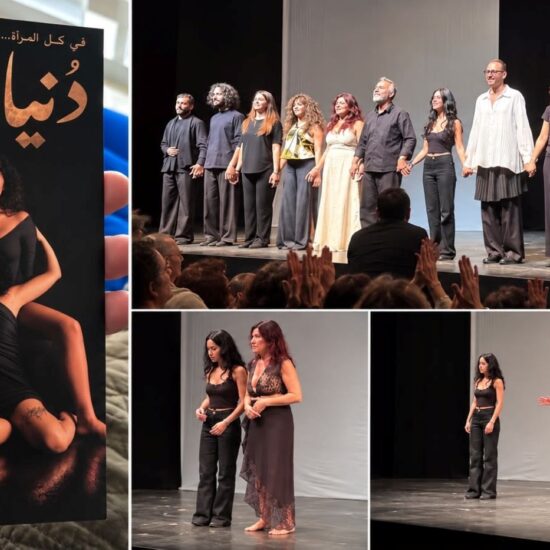
Assala returns to Damascus: Syrian singer Assala Nasri returned to the stage in Damascus after 15 years away, performing in the capital in a moment that carried significance beyond music.
Her return comes as Syria attempts to rebuild its public and cultural life following years of war and political repression. The concert also raises broader questions about how societies emerging from conflict reclaim cultural spaces and reconnect with memories of a country that has changed profoundly.
What We’re Reading
“When Damascus Sang Again” Alia Mansour, Syrian-Lebanese columnist looks at Assala Nasri’s return to Damascus after 15 years and places the event within Syria’s wider attempt to reclaim public life after years of war and repression. Drawing a parallel with Fairuz’s return to Beirut after Lebanon’s civil war, the piece explores what music can mean when a society is trying to recover its sense of normality while recognizing that cultural celebration cannot substitute for justice, accountability or reconstruction.
“The Price of a Name” In this piece, Cathryn Papadopoulo examines the latest development in the Beirut port explosion investigation after prosecutors requested charges against former President Michel Aoun over alleged criminal negligence. The piece asks what it took for the investigation to reach this point and whether the movement of the case represents the beginning of accountability or another moment in Lebanon’s long and complicated search for justice.
“What Does the Tower of Qalaat Faqra Tell Us About Roman Lebanon?” The article examines the Roman-era Tower of Qalaat Faqra and what the archaeological site can reveal about Roman Lebanon, local religious traditions and the interaction between imperial power and local communities. It also looks beyond the history of the site to the challenges facing Lebanon’s archaeological heritage today.
“Southern Lebanon’s Agricultural Sector Counts the Cost of War” In this piece, Rodayna Raydan examines the damage suffered by Lebanon’s agricultural sector, particularly in the South, where farmers have lost crops, orchards, agricultural land and access to their properties. Drawing on Ministry of Agriculture figures and testimony from agricultural officials and a farmer from Khiam, the article shows how the impact of war extends beyond physical destruction to livelihoods, production, food security and the future of rural communities.
“A Wedding at Whose Expense?” Makram Rabah , NOW’s Managing Editor examines the controversy surrounding a US-dollar bank account opened in connection with the wedding of the son of Amal Movement figure Ali Hassan Khalil. The piece focuses on the questions raised by the account, banking compliance and the treatment of politically exposed persons, while examining what the episode says about Lebanon’s financial and political culture.