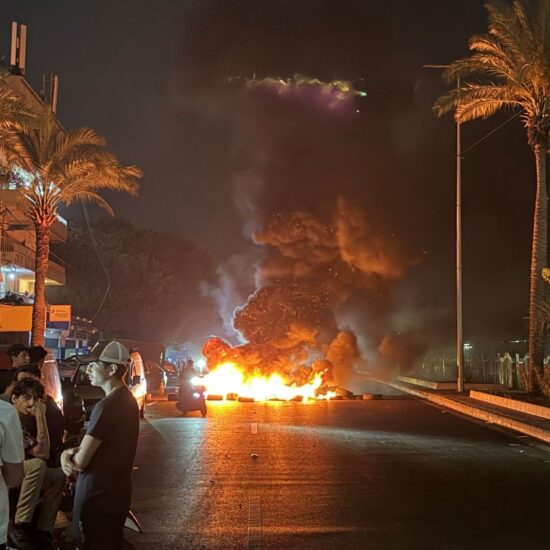
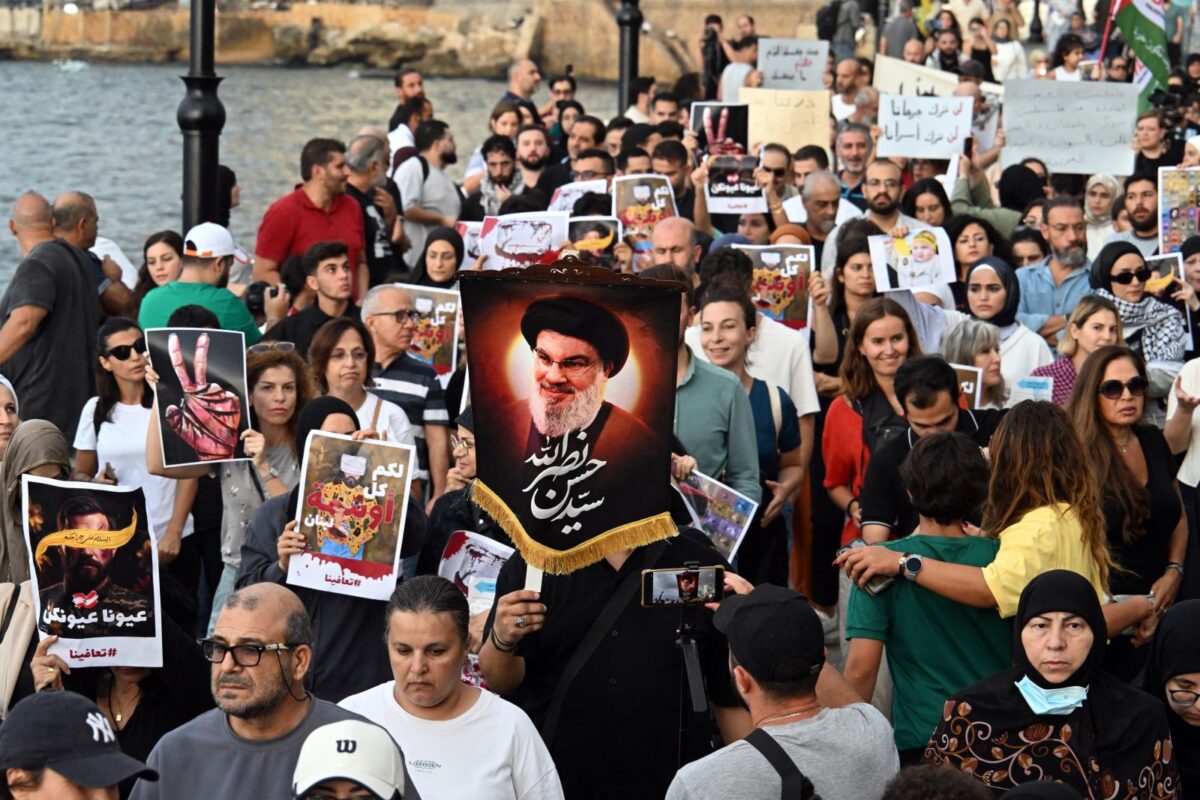
BEIRUT, LEBANON - SEPTEMBER 17: Hezbollah supporters gather in the coastal district of Ain Al Mraiseh to commemorate those who lost their lives in last year's Israeli operation, which caused the explosion of hundreds of pagers and radios in Beirut, Lebanon on September 17, 2025. Houssam Shbaro / Anadolu (Photo by Houssam Shbaro / ANADOLU / Anadolu via AFP)
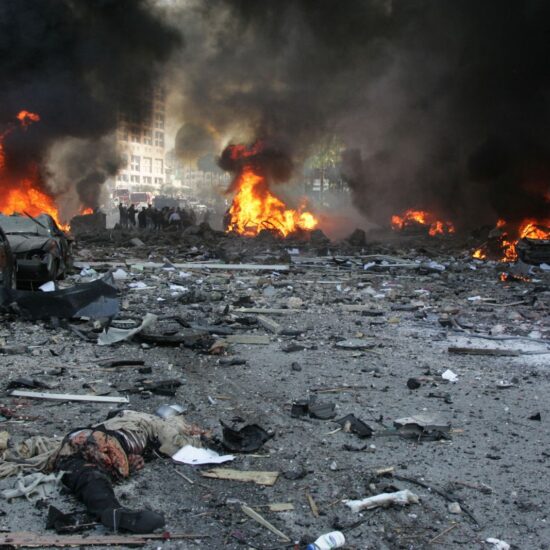
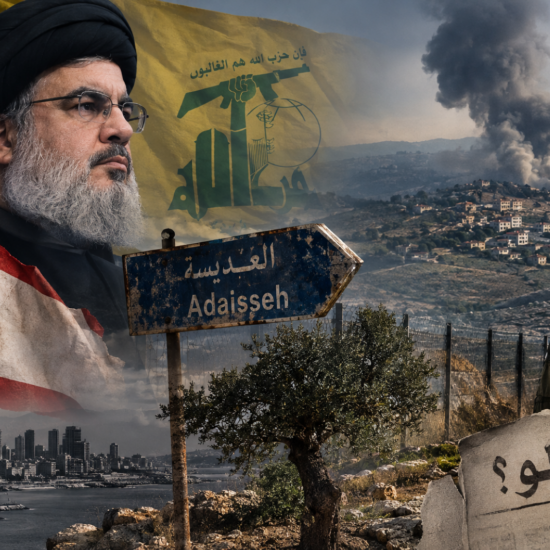
The anniversaries of the September 17–18, 2024, pager explosions and Hassan Nasrallah’s assassination on September 27 should reopen the questions that photographs and speeches must not be allowed to bury. How did Hezbollah’s supposedly impenetrable security apparatus prove so thoroughly compromised? How did promises of protection turn into catastrophe? Time does not erase these failures. Memorial ceremonies do not repair them.
But Hezbollah has another use for remembrance: tightening its grip on its supporters under the banner of “renewing the pledge” and restoring morale. This is the function of political mourning: turning loss into a fresh obligation to obey. Rather than allowing the catastrophe to indict the leadership, the leadership demands that its supporters prove their loyalty. The dead are saints. The survivors owe a debt. Anyone who asks questions is a traitor. This is not loyalty to the victims. It is blackmailing the living with the blood of the dead.
Crude simplification is not insight. Arrogance is not courage. Rehearsed certainty is not strategy. Being killed does not make someone’s words profound, and video editing does not turn shallowness into wisdom.
The videos of slain “commanders” should be treated as material for scrutiny, not sacred relics. Strip away the mournful soundtrack, the inflated titles and the sanctity conferred by death. Then ask: Where is the substance? Where is the understanding of the world? Where is the responsible assessment of the human cost? Crude simplification is not insight. Arrogance is not courage. Rehearsed certainty is not strategy. Being killed does not make someone’s words profound, and video editing does not turn shallowness into wisdom. Manufacturing saints is less about honoring the dead than shielding their decisions from accountability.
The pager catastrophe, meanwhile, requires no special effects to expose the failure. The infiltration of the supply chain, the deceptive commercial cover for the devices and the manipulation of the procurement process cannot be explained away with another sermon about sacrifice. This was a collapse at the heart of the very function Hezbollah has long claimed to have mastered: security.
Did corruption open the door to the breach? That possibility must be investigated, not presented as an established fact without evidence. But Hezbollah cannot hide behind secrecy forever. Who selected the supplier? Who authorized the purchase? Who inspected the devices? Where are the findings, and who has been held accountable? Suspicion is not settled by an anthem. It is settled by examining contracts and conducting an investigation. An organization that asks its supporters to entrust it with their lives cannot treat questions about their safety as an act of insubordination.
Nor can documentaries wash away this scandal. Even the story of the engineer who came close to uncovering the trap, as presented in Al Jazeera 360’s documentary The Trap, returns us to the original question: How did the trap enter the organization in the first place? Individual heroism, however genuine, does not absolve an institution. Admiration for the person who tried to discover the danger does not exonerate those who allowed it to reach people’s hands.
We Lebanese are not obliged to choose between absolving Israel and absolving Hezbollah. Condemning the attack does not require misrepresenting the devices’ function, and sympathy for the wounded does not grant their leadership permanent immunity.
Then comes the audacity of demanding that we stop making basic distinctions. Civilians and children were among the victims. Fighters were among those using the devices. Acknowledging the first fact does not require denying the second. The second does not justify killing civilians. We Lebanese are not obliged to choose between absolving Israel and absolving Hezbollah. Condemning the attack does not require misrepresenting the devices’ function, and sympathy for the wounded does not grant their leadership permanent immunity. Victims deserve the truth, not to be used as a screen behind which responsibility disappears.
Yes, Hezbollah fought Israel. Denying that is not analysis. But fighting Israel does not prove that protecting Lebanon is the principle governing its decisions. There is an enormous difference between an organization that wages war and one with a strategy to protect its community from the consequences. When questioning decisions becomes forbidden, and every failure must be compensated for with another display of loyalty, controlling people has become more important than keeping them alive.
This is where the contempt for human life shared by Hezbollah’s leadership and its Iranian patron becomes clear. People are reduced to instruments for perpetuating the project, rather than the purpose it is supposed to serve. Respecting them means holding a leader accountable for what he did with their lives, not turning his funeral into an instruction to continue along the same path. It means protecting those who survive, not recruiting their grief.
More dangerous still is the attempt to reshape the collective memory of Lebanon’s Shiites: loss becomes an occasion for celebration, defeat a source of pride, and children’s graves platforms for renewing allegiance to those who squandered their lives.
More dangerous still is the attempt to reshape the collective memory of Lebanon’s Shiites: loss becomes an occasion for celebration, defeat a source of pride, and children’s graves platforms for renewing allegiance to those who squandered their lives. Hezbollah wants parents to dance on their children’s graves rather than hold accountable those who led them there.
That is the function of the spectacle surrounding the commemoration of slain commanders and the funerals of victims. It does not make room for grief. It imposes a single permissible meaning on it, criminalizing questions and reducing loyalty to obedience. The problem is not with families honoring their children. It is with a leadership that confiscates their grief to renew its authority over them.
Lebanese Shiites are not a community without reason or agency. But Hezbollah wants to suppress their capacity for criticism, confine their memory to its narrative and turn successive generations into fuel for Iran’s Revolutionary Guard, which has abandoned them time and again. It has no right to impose its political and religious doctrines on a community that cannot be reduced to the party and whose future it does not own. Turning people’s memory into an instrument that compels them to repeat their tragedy is a political and moral crime against Shiites and against all Lebanese.
These anniversaries are not a substitute for accountability. They are another reason to demand it. Turning them into a factory of saints is simply an attempt to cloak failure in sacred immunity.
These anniversaries are not a substitute for accountability. They are another reason to demand it. Turning them into a factory of saints is simply an attempt to cloak failure in sacred immunity.
They will keep moving from one tunnel to the next, calling every new stretch of darkness a victory, until they reach a tunnel near you.
This article originally appeared in Elaph.
Makram Rabah is the managing editor at Now Lebanon and an Assistant Professor at the American University of Beirut, Department of History. His book Conflict on Mount Lebanon: The Druze, the Maronites and Collective Memory (Edinburgh University Press) covers collective identities and the Lebanese Civil War. He tweets at @makramrabah