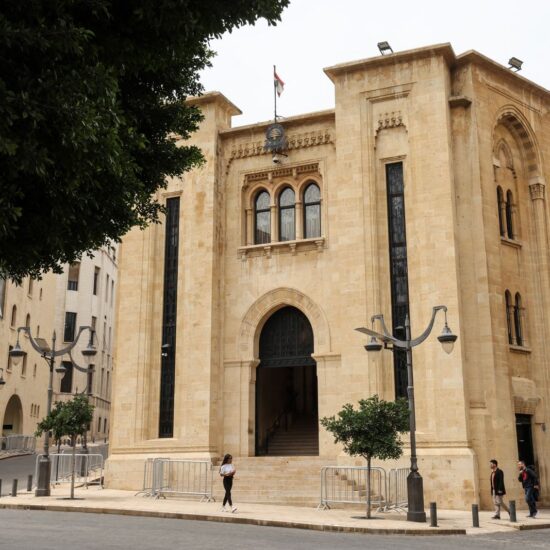
The government’s recent declaration that war and peace belong exclusively to the state was not wrong. It was insufficient. A statement without enforcement is not sovereignty; it is commentary. If the Lebanese state cannot exercise a monopoly over the use of force, then it must confront an unavoidable question: is it governing, or merely narrating?
For decades, Lebanon has survived through managed ambiguity. Armed autonomy was tolerated under the language of “resistance”. Strategic decisions were outsourced while the state maintained formal neutrality. This arrangement was always unstable, but it was politically convenient. Today, it is indefensible.
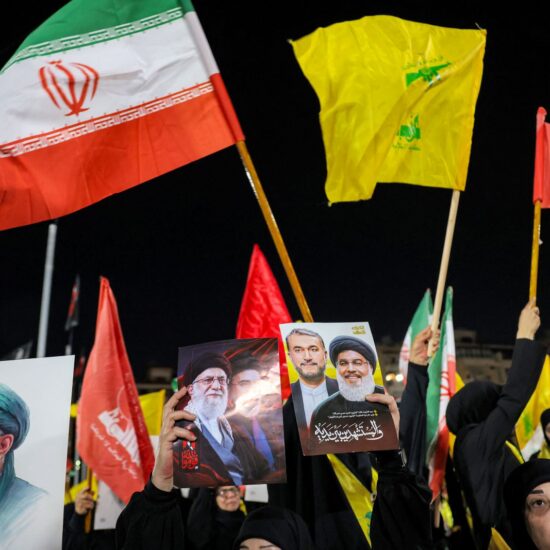
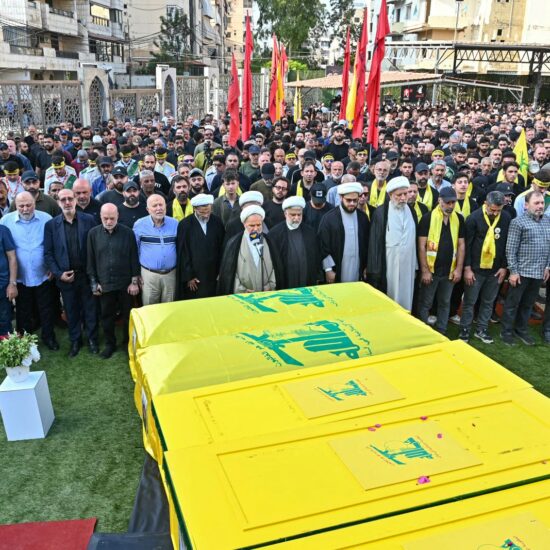
Hezbollah is not merely a political party operating within democratic competition. It is an armed structure with independent military capacity embedded in a regional axis. It retains the ability to trigger escalation with a militarily superior adversary without formal state authorization. That reality alone disqualifies Lebanon from claiming full sovereignty.
A state cannot share the power of war.
The recent events expose the hierarchy of decision-making. For months, Israel conducted repeated strikes on Lebanese territory while Hezbollah maintained calibrated restraint. Yet when Iran was struck, escalation followed immediately. That sequencing reveals a structural truth: Lebanon’s security posture is linked to regional calculations beyond its institutional control.
This is not an accusation against a community. It is an indictment of a political structure.
The Lebanese Shi’a community is not synonymous with permanent militarization. No Lebanese sect should be structurally tied to an armed project that exposes the entire country to cyclical confrontation. The issue is not identity. It is authority.
If the government asserts that Hezbollah’s current actions are illegal, it must answer a basic question: illegal according to what enforcement mechanism? What operational plan? What chain of command? What security deployment? Law without execution is performance.
And performance in moments of war is dangerous.
If the Lebanese government lacks the capacity to enforce its own declaration, then it must be honest about that incapacity. If it possesses the authority but lacks the will, then it must confront the political consequences of that choice. What is no longer acceptable is rhetorical sovereignty paired with operational paralysis.
Lebanon cannot rebuild an economy while remaining a potential battlefield for regional actors. It cannot negotiate financial recovery while war decisions remain externalized. It cannot speak of neutrality while armed escalation exists beyond cabinet control.
This is no longer about reform. It is about state survival.
If the government cannot enforce a monopoly over force, it must either move decisively to establish one through legal, political, and institutional means, or admit that it governs symbolically.
Govern or resign.
There is no third option left.
Ramzi Abou Ismail is a Political Psychologist and Senior Research Fellow at the Institute for Social Justice and Conflict Resolution at the Lebanese American University.
The views in this story reflect those of the author alone and do not necessarily reflect the beliefs of NOW.