Why it matters
The killing of a French soldier serving with UNIFIL in Ghandouriyeh is not an accident. It is not a misunderstanding. It is not “popular anger.”
It is a political act, and in south Lebanon, political violence of this kind does not happen outside the ecosystem controlled by Hezbollah.
For years, France has shielded Lebanon diplomatically, accommodated Hezbollah politically, and invested in the illusion that stability could coexist with an Iranian-backed armed order. That illusion has now been shattered, in blood.
What happened
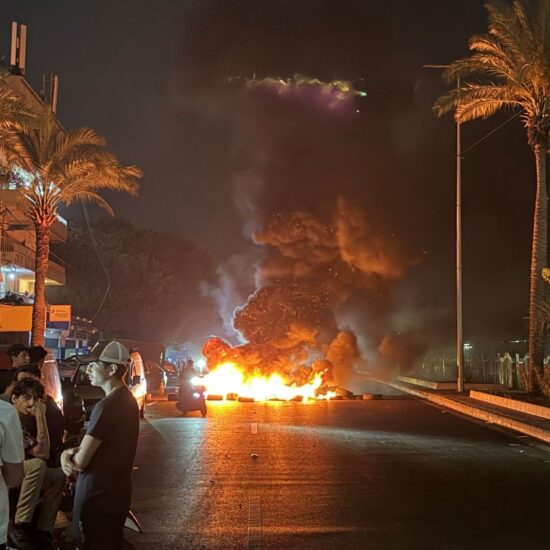
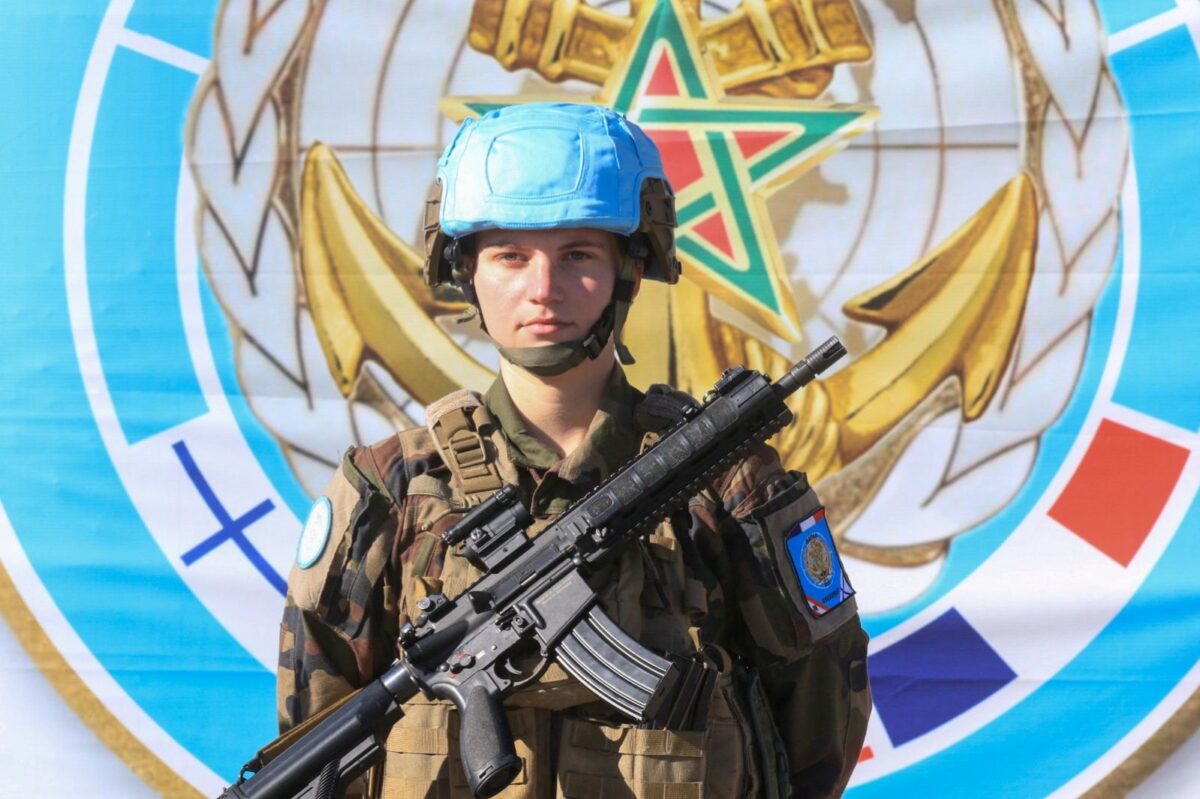
An altercation between locals and members of the French UNIFIL contingent in Ghandouriyeh escalated into direct violence, leaving one French peacekeeper dead and others wounded.
The incident occurred amid the return of displaced residents to southern villages, ongoing Israeli violations, and a fragile security environment. But none of this explains, or excuses, the targeting of international troops operating under a UN mandate.
The French contingent is not just another unit. It is one of the most politically significant components of UNIFIL, representing a country that has consistently played a leading role in sustaining Lebanon diplomatically and financially.
That is precisely why this killing matters.
The big picture
There is no such thing as “random” violence against UNIFIL in Hezbollah-dominated territory.
Whether Hezbollah directly ordered the attack or simply allowed it to happen is irrelevant. The reality is simpler: nothing of this magnitude takes place in the south without falling within the boundaries set by Hezbollah’s security and political order.
This is how Hezbollah operates — through plausible deniability layered over total control. It does not need to claim responsibility to assert authority. The message is embedded in the act itself.
And the message is clear: even international forces are not immune if they operate outside Hezbollah’s terms.
What Hezbollah is really saying
By allowing, or enabling, the killing of a French peacekeeper, Hezbollah is sending a blunt signal:
No authority in south Lebanon supersedes its own.
Not the Lebanese state.
Not the United Nations.
And certainly not France.
This was not about a misunderstanding with civilians. In a territory so tightly controlled, there is no such thing as spontaneous escalation at this level. Violence of this kind reflects a permissive environment, one that Hezbollah has built, sustained, and weaponized.
The return of civilians, the movement of UN patrols, even the rhythm of daily life in the south all operate within an implicit system of control. When that system turns violent, it is because violence has been allowed to happen.
The French illusion collapses
For years, France chose engagement over confrontation.
Paris bet on managing Hezbollah rather than challenging it. It invested in dialogue, protected Lebanon from full diplomatic isolation, and treated Hezbollah as a necessary part of a fragile equilibrium.
Ghandouriyeh exposes the failure of that approach.
Because the reality is this: Hezbollah does not reward accommodation. It exploits it.
The same France that defended Lebanon’s “stability” now finds its soldiers killed inside a system that stability was supposed to preserve.
What comes next
This changes the equation.
France cannot treat this as a routine incident. The killing of a French soldier on Lebanese soil demands a response — political, diplomatic, and potentially operational.
At the same time, this incident will reignite international scrutiny of UNIFIL itself. A force that cannot protect its own troops is a force whose mandate will inevitably be questioned — especially by Israel and other actors already skeptical of its effectiveness.
Most importantly, this once again exposes the fiction of Lebanese sovereignty. A state that cannot prevent the killing of international peacekeepers on its territory is not exercising sovereignty. It is surrendering it.
The bottom line
The killing of a French UNIFIL soldier is not just a security breach. It is a revelation.
It reveals the true balance of power in south Lebanon.
It exposes the cost of tolerating armed non-state authority.
And it confirms, once again, that Hezbollah’s project is not about protecting Lebanon — it is about dominating it.
France has now learned this lesson the hard way.
The question is whether it will continue pretending otherwise.