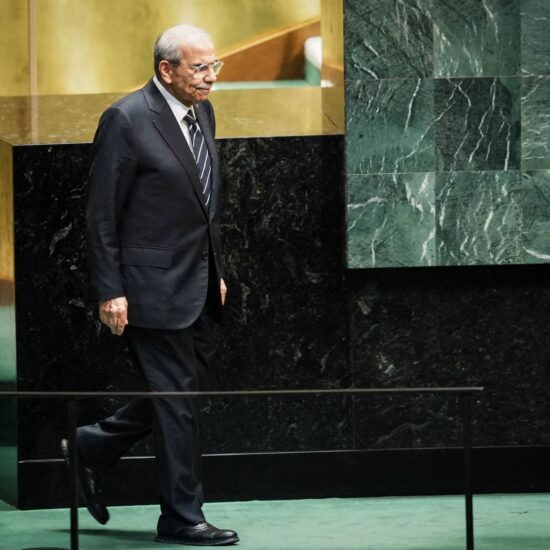
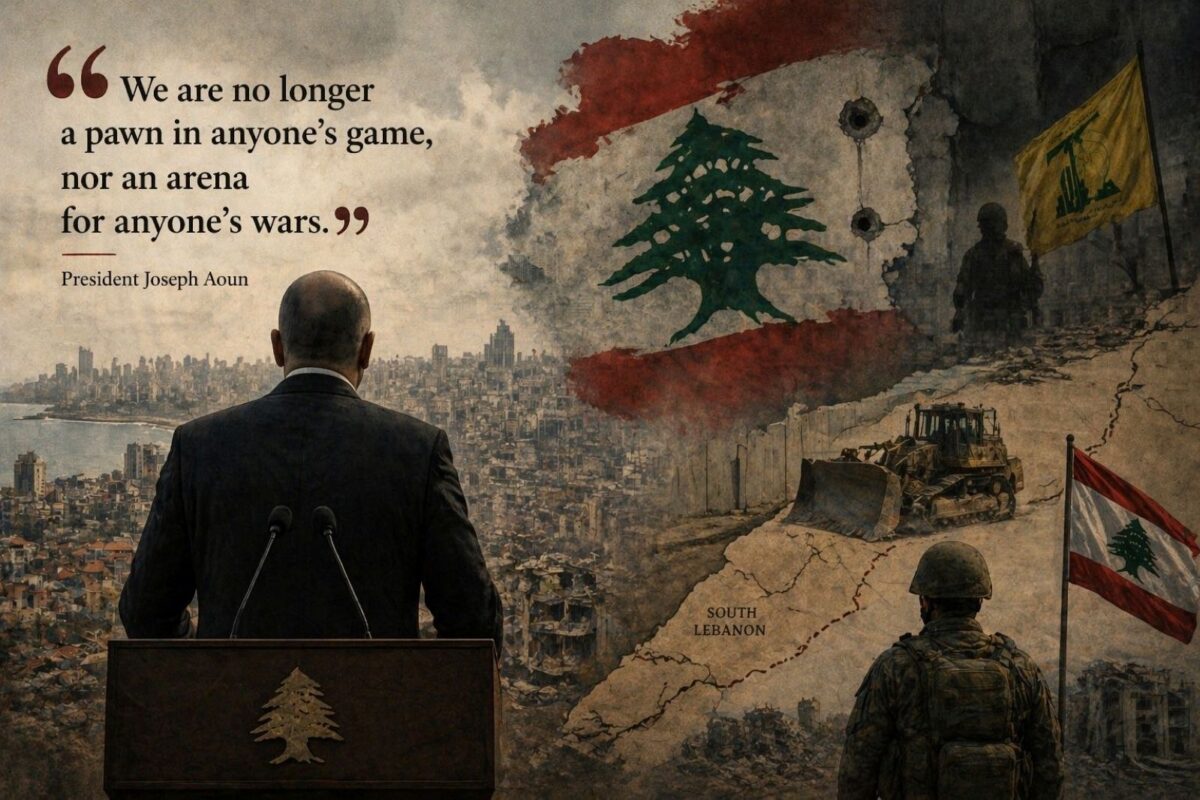
Joseph Aoun said what Lebanon needed to hear. He said it well. He said it with the kind of moral clarity that this presidency has been starved of for years. “We are no longer a pawn in anyone’s game, nor an arena for anyone’s wars.” For a moment, a genuine moment, it felt like something had shifted.
Then the moment passed. And the silence that followed was louder than the speech.
Let me be precise about what I mean, because in Lebanon’s current political climate, any criticism of the president is immediately weaponized by Hezbollah’s media apparatus, by its influencers, by everyone with a stake in reducing complex accountability to simple loyalty tests. So let me say this first: the attacks on Aoun from that quarter are bad faith dressed as principle, and they deserve to be named as such. A president who declares state sovereignty over all Lebanese territory, who insists that the Lebanese army is the sole legitimate defender of the nation, is not an enemy of the resistance. He is the resistance’s most serious political challenge and that is precisely why they want him discredited.
But defending Aoun from his bad-faith critics does not mean releasing him from legitimate ones. And the legitimate criticism is this: a beautiful declaration is not a plan.
Lebanon has never suffered from a shortage of soaring presidential language. It has suffered, chronically and fatally, from the absence of the morning after the speech, the sequence, the mechanism, the operationalized answer to the simplest and most devastating question: how?
How will Hezbollah be disarmed without lighting the fuse of civil conflict? How will the Lebanese state extend its authority over the south while Israeli bulldozers are simultaneously constructing a 10-kilometer buffer zone inside Lebanese territory? How will a community that has organized its entire identity around armed resistance be asked to lay down that identity and be offered something real in return?
These are not rhetorical questions. They are the only questions that matter. And their absence from the presidential address is not a stylistic oversight. It reflects a deeper structural failure one that no amount of eloquence can compensate for.
The Shia community is the ignored variable in every conversation about disarmament, and ignoring it is not caution. It is catastrophe deferred. Hezbollah is not the Shia community. But the Shia community is the sea in which Hezbollah swims and no strategy that treats that community as a problem to be managed from a distance, rather than a constituency to be addressed with dignity, will succeed. You do not disarm a movement by threatening it. You disarm it by making its protective function obsolete by answering, credibly, the question that every Shia family in the south is asking right now: and then who protects us?
That question requires political psychology, not just political will. It requires people who understand how communities under existential perceived threat make decisions how identity closes around a source of protection when that protection is challenged, how alternatives must be framed not as disarmament but as transition, not as surrender but as sovereignty shared. The advisory ecosystem around this presidency appears to be legal, diplomatic, and military. That is necessary. It is not sufficient.
President Aoun deserves advisors who understand group dynamics. Lebanon deserves a roadmap with a mechanism, not a promise of one. And the Shia community deserves to be spoken to not spoken about.
The country’s internal fabric does not run-on diplomatic time. Negotiations take months. Social cohesion collapses faster than that. If the plan is to manage the file quietly for the next year while something slowly emerges, what will emerge instead is fracture not from rockets, but from the accumulated exhaustion of a population that was told the decision had been reclaimed, and then watched nothing change.
Fifteen months of good intentions already broke this country once. We cannot afford another instalment.
The speech was beautiful. Lebanon needs what comes after it.
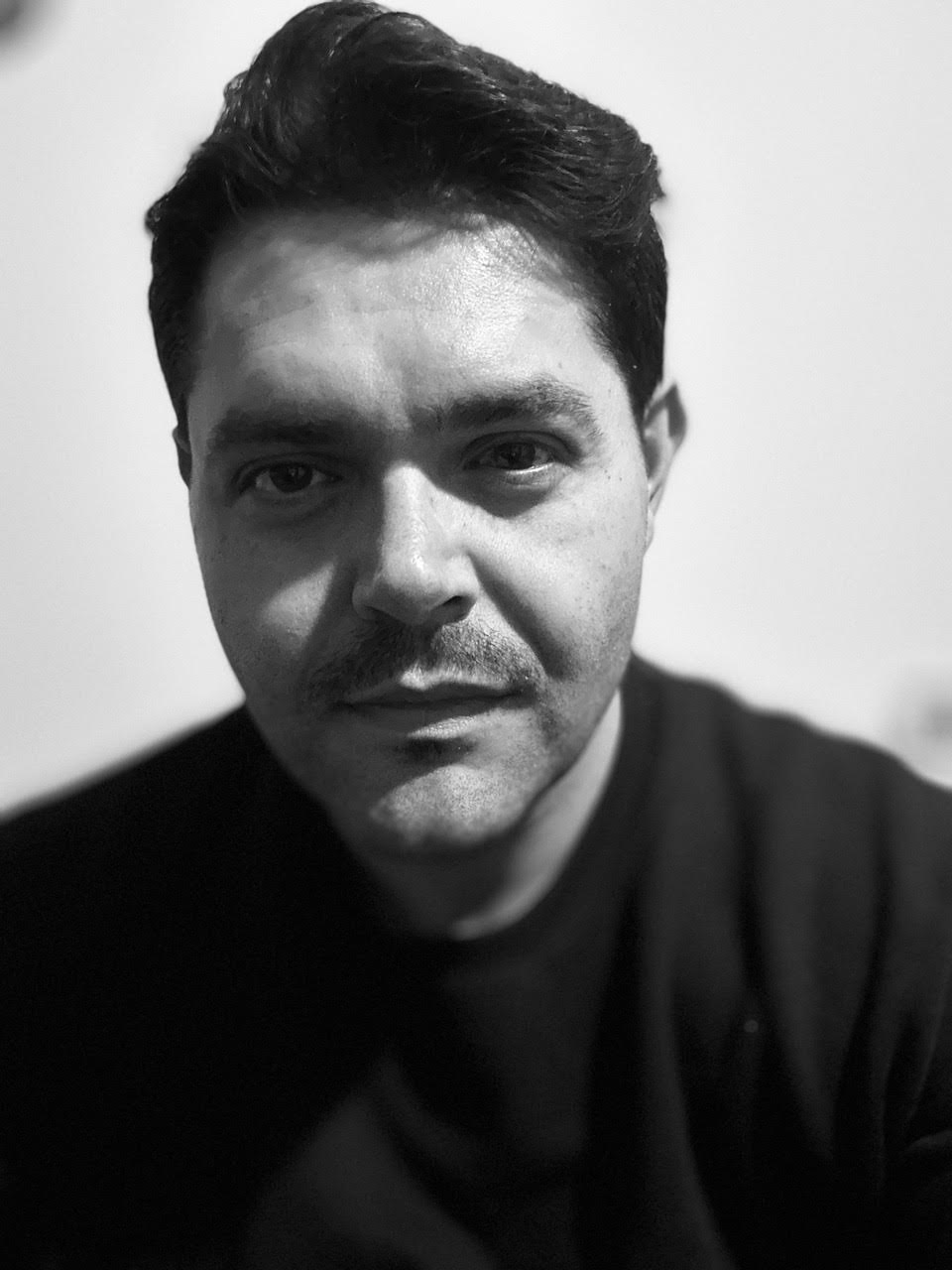
Ramzi Abou Ismail is a Political Psychologist and Senior Research Fellow at the Institute for Social Justice and Conflict Resolution at the Lebanese American University.
The views in this story reflect those of the author alone and do not necessarily reflect the beliefs of NOW