Naïm Qassem says the “resistance” is protecting Lebanon. The wreckage says otherwise.
Why it matters:
Hezbollah’s latest message to the Lebanese public is not a strategy for sovereignty, recovery, or protection. It is an invitation to remain trapped inside a failed mythology — one that has already reduced large parts of the country it claims to defend into ruin. At a moment when Lebanon needs clarity, accountability, and a path out of destruction, Hezbollah is once again offering fantasy dressed up as defiance.
What happened:
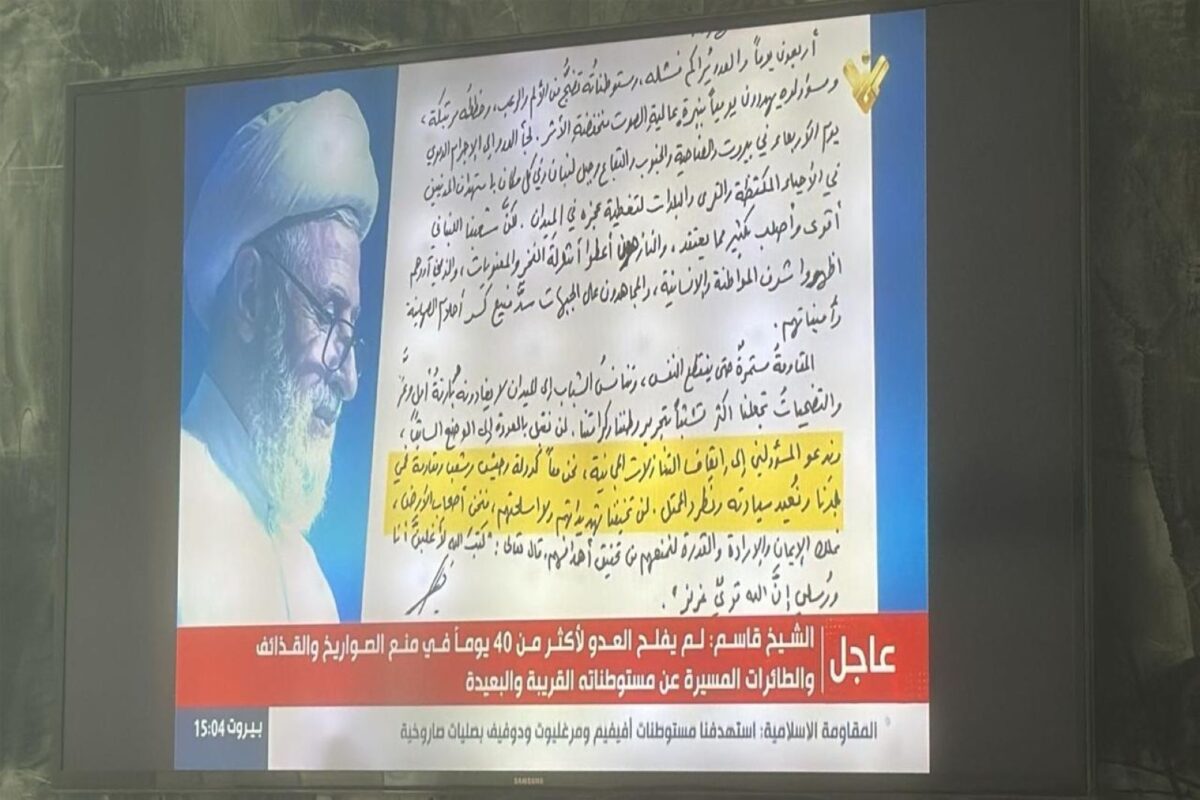
In his latest address, Hezbollah Secretary-General Naïm Qassem insisted that the “resistance” remains strong, that there will be no return to the previous situation, and that Lebanon must reject what he described as “free concessions.” He repeated the movement’s familiar formula of “state, army, people, and resistance,” presenting Hezbollah not as the force that helped drag Lebanon into devastation, but as its guardian and liberator.
He also claimed that Israel had failed militarily, that Hezbollah’s fighters had imposed new realities on the battlefield, and that threats and weapons would not intimidate those he described as the true owners of the land.
Reality check:
This is where Hezbollah’s discourse collapses into absurdity. A movement cannot claim victory while the land it supposedly protects lies occupied, shattered, and in many places flattened. It cannot speak of sovereignty while operating as an armed authority above the state. It cannot invoke national dignity while turning villages, towns, and neighborhoods into arenas for permanent destruction.
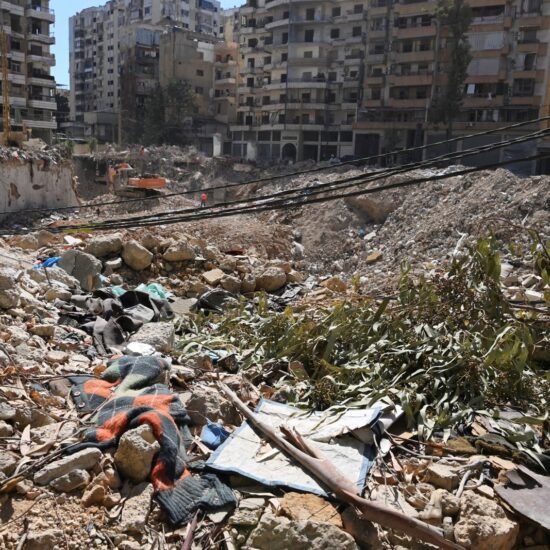
The most damning rebuttal to Hezbollah’s propaganda is not an argument. It is the landscape itself.
Southern Lebanon has not been “protected.” It has been devastated. Entire communities have paid the price for a military doctrine that treats civilian space as expendable and national collapse as acceptable collateral. If this is Hezbollah’s definition of steadfastness, then it is one that asks ordinary Lebanese to lose their homes, their livelihoods, and their future so that the party can preserve the illusion of relevance.
What he’s really saying:
Qassem’s message is not really about liberation. It is about refusing accountability.
By insisting there can be “no return to the previous situation,” Hezbollah is effectively saying that Lebanon must continue to live under the logic that produced this catastrophe in the first place: a state too weak to decide war and peace, an armed party too arrogant to admit failure, and a society forced to absorb the consequences.
His appeal to stop “free concessions” is equally cynical. The greatest concession ever imposed on Lebanon was not diplomatic restraint or political compromise. It was the concession of the state itself — handed over, piece by piece, to an organization that has long treated the republic as a platform for its own military and ideological project.
Between the lines:
Hezbollah’s problem today is that its lies are becoming harder to sustain.
For years, it sold itself as a shield. But what kind of shield leaves the country exposed, occupied, and reduced to rubble? What kind of “protection” produces mass displacement, destroyed infrastructure, and a population living under constant threat? What kind of “victory” is measured in funerals, ruins, and the normalization of endless war?
The answer is simple: this is not the language of national defense. It is the language of delusion.
And like all delusions, it depends on forcing others to participate in it.
Lebanese are asked to pretend that devastation is endurance, that occupation is resistance, that ruin is dignity, and that submission to Hezbollah’s permanent war footing is somehow a form of sovereignty. But this rhetorical trick is wearing thin. The gap between what Hezbollah says and what Lebanon has become is now too vast to conceal.
The bigger picture:
Hezbollah no longer offers Lebanon a future. It offers only a permanent state of sacrifice in service of an ideological and military posture that benefits its leadership more than the country it claims to defend.
Every new speech follows the same formula: glorify suffering, deny reality, invoke sacred language, and present national destruction as proof of moral superiority. But for most Lebanese, this is no longer inspiring. It is exhausting. And more importantly, it is transparent.
A movement that truly defended the land would not leave it occupied and destroyed. A movement that truly respected the people would not repeatedly expose them to disaster and then ask them to celebrate their endurance. A movement that truly believed in the state would not insist on remaining above it.
Bottom line:
Naïm Qassem’s speech is not a declaration of strength. It is the exhausted repetition of a political fiction that has brought Lebanon to hell and, in doing so, handed Israel exactly what it wants: a broken country, a ruined south, a hollowed-out state, and a population trapped between fear, exhaustion, and rubble.
Hezbollah wants the Lebanese to believe that this is resistance. Increasingly, it looks like national suicide marketed as virtue.