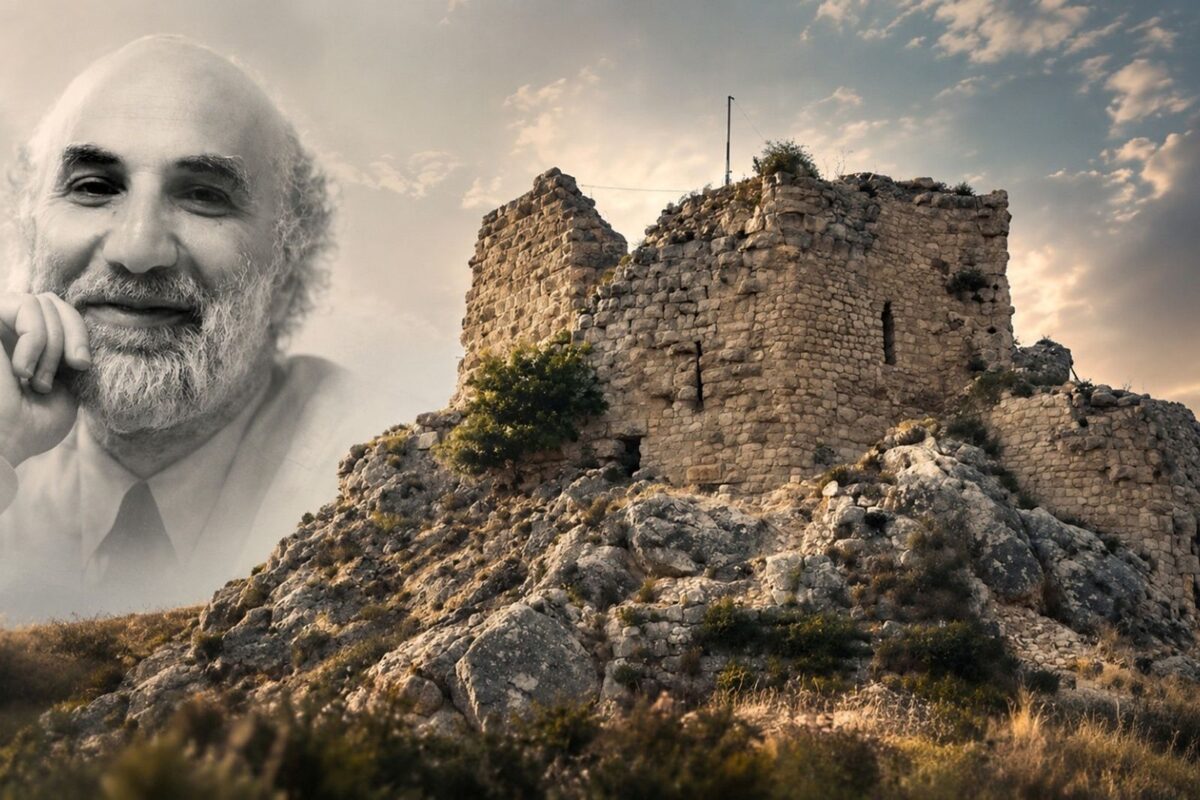
In Arnoun, the southern Lebanese village that gazes upon Beaufort Castle as though reading history from one of its most commanding heights, Fouad Ajami was born. The Lebanese-American intellectual spent much of his life trying, through memoir and scholarship, to restore people to their land after tyrants, ideologues, and merchants of blood had tried to sever them from it. For Ajami, Arnoun was never merely a place on the map of South Lebanon. It was a living memory: of ordinary people who belonged to the land, of homes and families, of fear and hope, of a South that was never the possession of outsiders, no matter how many armies, banners, and causes passed over its soil.
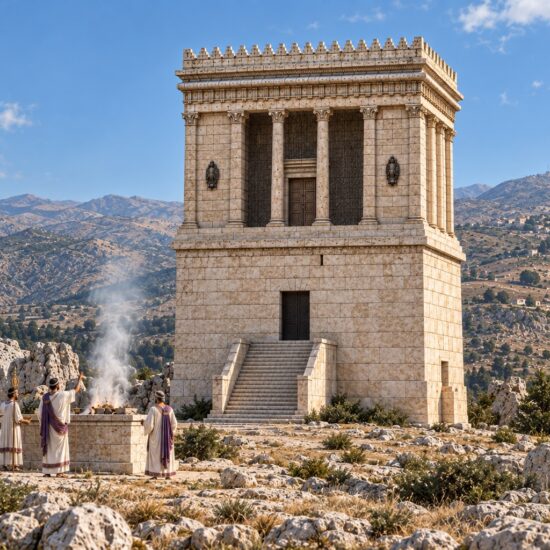
Today, as Beaufort Castle once again falls under Israeli occupation, the scene cannot be reduced to a “loss for Hezbollah,” nor even to a fleeting Israeli victory. This castle, standing for centuries above the Litani River, has never been mute stone. It has borne witness to a far deeper tragedy: the tragedy of a land repeatedly trampled by strangers, each arriving with a promise of salvation, each raising a flag above it, and each leaving behind ruin for its people to bury their dead and rebuild what others destroyed.
From the Crusaders to Saladin, from the Mamluks to the Ottomans, from Fakhr al-Din to the armies of the Mandate, then from the Palestine Liberation Organization to Israeli occupation, and finally to Hezbollah and Iran’s Revolutionary Guard, Beaufort has witnessed the same recurring truth: all those who came to this land claiming to save it eventually turned its people into fuel for their own projects.
This is the heart of the tragedy. Beaufort is not merely a military position, nor simply a “strategic point” overlooking Galilee and the Litani. It is a mirror. Whoever looks at it today sees the faces of all those who claimed to protect Lebanon while using it for purposes that were never Lebanese. One sees those who spoke in the name of Jerusalem, the nation, resistance, liberation, and sovereignty, yet never once asked the people of Arnoun, Nabatieh, Marjayoun, Bint Jbeil, Khiam, and the villages of the South whether they wanted their homes turned into barricades, their fields into rocket platforms, and their memories into military communiqués.
Hezbollah will now do what it always does. It will turn the fall of Beaufort into yet another chapter in its discourse of victimhood. It will say that Israel is an aggressor, and that is true. It will say that occupation is a danger, and that too is true. But it will never answer the essential questions: who brought this occupation back? Who confiscated Lebanon’s decision of war and peace? Who turned the South into an open Iranian arena? Who convinced people that death is destiny, destruction is sacrifice, displacement is heroism, and the return of families to their homes is a minor detail in a grand epic scripted elsewhere, in Tehran?
The humiliation is not only that Israel raised its flag above the castle. The deeper scandal is that the Lebanese state was absent from the scene, unable to prevent it, because an armed party had first usurped the role of the state and then failed to defend the very land it had claimed to protect. Those who promised permanent liberation have returned the Lebanese to the image of occupation. Those who promised deterrence delivered devastation. Those who claimed their weapons would prevent Israel from advancing helped create the conditions for Israel to entrench itself in one of the most symbolic fortresses in South Lebanon.
But Beaufort is older than Hezbollah, older than Israel, and greater than every flag ever raised above it. It has seen invaders come and go. The Crusaders departed. Saladin and the Mamluks departed. The Ottomans and the French departed. The PLO departed. Israel departed in 2000. And now Israel has returned because Lebanon allowed an Iranian proxy to hijack its borders, its decision-making, and its fate. Hezbollah itself, no matter how loudly it speaks, will not be able to hold history hostage forever.
What must be said plainly today is this: Beaufort Castle is not Hezbollah’s castle, to be mourned according to Hezbollah’s mythology. Nor is it an Israeli trophy, to be interpreted through the arrogance of occupation. It is Lebanese heritage, a southern memory, and a historic landmark that reminds us that slogans do not defend land once that land has been made vulnerable to outsiders. Land is protected by a state. It is protected by the people who live on it. It is protected by a national decision that does not emerge from an Iranian operations room or from a mobilizing speech that distributes death among the poor while others claim glory.
In Fouad Ajami’s recollections, the South appears not as an eternal front, but as a human landscape. Its people return as individuals with names, not as numbers in a ledger of martyrdom. Its villages return as places of life, not as platforms for regional war. This is precisely what tyrants and militias seek to erase. The tyrant fears memory because memory exposes his lies. He fears the village because the village exposes the empire. He fears the individual because the individual disrupts the myth of the armed collective.
In Fouad Ajami’s recollections, the South appears not as an eternal front, but as a human landscape. Its people return as individuals with names, not as numbers in a ledger of martyrdom. Its villages return as places of life, not as platforms for regional war. This is precisely what tyrants and militias seek to erase. The tyrant fears memory because memory exposes his lies. He fears the village because the village exposes the empire. He fears the individual because the individual disrupts the myth of the armed collective.
For this reason, the fall of Beaufort must become a moment of confrontation, not merely a moment of mourning. A confrontation with Israel, yes, as an occupying and aggressive force. But also a confrontation with Hezbollah, as the party that turned the South into an exposed battlefield. A confrontation with the Lebanese state, which has hidden behind statements while history is being written on the stones of its own castles. And a confrontation with a cowardly political class that mistakes silence for wisdom, when silence at the moment castles fall is not wisdom at all. It is complicity.
Beaufort Castle will not be defeated. Stone often outlives tyrants. The real question is not whether the castle will survive, but whether the Lebanese will survive this recurring cycle of occupation, proxy rule, and denial. Will they reclaim the South as a land for its people, or will they once again leave it to those who turn it into a stage for false heroics and real tragedies?
Beaufort is not Hezbollah’s defeat alone. It is an indictment of a republic that allowed itself to be kidnapped, and of a people repeatedly asked to die so their leaders would not have to admit the truth. And the truth is simple: whoever hands his land to strangers, even in the name of resistance, will one day wake up to find a stranger’s flag raised above his highest castle.
Beaufort Castle will remain after all flags depart. The Crusaders left. The Ottomans left. The PLO left. Israel left in 2000. And everyone who imagined that the South belonged to his project will also leave. But the question remains: will the Lebanese remain prisoners of waiting, or will they finally reclaim their land from occupation and from the proxies of foreign powers alike?
Makram Rabah is the managing editor at Now Lebanon and an Assistant Professor at the American University of Beirut, Department of History. His book Conflict on Mount Lebanon: The Druze, the Maronites and Collective Memory (Edinburgh University Press) covers collective identities and the Lebanese Civil War. He tweets at @makramrabah