Photo by- / LEBANESE PRIME MINISTER'S PRESS OFFICE / AFP
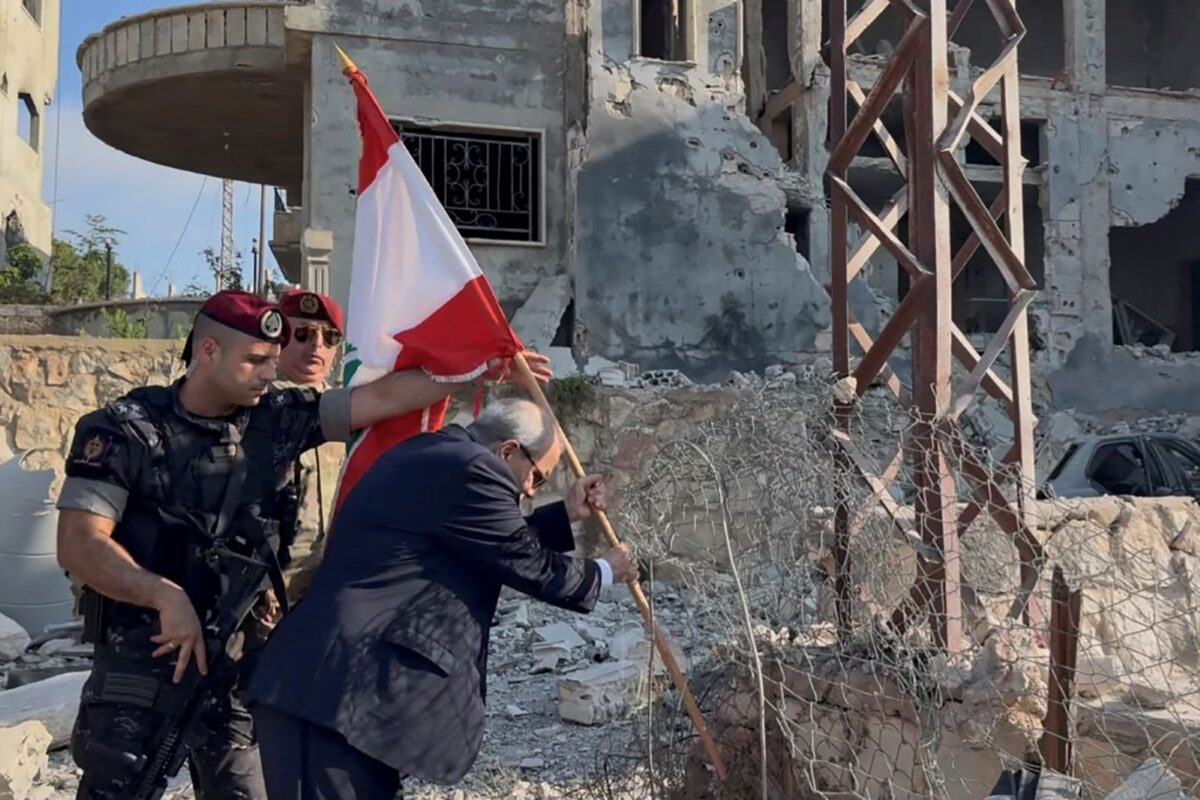
This handout picture released by the Lebanese prime minister's media office shows Lebanese Prime Minister Nawaf Salam placing a national flag along a damaged street in the southern village of Zawtar al-Gharbiya on July 22, 2026, after the withdrawal of Israeli troops from the area.
Under the arrangement, the Lebanese Army is expected to assume exclusive security control, dismantle unauthorized weapons and military infrastructure, while Israel gradually withdraws from the designated areas.
Supporters see the initiative as a rare opportunity for the Lebanese state to reassert its authority in the south. Critics, however, question whether the model can succeed while Israeli forces retain positions nearby, Hezbollah’s long-term response remains uncertain, and implementation depends on fragile political and security understandings.
The deployment of the Lebanese Army into the first “pilot zones” in south Lebanon marks one of the most significant developments since the June framework agreement between Lebanon and Israel. For the first time, the agreement is moving beyond diplomatic commitments and into practical implementation, placing the Lebanese state before a difficult test: can it establish exclusive authority over areas that have long existed outside full state control?
The three villages
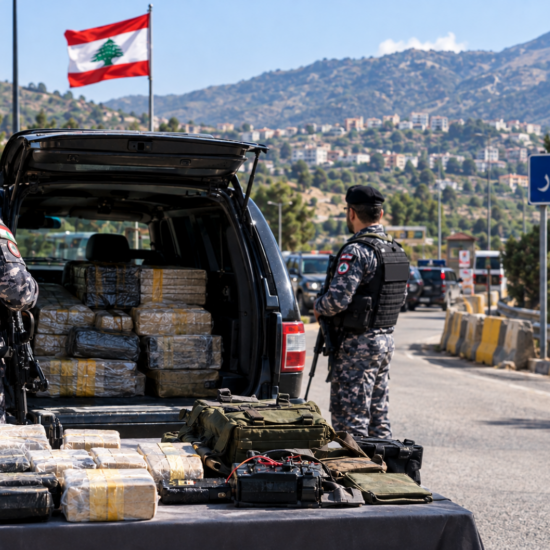
The pilot phase focuses on the villages of Froun, Srifa and Zawtar al-Gharbiyeh, where the Lebanese Army is tasked with assuming responsibility for security following coordinated Israeli withdrawals. Under the mechanism, the army is expected to confiscate weapons outside state control, dismantle military infrastructure not belonging to the state, and prevent armed groups from re-establishing a presence. The operation is being coordinated through the Military Coordination Group established under the US-sponsored framework agreement.
The initiative represents far more than a localized security arrangement. If successful, the mechanism could gradually expand across other parts of southern Lebanon, with further Israeli withdrawals taking place alongside wider Lebanese Army deployment. In theory, it offers a roadmap for implementing the principles of UN Security Council Resolution 1701 through a more structured and closely monitored process.
The implementation challenge
For Lebanon’s government, the pilot zones also carry strong political symbolism. Prime Minister Nawaf Salam’s visit to Zawtar al-Gharbiyeh, where he raised the Lebanese flag after the army’s deployment, was designed to reinforce a message that state institutions, not armed groups, should represent sovereign authority in the south. President Joseph Aoun has similarly argued that the Lebanese Army should remain the country’s sole legitimate armed force responsible for protecting national sovereignty.
Political analyst Marwan El Amine argues that the pilot zones represent far more than a localized security mechanism. In his view, they constitute the first practical implementation of the June framework agreement between Lebanon and Israel and signal what he describes as a separation between Lebanon’s state institutions and the regional agenda historically pursued by Iran through Hezbollah.
“The pilot zones confirm that the Lebanese state is prepared to exercise sovereign decision-making,” Marwan told NOW. “They send a message that the state—not armed groups—is capable of reclaiming territory through diplomacy and state institutions rather than through nom-state military structures.”
He added that the gradual Israeli withdrawal from the designated villages gives the Lebanese state an opportunity to demonstrate that it can restore authority without exposing local communities to another cycle of war. However, he cautioned that a full Israeli withdrawal remains tied to the dismantling of Hezbollah’s military infrastructure, as stipulated in the framework agreement, making implementation inseparable from the broader question of Hezbollah’s weapons.
Yet translating symbolism into sustainable security presents a far more difficult challenge.
The framework agreement requires a delicate balance between Israeli withdrawals and the Lebanese Army’s ability to secure territory previously influenced by Hezbollah.
The framework agreement requires a delicate balance between Israeli withdrawals and the Lebanese Army’s ability to secure territory previously influenced by Hezbollah.
Israel has repeatedly stated that its withdrawal will remain conditional upon the removal of Hezbollah’s military infrastructure, while also insisting it retains the right to respond to perceived threats. At the same time, Lebanese authorities must implement security measures without triggering internal political confrontation or undermining domestic stability.
While many observers describe the obstacles primarily as political divisions, Marwan rejects that characterization. He argues that the central challenge is not a conventional domestic disagreement but the continued existence of Hezbollah as an armed actor operating outside the state’s authority.
“This is not simply a political dispute within Lebanon,” he said. “It is a conflict between the Lebanese state and Hezbollah’s insistence on maintaining an armed project that serves Iran’s regional interests rather than the interests of the Lebanese state.”
According to Marwan, the pilot zones will therefore become an early indicator of whether the Lebanese authorities are prepared to prevent Hezbollah from re-establishing a military presence in areas vacated by Israeli forces. “The first real test,” he said, “is whether the state can stop Hezbollah’s military infrastructure from returning once the army deploys.”
He also argued that Hezbollah has little incentive to portray the pilot zones as a success because doing so would reinforce the legitimacy of state institutions rather than its own military role. Whether the initiative expands beyond the initial villages, he said, will depend not only on security coordination but also on the Lebanese government’s willingness to implement long-standing commitments that place the state’s monopoly over arms at the center of national security.
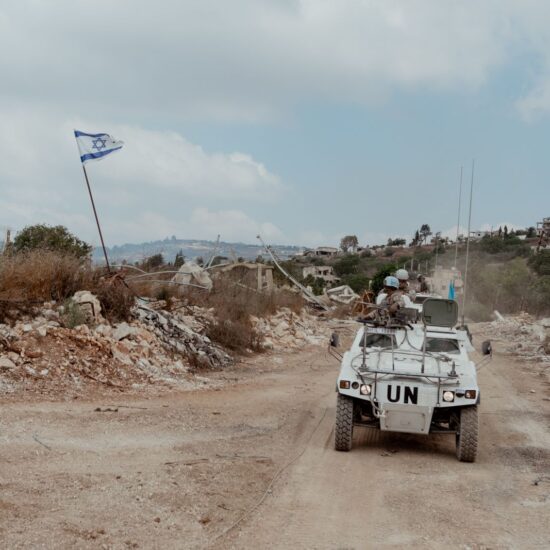
Early implementation has already illustrated these difficulties. During the army’s deployment in Zawtar al-Gharbiyeh, the Lebanese Army reported Israeli gunfire near its units, warning that such incidents risk disrupting the agreed deployment process. The episode underscored how fragile the security environment remains despite the framework agreement.
Beyond the military dimension, the pilot zones are also viewed internationally as a test of Lebanon’s willingness and capacity to re-establish state authority over territory historically dominated by Hezbollah.
American officials have described the initiative as an opportunity for the Lebanese state to regain effective control while warning that any attempt to obstruct implementation or rebuild military infrastructure could jeopardize reconstruction efforts and prospects for long-term stability.
Ultimately, the pilot zones are testing more than a ceasefire mechanism or a localized security arrangement.
Ultimately, the pilot zones are testing more than a ceasefire mechanism or a localized security arrangement. They represent the first practical effort to determine whether Lebanon can translate political commitments into state authority by enabling the Lebanese Army to exercise exclusive control over territory long dominated by non-state armed structures.
The outcome will show whether the Lebanese state can become the only authority responsible for armed security and military power in the country.