When President Trump told reporters at the G7 summit on 16 June that he had urged Israel to “let Syria take care of Hezbollah,” because Damascus would “do a better job,” he was not improvising. He had floated the same idea earlier in the month. U.S. envoy Tom Barrack had aired it first, warning in December that Lebanon risked being “reabsorbed” into Syria if it would not disarm Hezbollah, a remark Speaker Nabih Berri angrily rejected. By March, Washington was reportedly quietly urging Damascus to move forces into eastern Lebanon. The phrasing was new, but it revived the oldest dilemma in modern Lebanese history.
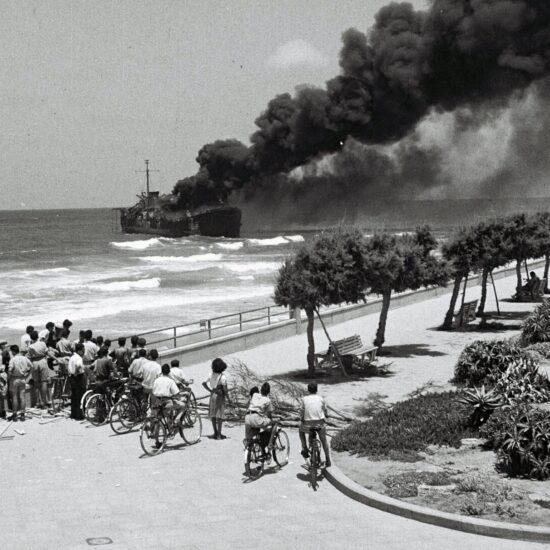
In 1982, Israel invaded to expel the PLO and very nearly extracted a peace. The May 1983 agreement, brokered by Washington under President Amin Gemayel, would have normalized relations and sent Israeli troops home. Beirut, under Syrian pressure and riven by its own divisions, abrogated it within a year. The space Lebanon refused to fill on its own, and by choice, was filled for it: Syrian forces, in the country since 1976, settled in for nearly three decades and did not leave until the Cedar Revolution forced them out in 2005. Israel, for its part, held a “security zone” in the south until 2000, then withdrew so abruptly that the South Lebanon Army collapsed and Marjayoun emptied overnight of the families tied to it. The Metn remembers the Syrians one way; the South remembers the Israelis another. The lesson both taught is identical: horror vacui. A sovereignty Lebanon will not exercise, a decision it will not make, is a vacuum others will fill and occupy.
That is the lesson now being tested a third time, and Hezbollah is the reason. From a clandestine militia in the late 1980s, the party became a standing military force that outgunned the state, then a political bloc that governed through the Shia duo of Amal and Hezbollah, its Aounist allies, and a puppet presidency. It then became a weight that helped sink the economy, and finally a parallel authority running smuggling routes in arms, fuel, Captagon, and people. Successive governments, first Mikati’s and then the wider establishment, chose accommodation over confrontation.
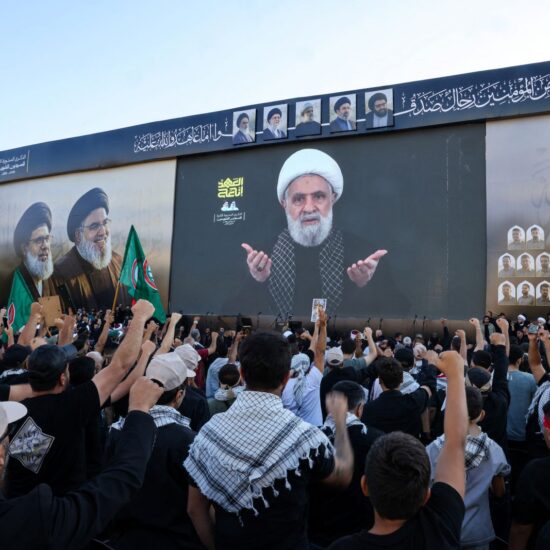
Then Hezbollah miscalculated. On 8 October 2023, it opened a “support front” for Gaza. It did not foresee where that would lead: the killing of its leader Hassan Nasrallah in September 2024, of his designated successor Hashem Safieddine weeks later, and of much of the senior command, followed by a war that gutted the party and a ceasefire in November 2024 that left it diminished and exposed. For the first time, not only Israel but much of the West began treating the group as a threat to be dismantled rather than managed.
Into that opening stepped a new president. In his inaugural speech on 9 January 2025, army General Joseph Aoun vowed a state monopoly on arms; PM Nawaf Salam’s government adopted the principle. In August, the cabinet tasked the army with a disarmament plan, and in September General Rodolphe Haykal presented “Homeland Shield,” a five-phase roadmap beginning south of the Litani. By January 2026, the army declared the first phase substantially complete; by February, the cabinet had set four months for the second. Hezbollah rejected the timeline outright, insisting that the ceasefire applied only south of the Litani.
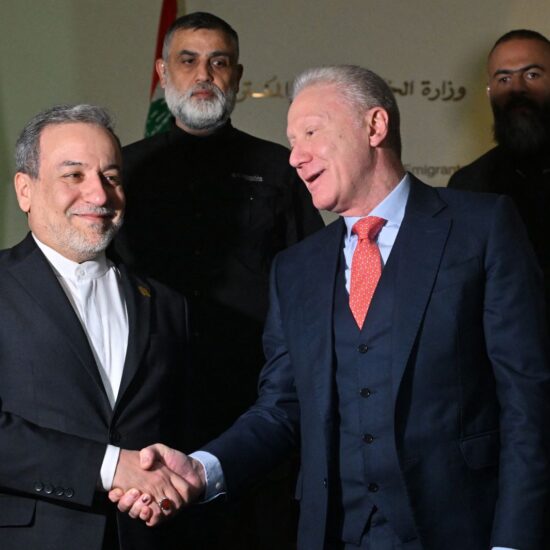
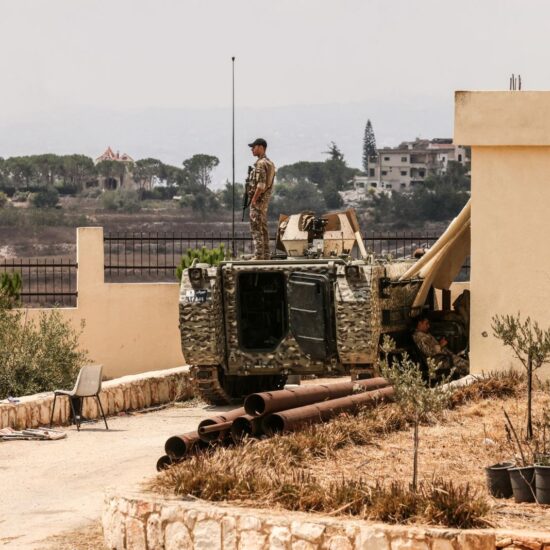
The plan stalled where every Lebanese plan stalls: at the line between intention and enforcement, between capability and failure. Israel, unconvinced, resumed and then deepened its incursion into the south, pushing further than at any point since 2000. Direct Lebanese-Israeli talks opened in Washington in April 2026, the first since 1983, with Beirut seeking a ceasefire and withdrawal, and Israel demanding disarmament first. The talks are stalling, and Lebanon’s own hedging, negotiating while refusing to confront the party at home, is a large part of the reason why. Once again, Lebanon intends and fails to advance.
This is the context for Trump’s remark. Read generously, it is an offer of sovereignty: decide for yourselves whether peace with Israel or a Syrian hand clears the Bekaa and northern Lebanon, and, by extension, all of Lebanon, of Hezbollah, because either road ends with Hezbollah’s arsenal gone. Read plainly, it was a jab at Netanyahu over civilian casualties, and Damascus has repeatedly said it has no intention of crossing the border. Read more deeply, it was a last invitation before the dice roll. The choice may therefore be more rhetorical than real, which only raises the stakes. Either way, the vacuum will be filled. What the South and the Bekaa remember is how slowly such guests depart.
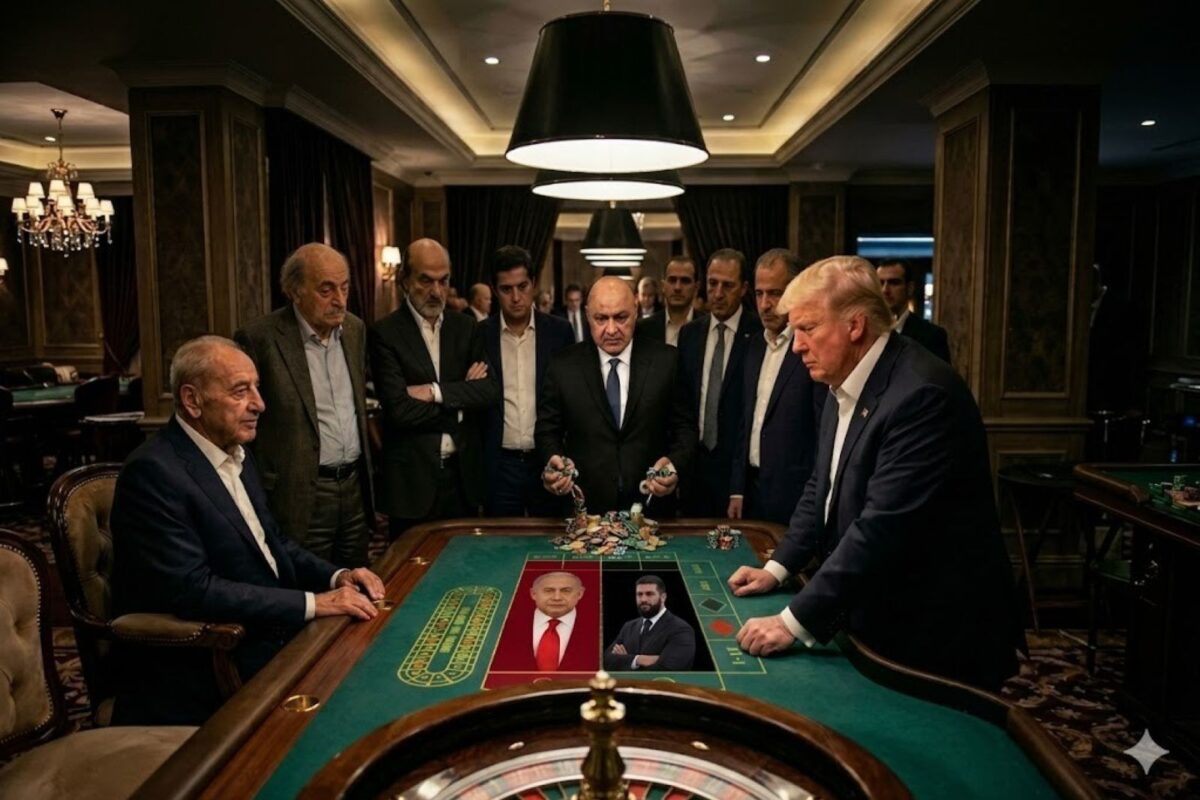
Still, the frame holds. Rouge ou noir. Peace with Israel, or the Syrians back in. President Aoun, Prime Minister Salam, Speaker Berri, members of parliament, and party leaders: in both colors the wager is the same, and in both the bank’s first claim is Hezbollah’s weapons. The only question Lebanon has never been willing to answer is whether it will place the bet itself and win the big prize, or wait, as it did in 1983, for someone else to place it. Some risks are not worth taking.
Cathryn Papadopoulo is the Secretary of Foreign Affairs and The Diaspora, in Lebanon’s National Liberal Party, called Ahrar.
The views in this story reflect those of the author alone and do not necessarily reflect the beliefs of NOW.