There is a persistent habit in regional politics: treating “Arab solidarity” as if it were a functioning system rather than a rhetorical one. It is invoked in speeches, reaffirmed in communiqués, and used as a standard to discipline smaller states. Yet when tested against reality: war, collapse, internal fragmentation, or external interference, it repeatedly dissolves into selective alignment and competing national interests.
Lebanon is confronting that gap again at a decisive moment.
For the first time in years, there is a serious opening, driven largely by sustained U.S. engagement, to address Lebanon’s structural breakdown.
**For the first time in years, there is a serious opening, driven largely by sustained U.S. engagement, to address Lebanon’s structural breakdown. **
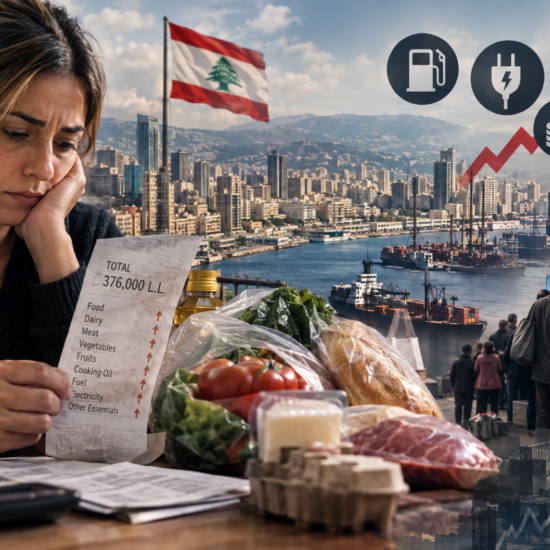
This includes the possibility of economic stabilization, institutional recovery, and security arrangements that could redefine the country’s trajectory, potentially within a broader peace framework. It is not theoretical diplomacy. It is a real strategic window shaped by shifting regional calculations and accumulated exhaustion with permanent crisis.
And yet, the familiar demand returns: wait for Arab consensus.
The problem is that such consensus has never functioned as a binding political or security reality.
Arab multilateral institutions have consistently failed their most important stated purpose: forming a unified bloc capable of protecting member states from fragmentation, armed internal capture, and external penetration. When sovereignty is violated, when state authority erodes, when foreign actors entrench themselves inside Arab countries, there is no enforcement mechanism, only statements, divergence, and selective positioning.
*The record is not abstract.*
Arab states have already made sovereign peace decisions independently of any collective framework: Egypt signed the Camp David Peace Treaty in 1979 Jordan signed the Wadi Araba Treaty in 1994 The UAE, Bahrain, Sudan, and Morocco normalized relations in 2020 under the Abraham Accords
These were not deviations from a unified Arab position. They were proof that no enforceable consensus exists in the first place.
Yet Lebanon is still expected to act as if such a consensus meaningfully constrains its survival decisions.
The same structural failure appears across every major regional crisis.
Syria after 2011 became the clearest case study. A state collapsed into war, and instead of coordinated Arab influence, the region fragmented into competing positions while external powers filled the vacuum. Iran and Russia entrenched themselves decisively, while Arab leverage steadily eroded.
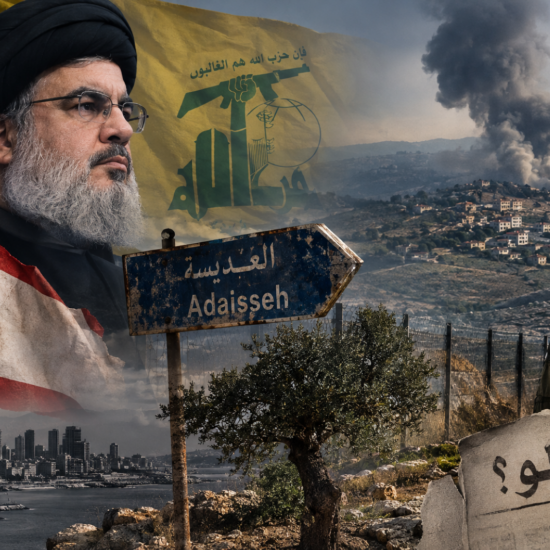
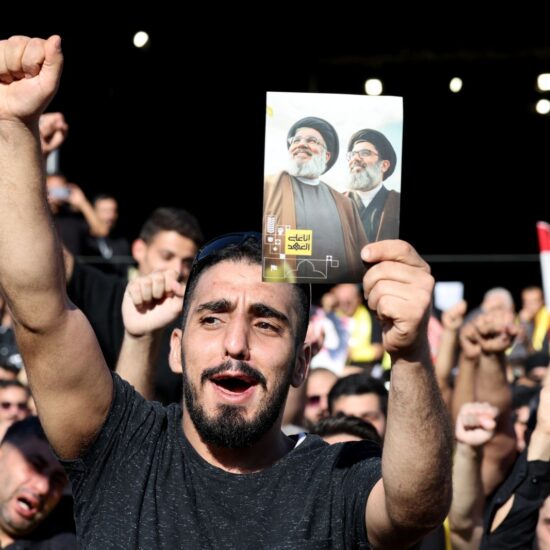
Lebanon’s trajectory has been slower but structurally identical. The rise of Hezbollah as a dominant armed and political actor aligned with Iran did not happen in secrecy. It unfolded over decades in plain sight. Yet no sustained Arab strategy emerged to reinforce Lebanese sovereignty or restore the state’s monopoly over force. Support was episodic, reactive, and often conditional rather than strategic.
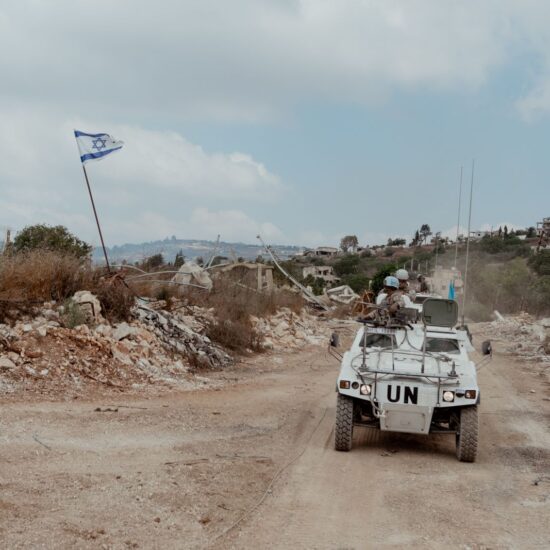
More recently, regional war involving Iran, the United States, and Israel has again exposed the absence of Arab cohesion. Even when Gulf states came under direct pressure from Iranian-linked attacks and regional spillover, responses remained fragmented.
There was no unified doctrine, only individual calculations shaped by immediate risk.
At the same time, the Palestinian cause, while remaining unresolved, has often been politically instrumentalized within Arab discourse. It has served both as a genuine moral reference point and, at times, as a rhetorical shield masking deeper strategic divergence and paralysis.
The result is consistent: symbolic unity, operational fragmentation.
External powers adapted accordingly. Iran expanded its influence through non-state networks across multiple Arab theaters. Turkey projected influence into Syria, Iraq, and Libya. The regional order shifted away from collective logic toward transactional alignment based on shifting interests.
This is the environment in which Lebanon is being asked to delay decisions about its future.
Lebanon is not obligated to wait for a unity that does not function. Nor is it required to subordinate its existential choices to a framework that has repeatedly failed to protect its members in moments of greatest need.
*But Lebanon is not obligated to wait for a unity that does not function. Nor is it required to subordinate its existential choices to a framework that has repeatedly failed to protect its members in moments of greatest need.*
And there is a deeper reality approaching.
When the current Iran–United States–Israel war eventually de-escalates, the political earthquake that follows will not preserve existing alliances or rhetorical constructs. It will expose them. What is presented today as “solidarity” will again reveal itself as conditional, reversible, and shaped by circumstance—not permanence.
**Lebanon has the right to choose its allies based on facts, not narratives. Based on who actually supports its sovereignty in practice, not who invokes it in speeches. **
*No state in this region holds moral seniority over Lebanon’s right to survive, recover, and define its own strategic direction. That hierarchy does not exist in reality, and pretending otherwise has already cost Lebanon far too much.*
*We will not be shy about that anymore.*
Lebanon has lived long enough under the pressure of imagined consensus and selective solidarity. It has already paid the price of waiting for unity that never arrives when it matters most.
The question is no longer whether Arab solidarity is real. It is whether Lebanon will continue being intimidated to act as if it is.
*We will not forever wait for a two-state solution that might or might not happen. Our wait will not increase the chances of this dream materializing. Palestine has its people, Lebanon has its own future, ambitions, and dreams.*
Jordan and the UAE have signed a $2.3 billion agreement to build and operate a 360-km railway connecting Aqaba Port to industrial mining areas as part of the new India-UAE-Israel trade corridor (Port of Haifa).
This is already reflected in how regional states are building real strategic and economic alignments, driven by growth, connectivity, and shared prosperity, and reflecting the kind of regional future Lebanon also has the right to join.
*This is my opinion, open and stated clearly- as clearly as it needs to be said.*
Elissa E Hachem is a journalist and political writer specializing in regional affairs and governance. Former Regional Media Advisor at the U.S. State Department’s Arabic Regional Media Hub, with broad experience in strategic communication across government and private sectors.
The views in this story reflect those of the author alone and do not necessarily reflect the beliefs of NOW.