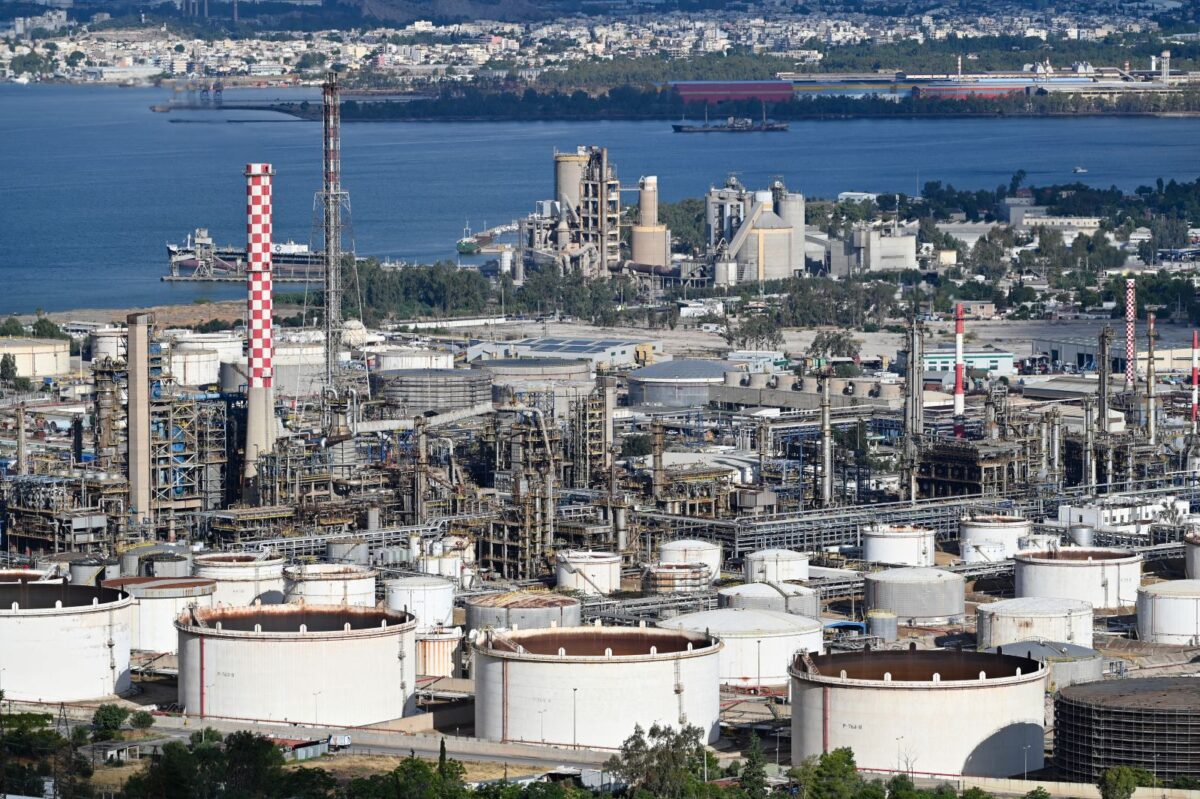
A general view of the HELLENiQ Energy oil refinery is seen in Aspropyrgos, near Athens, Greece, on July 25, 2026. Oil prices have risen to record levels amid a crisis in the Strait of Hormuz. (Photo by Nicolas Koutsokostas/NurPhoto) (Photo by Nicolas Koutsokostas / NurPhoto / NurPhoto via AFP)
There is an old rule in strategy: never point a weapon you are not prepared to use. Iran has spent four decades perfecting the opposite. Point the weapon, let everyone else calculate the cost of calling the bluff, and extract the rent while they hesitate. The Strait of Hormuz is the latest and most ambitious application of this tactic. By squeezing the waterway through which a fifth of the world’s oil passes, Tehran is betting that high energy and food prices, along with high anxiety, will do the negotiating for it. No summit, no concessions, no signatures. Just pressure, applied patiently, until someone else decides that stability is worth paying for.
The tanker war, or when the answer was no
It was not always so. During the 1980s war with Iraq, Iran tried a similar tactic. As the tanker war escalated and Kuwaiti shipping came under attack, the United States did not issue a statement of concern. It reflagged Kuwaiti tankers under the American flag and escorted them through the Gulf, forming the largest naval convoy operation since the Second World War. When Iran mined the waters anyway, and an American frigate struck one of those mines, the US Navy responded in April 1988 by destroying Iranian oil platforms and sinking or crippling half of Iran’s operational navy in a single day. A few months later, Ayatollah Khomeini drank what he famously called the cup of poison and accepted the ceasefire.
The lesson Tehran drew at the time was clear, as its behavior changed. For decades afterward, Iran did not attempt to close Hormuz. When Iran did not get away with it, it did not try again. Now it is getting away with it, and the threat has been elevated to policy. The difference between 1988 and today is not necessarily Iranian capability, which has improved but not transformed. The difference is the response. In 1988, the response was maximal and immediate. Today, responses arrive in fractions: a limited strike here, a sanctions package there, a statement of resolve everywhere. And Tehran has learned to read fractional retaliation the way it reads everything else, as an invitation to continue.
How the regime thinks
This tells us something about the Islamic Republic’s operating system. It cannot fight continuously, and its military doctrine was never built for that. What the regime does superbly is live dangerously. Permanent crisis, calibrated just below the threshold of total war, is the strategy.
Thomas Schelling wrote that the power to hurt is bargaining power, and that to exploit it is diplomacy. Iran seems to have absorbed that lesson well. It has understood that in a confrontation between a party that fears escalation and one that is willing to embrace it, fear itself becomes a source of leverage available mostly to one side. Each time the other side retaliates below the threshold Tehran expects, restraint is read not as caution but as room to push further. The pressure rises, the threshold shifts, and the pattern keeps repeating itself.
The current calculation is almost elegant. Keep Hormuz unreliable. Keep tankers rerouting, insurance premiums climbing, and energy and food prices high enough to hurt. Then wait. The pain will travel through supply chains into inflation numbers, and from there into everyone else’s domestic politics. Iran does not need to defeat anyone. It needs others to conclude that their own voters, investors, and budgets cannot absorb the cost of standing firm.
The asymmetry of loss
And here is the uncomfortable part: the strategy is not wrong. It works because others have more to lose, or, more precisely, more than they are willing to risk. This is the tragedy of the Iranian people, whose capacity for suffering has been converted by their rulers into a strategic asset. What sanctions can threaten a government that treats sanctions as a governing tool?
Consider the impact on the other side. The American president has midterm elections to lose, and how can you even campaign on expensive gasoline? Iran’s neighbors have planned their futures around megaprojects, diversification plans, tourism targets, and foreign direct investment, all of which assume one thing above all else: stability and open waterways. You cannot build a post-oil economy on the shore of a strait that closes whenever Tehran feels underappreciated. From Iran’s perspective, every tower in a Gulf city is not something to imitate; it is a hostage.
Meanwhile, the Iranian position amounts to a masterpiece of negotiating minimalism: I am very easy to please; just give me everything I want. The list is well known. Rent from Hormuz. A nuclear program. A ballistic missile program. A network of armed proxies operating inside other people’s states. And total impunity for all of the above.
Meanwhile, the Iranian position amounts to a masterpiece of negotiating minimalism: I am very easy to please; just give me everything I want. The list is well known. Rent from Hormuz. A nuclear program. A ballistic missile program. A network of armed proxies operating inside other people’s states. And total impunity for all of the above.
The Lebanese already own this script
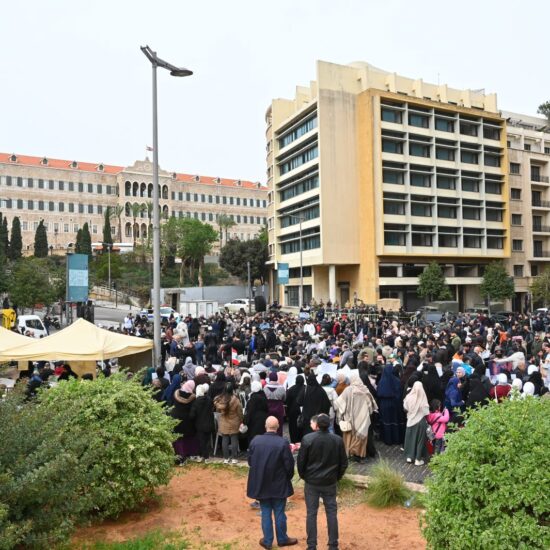
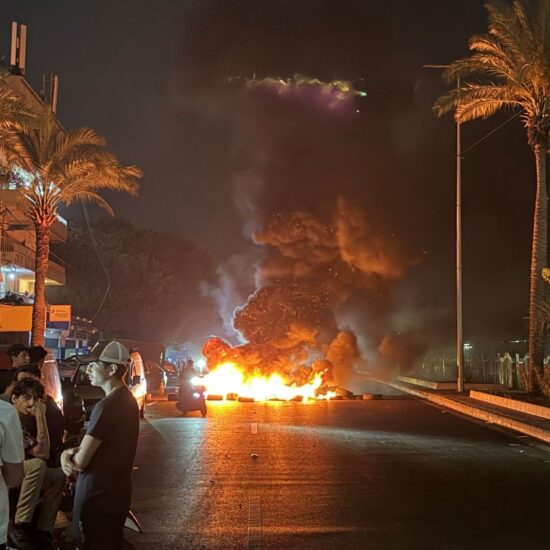
If this logic sounds familiar to Lebanese readers, it is because we have lived within it since 2005. Hezbollah pursued the same domestic strategy for two decades: block the formation of governments, block presidential elections, block the institutions, block the budget itself, and wait for everyone else to crack. And everyone else did crack, every single time, for reasons that sounded impeccably responsible. The others preferred stability over chaos, economic growth over stagnation, and a bad settlement today over an honest confrontation whose cost nobody wanted to underwrite.
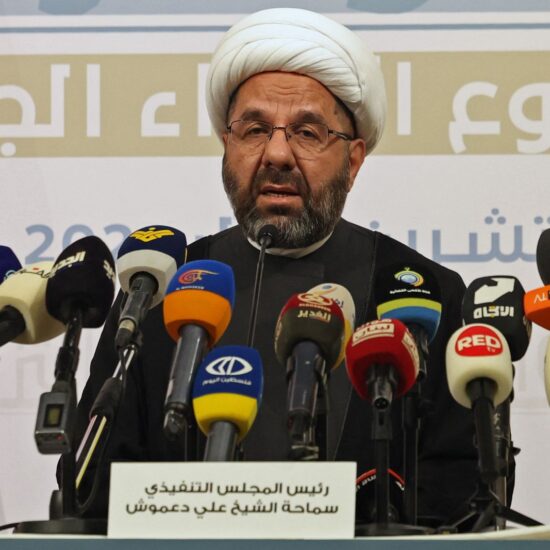
So Hezbollah collected. The blocking third. Formal recognition of its weapons. A free hand to use Lebanon as a launching pad for projects in Syria, Iraq, and Yemen. And what did the rest of us collect? Marginalization, ruined relations with the Arab and Gulf states, a procession of crises, and finally state failure itself.
So Hezbollah collected. The blocking third. Formal recognition of its weapons. A free hand to use Lebanon as a launching pad for projects in Syria, Iraq, and Yemen. And what did the rest of us collect? Marginalization, ruined relations with the Arab and Gulf states, a procession of crises, and finally state failure itself.
Saying this does not mean the political elite is not self-serving, corrupt, and greedy, as many might argue. But that elite found its dream partner in Hezbollah, which was happy to share the proceeds of impunity. This relationship became the business model that Hezbollah is trying to preserve today. Lebanon, in other words, served as a pilot project. Iran is now running the same program on a regional scale, with the Strait of Hormuz serving as the blocking third.
The optimist’s consolation
So what is to be done, short of total war? The honest answer is that I don’t know. Supporting the internal opposition has not worked; the regime has crushed every uprising and will crush the next. Economic pressure and embargoes have not worked; the regime survives while the people suffer, which, from the regime’s point of view, is not a failure but a strategy.
The optimist, the person truly gifted at reading the glass as half full, will tell you that Iran can win the war but lose the peace. The optimist could cite Bashar al Assad, who won his war and then discovered that a victory without reconstruction, legitimacy, or an economy is just a slower form of defeat. It is a comforting analogy, and it is not wrong. The only problem is that al Assad survived for ten years after winning before he collapsed.
Ten years is an eternity when the strait is closed. Iran’s neighbors, and frankly the whole world, cannot factor in a decade of waiting when making plans. The optimist’s observation is a fine argument for historians and a terrible one for finance ministers or hedge fund managers. And the regime knows this. Surviving until the others make a deal is not a flaw in the strategy. It is the strategy, again. It is exactly how Lebanon dealt with Hezbollah, and we have seen the invoice.
Ten years is an eternity when the strait is closed. Iran’s neighbors, and frankly the whole world, cannot factor in a decade of waiting when making plans. The optimist’s observation is a fine argument for historians and a terrible one for finance ministers or hedge fund managers. And the regime knows this. Surviving until the others make a deal is not a flaw in the strategy. It is the strategy, again. It is exactly how Lebanon dealt with Hezbollah, and we have seen the invoice.
Hong Kong, Hanoi, and the missing exit
Walid Jumblatt once said the Lebanese had to choose between the Hong Kong and Hanoi models: prosperity through openness or resistance through siege. Iran is now offering the same menu to its neighbors and the world. Choose Hong Kong and pay me for the privilege, or choose Hanoi and suffer with me.
But as I argued in a previous article, this comparison needs an update. Hanoi is no longer the Hanoi we knew. The real Hanoi looked at its own model, buried it, liberalized its prices and trade, and became one of the great export economies of our time.
Which brings us back to the question in the title. Who blinks first? In a staring contest between those who have something to lose and someone who has already turned loss into an ideology, the outcome is not in doubt. Those with futures blink. That is the entire strategy, and it has worked in Beirut and, so far, in Hormuz.
Unfortunately, Beirut gave this answer two decades ago. Look at it now.
Khalil Gebara is an academic and researcher.
The views in this story reflect those of the author alone and do not necessarily reflect the beliefs of NOW.