This week marks 106 years since General Henri Gouraud, the French High Commissioner, signed Arrêté No. 318 delimiting the State of Greater Lebanon on August 31, 1920, and stood the following day on the steps of the Résidence des Pins in Beirut to proclaim it on September 1, 1920. That proclamation has since served as the birth certificate of the Lebanese state in official memory. Yet the name Gouraud pronounced that day, “Grand Liban”, did not originate with him. Two questions follow: where did the idea of expanding a ‘smaller’ Lebanon into a Greater Lebanon first take shape, and where did the name itself originate?
The autonomist dynamics behind Greater Lebanon predate the term itself by centuries. Some form of self-rule in Mount Lebanon can already be traced to the Druze emirate of the Ma’nids, whose “Long Rebellion”, reinforced by the Druze-Maronite alliance that structured the Mountain under the Shihabi dynasty (1697–1841), established a durable pattern of autonomy well before the nineteenth century closed, as the late AUB historian Abdul-Rahim Abu Husayn has demonstrated (1).
An Antoura alumnus was the first to translate this discourse into a full program: Bulus Nujaym. Writing under the pseudonym M. Jouplain. His 1908 Sorbonne thesis, La Question du Liban: étude d’histoire diplomatique et de droit international, argued that Mount Lebanon had to expand to its “natural frontiers” to survive.
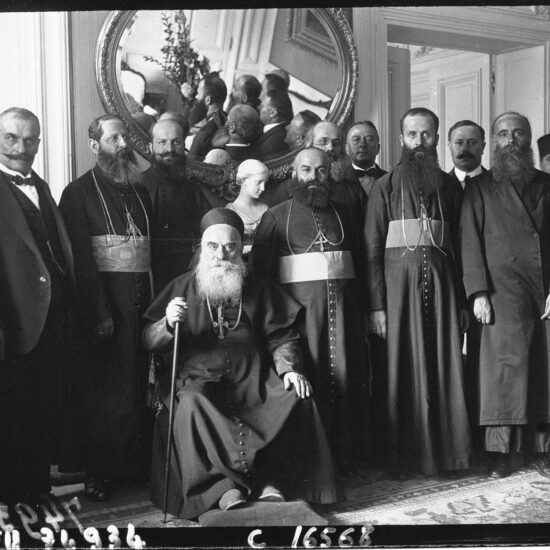
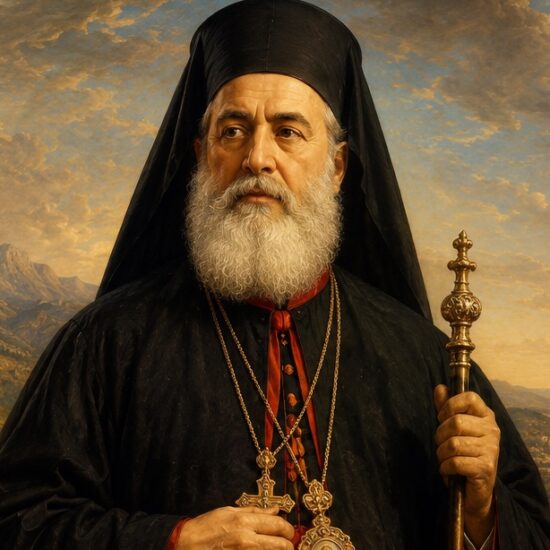
That pattern found its first documentary trace of territorial ambition beyond the Mountain’s historical core in October 1840, in the aftermath of the Ottoman restoration and the exile of Emir Bashir II Shihab, who had ruled for nearly half a century (1788-1840). Maronite Patriarch Yusuf Hobeich (2) addressed a memorandum to the Ottoman Sultan on his behalf, his bishops, clergy, and people, setting out fourteen articles of grievance centered on communal autonomy. Article 12 carries particular weight:
“…The governor of Mount Lebanon and Anti-Lebanon, in accordance with the established ancient custom, shall always be none other than a Maronite from the noble Shihabi family…” (3)
The article never speaks of a Greater Lebanon, but its use of “Anti-Liban”(4), a term possibly drawn from French missionaries or orientalists, extended autonomist claims geographically toward the Bekaa. The intellectual origin of this expansive idea within the Maronite clergy remains an open question to this day.
The 1861 settlement, closing two decades of tensions and three civil wars, gave Mount Lebanon’s governance institutional form through the Mutasarrifiyya: a constitutional charter under Ottoman and international guarantee, a representative council, and expanding municipal infrastructure. Missionary schools such as Collège Saint-Joseph d’Antoura (f. 1834), alongside diaspora intellectual circles, shaped local elites’ political aspirations in nationalistic terms. At the Université Saint-Joseph, Jesuit scholars Fathers Martin and Henri Lammens supplied Lebanese intellectuals with notions of historical and natural boundaries on which to build a national identity. Together with activists within the representative council, these dynamics gave rise to what historians identify as the “Lebanist” movement.
An Antoura alumnus was the first to translate this discourse into a full program: Bulus Nujaym. Writing under the pseudonym M. Jouplain. His 1908 Sorbonne thesis, La Question du Liban: étude d’histoire diplomatique et de droit international (5), argued that Mount Lebanon had to expand to its “natural frontiers” to survive. “Grand Liban” appears nowhere in it, but the thesis supplied the territorial and economic reasoning the term would later name, even if framing Lebanon’s expansion within a broader Syrian space rather than as a separate national project.
By 1918, the Ottoman order that had contained these debates was gone. Allied occupation spread across the former Ottoman Levant, the Paris Peace Conference was reshaping the postwar order, and wartime famine had killed close to a third of the Mountain’s population. Lobbying for expansion became, for the Lebanist factions, a matter of survival, even as French policy still leaned toward a “Syrie intégrale” in which Mount Lebanon would retain autonomy within a wider Syrian entity.
The term “Greater Lebanon” was not used before 1918, at least in the surviving record. Daud Ammun (6), a member of the administrative council of the Mutasarrifiyya who would go on to head a delegation to the peace conference in Versailles in 1919, is said to have used it first, in a letter to his wife at the end of that year. The claim rests on Fawaz Traboulsi’s Silat bila Wasl: Michel Chiha wal-Aidiulujiyya al-Lubnaniyya (7), though the letter itself is not cited or reproduced there.
In this article, Nujaym shifts away from the form of Syrianism evident in his 1908 thesis, adopting the term “Greater Lebanon” and equating it with “Natural Lebanon”.
What can be verified is the term’s first appearance in print. Two articles published in 1919 in La Revue Phénicienne (8), the journal founded by Charles Corm (9), carries it into public circulation. The first came from Albert Naccache, a Antoura alumnus and Lausanne-trained engineer. In a piece titled “Notre avenir économique”, he wrote:
“…The formation of an administrative entity that would encompass Natural Lebanon, referred to by some as ‘Greater Lebanon,’ would enable the Lebanese to produce their own cereals…” (10)
He used the term a second time in the same article:
“...In summary, the political formation of Natural Lebanon; the certain, though gradual, development of independence, an immemorial privilege of the Lebanese, under the aegis of a civilized Western power that would respect economic independence, ensure the full observance of individual liberties and the administration of justice, assist in internal organization, and foster economic development, are desiderata that correspond to the wishes of the majority of the inhabitants of Natural Lebanon (Greater Lebanon)…” (11)
In the same magazine, Bulus Nujaym, writing from his villa Rosa in Jounieh on July 10, 1919 (published that August), stated:
“…Only the Lebanon of the great era, which we call ‘Natural Lebanon’ and which in current political practice is referred to as ‘Greater Lebanon,’ would fulfill these essential and indispensable conditions, … following the boundary proposed by Mr. A. Naccache...’” (12)
In this article, Nujaym shifts away from the form of Syrianism evident in his 1908 thesis, adopting the term “Greater Lebanon” and equating it with “Natural Lebanon”. He also adopts the boundaries proposed by Naccache, which correspond closely to the map of Lebanon drawn by the French topographic unit in 1861.
What neither man claims, however, is authorship of the name itself. Naccache calls it a name given “by some”; Nujaym describes it as a term already used “in current political practice”. Whatever collective process of naming preceded these two articles remains, on the present evidence, untraceable to a single author or moment.
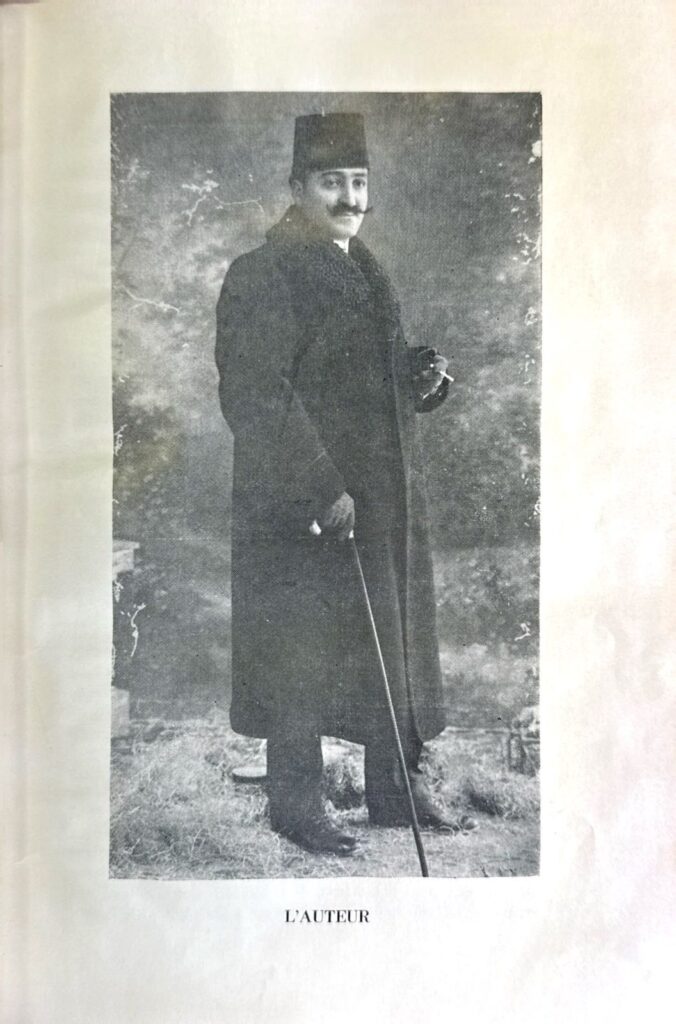
Picture of Boulos Njeim, archives of the Collège Saint-Joseph d’Antoura, where he and Albert Naccache were both alumni.
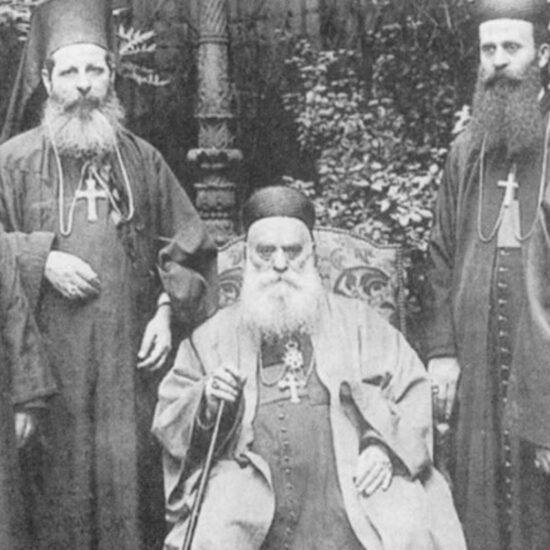
In October 1919, the second Lebanese delegation to the Peace Conference, led by Maronite Patriarch Elias Hoyek, submitted its memorandum, Les Revendications du Liban. The term “Grand Liban” appears nowhere in its pages. The document nonetheless takes up the arguments of Nujaym and other intellectuals, speaking the language of territorial restoration through enlargement:
“…Section II — The Restoration of Lebanon
In claiming its territorial enlargement, Lebanon is, in reality, merely demanding the restoration of its territory, as attested by history and by the map of the French General Staff of 1860–1862…” (13)
The developments of 1919–1920 in the Levant, the rivalry between British and French ambitions in the region, the earlier findings of the King-Crane Commission, and the breakdown of negotiations with Emir Faisal in Damascus, coincided with sustained lobbying by the Lebanist faction: through delegations in Paris, and through a media campaign in Lebanon and the diaspora led largely by the New York–based Naoum Mokarzel (14). Together, these pressures contributed in gradually shifting French policy toward the Greater Lebanon project in 1920.
The term “Grand Liban” had circulated in political and intellectual discourse amongst the Francophone elites in Beirut and Mount Lebanon for two years before it acquired formal legal standing. “Grand Liban”, in contrast to “le Petit Liban” of the old Mutasarrifiyya, acquired formal legal standing with a decree signed by Gouraud, the French High Commissioner in Syria and Lebanon. Decree no. 318, issued on August 31, 1920, entitled Delimiting the State of Greater Lebanon, fixed the borders of the new polity: Article 1 declared the formation of the State of Greater Lebanon, while Article 2 set its boundaries, joining the former Mount Lebanon Mutasarrifate to Beirut, Tripoli and its hinterland, Sidon and the southern districts, and the districts of Baalbek, the Beqaa, Rashaya, and Hasbaya. Its provisions were to take effect on September 1, 1920, the same day Gouraud proclaimed the new state from the steps of the Résidence des Pins in Beirut. Gouraud’s own proclamation shows how thoroughly this term coined in Lebanese circles had by then been absorbed into official French discourse. He used “Grand-Liban” four times in the speech itself, first in the act of proclamation:
“…it is in sharing your joy and your pride that I solemnly proclaim Greater Lebanon, and that in the name of the Government of the French Republic…” (15)
He closed the speech with the cry “Vive le Grand-Liban. Vive la France”. Alongside the state’s name, he also twice addressed the people themselves as “Grand-Libanais” (Greater Lebanese). Gouraud’s speech also credited the diplomatic labor that had carried the idea to this point, singling out, with evident regret at their absence, the delegates who had carried the case to Paris:
“…and among whom I regret not yet seeing your Delegates in Paris, whose role has been so useful in the Councils of the French Government…” (16)
A recurring shorthand casts Greater Lebanon as a French colonial creation, imposed from outside with little local agency. The record instead shows years of lobbying and argument, built on foundations that Ammun, Nujaym, Naccache, and others had already laid well before French policy adopted their terms. The final decision on the state’s borders still belonged to Gouraud and French policy, but one shaped by the aspirations of a segment of the local population, as expressed by that segment’s own intellectuals in the years before
The search for a single coiner of the term nonetheless runs into difficulty. That very difficulty is itself telling: the name arrived collectively, through years of overlapping usage rather than a single act of authorship. One hundred and six years on, Lebanese historiography still grants little space to the intellectuals whose words gave Greater Lebanon its name well before Gouraud pronounced it. At minimum, it owes them a fuller accounting of that role.
Charles al-Hayek is a public historian and the founder of Heritage and Roots.
The views in this story reflect those of the author alone and do not necessarily reflect the beliefs of NOW.
Endnotes
(1) Abdul-Rahim Abu-Husayn, Rebellion, Myth Making and Nation Building: Lebanon from an Ottoman Mountain Iltizam to a Nation State (Tokyo: Research Institute for Languages and Cultures of Asia and Africa, 2009).
(2) Joseph VIII Peter Hobaish (1787–1845), born in Keserwan, was the Maronite Patriarch from 1823 to 1845. He promoted clerical education, reorganized the seminary of ʿAyn Warqa, founded new seminaries, and established patriarchal residences at Bkerké and Dimane. His patriarchate coincided with the Egyptian occupation of Lebanon (1831–1840) and the political and sectarian upheavals of the early 1840s, during which he played an important ecclesiastical and political role.
(3) Ibid., p. 210.
(4) Anti-Lebanon derives from the Greek Antilibanos (Ἀντιλίβανος), literally the mountain “opposite” or “facing” Libanos (Lebanon), referring to the eastern range that parallels Mount Lebanon across the Beqaa Valley. The designation, attested in ancient Greek and Roman geographical literature, including Strabo and Ptolemy, survived in Western geographical usage. Locally, however, the eastern mountain range was not traditionally known by a single, unified name.
(5) M. Jouplain [Būlus Nujaym], La question du Liban: Étude d’histoire diplomatique & de droit international (Paris: A. Rousseau, 1908). HathiTrust Digital Library.
(6) Daoud Ammoun (1867–1922) was a Lebanese lawyer, poet, diplomat, and politician from Deir al-Qamar. A member of the Administrative Council of Mount Lebanon, he headed the first Lebanese delegation to the Paris Peace Conference in 1919, where he advocated Lebanese independence. Following the establishment of Greater Lebanon in 1920, he became president of its Administrative Committee, the new state’s first legislative body.
(7) See Fawaz Traboulsi, Silat bila Wasl, Michel Chiha wal-Aidiulujiyya al-Lubnaniyya [Ties without Connection, Michel Chiha and the Lebanese Nationalist Ideology] (Beirut: Riad El-Rayyes Books, 1999), p. 19.
(8) Founded in Beirut in 1919 by the Lebanese writer and entrepreneur Charles Corm, La Revue Phénicienne was the first French-language political and literary journal published in Lebanon. It played an important role in advocating for the Lebanese cause, providing a platform for intellectuals whose writings sought to influence both French decision-making and local public opinion.
(9) Charles Corm (1894–1963) was a Lebanese writer, poet, and entrepreneur, and a prominent advocate of Lebanese nationalism and Phoenicianism. In 1919, he founded La Revue Phénicienne, which became an important intellectual platform for articulating Lebanese nationalist ideas and a distinct Phoenician-rooted conception of Lebanese identity.
(10) La Revue Phénicienne, Collection complète 1919 (Beyrouth: Dar An-Nahar & Editions de la Revue Phénicienne, 1996), p. 5.
(11) Ibid., p. 7.
(12) Ibid., p. 76.
(13) Ibid., p. 238.
(14) Naoum Mokarzel (1864–1932) was a Lebanese-American journalist, publisher, and political activist from Freike, Mount Lebanon. In 1898, he founded the Arabic-language newspaper Al-Hoda in New York, which became one of the most influential publications of the Mahjar press. A prominent advocate of Lebanese nationalism, Mokarzel used Al-Hoda to campaign for Lebanese political autonomy and later for the establishment of Greater Lebanon.
(15) Archives diplomatiques (France), Fonds Henri Gouraud, 399PAAP/139, “Proclamation du Grand Liban le 1er septembre 1920 à Beyrouth,” discours du général Gouraud, version définitive.
(16) Ibid.