“Sans cette graine d’inconscience on ne fait point de grandes choses”
—Charles de Gaulle
The Mount Lebanon Transitional Council (MLTC), launched on April 6, 2026, in New York City, sits on a straightforward premise: modern Lebanon, in its current configuration, both geographical and political, has run its course, becoming unworkable. Far from the viable nation-state that its founding fathers aspired to, today’s Lebanon wobbles forth as a death wish wrapped in a suicide pact, a hollow collection of platitudes, pieties, empty slogans, and cheesy jingles celebrating feel-good notions of “diversity,” “dialogue of cultures,” and Lebanon as a “link between East and West.” In reality, over the past century, the country has served as little more than a failed laboratory for a yearned-for but never-fulfilled “coexistence.”
Critics reacting more out of reptilian brain impulses than based reasoned and reasonable concerns, denounced the MLTC’s premise as “crazy,” dismissing its members as “idiots” lacking legitimacy because none ostensibly reside in Lebanon. These are little more than reflexive “feel-good” sentiments, displaying excuses that are risible rather than engaging with substantive concerns. What’s more, the ideas that the Council is aiming to advance, rethinking Lebanon’s unsustainable structures, are neither novel nor far-fetched. They echo longstanding proposals advanced by serious actors confronting deep societal and political fractures in honest pursuits of workable resolutions for deeply divided societies.
Historical Roots: From Ottoman Autonomy to French Mandate
Modern Lebanon did not emerge in a vacuum. It was a continuation of an 1860s experimentation with local (Christian) autonomous rule, under international guarantees, in the heart of an Ottoman Empire in its twilight. Similar visions of a loose federation or a looser confederation resurfaced and were likewise advanced by French authorities during the Mandate period, beginning in 1918 and extending long into the 1920s.
In a June 1920 speech, on the eve of his wresting the Vilayet of Damascus from Faysal’s “Arab nationalist” scheme, Lebanon’s first Mandate-era High Commissioner, General Henri Gouraud, articulated France’s postwar vision for Lebanon and the region, one that Maronites themselves stymied and later torpedoed. “With proud traditions and a millennial history all its own” noted Gouraud in his message:
Lebanon ought to remain free, and shan’t be constrained to enter into any regional unions… Independence in a Petit Liban is imperative… [Indeed] only a federal system is the adequate system [for it and the Vilayets of Damascus and Aleppo] reconciling and harmonizing discord, preventing antagonisms, and guaranteeing unity in diversity as demonstrated in the examples of the United States and the Helvetic Confederation. (1)
Gouraud reiterated this same perspective in a 1922 interview with Le Petit Parisien, questioning the viability of unitary states in the fragile postwar Levant. Restating a longstanding Quai d’Orsay line, Gouraud noted:
Yes, I do believe in the future of this country [Lebanon]; but let me repeat “let us give it time.” Its economic and political development, so viciously hampered by centuries of oppression, is still brittle. Its elites, so intellectually distinguished, still lack the necessary political experience. Its peasantry, so admirable, remains often unsophisticated. Political dissension is still, at the present time, so acute that a unitary Lebanon… for the time being is almost inconceivable. This country must still go through a period of learning, a period of education, before reaching the requisite maturity. It needs friendly tutelage. I think that the French Mandate is qualified to ensure, in stages, the gradual formation of what should for all intents and purposes be a federal state, which will be one of the most solid guarantees of the stability of the Orient… Our arduous task is to bring harmony to the disparate parts of this country; a French-style harmony in a traditionally divided region, strewn as it is with the stunning remnants of millennial civilizations… (2)
This sentiment, or rather this coherent expression of French policy that never obtained, was reiterated repeatedly by Gouraud’s own chief of staff, Robert de Caix, who relayed it even more explicitly in his memoirs and correspondence with the Quai d’Orsay:
The entire Middle East has been so poorly packed together; with a resulting clutter [making it it] all the more legitimate reason for [France] to try to steer the minds clear of unitary political systems and, instead, advance federalist concepts […] Federalism would be […] a boon to the bulk of this region’s population, who remain, to a very large extent, alien to all kinds of [unitary] political life. (3)
De Caix had floated similar federative notions even during the war, years before France was assigned the 1920 Lebanon and Syria League of Nations Mandates. In a June 1916 memo addressed to Paris’s venerable La Société de Géographie, the world’s oldest geographic society, de Caix observed that:
At no point in history had Syria ever been a single discrete independent entity. Indeed, it had always been deeply divided among various ethnicities, nations [“races,” in French terminology of the times], and faith communities; a fact that makes it impossible to put in place a single expansive protectorate as we might have done in some of our other colonies… Yet there are a few coherent entities [within this Syrian morass], namely Lebanon… [and] to this political dust… a social mosaic of small intermingled ethnic groups, ought to be applied a protective dust.” (4)
In later years, certainly towards the conclusion of the Great War, these early germs of de Caix’s preliminary ideas would further evolve into an open advocacy for the adoption of a federative system for Lebanon, and Syria.
The Maronite Choice; Greater Lebanon
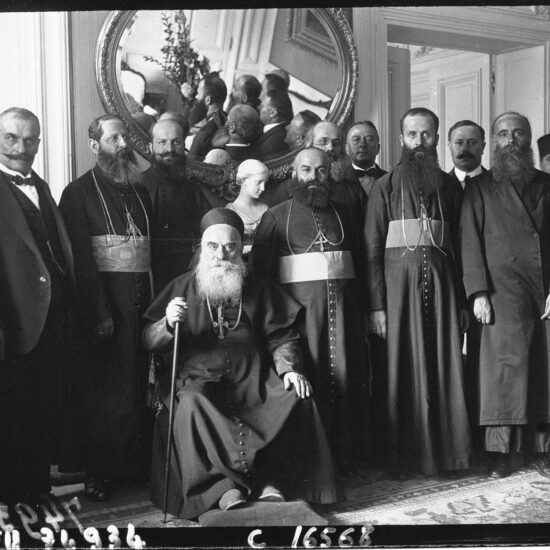
Maronites, imbued in historical hubris and their unshakable trust in the indefatigable friendship and “dedication” that the French might have held for them, remained tone deaf to federalist notions, adamant about expanding their historical mountain sanctuary. A “Greater Lebanon” was their telos and obsession; a more viable entity in their telling, capable of repelling the specter of anthropogenic famines like the one they endured between 1915 and 1918. And so they insisted on expanding beyond the historic mountain sanctuary. They sought to incorporate coastal ports and the fertile Bekaa Valley, at one time the “Granary of Rome,” to avoid future existential vulnerabilities. This vision of Grand Liban (Greater Lebanon) was the central argument presented by the Lebanese Delegation that introduced the “question of Lebanon” at the 1919 Paris Peace Conference; ideas that the main Lebanese émigré groups around the globe likewise advocated for in the run up to the Peace Conference. What’s more, Greater Lebanon from a perhaps shortsighted 1920 Maronite perspective, was France making good on an old promise. Maronite Patriarch Elias Peter Hoyek captured that mood of the times, both in his memorandum to the Paris 1919 Peace Conference, and in later correspondence with French officials. That much is revealed in a passionate dispatch he sent to Camille Barrère, a friend and French Ambassador to Rome in 1920. In his missive, an elated Hoyek would write as follows:
I have just witnessed the proclamation of the establishment of Greater Lebanon, and I am still under the shock of profound emotion. I was deeply moved by this solemn moment in time, which gave France the opportunity to bring to fruition its noble millennial mission among us, allowing the Lebanese to see their national aspirations fulfilled. It was due to the high energy and profound wisdom of General Henri Gouraud that his question was resolved to the great satisfaction of your friends in Lebanon. “C’est l’homme qu’il vous faut” [This is your man] you had told me in Rome, and I am pleased to tell you that you were not mistaken. In a profoundly religious country such as ours, General Gouraud, steeped in Christian values, is an exemplar… Great is our gratitude to France for having chosen [him] to bring us yet another proof of the uninterrupted interest and deep affection in which she still holds a country such as ours… (5)
Never mind that the era’s federalists and advocates of Petit Liban did not share the Patriarch’s “profound emotion,” and would have preferred not stepping into the morass that would become Greater Lebanon. But their voices were muted, marginalized in the hubris and euphoria of the Grand Libanais. One notable dissenter was Émile Eddé, a close associate of the Patriarch and future president of Mandatory Lebanon. As Gouraud solemnly declared the establishment of Greater Lebanon, Eddé is reported to have leaned toward the Patriarch, whispering in his ear sotto voce, “vous regretterez, Béatitude, cette initiative dans moins de cinquante ans” (“Your Excellency, in less than fifty years you shall regret this initiative.”) As historian Fouad Ephrem Boustany later noted in 1978, neither man lived long enough to witness “the fulfillment of this prophecy,” the slow decay and ongoing dismantlement of the state that the Patriarch helped shape and that Eddé apprehended and reluctantly endured. (6)
Diaspora and Legitimacy: A Consistent Historical Pattern
And so from the preceding, and notwithstanding the fact that modern Lebanon in its current configuration is not etched in stone, indeed its continuation appears far from benign, state-building is not a “resident-only” enterprise. History is replete with examples of diasporic communities shaping homelands from afar, to wit, Jews and Palestinian Arabs offer clear modern parallels for those quick to dismiss the MLTC on residency grounds. What’s more, dismissing the Council’s legitimacy, indeed missing its outlines as incarnation of earlier models of early twentieth century émigré lobbying that created Greater Lebanon reveal both historical indigence and hemiplegic logic.
The ill-fated 1920 Lebanon that the MLTC now seeks to remedy was itself midwifed by diaspora groups operating far from the Mount Lebanon Mutasarrifate, precisely the kind of non-resident activism that some critics now condemn. These groups were central, not marginal. They included:
Union Libanaise in Santiago and other South American hubs (e.g., Buenos Aires);
The Lebanese and Syrian League of the United States and related associations lobbying Washington and Paris, framing Greater Lebanon as a Christian-protected entity owed French support and protection;
Parti National Libanais and Ligue pour la Défense des droits du Grand Liban in Cairo (Pierre Gemayel, Youssef el-Saouda, and Michel Chiha gravitated in those circles);
Paris-based groups such as the Parti Progressiste Libanais and the Comité Central Syrien;
The Pen League, New York (primarily a literary club, albeit part of wider émigré pressure groups and intellectual ferments, including the Mokarzel brothers of al-Hoda);
The Geneva-based Conseil Administratif du Peuple Libanais, which petitioned the League of Nations in alignment with Hoyek’s “Lebanese Delegation.”
None of these groups operated as “residents” of the territory they helped reshape, yet they actuated the international pressure, petitions, propaganda, and historical narratives that expanded Mount Lebanon into the modern Lebanese republic. Their efforts defined the very borders, confessional power-sharing, and French-backed origins that critics today treat as sacrosanct, as if they were laws of nature rather than contingent political choices, and bad ones at that.
The Reckoning of History
Those criticizing, denigrating, or dismissing the Mount Lebanon Transitional Council suffer from selective amnesia, or are rather saddled by ignorance of the émigré dynamics that birthed Greater Lebanon. Another diasporic initiative now seeks to remedy that earlier project’s shortcomings and set Lebanon, or at least its historic core, on a more sustainable course. Applying a rigid “on-the ground residency” litmus test to the MLTC would retroactively invalidate the very process that created modern Lebanon.
Granted, the Council is operating in a far messier environment than its predecessors: a collapsed Lebanese state under Iranian control, where skepticism is sometimes amplified by those aligned with Tehran. Yet the locomotive channeling diaspora energy into concrete diplomacy and carving a path toward salvation has already left the station. History shows that bold rethinking of unworkable arrangements is not heresy, it is often the prerequisite for survival. The Mount Lebanon Transitional Council’s call merits serious engagement, not reflexive condemnation.
Qui n’avance pas, recule
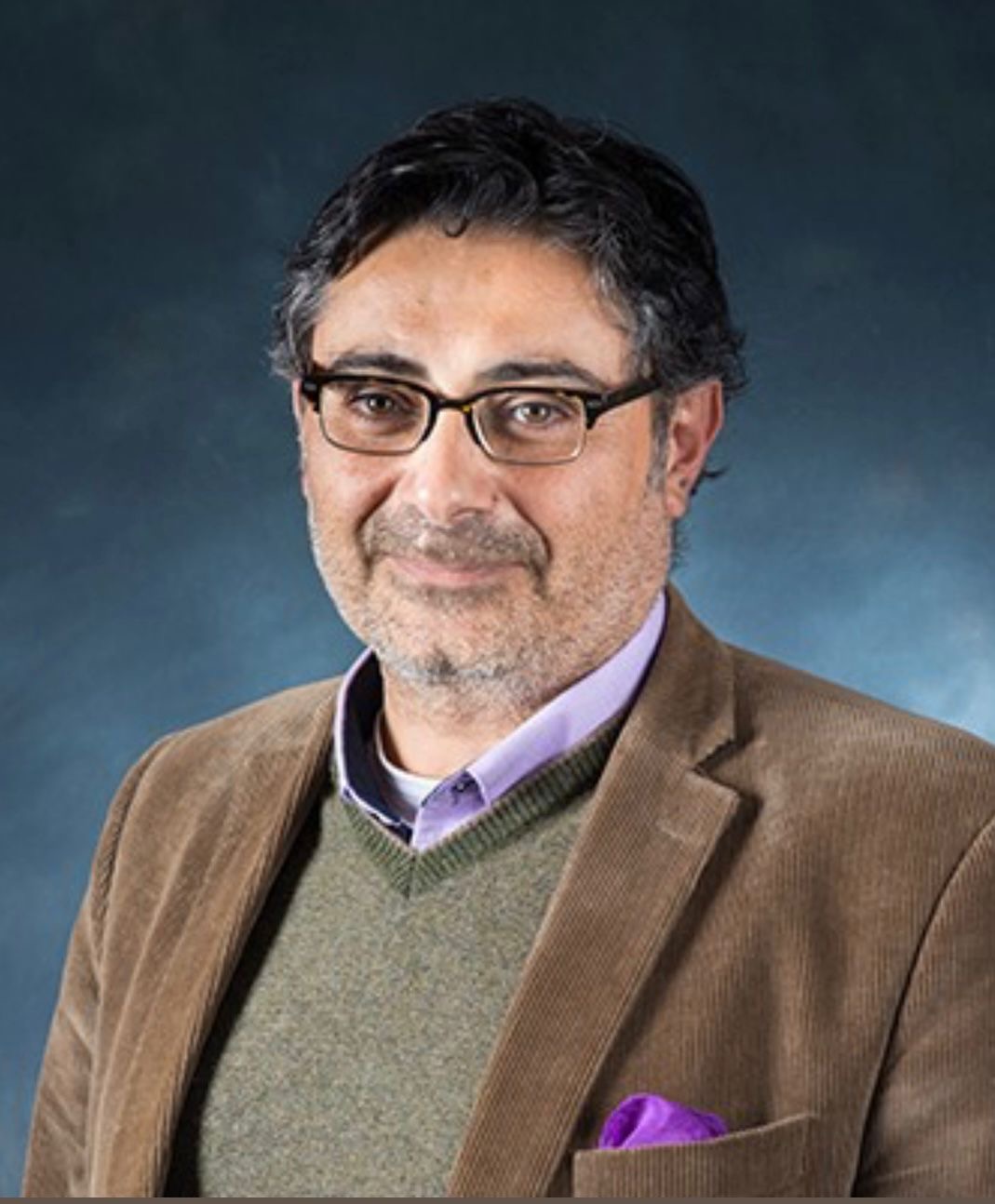
Franck Salameh is the Terse Professor of Near Eastern Studies at Boston College
The views in this story reflect those of the author alone and do not necessarily reflect the beliefs of NOW.
Notes:
- Archives du Ministère des affaires étrangères, Quai d’Orsay, Correspondence Politique et Commerciale, Serie “E”, Levant-1918-1940, Sous-Série: Syrie, Liban, Cilicie, Vol. 133.
- Une interview du General Gouraud, Le Petit Parisien, 7 Juin, 1922, Archives du Ministère des affaires étrangères), Correspondence Politique et Commerciale, Serie “E”, Levant-1918-1940, Sous-Série: Syrie, Liban, Cilicie, Vol. 133.
- Archives du Ministère des affaires étrangères) Quai d’Orsay, Correspondence Politique et Commerciale, Serie “E”, Levant-1918-1940, Sous-Série: Syrie, Liban, Cilicie, Carton 313, dossier 27, pp. 39-40.
- Gérard D. Khoury, Une tutelle colonial ; Le Mandat Français en Syrie et au Liban ; Écrits politiques de Robert de Caix (Paris: Belin, 2006), 16.
- Elias Pierre Hoyeck, «Lettre du Mgr. Hoyeck,» Archives du Ministère des affaires étrangères) Quai d’Orsay, Correspondence Politique et Commerciale, Serie “E”, Levant-1918-1940, Sous-Série: Syrie, Liban, Vol. 126.
- Fouad Ephrem Boustany, Le problème du Liban (Beirut: C. R. Kaslik, 1978), 33.