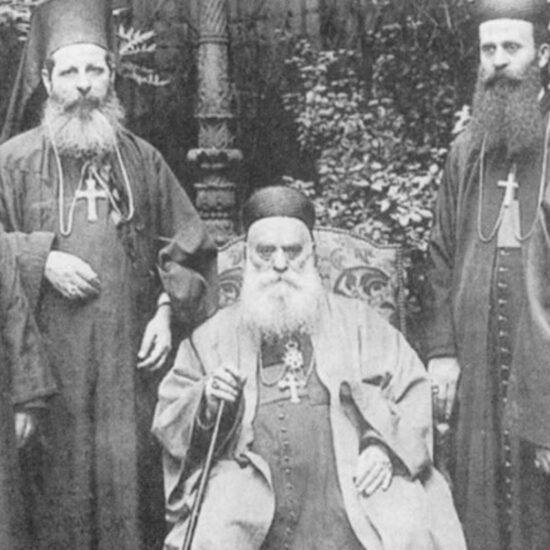
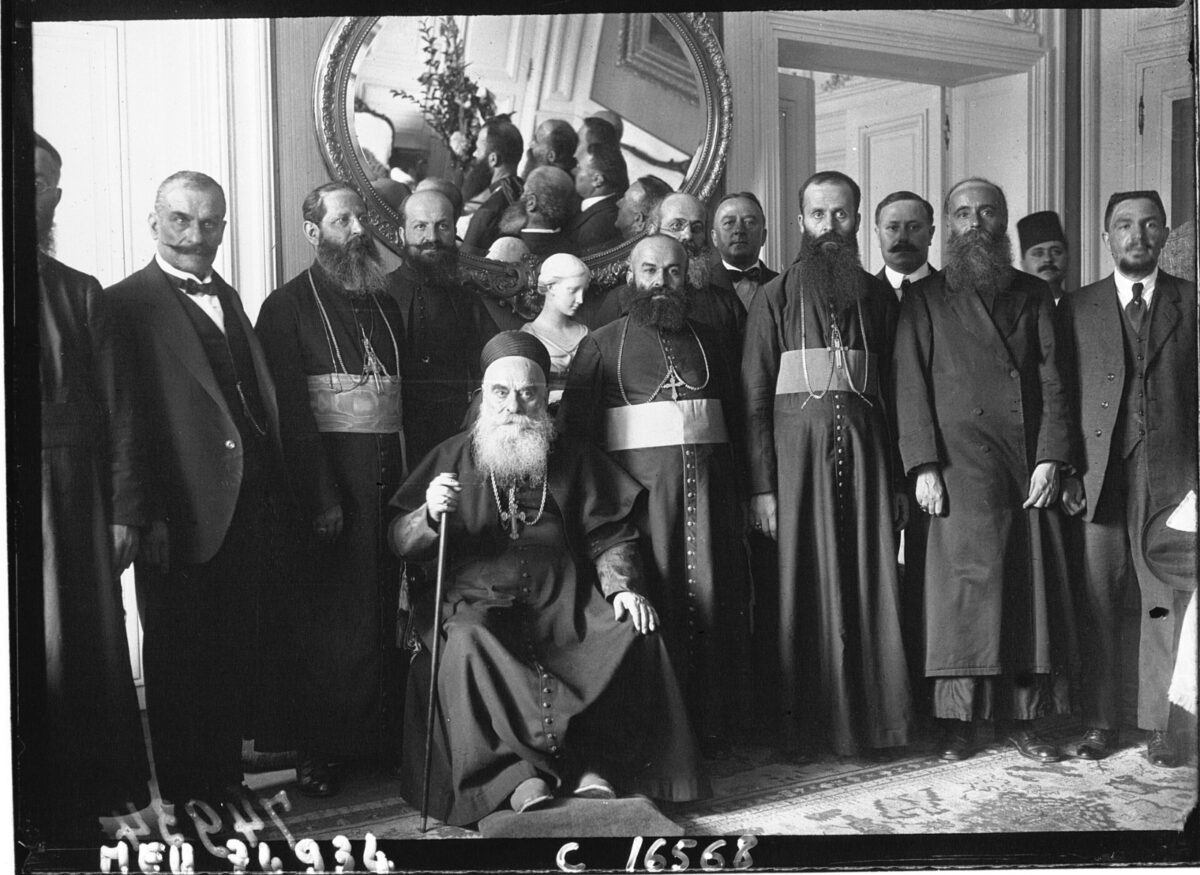
Patriarch Hoyek seated, with members of the delegation in Paris, https://catalogue.bnf.fr/ark:/12148/cb415761359
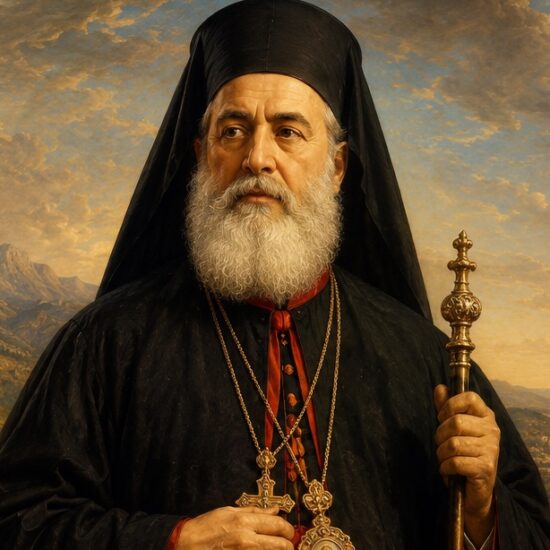
The beatification of Patriarch Elias Hoyek (1) is, first and foremost, a Catholic event. It belongs to the Maronite Church, and its spiritual meaning speaks directly to a segment of the Lebanese population; for many other Lebanese, this religious dimension carries little or no significance, a gap worth acknowledging rather than smoothing over. Its historical dimension, however, is shared by all Lebanese, whatever their reading of it: Hoyek stood at the center of the making of Greater Lebanon in 1920. At the heart of that episode lies a document long forgotten in Lebanon: Les Revendications du Liban [The Demands of Lebanon], Mémoire de la Délégation Libanaise à la Conférence de la Paix (Paris, 25 October 1919).
This document raises questions central to that history. Why did the Patriarch undertake a mission to Paris? What memorandum did he carry, and what arguments did it advance to justify the Lebanese project? How was it received by the decision-makers of the day? And what, ultimately, was the outcome? Answering them requires a brief tracing of the longer history of the Lebanist project itself.
This document raises questions central to that history. Why did the Patriarch undertake a mission to Paris? What memorandum did he carry, and what arguments did it advance to justify the Lebanese project? How was it received by the decision-makers of the day? And what, ultimately, was the outcome? Answering them requires a brief tracing of the longer history of the Lebanist project itself.
The earliest development of a “national” project in what is now Lebanon dates to the 1840s. Under the Mutasarrifiyya (1861–1918), a “Lebanist” current gradually took shape among Francophone elites in Beirut, Mount Lebanon, and the diaspora, driven by the need to expand the Mountain into the surrounding plains and coastal cities (2). This was partly a matter of survival, the Mountain’s limited carrying capacity, worsened by the sericulture crisis of the 1880s and by demographic growth, and partly a claim to Lebanon’s “natural” and “historical” borders, an idea cultivated in Jesuit and Lazarist schools where the Francophone elites were educated. Yet this early Lebanism still operated within an Ottoman, and at times Syrian, framework. From the 1910s, associations and lobbying activity spread through Cairo, the United States, Latin America, and Paris. The First World War gave this movement new urgency: famine devastated the Mutasarrifiyya, turning territorial expansion from a political ambition into an existential necessity.
At first, in 1918, local elites of the Mutasarrifiyya, still shaped by their prewar aspirations, mainly contemplated consolidating the Mountain’s autonomy along with an undefined extension of its boundaries. Only some months later did they stake a clear claim to the independence of a delimited Greater Lebanon, whose contours bore the mark of programs formulated by the emigrant societies abroad. This shift came against the backdrop of the Arab government established under Emir Faysal in Damascus, which briefly exercised nominal authority over the territories of the Mutasarrifiyya and the Vilayet of Beirut before being dislodged by British troops in October 1918.
The collapse of Ottoman rule brought these aspirations to the Paris Peace Conference, which opened in January 1919, convened by the victorious Allies, chiefly France and Britain, to settle the postwar peace agreements with the defeated empires and determine the future of their territories along with the national claims of their inhabitants.
The collapse of Ottoman rule brought these aspirations to the Paris Peace Conference, which opened in January 1919, convened by the victorious Allies, chiefly France and Britain, to settle the postwar peace agreements with the defeated empires and determine the future of their territories along with the national claims of their inhabitants. French colonial circles, however, initially lobbied for a rival project: a Greater Syria that would include Lebanon. That same January, the French Congress of Syria, where Paul Huvelin (3) presented Que vaut la Syrie?, called for “la Syrie intégrale” to be placed under French colonization.
In this context, and in a logic of institutional continuity, the Mutasarrifiyya was still functioning, and its Administrative Council, representing the six historical communities (Maronites, Druze, Orthodox, Melkites, Sunnis, Shiites), convened in Baabda and decided to send a delegation, headed by Daoud Ammoun, to lay out the demands of the Lebanese: extension of Mount Lebanon, independence, a parliamentary regime, and French assistance. The delegation submitted its memorandum on 15 February. It came to nothing, since Britain and France had not yet settled the limits of their respective spheres of influence over the former Ottoman territories.
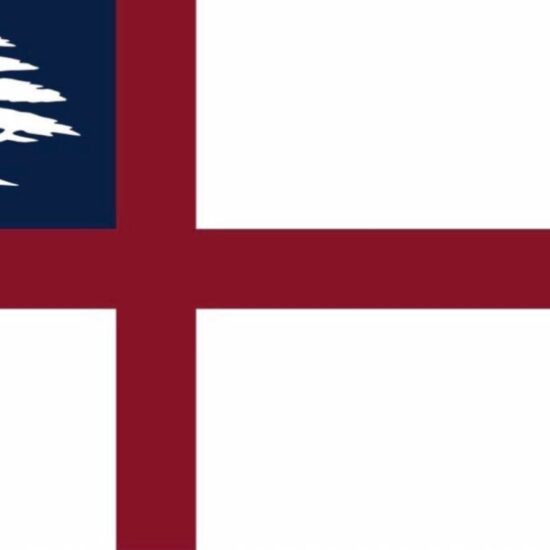
It was at this point that Patriarch Elias Hoyek (1843–1931), who had led the Maronite Church since 1899, joined with the reconstituted Administrative Council to take over the task of articulating and promoting the Lebanist project. On 20 May 1919, the Administrative Council declared, in vague terms, the “political and administrative independence of Lebanon within its geographical and historical borders.” Simultaneously, the Patriarch organized a campaign across the towns and villages of Mount Lebanon, mobilizing municipalities and the clergy to back this declaration. White flags bearing a cedar, alongside French flags, were raised at popular gatherings. Hoyek even informed the French High Commissioner, Picot, of his determination to travel to Paris to defend the Lebanist cause at the Peace Conference. On 16 June 1919, the Administrative Council formally delegated the Patriarch to head a second delegation to Paris, with a set of demands he would submit both to the Peace Conference and, a few days later, to the American-led King-Crane Commission. The French initially opposed the voyage but later relented, on condition that the Patriarch depart through the port of Jounieh rather than Beirut, so as to avoid friction with Faysal. He left on 15 July with a delegation of six: Maronite bishops Ighnatios Moubarak, Boutros Feghali, and Choukrallah Khoury; priest Istifan al-Douaihy; Leon Hoyek, the Patriarch’s brother; and deacons Melhem and Ibrahim Khalil. Once in Paris, the delegation was joined by the Melkite bishop of Zahle, Kyrillos Moughabghab, and Maronite bishop Yusuf al-Khazen. Poincaré, President of the French Republic, received the delegation at the Élysée Palace on 28 August, and on 5 November they were received by Clemenceau, the real decision-maker. On 27 October, the Patriarch submitted his memorandum to the Peace Conference — a fifteen-page document, Les Revendications du Liban, organized around four main demands. It opens with the following affirmation:
“The Maronite Patriarch, President of the Lebanese Delegation to the Peace Conference, acting on behalf of the Government and the Administrative Council of Lebanon, by whose authority he is duly mandated, as well as on behalf of the populations of the Lebanese towns and countryside, and of those requesting their incorporation into Lebanon, without distinction of rite or religious denomination, populations from whom he has received due authorization and whose mandates have been deposited, through the Ministry of Foreign Affairs of the French Republic, with the General Secretariat of the Peace Conference, has the honor of appealing to the high sense of justice of Their Excellencies the Plenipotentiaries of the Allied and Associated Powers, sitting as the Supreme Council at the Peace Conference:”
Four demands followed:
(1) Recognition of the independence of Lebanon, proclaimed by the Lebanese government and people on 20 May 1919.
(2) The restoration of Lebanon within its historical and natural boundaries, through the return of territories taken from it by Turkey.
(3) Sanctions against those responsible for the atrocities and executions committed in Lebanon by the Turco-German authorities, and reparations from Turkey for the reconstruction and repopulation of a Lebanon decimated by organized famine.
(4) Since the mandate principle had been established by the Treaty of Versailles (28 June 1919), the entrusting of that mandate — without prejudice to Lebanon’s sovereign rights, to the government of the French Republic, which, under Article 22 of the League of Nations Covenant, would extend its assistance and counsel to Lebanon.
The first demand, Lebanon’s independence, was elaborated through four sets of considerations. The historical argument held that Lebanon had always preserved its independence and autonomy under successive empires, never subject to direct rule, and that this autonomy had been formally recognized by the great powers since 1861. The political argument stressed that, unlike other Ottoman provinces, Lebanon possessed a distinctive system granting representation to its local communities, more advanced than anything found elsewhere in the region. The cultural argument presented Lebanon as an educated nation, the “principal center of Western culture” in the East, where even the smallest village had its own school. The fourth, factual and legal, argument noted that Lebanon had not itself declared war, and went on to justify the claimed “restoration” of Lebanon’s territories, supported by an annexed 1862 French topographical map, asserting that these borders “corresponded to a geographical entity which was, in former times, Phoenicia, and which, in modern times until 1840, constituted the Lebanese territory,” a striking instance of the past being mobilized in service of a national project.
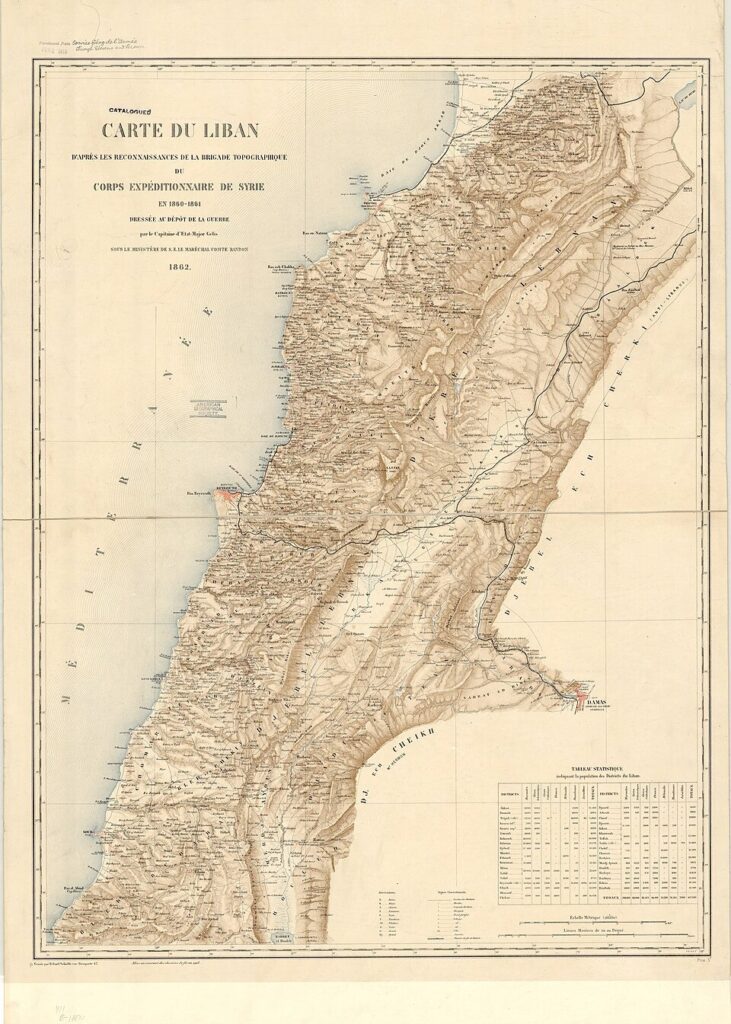
Map of Lebanon According to Reconnaissance Information Collected by the Topographical Group from the Syria Expedition of 1860–1861, mentioned in the 1919 memorandum. Collection of the Bibliothèque nationale de France (BNF), Paris.
The memorandum then turned to sanctions and reparations: it called for penalties against the perpetrators and instigators of the wartime atrocities, whether Turkish or German, at whatever level of the civil or military hierarchy, and for reparations to the families of victims and deportees, as well as compensation to enable the reconstruction, reforestation, and repopulation of Lebanon, a population reduced by famine, whose return from emigration such compensation was meant to encourage. It closed with the case for the mandate, declaring that France, the power whose selection, under Article 22 of the League of Nations Covenant (4) , depended above all on the will of the populations concerned. The memorandum grounded this choice of France in three registers: sentiment, affinity, and culture; historical ties; and considerations of interest and dignity.
Contrary to what is often assumed in Lebanese public memory, and to the narrative now circulating in Lebanese media and press around the beatification, the mission made little immediate headway, and Lebanon’s independence was far from a secured outcome. France was still negotiating with Britain over the mandate for all of Syria, and preferred not to commit on Lebanon’s status until Syria’s had been settled.
Its reception among French decision-makers, however, was considerably cooler than the ambition of the project itself. Contrary to what is often assumed in Lebanese public memory, and to the narrative now circulating in Lebanese media and press around the beatification, the mission made little immediate headway, and Lebanon’s independence was far from a secured outcome. France was still negotiating with Britain over the mandate for all of Syria, and preferred not to commit on Lebanon’s status until Syria’s had been settled. Internal French diplomatic correspondence anticipated the Patriarch’s demands as imprecise and recommended an equally noncommittal response. The meeting with Clemenceau was accordingly brief, and his follow-up letter of 10 November offered only vague reassurances about eventually meeting Lebanese aspirations for independence, without any concrete commitment on status or borders. The memorandum submitted to the Conference was filed without further action, and the mission secured no firm French pledge.
This lack of a firm French pledge did not mean the Lebanist project had stalled; it was simply being settled through channels beyond Hoyek’s mission. In January 1920, the Faisal–Clemenceau Agreement saw France recognize Faisal’s Arab government in Damascus in exchange for Faisal’s acceptance of French influence and of a French-administered coastal zone that included Lebanon. France extended recognition to Arab aspirations chiefly insofar as it secured French interests in the region. Although the agreement was secret, the press soon published its terms, prompting the Patriarch and the Administrative Council to send a third delegation to the Peace Conference, headed by Bishop Abdallah al-Khoury, in February 1920. The Melkite bishop of Zahle, Moughabghab, was also sent to Paris in March to press the case for annexing the Bekaa. The same demands were submitted to French leadership once again, but the delegation secured no decisive French commitment.
The agreement, however, was quickly disavowed by Faisal’s own nationalist base in Damascus, which saw it as a betrayal of Arab independence, collapsing the fragile understanding between Paris and Damascus and setting the stage for the confrontation to come. The diplomatic sequence that followed moved quickly: on 25 April 1920, the San Remo Resolution assigned Class “A” League of Nations mandates for the still-undefined territories of Palestine, Syria, and Mesopotamia, and General Henri Gouraud, commander of the French Army of the Levant, was tasked with implementing France’s mandate on the ground, a mandate that would culminate, on 1 September 1920, in Gouraud’s proclamation of the State of Greater Lebanon.
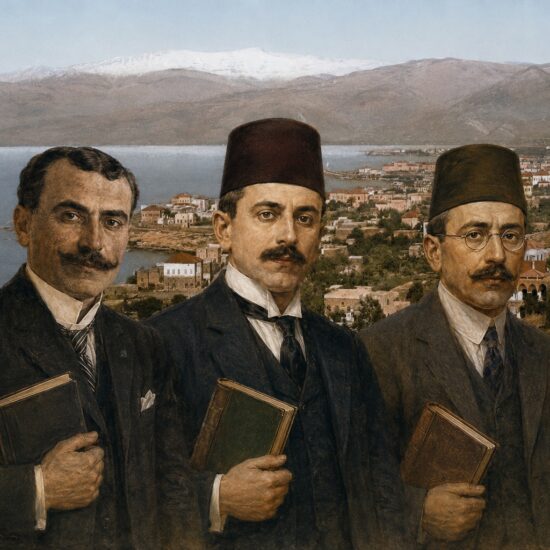
However, if the involvement of the Lebanese in the decision to establish an independent Greater Lebanon was negligible, their contribution to this final outcome was not entirely insignificant (5). When France ultimately decided to establish Greater Lebanon, French officials were influenced and guided by claims and narratives developed over the preceding decades by a wide circle of Lebanist intellectuals and lobbyists, among them Chekri Ganem, Khairallah Khairallah, Boulos Nujaim, Naoum Moukarzel, and Charles Corm, whose arguments the memorandum itself echoed and drew upon, even as Hoyek’s mission has come, in later memory, to eclipse their contribution. General Gouraud delimited the new state’s boundaries closely along the lines of a map drawn by the 1861 French Expedition, a document that had mostly gathered dust in the archives until it was rediscovered by Lebanese activists in the years preceding the First World War and included in the 1919 memorandum.
The memorandum examined in this article is a foundational document of the Lebanese state: it is the fullest articulation, before an international body, of the Greater Lebanon claim. Yet its value lies just as much in what it exposes as in what it anticipated: read closely, the memorandum shows that its central arguments belonged, in substance, to the intellectuals who had developed them well before Hoyek’s mission; his merit lay in carrying the claim, as a catalyst, to the Peace Conference itself. The mission’s ambitions diverged sharply from what it actually secured, which was little more than vague reassurance. A beatification reopens this historiographical question by returning a single religious figure to the center of what was, in practice, a collective and contested political founding. What remains for historians is to weigh how much of Lebanon’s founding narrative belongs to Hoyek, how much to the intellectuals whose claims he carried, and how much to the century of change that made his mission possible, a task that starts with bringing documents such as this one out of the archive and back into the public conversation the beatification has now reopened.
For the full document of the 1919 Memorandum, refer to this: Les Revendications du Liban. Mémoire de la Délégation Libanaise à la Conférence de la Paix, publié dans La Revue Phénicienne, numéro de Noël 1919, collection privée de l’auteur.
Charles al-Hayek is a public historian and the founder of Heritage and Roots.
The views in this story reflect those of the author alone and do not necessarily reflect the beliefs of NOW.
Endnotes
(1) “Hoyek, Elias,” 1914–1918 Online: International Encyclopedia of the First World War.
https://encyclopedia.1914-1918-online.net/article/hoyek-elias/
(2) For more on this topic, see Carol Hakim, The Origins of the Lebanese National Idea, 1840–1920 (Berkeley: University of California Press, 2013).
(3) Paul-Louis Huvelin (1873–1924) was a French legal historian specializing in the earliest forms of Roman law. He was instrumental in founding the law school of the Université Saint-Joseph in Beirut in 1913, and in 1919 led a mission to Syria to assess threats to French interests in the region.
(4) Article 22 of the League of Nations Covenant created the mandate system, entrusting former Ottoman and colonial territories to “advanced nations” as trustees rather than sovereigns, graded by each population’s level of development. Lebanon and Syria fell under the most advanced tier, “Class A,” where independence was provisionally recognized and the population’s own wishes were to guide the choice of Mandatory. This is the provision Hoyek’s 1919 memorandum directly invoked in requesting France as Lebanon’s mandatory power.
(5) For more on this topic, see Carol Hakim, The Origins of the Lebanese National Idea, 1840–1920 (Berkeley: University of California Press, 2013).