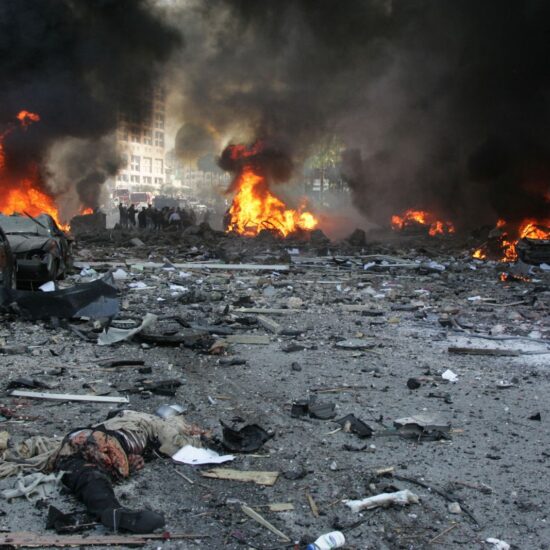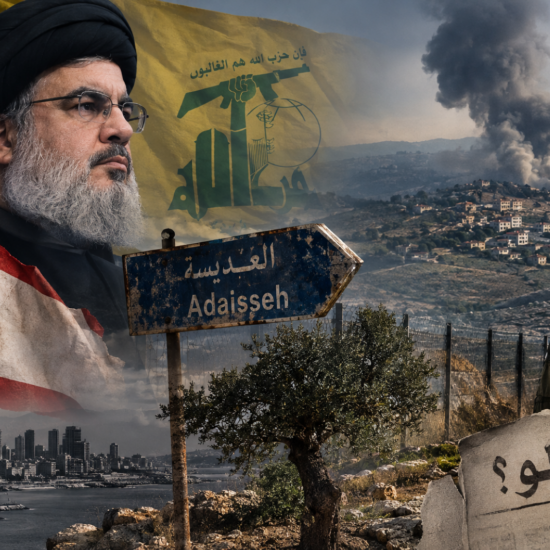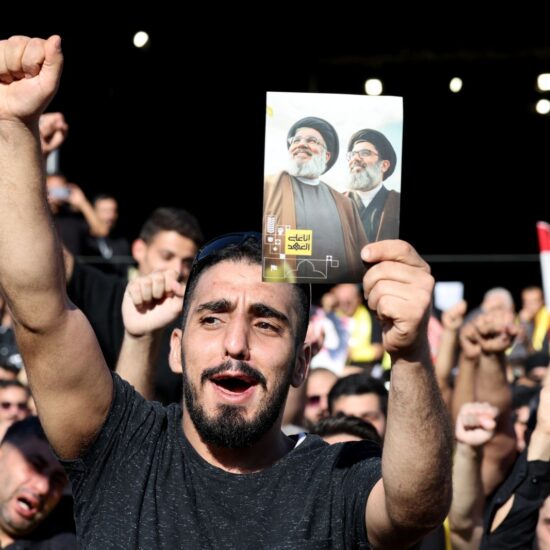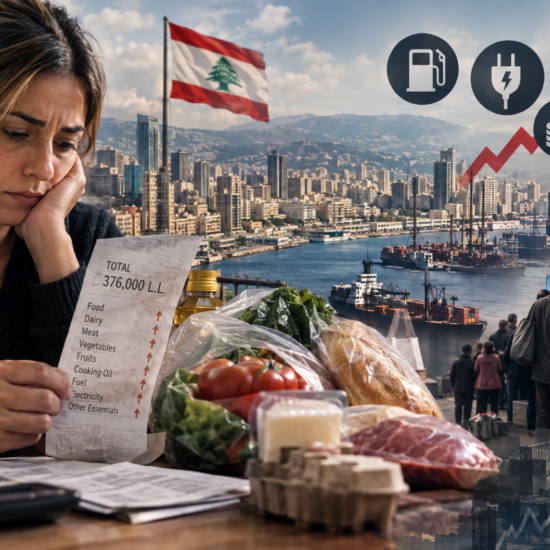
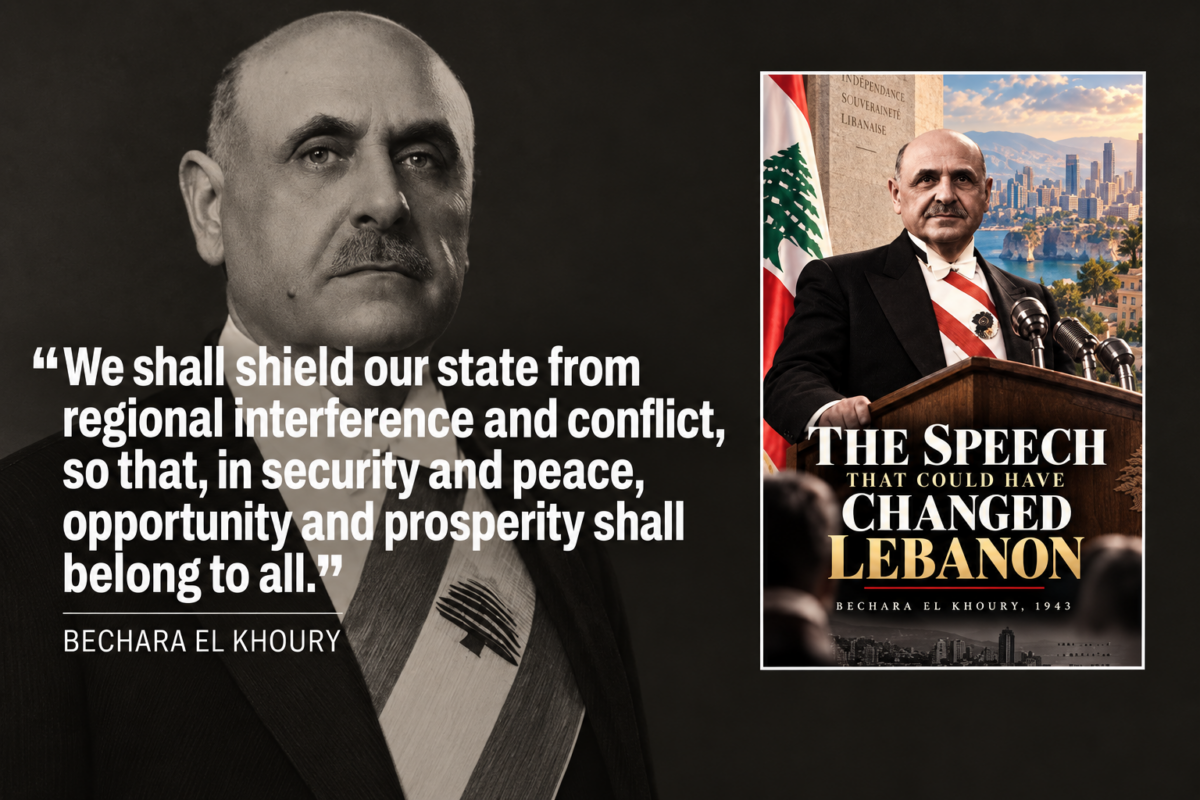
This AI-generated video imagines an alternate Lebanese history: Bechara El Khoury, the first president of the independent Lebanese Republic, reshapes the original mandate into a genuinely sovereign state, setting Lebanon on a different trajectory of stability, secularism, and prosperity.
And beautiful it is. The video is clever, elegant, visually gorgeous, technically impressive and, annoyingly enough, very well done. Which makes the reasoning behind it all the more frustrating.
Because by the 1970s, long after Bechara El Khoury, Lebanon looked remarkably like those beautiful visuals.
I should know; I was there.
The country was considerably more secular than almost anything one could find in this Mad Max region, and well beyond it, at the time. It was certainly more secular, more liberal and more socially open than Lebanon is today.
It did, however, respect certain traditions in the interest of inclusivity, and to the extent that the sectarian communities themselves accepted them at the time.
Remember, these communities had only recently emerged from five centuries of Ottoman rule, during which populations were hardly encouraged to think of themselves as equal citizens of modern nation-states. They were organized largely as religious communities under the millet system.
You do not undo five centuries over a weekend.
Illiteracy was falling. Education was booming. Universities, publishing, banking, healthcare, agriculture, energy, tourism, commerce, culture, women’s participation. The whole bloody thing was moving.
Yet, by independence, Lebanon already had a two-bloc Parliament: the National Bloc and the Constitutional Bloc, not Christian and Muslim blocs, and both were confessionally mixed. For God’s sake.
Nor did secular thought suddenly arrive in Lebanon courtesy of a 2026 AI video. Beirut and Tripoli had been pumping modernist, reformist and secular ideas into the region since the late Ottoman period.
So yes, the Republic compromised. Give some to the Church. Take some for the state. Keep everybody sufficiently represented, sufficiently irritated, and move forward.
Considering what was going on around us, not least with our very neighborly Alawite Baath to the east and our less neighborly Jewish Pandora’s box to the south, it was a pretty smart arrangement.
More importantly, it was moving in the right direction. And direction matters.
Religion and sectarianism are rarely tamed by decree or force. They are tamed by progress, education, prosperity, interaction and, eventually, conviction. And Lebanon was getting there.
Illiteracy was falling. Education was booming. Universities, publishing, banking, healthcare, agriculture, energy, tourism, commerce, culture, women’s participation. The whole bloody thing was moving.
And obviously not because the state or society were becoming more sectarian, but because they were becoming less so.
Beirut was becoming what everybody now nostalgically photoshops it into having been. Except it actually was.
Not perfect. Not fully secular. Not Sweden on the Mediterranean. But getting there.
Then Mad Max arrived. Or, more accurately, Mad Max decided we were not allowed to close the door and fence the house.
Lebanon tried, repeatedly and sometimes clumsily, to keep itself out of the regional pit. The region repeatedly decided otherwise.
What had been a fairly successful little Lebanese Republic trying to survive a haberdashery of failed, totalitarian United Arab Something-or-Others soon became Lebanese versus Arab, Right versus Left, West versus Soviet, defensive versus revolutionary.
Everybody had a cause. Everybody’s cause was apparently more important than Lebanon. And everybody was terribly secular. Until, of course, they weren’t.
“Free Palestine” had, and still has, an extraordinary ability to become Allahu Akbar in seconds. Just as “Resistance” would eventually become, quite literally, the Party of God. Funny how that works.
Islamists could use the Left, the Left could use the Islamists, and everybody could use Palestine. Eventually, Islamism did what Islamists tend to do: kick its useful-idiot leftist friends aside and return to the considerably older business of believers, infidels and holy causes.
Meanwhile, the Republic, and even much of the sovereignist camp and the Christian Right, kept trying to preserve the political and national frame of the struggle.
Good luck with that. The regional religious pressure was enormous: Muslim-Arab versus Christian-Western and Jewish-Israeli then; Shia-Persian versus Sunni-Arab later. Different decade. Different costumes. Same shitty neighborhood.
And there sat poor little Lebanon, semi-secular and increasingly progressive, on the prettiest hills in Mad Max land.
Right-wingers and Christians who hated Islamism and Arabism, with some reason. Leftists and Muslims who hated Lebanon and Maronites, go figure. Islamists who hated all of the above and, every so often, one another.
But nooooo. We had to fight the Zionists. Everything else could wait.
And this is where the video’s premise really falls apart.
Whether Lebanon had been formally sectarian or formally secular would hardly have changed the regional forces trying to pull it apart. At most, Hezbollah might simply have been replaced by the SSNP.
Different packaging. Same problem.
Because Israel, and by extension the Maronite president, became, in the eyes of fanatics and leftists alike, sufficient reason to destroy everything. Including life itself.
And therein lies the problem: a religious-racial battle dressed up as a secular-political struggle, demanding that every other concern, including one’s own nation and compatriots, be considered secondary to it.
And with a gun to your head.
Which is why “sectarianism” has always struck me as far too abstract and naive an explanation for Lebanon’s failure.
It is wonderfully convenient. Sectarianism did it. Case closed.
No need to ask who did what. Who armed whom. Who invaded whom. Who assassinated whom. Who financed whom. Who occupied what. Or which glorious regional cause Lebanon was expected to commit suicide for in that particular decade.
Perhaps Lebanon’s great failure was not that it failed to abolish sectarianism fast enough, but that it failed to build nationalism faster.
Just blame sectarianism. Not Arabism. Not Islamism. Not Leftism. Lebanism, by ricochet, becomes the culprit.
Because it carried a Maronite flavor? The United States carried a Protestant one. France a Catholic one. Historical flavor does not, by itself, make a state incapable of becoming increasingly secular.
And Lebanon was becoming precisely that.
Which is why “sectarianism did it” is usually the explanation of either the lost or the deliberately misleading.
Which brings me back to the video. Bechara El Khoury could just as easily have been made to say:
“We shall shield our state from regional interference and conflict, so that, in security and peace, opportunity and prosperity shall belong to all.”
Now imagine that Lebanon.
Not a Lebanon magically cured of five centuries of history by simply deleting sectarianism from a Constitution, but one actually allowed to continue along the trajectory it was already on.
So the destination was hardly the problem. Getting there was.
Educate. Prosper. Interact. Liberalize. Modernize. And gradually make sectarian identity less useful than citizenship.
Perhaps Lebanon’s great failure was not that it failed to abolish sectarianism fast enough, but that it failed to build nationalism faster.
Perhaps it was that everybody kept interrupting.
That would have made the story both real and amazing.
I hope those who made the video are simply among the lost rather than the deliberately misleading.
Because, annoyingly, it really is a job very well done.
Eli Khoury is the publisher of NOW_leb. He tweets @eli_khoury