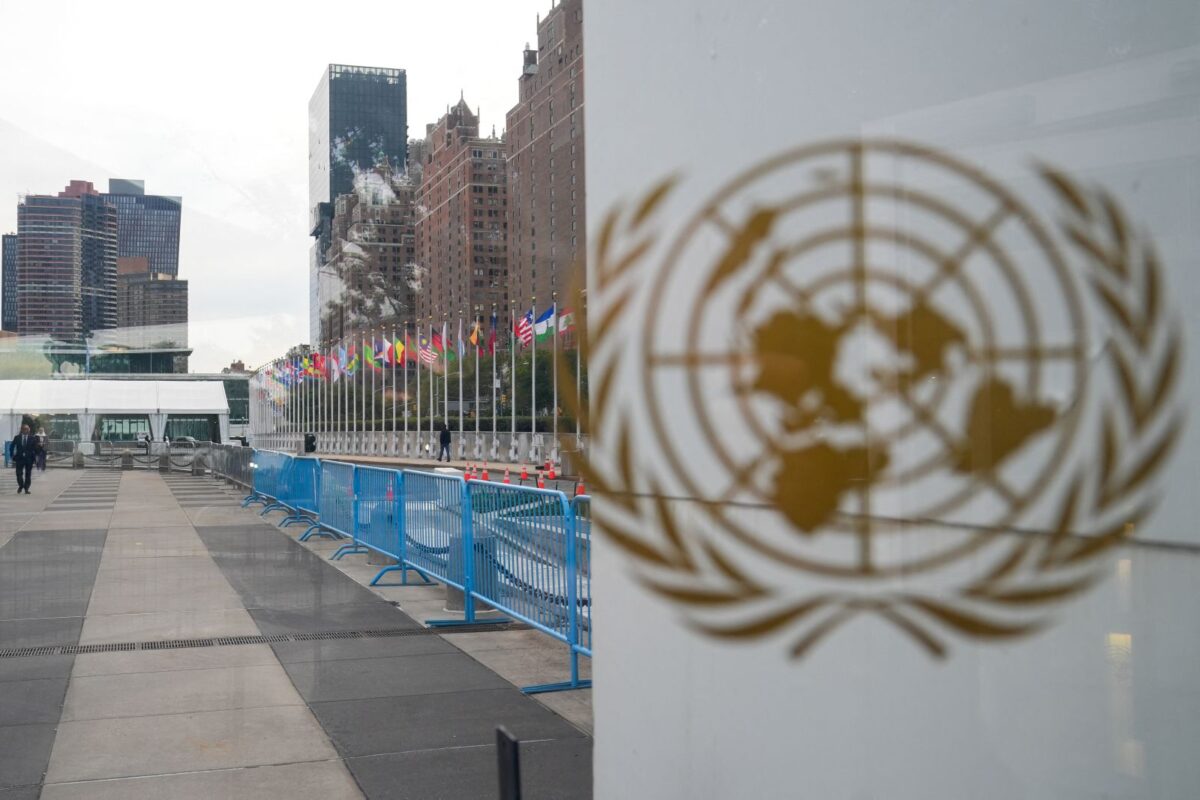
NEW YORK, UNITED STATES - SEPTEMBER 24: The 81st United Nations General Assembly (UNGA) is held at the United Nations Headquarters in New York, United States, on September 24, 2026. Mehmet Eser / Anadolu (Photo by Mehmet Eser / ANADOLU / Anadolu via AFP)
World leaders gathered in New York this week for the annual United Nations General Assembly. Many speeches were delivered, but sideline meetings drew more coverage and interest. Who met with whom, which issues they discussed, and what those conversations might produce mattered more than what leaders said from the podium.
As the UN prepares to choose its next Secretary-General, what do we still expect from the organization and from the person who leads it?
Some might say this is true of every international conference. Perhaps that is precisely the point. The General Assembly has become another item on world leaders’ busy calendars, and its importance is measured more by the meetings it enables than by the deliberations in its main hall. As the UN prepares to choose its next Secretary-General, what do we still expect from the organization and from the person who leads it?
In Lebanon, Palestine, and other countries enduring repeated wars, UN Secretaries-General have become familiar names. Javier Pérez de Cuéllar was in office when the Israeli army reached Beirut in 1982. Boutros Boutros-Ghali was there during Operation Grapes of Wrath in April 1996; Kofi Annan in 2006, when the Security Council adopted Resolution 1701, the text every Lebanese politician still quotes, though its central provisions remain unfulfilled. We know these names because they were on the paperwork while things were being done to us.
Does the UN Still Matter?
The question extends beyond the Secretary-General to the UN system, its agencies, the Sustainable Development Goals, and peacekeeping missions. Does UNDOF’s presence in the Golan Heights really matter? It is mandated to monitor the 1974 disengagement agreement between Israel and Syria. The Syrian regime that signed it fell in December 2024, and Israeli forces moved into the area of separation that UNDOF is meant to monitor. They have not left, and Israel has said it intends to remain indefinitely. The mission still monitors a line on the map, while the separation it was meant to preserve is violated on the ground.
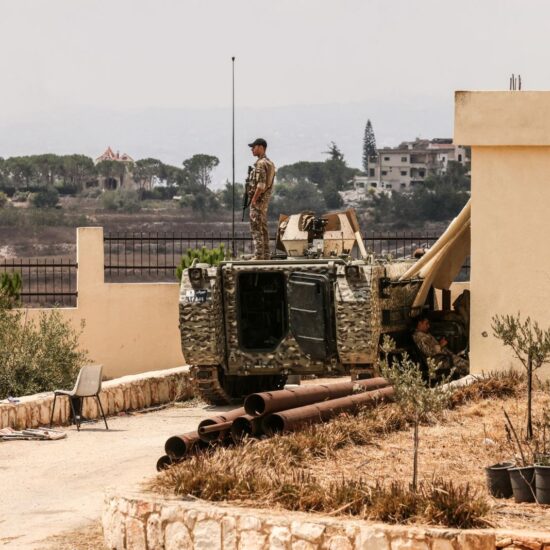
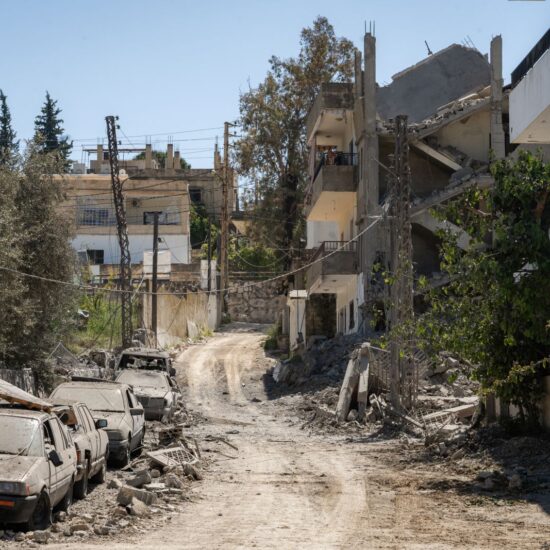
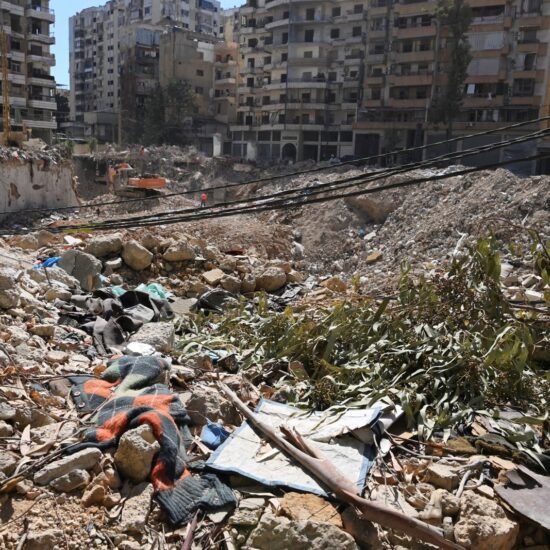
Should the Lebanese shed tears if UNIFIL is dismantled? It was created in March 1978 as an interim force. Its mission is now ending after forty-eight years and hundreds of deaths among its personnel. Resolution 2790 gave it a final mandate until 31 December 2026, with withdrawal to follow through 2027. As of August, it still fielded roughly 7,500 peacekeepers from 46 countries. Its 2024–25 expenditure exceeded half a billion dollars. Since the vote to end its mandate, I have not heard a serious argument for preserving UNIFIL beyond its contribution to South Lebanon’s economy. That tells you what the mission has become. Had the force done a better job, would the south be so extensively destroyed and still partly occupied today?
Has the UN made the world less imperfect, or has it given imperfection a procedure and an annual review?
What should we say about the UN system’s failures in Palestine, Rwanda, Darfur, and Syria? In 2012, Ban Ki-moon warned that people expected the UN to be more than a mirror of a divided world. That remains a useful test. Has the UN made the world less imperfect, or has it given imperfection a procedure and an annual review?
The Price of the Veto
Questions about the usefulness of international institutions did not begin with the UN. The League of Nations faced them before the Second World War; the organization that replaced it inherited the challenge of securing cooperation among competing powers. The aim was to promote multilateral diplomacy and coordination: in simple economic terms, to shift international relations from a zero-sum game to a positive-sum one. The veto was the price of getting the great powers into the room. It was designed as a brake, not an engine, and it has worked exactly as intended.
Many countries have long argued that the Security Council’s permanent membership no longer reflects the world. The Non-Aligned Movement made that case decades ago; today, many middle powers make the same point. Yet changing who sits at the table does not, by itself, alter the calculation that determines whether cooperation occurs.
Then there is the issue of universal values, from human rights to development. The recent BRICS summit condemned unilateral sanctions, in part because of their impact on human rights, regardless of the records of some states that made that argument. Human rights are repeatedly manipulated and selectively invoked, including by states that helped draft them. Kofi Annan addressed this directly: the validity of universal values does not depend on their being universally obeyed or applied. The hypocrisy does not invalidate the principle. It does, however, raise questions about the institutions expected to defend it.
The Bureaucratic Burden
The UN also suffers from a more familiar problem: bureaucracy. Agencies and responsibilities overlap. Procedures consume resources, and funding intended for beneficiaries pays for offices, overhead, and reporting requirements. The apparatus or apparatchiks develop their own reasons to persist. We have conventions, annual conferences of state parties, targets, indicators, and midterm reviews of those targets. It becomes difficult to tell where administering the work ends and justifying the institution begins.
Two United Nations
Would it matter if the UN disappeared tomorrow? Would the world be better or worse off without it?
Would it matter if the UN disappeared tomorrow? Would the world be better or worse off without it?
One has to think at two levels: the UN headquarters and the UN on the ground. At headquarters, much of what we see is procedural. Texts are drafted, vetoed, or adopted, then left unenforced. On the ground, despite all the criticism, UN agencies still save lives. But they may also compensate for government corruption and incompetence. Someone will point to colonial legacies, foreign meddling, and imperial greed. Those explanations deserve attention. They do not settle the question of what governments do with the responsibilities they still hold.
Both can be true at once. Agencies can subsidize bad government, while their withdrawal offers no guarantee of better government. Lebanon has lived with versions of this arrangement since the early 1990s. The state does not deliver; an agency does instead; the state takes the credit; the agency writes a report; and the donor renews. This arrangement can endure for decades. Stability is not the same as success.
Secretaries, Not Generals
So does it matter who holds the office? The Secretary-General commands no standing UN army and has no budget independent of member states. The office carries discretion, and in a system where the large levers cancel each other out, marginal discretion matters. Whoever holds it can influence which envoy is appointed, how bluntly a report is presented, how forcefully famine is addressed, and whether a government is named or hidden behind the phrase ‘parties to the conflict.’ An inconvenient report can create more trouble than years of inconclusive diplomacy.
This year’s selection reveals something about those limits. Most candidates come from Latin America and the Caribbean, supporting the argument that regional rotation should now favor them. Rebeca Grynspan of Costa Rica and Carolyn Rodrigues-Birkett of Guyana led the September 18 straw poll, according to Reuters. António Guterres leaves office on December 31. Formally, the General Assembly appoints his successor on the Security Council’s recommendation. A candidate needs a majority on the Council and must avoid a veto from any of the five permanent members. An objection from one of those capitals can outweigh support from many others. Qualifications, talent, and management style must pass through that filter.
In countries like ours, the choice still matters. The name appears in reports and recommendations that shape what is monitored, condemned, counted, and ignored. That is why we remember Pérez de Cuéllar, Boutros-Ghali, and Annan. But the question of who gets the job raises a larger one: whether multilateralism can still deliver on its promises.
Does Cooperation Still Pay?
Multilateralism has never been sustained by goodwill alone. It rests on calculation and mutual benefit. The case for cooperation is strongest when a problem cannot be solved unilaterally, when acting together yields greater gains than acting alone, and when walking away carries a cost. Under those conditions, the institution is worth its dues. When governments see little advantage in cooperation and little cost in avoiding it, no Security Council reform and no talented Secretary-General can make the arithmetic disappear.
Let’s look at wars first. Negotiation requires the parties to view an agreement as preferable to another month of fighting. Many wars drag on until exhaustion, or until one side runs out of men, money, or patience. The same is true closer to home. Ceasefires in our region often arrive when the fighting has stopped paying, brokered by states with leverage over the parties. Diplomacy and the UN system then formalize a process already underway elsewhere rather than initiate one.
The COVID-19 pandemic revealed a different challenge. Faced with a global problem, countries closed borders, restricted exports, and signed their own contracts with vaccine manufacturers. Cooperation offered collective benefits, including expanded vaccine production and a faster global recovery. Yet governments competed to secure doses for their own populations. The immediate political reward was securing national access. The arithmetic of collective recovery did not necessarily align with the political arithmetic each government faced.
Climate presents another version of the problem. The damage is felt at home, but limiting it requires cross-border action. Governments face immediate domestic costs, while many of the benefits are shared internationally and accumulate over time. A government can delay its commitments and still benefit from action taken elsewhere. The cost of walking away is therefore often too distant or too widely shared to alter the decision. Thirty years of conferences have produced targets, reviews, and the date of the next conference. The incentives to postpone remain.
The UN’s most dependable work may be the least political. Its agencies develop statistical standards so national accounts can be compared, coordinate the use of radio frequencies, set international aviation standards, and support the exchange of weather data. They help provide water and vaccinations where governments cannot or will not. This is real work, much of it invisible until it stops. It is also where the benefits of cooperation are easier to see. But providing useful services does not, by itself, sustain a political order.
Whoever takes the office, statements of grave and deep concern will continue to be issued.
The UN has retained the vocabulary of universality while losing much of its ability to give that vocabulary political force. The next Secretary-General will preside over that gap. Whoever takes the office, statements of grave and deep concern will continue to be issued. The question is whether the arithmetic will allow much else.
Khalil Gebara is an academic and researcher.
The views in this story reflect those of the author alone and do not necessarily reflect the beliefs of NOW.