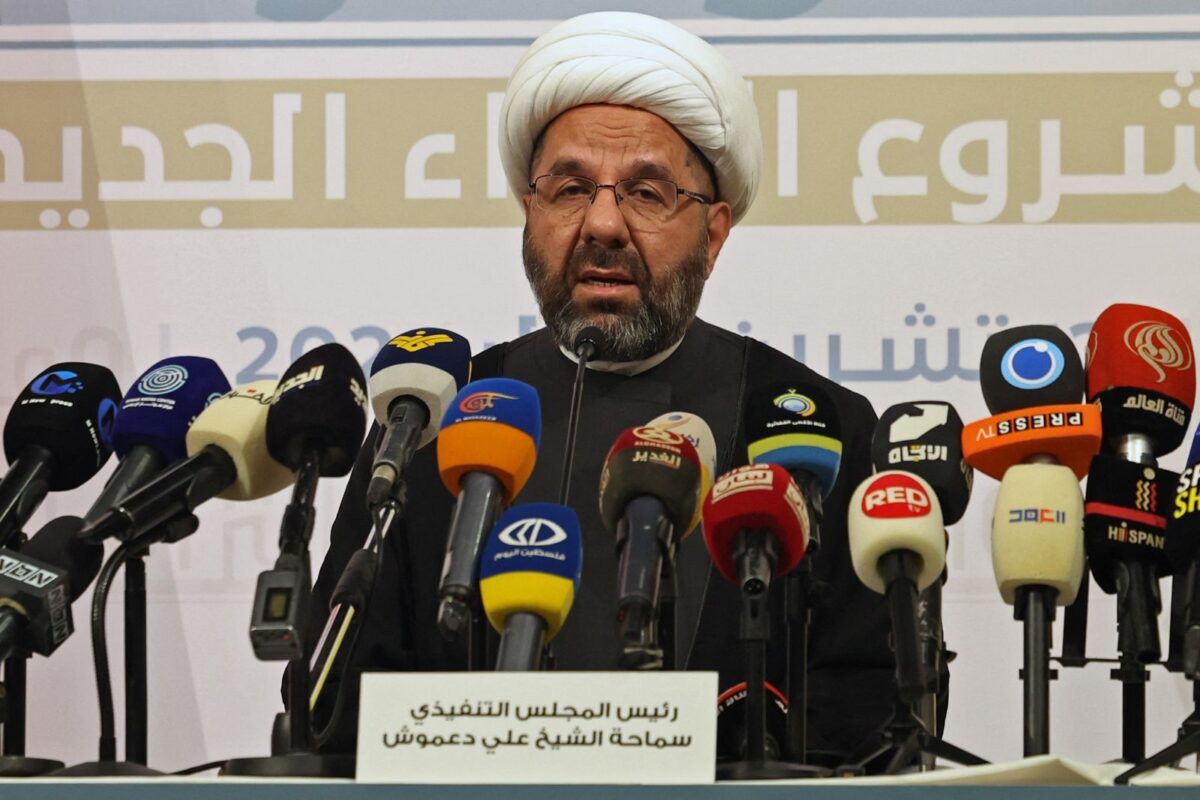
The head of Hezbollah's Executive Council, Ali Damoush addresses a press conference in the southern suburbs of Beirut on October 13, 2026. (Photo by Anwar AMRO / AFP)
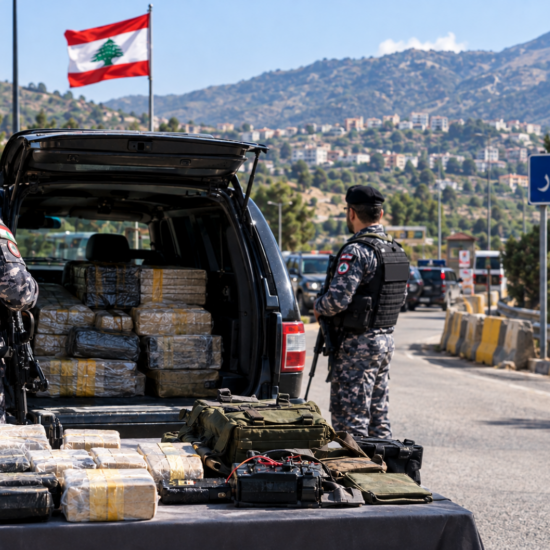
A van loaded with C4 and TNT drove out of the Bekaa toward Beirut. It crossed territory covered by the army, the security services and the border authorities, and it was stopped only at Dahr al-Baidar, at the gates of the capital. Ask yourself what would have happened if it had not been.
Days later, Hezbollah stood before cameras and announced it would hand out large sums of cash to thousands of families, as if no state existed. No one in authority answered that either.
This is Lebanon today: a republic with nothing left to hide behind. I call it the naked state.
Who let it through?
The question nobody in authority has answered is how. A load of that size does not cross a country by accident.
The investigation is open, and the facts have been repeated for days: C4 and TNT, followed by roughly 200 additional kilograms seized along the Syrian border. The question nobody in authority has answered is how. A load of that size does not cross a country by accident. Either the institutions did not see it, or they saw it and did not act. Both answers are an indictment. In March, the Cabinet banned Hezbollah’s military and security activity outside state authority. On the ground, that decision meant nothing.
As for the cash, helping those who lost their homes is a national duty. But where does the money come from, how does it enter, and how does it move outside official channels, when the US Treasury has sanctioned networks accused of financing the party?
As for the cash, helping those who lost their homes is a national duty. But where does the money come from, how does it enter, and how does it move outside official channels, when the US Treasury has sanctioned networks accused of financing the party? An organization that behaves this way feels no pressure. It acts like one that is growing.
Now the fog around Berri.
He is harder to read, and I still see fog around him. He is the head of the deep state, the political arm and the tongue of Hezbollah, and through it of the Iranian regime. For forty years he gave an armed project a Lebanese, parliamentary face.
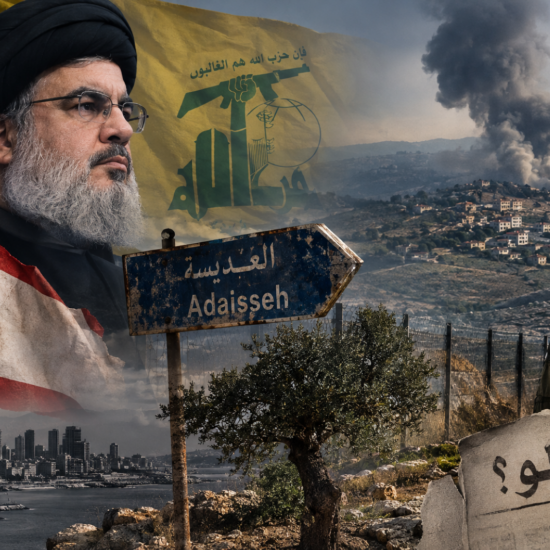
Let us be clear about who Hezbollah answers to. It answers to Tehran. Hussein Hajj Hassan has said the party is part of the axis stretching from Hormuz to Bab al-Mandab. That is a regional chain of command, not a Lebanese strategy.
Now the Iranian era in the region appears to be closing, and Hezbollah with it. Berri is fading, and he leaves his own community with zero gain after four decades.
Now the Iranian era in the region appears to be closing, and Hezbollah with it. Berri is fading, and he leaves his own community with zero gain after four decades. All that remains is a scramble to fit back into the Lebanese puzzle he helped break. His “weapon of national unity” sounds hollow when armed operations unfold in his own country without his ability to prevent or explain them.
The deeper tragedy belongs to the Shia community. For four decades it was governed by Hezbollah and Amal, and it was led from one catastrophe to the next: 2006, 2024 and the renewed fighting this year, with the displacement, the ruined villages and the collapsed economy. Sacrifice itself was sold as success. But survival is not security, defiance is not sovereignty, and preserving a movement is not the same as protecting the community it claims to speak for.
The danger is that no replacement is waiting. Independent Shia voices lack the organization to turn discontent into representation, and where civilian alternatives are weak, the vacuum is filled by whoever holds the weapons.
The danger is that no replacement is waiting. Independent Shia voices lack the organization to turn discontent into representation, and where civilian alternatives are weak, the vacuum is filled by whoever holds the weapons.
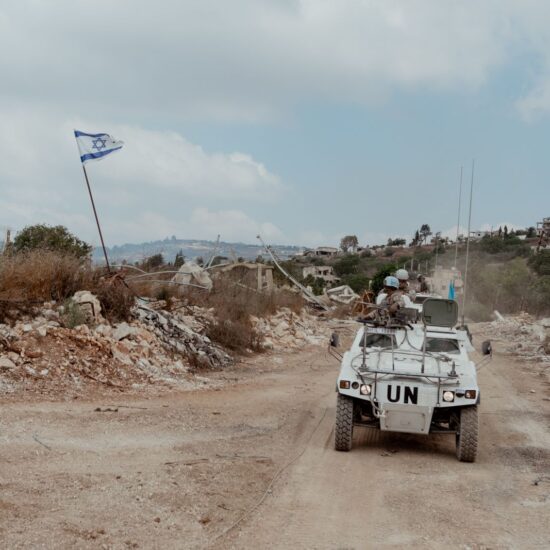
The state is weaker still. It does not control its territory, its border or its security, and it still lacks the courage to say plainly what much of the world has already said: Hezbollah is a terrorist organization.
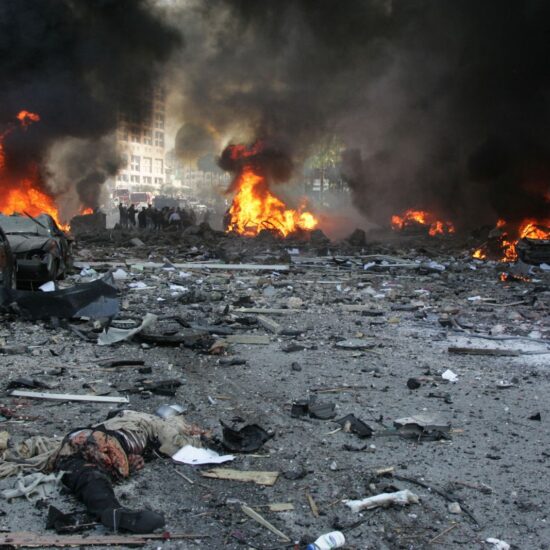
All of this is happening while the drums of war can be heard across the region. Every other country in that neighborhood is bracing for what may come. Lebanon is racing toward its own undoing faster than any of them. It does not need Israel to destroy it, because it is perfectly capable of doing the job alone. It has a state that cannot enforce its laws, a movement that answers to no one, a broker whose time has passed and a community with no one left to lead it.
There is no other state in the world quite like it. Irony or tragedy, I cannot decide which. It is exposed, with nothing left to cover its shame.
Lebanon needs one state, one legitimate armed authority and one law applied equally to everyone. Until it says so out loud and acts on it, the nakedness will only deepen.
Elissa E Hachem is a journalist and political writer specializing in regional affairs and governance. Former Regional Media Advisor at the U.S. State Department’s Arabic Regional Media Hub, with broad experience in strategic communication across government and private sectors.
The views in this story reflect those of the author alone and do not necessarily reflect the beliefs of NOW.