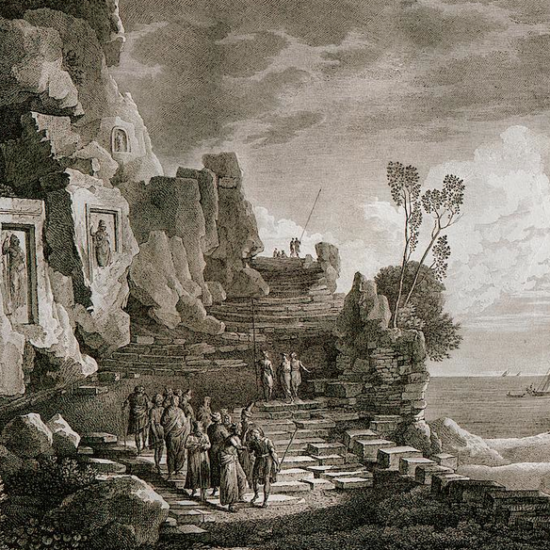
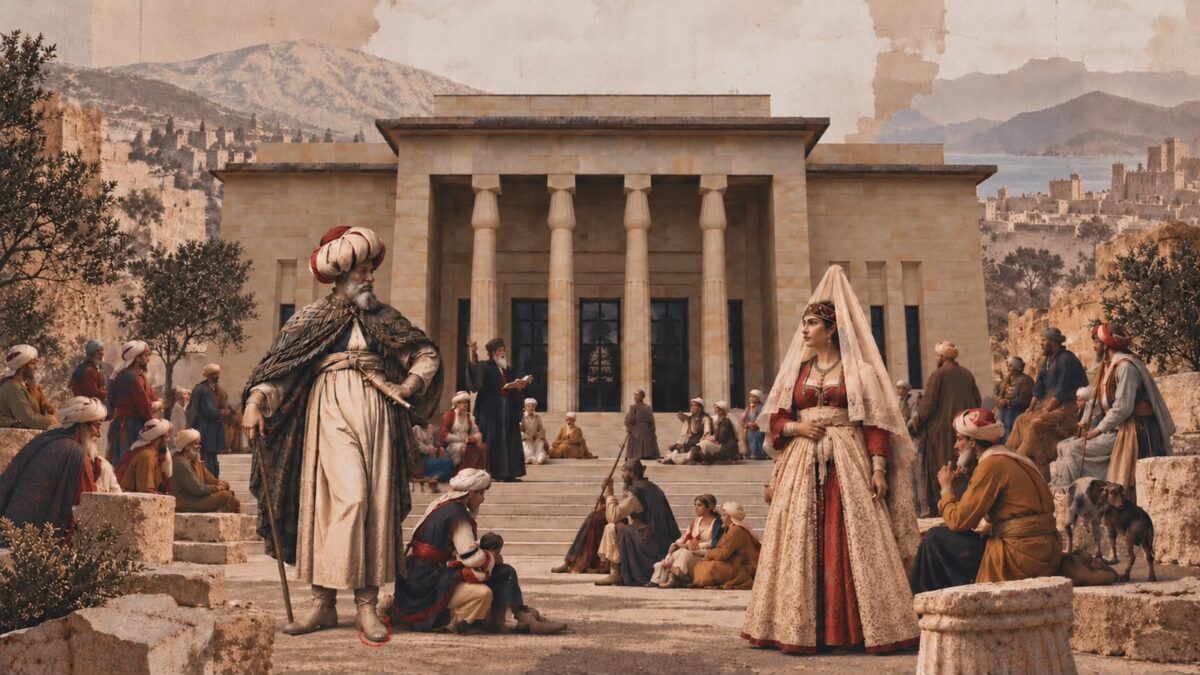
Walk through the National Museum of Beirut and Lebanese history unfolds through the Bronze Age, the Iron Age (the Phoenician period), and the Hellenistic, Roman, and Byzantine periods. Six vitrines are devoted to the Arab-Islamic periods, and four centuries of Ottoman rule are represented by a single funerary slab and some ceramics occupying part of one vitrine. The one significant medieval display presents the thirteenth-century Maronite mummies, manuscripts, and objects of daily life found in the grotto of Assi al-Hadath. The official history textbooks follow a similar pattern. Antiquity testifies to the depth of human civilization on this land, yet it tells a broken story, since the making of Lebanon belongs to the centuries between the Arab conquest of 636 and the proclamation of Greater Lebanon in 1920.
This raises questions that go beyond display and curriculum. What narrative of the nation does a museum construct when it selects its periods? Whose past does it include, and whose does it leave in storage? Can a society explain its religious diversity, its culture of autonomy, and its distinct identity while skipping the centuries that produced them? Where explanation is lacking, invention takes its place: heritage is fabricated to compensate, and modern challenges are projected onto the distant past through a kind of historical telescoping. The missing centuries are also missing questions, and they deserve to be set out one by one.
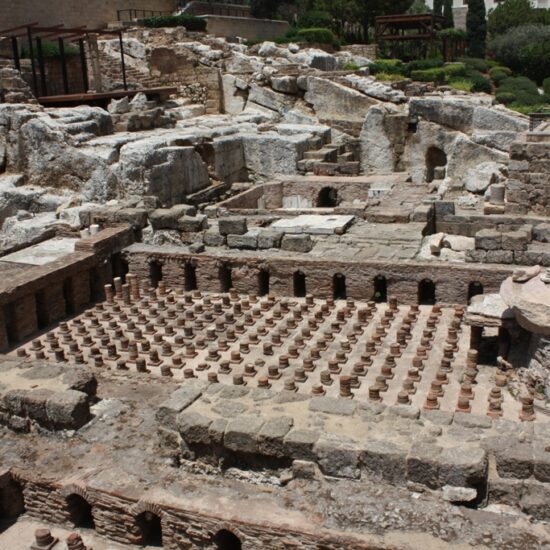
The first question concerns the religious diversity of Lebanon and the Levant, which can only be understood by returning to Late Antiquity. How did the local polytheistic cults, long Hellenized and Romanized, come to an end between the fourth and sixth centuries? How did Christianity prevail, and what role did imperial patronage play? How were the Roman temples converted? Archaeology has brought to light substantial proto-Byzantine basilicas, yet textbooks and museums make no use of them to explain this transformation.
The same period raises a second question, that of the brief Sasanian occupation. The last great war between Rome and Persia (602–628), during which the Sasanians occupied the Levant, was decisive for the end of Roman rule and helps explain why the Byzantines fell to the early Arab-Muslim armies. Students never encounter it.
This leads to the third question: how did Islam spread in Lebanon? The story of the first Muslims on this land gives way to general narratives that explain little in terms of continuity and change. The life of Imam al-Awza’i offers a telling example. It sheds light on the formation of an early Muslim community in the Bekaa, Baalbek, and Beirut in the mid-eighth century, on the imposition of the dhimma system and the revolts in Mount Lebanon, and on early signs of coexistence, visible in the Imam’s defence of the Christians of the mountain in harsh times.
Can a society explain its religious diversity, its culture of autonomy, and its distinct identity while skipping the centuries that produced them? Where explanation is lacking, invention takes its place…
Christians themselves were undergoing a profound transformation, which raises a fourth question: the formation of the Melkite, Maronite, and Jacobite churches. In the late Roman period, Christianity existed as many branches still in formation, from which the present-day communities would later emerge and crystallize under Umayyad and Abbasid rule between the seventh and tenth centuries. In the context of the Christological controversies that followed the Council of Chalcedon (451), how did a monastic movement born in the fifth century in the Byzantine province of Syria Secunda become an independent church within the Patriarchate of Antioch, in Syria and Mount Lebanon, under Umayyad rule? And what do archaeology, epigraphy, and written sources tell us about these three communities in what is now Lebanon?
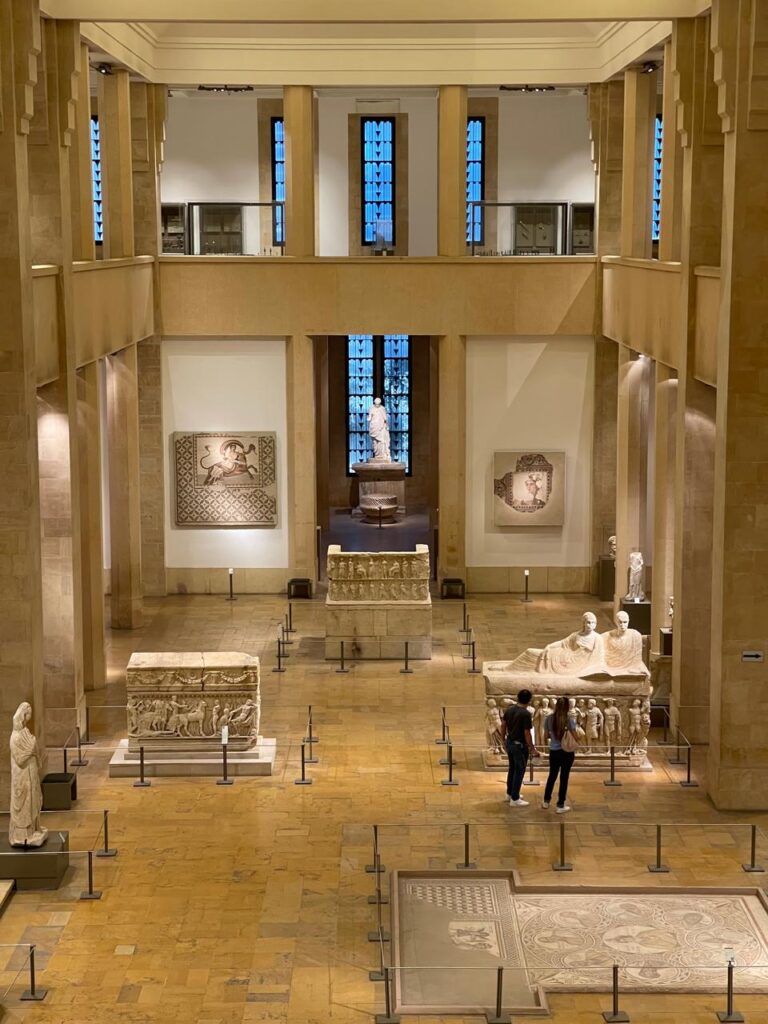
Classical antiquity occupies most of the exhibition space at the National Museum of Beirut.
Closely linked to communal identity is a fifth question, that of language. Social media hosts heated debates on the survival of Canaanite, Phoenician, Aramaic, and Syriac, and on whether Arabic arrived with the conquests or was already present in the Roman period. Public culture leaves out what the evidence suggests: Phoenician had long died out by the first century AD, replaced by Greek in the major cities and by different forms of Aramaic in rural areas, a rural linguistic landscape that still awaits proper scholarly attention. The transition to Arabic then probably took place in stages between the seventh and tenth centuries. The epigraphic evidence exists, and this linguistic transition deserves a place in what we teach.
The sixth question takes us to the period of Fatimid rule over the Lebanese coast, from the late tenth century to the arrival of the Crusaders, within what historians call the “Shi’i century.” How, where, and why did different Shi’i currents spread, as a form of opposition to the Abbasids, in what is today Jabal Amel, the Bekaa, and parts of Mount Lebanon? Archaeological evidence remains scarce for lack of excavation, but literary sources are available. Poets in Tyre are attested expressing ideas later incorporated into Ismaili, Alawite, and Twelver Shi’i beliefs. The dynamics of centre and periphery are equally important. The Banu Ammar in Tripoli and a local dynasty in Tyre broke away from direct Fatimid rule and established autonomous states that thrived on Mediterranean trade.
That trade points to another blind spot: the sea, so central to Lebanese narratives of identity. Textbooks fail to explain the Fatimid revival of Mediterranean trade, and the written evidence for new products arriving and being produced around these cities, sugar among them.
The Fatimid period also saw the birth of a community whose story is the subject of the seventh question: the emergence of the Druze in the first half of the eleventh century. How did regions such as the Chouf highlands and Wadi al-Taym embrace a new call from Cairo? What was the role of preachers such as the revered al-Sitt Sara? And how did the negotiations between centre and periphery later make the Druze a quasi-independent mountain community with a foundational role in the emergence of Lebanon?
Chronologically, the eighth question concerns the Crusader period. The monumental fortifications built in the twelfth and thirteenth centuries find little echo in the museum or the textbooks, which say little about the political structures, written sources, and material evidence of the period. The life of Muslim communities under Crusader rule and the treatment of local Christians, especially the Maronites, who entered into union with Rome in 1182, goes unmentioned. The Bekaa, which remained outside Crusader rule under the atabegs of Damascus and later the Ayyubids, is also left out of the picture. So is the small Ayyubid emirate of Baalbek, a branch of the wider Ayyubid sultanate, although it is the reason we call the site Baalbek’s qal’a, or castle: its princes fortified the Roman temple complex during their wars with the Crusader Count of Tripoli. In the same context emerged the Druze emirs of the Gharb, entrusted with defending the mountain against the Crusaders, whose relations with the atabegs, the Ayyubids, the Mamluks, and the Crusaders themselves were complex. Salih ibn Yahya’s 15th c. history of Beirut mentions their castles at Sarhmoul and Abey, sites still waiting for archaeologists.
The missing centuries hold the answer to this problem. They tell how the Lebanese communities came to share the same mountains, plain, and coasts, how they fought, negotiated, and coexisted, and how a culture of autonomy took shape among them.
The ninth question concerns the Mamluk period, from the second half of the thirteenth century to 1516. The violent imposition of Mamluk rule in the Jebbeh, Kisrawan, and al-Futuh and the question of persecution, whether of Christians or of Twelver Shi’is, remains largely confined to heated public debate and has yet to find its way into scholarly study. The disappearance of the Alawite community from Mount Lebanon, attested in Kisrawan and possibly in the Dinniyeh area, is equally overlooked, as is the emergence in Jabal Amel of the renowned schools of Twelver Shi’i learning. Little is said, moreover, about the consolidation of the iqta’ system and of provincial leadership that would carry over into the Ottoman period. The same silence surrounds Beirut and Tripoli and the urban Sunni societies that flourished in them, the first as a thriving port on the spice and sugar trade, the second as the seat of a Mamluk province, endowed with a built heritage unique in its state of preservation.
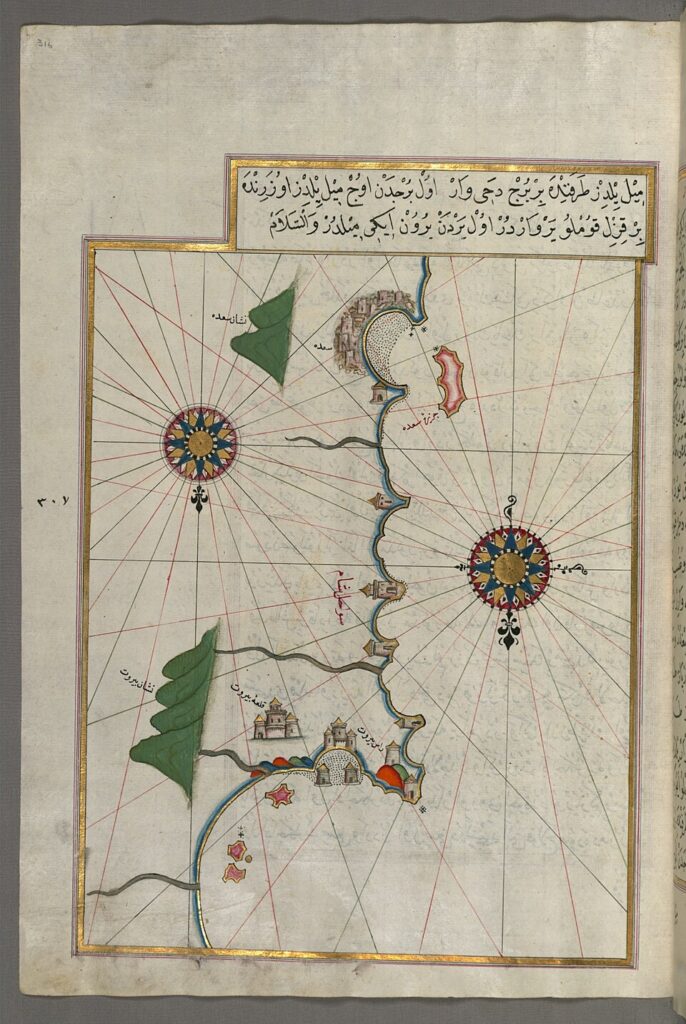
18th c. Map of the Eastern Mediterranean Coast as Far as the City of Beirut Ottoman Empire, The Walters Art Museum, Baltimore. Visual sources such as this map remain underused in the study and teaching of Lebanon’s history.
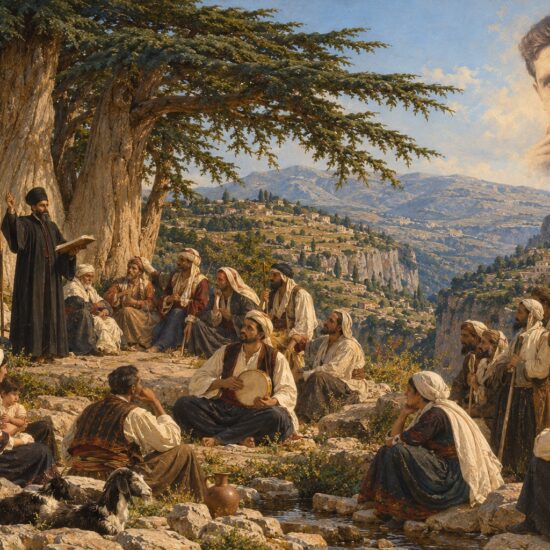
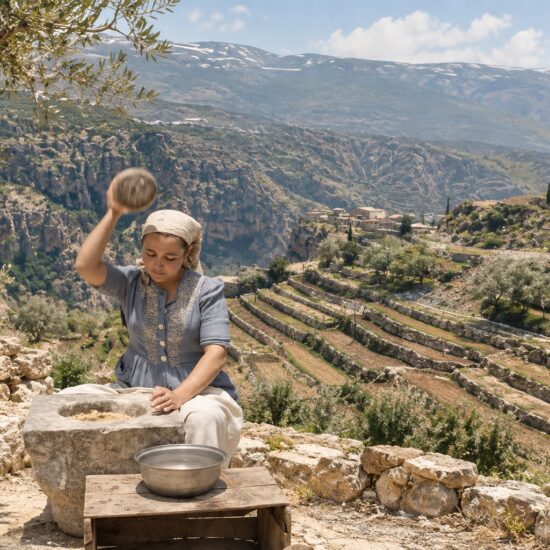
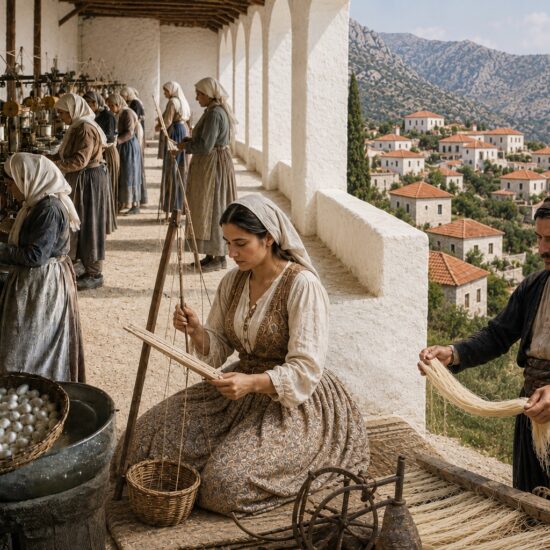
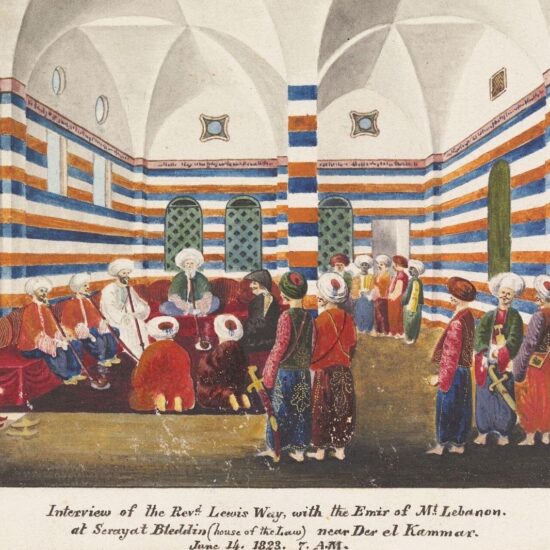
The tenth question is how people lived on this land in the Ottoman period, between 1516 and 1918. Lebanese popular culture makes extensive use of the image of the fallah and the day’a, the quintessential village, sometimes adorned with anachronistic elements. The village holds a monumental place in popular culture, yet it has no display in the museum and no proper chapter in history textbooks. Material culture, used and reused to the point of inventing a fake heritage, receives the same neglect. Where is the vernacular architecture of town and village explained? Where is the vast body of agrarian knowledge transmitted from one generation to the next? Where is the story of the mouneh, and of women as the custodians of this practice that allowed communities to survive in a landscape of agrarian precarity? The life of the elites is equally invisible: the emirs and their palaces, the architecture of their residences, the tantour worn by their ladies. Most striking of all is the absence of silk, which shaped Lebanon’s economy, culture, politics, and diplomacy for centuries. The museum is also silent on the coexistence of Muslims, Druze, Christians, and Jews in towns and villages, and on the difficult times of the nineteenth century, its massacres and peasant uprisings, and the ways in which life was rebuilt in their aftermath. Urban and rural ways of life, culinary traditions, costumes, customs, and the importance of zajal poetry in these communities thus remain invisible, and therefore impossible to understand.
The eleventh question concerns the negotiations between local leadership and the imperial centre. Why do the Lebanese have a distinct identity? How did the idea of a Lebanese state emerge gradually, and how far can it be traced back to the Druze emirs of the Chouf? What role did the “long rebellion” of the Druze against the Ottomans, as explained by the eminent historian Abdul-Rahim Abu-Husayn, play in the emergence of de facto autonomous rule under the Ottomans and, later, of a national narrative? Fakhr al-Din, for all his weight in that narrative, is completely absent from the museum. The same applies to Emir Bashir and to other ruling local dynasties.
The final question follows from the previous one: how did this tradition of autonomy become a national project in the nineteenth century? The civil strife of 1860 and the establishment of the Mutasarrifiyya of Mount Lebanon in 1861 gave autonomy an institutional form. What role did intellectuals play in formulating a national project and a national history? What role did missionary education play in shaping the educated elites? And where is the story of the diaspora? These developments, spanning the seventeenth to the early twentieth century, are central to understanding why the State of Greater Lebanon was declared in 1920.
More questions could be added, and together they lead to a broader one: why does Lebanon tell its story backwards? The museum presents Lebanon as part of the classical world. This is a historical reality, though one with little continuity in the present. The missing centuries, in contrast, explain the components of today’s Lebanon: its religious communities, its linguistic culture, the dynamics of its rural and urban history, and the relationship between imperial centre and provincial leadership that gave rise to Lebanese autonomy, a course that led to the idea of Greater Lebanon in 1920.
A road map already exists. For years, the History Department at the American University of Beirut has offered HIST 245, History of Lebanon from 634 to 1920 A.D., a course on the history of the regions that came to form Greater Lebanon and on the factors behind the development of a distinctive Lebanese identity. This road map could guide a museography that tells a more diverse and inclusive story of Lebanon, a public history that accompanies it, and textbooks that train students in analytical skills and free them from the obsession with a unified, almost authoritarian vision of the past.
The stakes extend well beyond the museum and the classroom. In the midst of the crisis Lebanon is living through, the past is always present, invoked by every party to justify the claims of today. When the centuries that shaped the country remain unexplained, each community fills the void with its own version, heritage is invented to compensate, and present conflicts are read back into a distant past. The missing centuries hold the answer to this problem. They tell how the Lebanese communities came to share the same mountains, plain, and coasts, how they fought, negotiated, and coexisted, and how a culture of autonomy took shape among them. Restoring these centuries to the museum, the textbook, and public culture would give the Lebanese a history in which each community recognizes its own story within a common one.
Charles al-Hayek is a public historian and the founder of Heritage and Roots.
The views in this story reflect those of the author alone and do not necessarily reflect the beliefs of NOW.