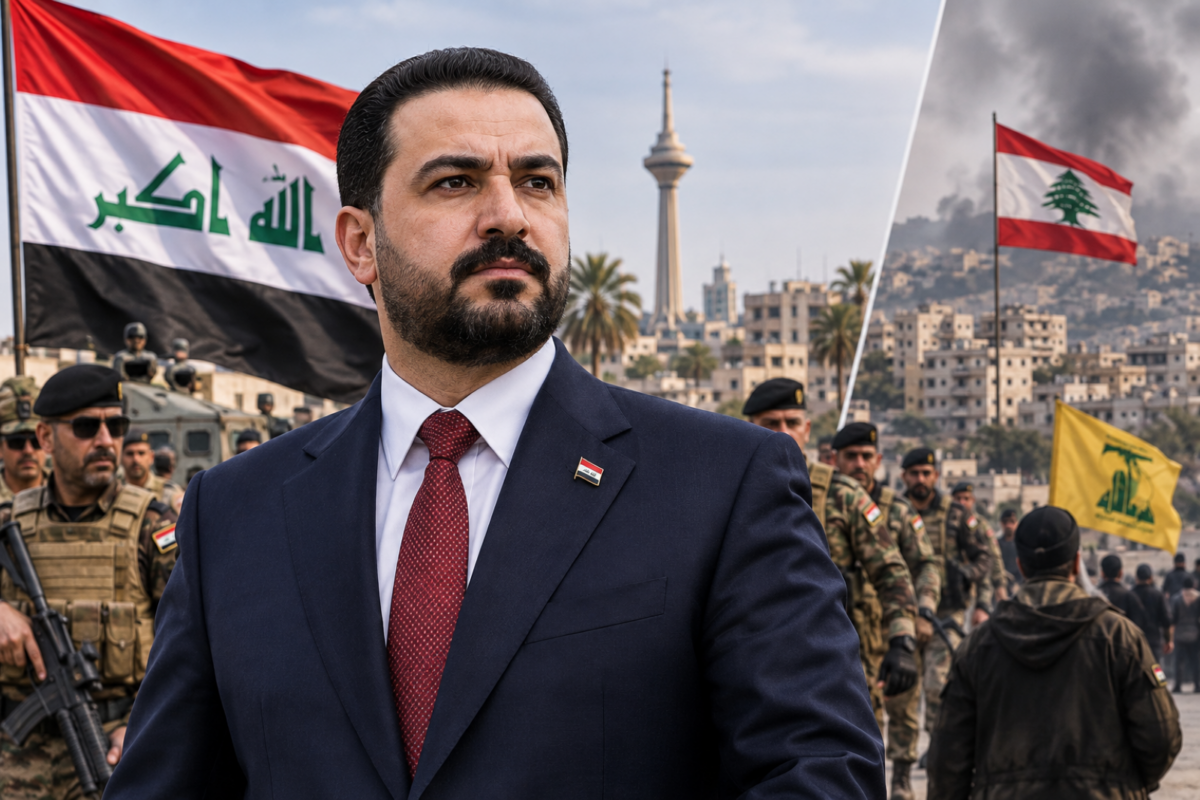
Iraqi Prime Minister Ali Al-Zaidi has initiated what is, by far, the boldest effort to disarm Iranian-backed militias in Iraq. After it was revealed that pro-Iran security officers were smuggling oil to Iran, Al-Zaidi has formed a task force to forcibly enter the area of Jurf-Al-Sakhar, which is under the control of an Iran-backed militia. Since the discovery of this scandal, Iraq has been gripped with tension. However, Iraqis are gradually coalescing in support of their government’s efforts, providing unprecedented popular momentum for the disarmament of Iran’s militias and the efforts to break their hold over Iraq’s economy and politics.
For years, Iraq has been held up as a success of Iran’s expansionist policies. Its proxies in Iraq have embedded themselves so deeply that their budget now comes from Iraq’s own treasury instead of Iran’s.
For years, Iraq has been held up as a success of Iran’s expansionist policies. Its proxies in Iraq have embedded themselves so deeply that their budget now comes from Iraq’s own treasury instead of Iran’s. When protests erupted in Iraq in October 2019, they were crushed under the direct supervision of Qassem Soleimani, demonstrating the willingness of Iran’s proxies to use violence. Even as Hezbollah in Lebanon was weakened by Israel, Iran continued to influence the political process in Iraq. The natural resort to sectarian rhetoric and fearmongering has also complicated attempts and even independent calls to disarm these militias.
However, it seems Iraqi leaders have understood that things couldn’t continue as before. Iran’s imperialist politics have corroded Iraq and threatened its security, necessitating resistance to these policies.
However, it seems Iraqi leaders have understood that things couldn’t continue as before. Iran’s imperialist politics have corroded Iraq and threatened its security, necessitating resistance to these policies. Despite great efforts to postpone it, a reckoning was always due with forces which have pledged allegiance to Iran at the expense of their countrymen. No greater proof of this is more apparent than in the events of the past decade. Large parts of Iraq fell under ISIS rule, while Iran sent Hezbollah to defend the Assad regime. A decade of misery and destruction ensued, and millions of people suddenly became refugees.
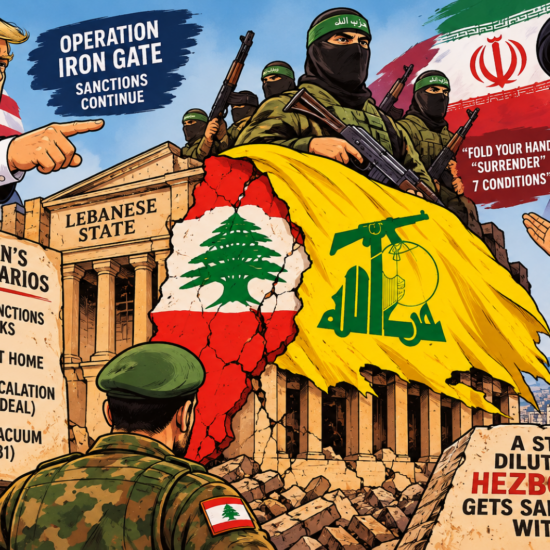
In Lebanon, the government continues to bury its head in the sand. Every day another warning sign comes, and every day the government refuses to deal with the facts. Hezbollah is growing increasingly assertive in its public rhetoric, amidst a regional environment which is still processing the results of the recent US and Israeli elections.
In Lebanon, the government continues to bury its head in the sand. Every day another warning sign comes, and every day the government refuses to deal with the facts. Hezbollah is growing increasingly assertive in its public rhetoric, amidst a regional environment which is still processing the results of the recent US and Israeli elections. The news is a constant loop of stories reporting a sharp drop in the standard of living, while hundreds of thousands remain displaced by Israel from their homes in South Lebanon. How long can we keep running away forever from overdue debates and national questions?
What is even more egregious is that a faction of self-righteous dogmatists continue to argue against a confrontation with Hezbollah, while simultaneously complaining about an inevitable domestic confrontation which they ascribe to “American and Israeli aggression”. When asked about alternatives to disarm Hezbollah in a way which hastens an end to the Israeli occupation, they blank and try to evade responsibility. Much energy is spent over moral outrage against those who advocate for the disarmament of Hezbollah, with labels such as “neocon”, “warmonger”, and for some reason “Likudnik” being thrown around. This despite the massive existential implications of this debate.
It is very easy to be a non-interventionist, avoiding responsibility for devising solutions to problems as existential as the erosion of democracy or the subcontracting of the country’s geopolitics to a foreign power. Any attempt at action is met with a harsh repudiation, as if the everyday Lebanese citizen is responsible for the direction of American foreign policy. At some point in the future, when the costs of inaction are as dramatic as expected, we will lament the hesitation which prevented us from taking action when the circumstances allowed it. Eventually, regret will not be able to save the future.
Mohammad el-Sahily is a student and activist. He tweets @moesahily.
The views in this story reflect those of the author alone and do not necessarily reflect the beliefs of NOW.