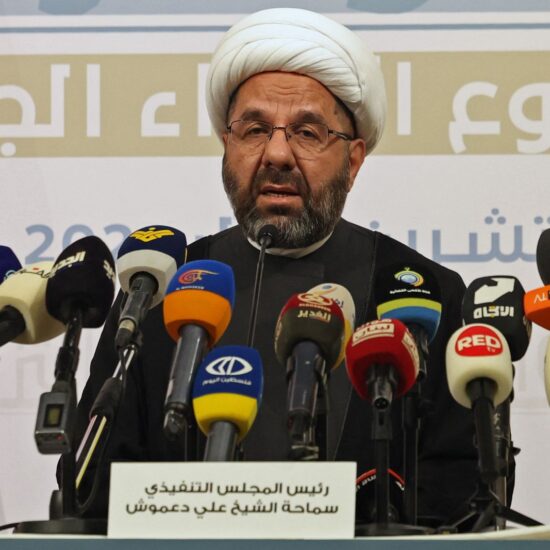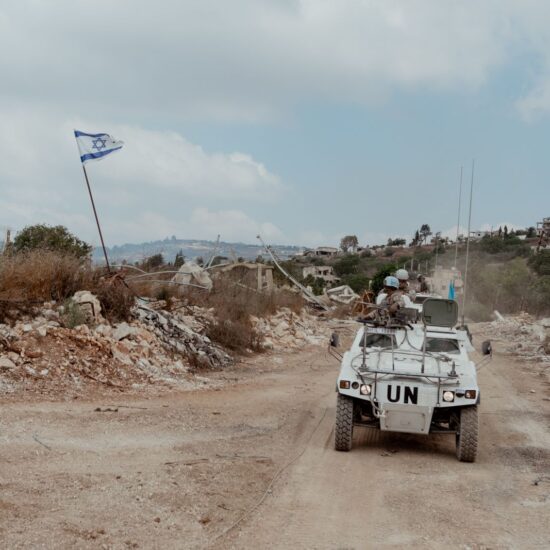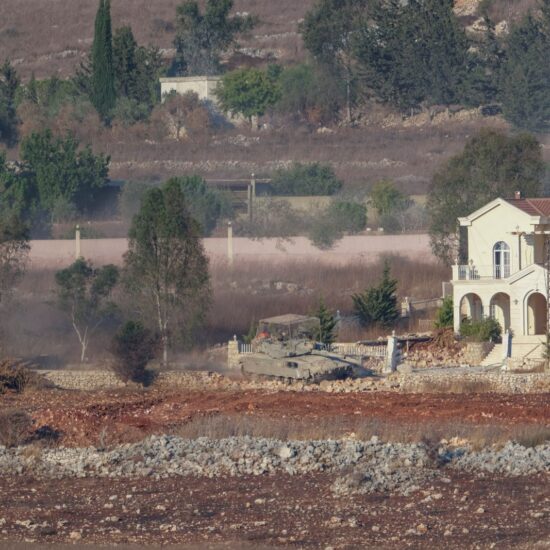
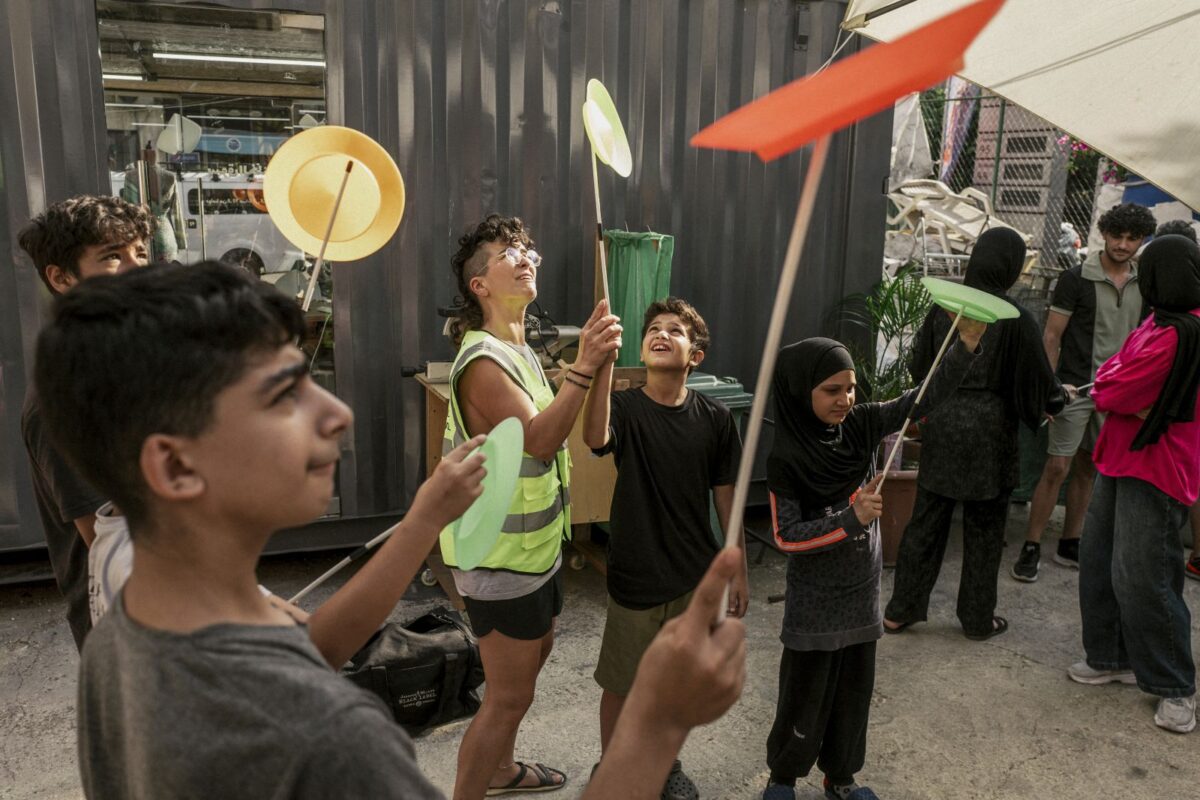
Photo by ADRI SALIDO / ANADOLU / ANADOLU VIA AFP. BEIRUT, LEBANON - SEPTEMBER 21: Volunteers organize entertainment activities, interactive games, and psychosocial support performances for displaced children who fled southern Lebanon due to Israeli strikes, in the Hamra neighborhood of Beirut, Lebanon on September 21, 2026.
Lebanon has become accustomed to speaking about its future as something that will begin once the present crisis is resolved. After a ceasefire, after reconstruction, after reform, the country will finally be able to think about the next generation. But that generation is growing up now.
A government can postpone a decision. A child cannot postpone being eight. The months spent outside a classroom, the meals missed and the care delayed are becoming part of a life while the adults responsible continue discussing what comes next.
UNICEF’s September 30 assessment makes that cost visible. Among surveyed households, 22 percent reported that their children had gone to bed hungry during the previous two weeks. Seventeen percent said their children had stopped attending school. Fourteen percent reported at least one child working, more than twice the proportion recorded in January 2025.
These figures describe the decisions through which families are being forced to survive. Food competes with transport. A medical appointment competes with rent. A child’s schooling competes with the income that child might bring home. Each decision may solve an immediate problem while making the family’s future more difficult.
Lebanon is financing its present survival by drawing down its children’s future
Lebanon is financing its present survival by drawing down its children’s future. The responsibility does not belong to parents struggling to make impossible choices. Telling a mother to prioritize education achieves little if she cannot afford the journey to school. Telling a father that children should not work offers no alternative to a household without adequate income. Advice becomes cruel when it assumes resources that people do not possess.
Public policy should make those choices less necessary. Instead, the household becomes the place where the consequences of war, economic collapse and institutional failure accumulate. What cannot be resolved politically must somehow be managed around a kitchen table.
The developmental consequences extend beyond missed lessons. Children learn through relationships, routines and repeated opportunities to explore their surroundings. Prolonged adversity can place these conditions under strain, particularly when it also overwhelms the adults caring for them. A school’s reopening matters enormously, but access to a building is only one part of restoring the conditions for learning.
A child who returns hungry, exhausted or frightened needs more than the resumption of the timetable. Teachers need the time and support to identify gaps and help children recover, rather than assume that attendance means the interruption has ended.
There is no reason to describe these children as a lost generation. Such language turns a demand for action into a prediction of defeat. Development remains open to change. Supportive relationships and dependable care can protect children through serious adversity. Recovery is possible, and that possibility is precisely why delay matters.
Resilience, however, requires conditions that adults and institutions help provide. It cannot become another flattering description of how much deprivation Lebanese people can withstand. Praising children for adapting does not answer whether they should have been required to adapt to so much.
The burden is also profoundly unequal. A family with sufficient resources has more options when schooling is interrupted: another school, private lessons, reliable internet or relocation. Another household may struggle to preserve even a basic routine. Neither can purchase complete protection from war, but their ability to limit disruption differs substantially.
Over time, repeated interruptions risk widening the distance between children who nominally share an education system. The inequality concerns the opportunity to learn consistently, receive care and imagine a future beyond immediate survival. Later, these unequal conditions can disappear from view when adults judge achievement as though everyone had started from the same place.
This should change how Lebanon defines recovery. Counting repaired buildings and reopened classrooms is necessary. It tells us too little about the children who remain absent, those who have entered work or those sitting at a desk without the support they need.
A child should not have to wait for national recovery to become a national priority.
A child should not have to wait for national recovery to become a national priority. The government and its partners should protect the practical conditions that keep children learning: affordable transport, meals, functioning schools and assistance that reduces families’ dependence on children’s earnings. Psychological support should be accessible through schools and community services, with specialist care available when needed. Caregivers and teachers also need support; they cannot absorb unlimited pressure on everyone else’s behalf.
These measures require money and difficult choices. That is true of every recovery priority. Their place in the budget should reflect the cost of allowing another year of interruption, rather than their limited power to command political attention. Children deserve protection now, independently of the workers or citizens they may become. They are already people whose days matter.
Lebanon’s leaders may eventually announce an agreement, a reform programme or the beginning of reconstruction. For a child who has spent those intervening years hungry, working or outside school, that announcement will arrive partway through a life. The years before it will still count.
Ramzi Abou Ismail is a Political Psychologist, Researcher and Analyst.
The views in this story reflect those of the author alone and do not necessarily reflect the beliefs of NOW.