Photo by HOUSSAM SHBARO / ANADOLU / ANADOLU VIA AFP
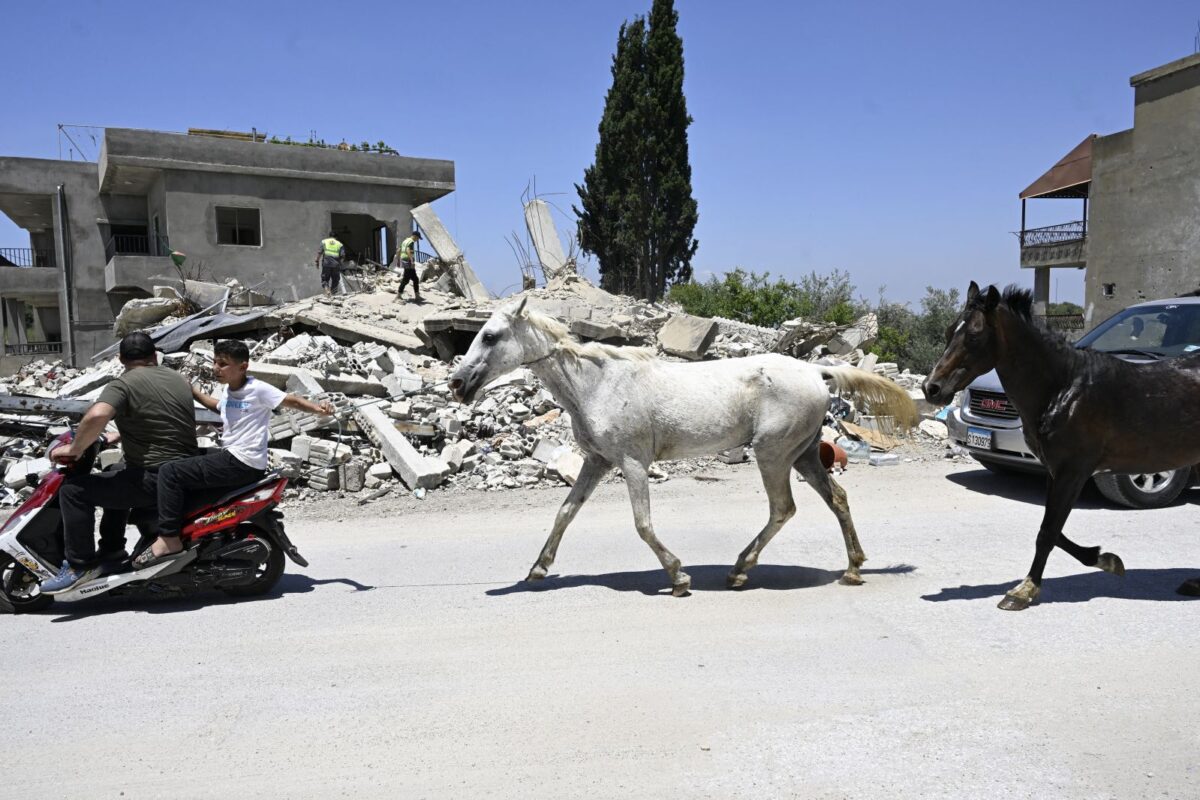
TOULINE, LEBANON - JUNE 16: Displaced Lebanese families arrive back in the village of Touline, located in the Marjayoun district of southern Lebanon, on June 16, 2026. Following the mutual agreement reached between the United States and Iran, residents who were forced to migrate due to Israeli attacks have begun returning to their homes and lands in the region. Houssam Shbaro / Anadolu (Photo by Houssam Shbaro / ANADOLU / Anadolu via AFP)
Lebanon is once again watching others negotiate its future.
Washington talks to Tehran. Tehran speaks of regional arrangements. Israel continues to shape realities on the ground. Foreign capitals debate stability, ceasefires, and security guarantees.
Meanwhile, the country whose future is supposedly being discussed remains largely absent from the conversation.
That is Lebanon’s tragedy.
For decades, every major regional development has been accompanied by promises that Lebanon’s interests would be protected. Yet every settlement, confrontation, and compromise has left Lebanon weaker, poorer, and less sovereign than before.
As another round of diplomacy approaches, Lebanon faces a simple choice: put its national interests first or continue allowing others to decide its future.
While Lebanon approaches a potentially decisive round of talks in Washington on June 22, the greatest challenge facing both the Lebanese state and the Israeli government is not the noise surrounding a supposed American-Iranian understanding. It is maintaining the resolve to move forward with direct negotiations and focusing on what truly matters: securing Lebanon’s future.
The priority should be clear. While the current ceasefire remains in effect, all parties should focus on reaching robust implementation mechanisms for Israeli withdrawals and redeployments, dismantling Hezbollah’s military infrastructure and all other illegal armed formations operating outside state authority, and establishing a clear pathway toward sustainable peace.
Today, once again, Lebanon finds itself watching discussions unfold between Washington and Tehran while asking the same question it has been asking for generations:
Where does Lebanon fit into all this?
The answer is uncomfortable.
In both the optimistic and pessimistic interpretations of a possible American-Iranian agreement, Lebanon is not sitting at the negotiating table as a sovereign actor defending its interests. It remains a file. A card. A bargaining chip.
Will such an agreement bring reconstruction and economic recovery? Or will Lebanon remain trapped under sanctions, uncertainty, and regional tensions it neither controls nor influences?
Will it reduce Iranian influence over Lebanese decision-making? Or will it simply provide that influence with a new international framework and fresh legitimacy?
No one seems willing to answer these questions.
There is another question that many prefer to avoid entirely.
What about Israel?
Israel is not negotiating Lebanon’s future with Iran because Israel is not a party to any American-Iranian understanding. It has signed nothing. It has committed itself to nothing. Yet it remains the actor conducting military operations on Lebanese territory, destroying infrastructure, and shaping realities on the ground through force.
History teaches us a simple lesson: countries do not necessarily alter their security policies because others have reached agreements.
This is why Lebanese fears run in two directions simultaneously.
Many fear a deal that rewards Iran’s regional project while leaving weapons outside the authority of the Lebanese state untouched.
Others fear the collapse of diplomacy altogether and a return to open-ended conflict.
Both fears are legitimate.
The lesson should be obvious by now. Major powers rarely prioritize the interests of small states. They manage them. They contain them. They use them. Unless those states possess the institutions, leadership, and national project necessary to defend their own interests.
That is precisely where Lebanon has failed for far too long.
The biggest mistake being made today is treating the Iranian regime and Hezbollah as part of the solution when they have consistently been at the center of the problem.
For decades, their project has not produced stronger institutions, greater sovereignty, economic prosperity, or political stability. It has produced wars, paralysis, isolation, destruction, and the steady erosion of state authority.
Standing with displaced civilians, supporting victims of conflict, and helping devastated communities rebuild is a moral obligation.
Rewarding Hezbollah politically for the consequences of its own decisions is something entirely different.
The notion that Hezbollah will voluntarily surrender its weapons because circumstances have changed is political wishful thinking.
Iran will not abandon its weapons platform in Lebanon because someone asks politely.
Attempting to rationalize Hezbollah’s continued military autonomy is not pragmatism. It is political surrender disguised as realism.
Which brings us to the Lebanese government.
The government should not be worried about threats that Hezbollah may topple the cabinet.
It should be worried about its own people.
It should be worried about the growing frustration of Lebanese citizens who are asking increasingly difficult questions.
Why has Hezbollah still not been disarmed?
Why do armed groups continue to operate outside the authority of the state?
Why have government decisions regarding security and sovereignty not been fully implemented?
Why has the Lebanese Army not been deployed everywhere the state has mandated it to be deployed?
If the government has issued decisions that are not being implemented, who is responsible?
Why has the Army Commander not been questioned if government resolutions concerning sovereignty, security, and the implementation of state authority remain unenforced?
Why are financial reforms still stalled while Lebanon faces continued scrutiny from the FATF and risks further financial isolation?
Why have government institutions not been cleansed of corruption, patronage networks, and the deep-state structures that have crippled governance for decades?
These are the questions that matter.
These are the questions that will determine whether Lebanon survives as a functioning state.
The government should stop governing defensively and start governing decisively.
It should enter Washington with confidence, knowing that the overwhelming majority of Lebanese citizens want one thing above all else: a sovereign state that answers to no militia, no foreign capital, and no external agenda.
Recent statements welcoming an American-Iranian agreement may be understandable as expressions of hope.
Every Lebanese wants violence to stop. Every Lebanese wants reconstruction. Every Lebanese wants normalcy to return.
But hope is not a strategy.
Lebanon cannot afford to suspend its national priorities while waiting to discover what others have negotiated.
Nor can it allow itself to become distracted from the direct talks that may offer the first genuine opportunity in decades to reshape the country’s future.
The real test for Lebanon’s leaders in the coming weeks is whether they remain focused on the national interest or once again allow Lebanon to become secondary to regional calculations.
This moment requires clarity. It requires courage. Most importantly, it requires a simple principle that has been absent from Lebanese politics for far too long:
Lebanon First.
We welcome diplomacy. We welcome peace. We welcome reconstruction.
But Lebanon’s future must be decided in Beirut, not Tehran, Washington, or anywhere else.
Lebanon does not need another agreement negotiated around it. It needs a state willing to stand for it.
Because if Lebanon does not place itself first, others will continue placing it wherever serves them best. And nations that fail to place themselves first eventually discover that everyone else has placed them last.
Elissa E Hachem is a journalist and political writer specializing in regional affairs and governance. Former Regional Media Advisor at the U.S. State Department’s Arabic Regional Media Hub, with broad experience in strategic communication across government and private sectors.
The views in this story reflect those of the author alone and do not necessarily reflect the beliefs of NOW.