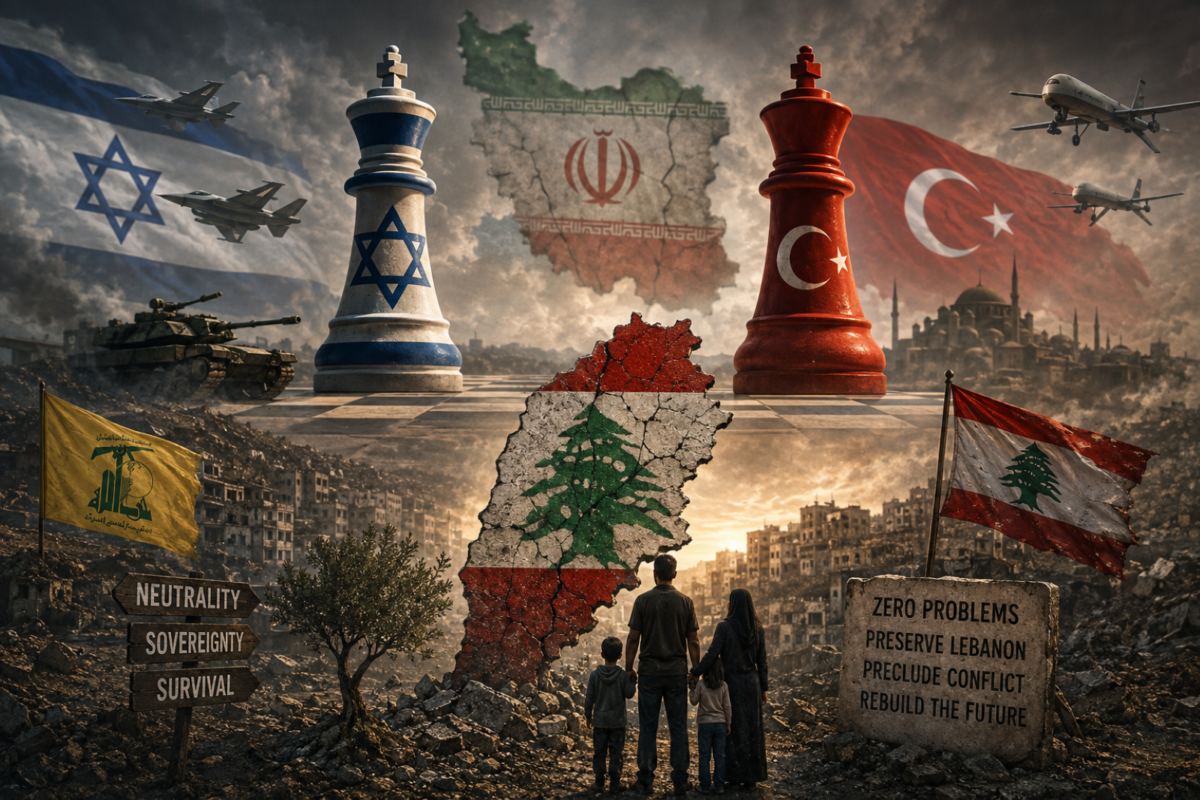
The recent tensions between Israel and Turkey, culminating with the Israeli airstrike on the Abu-al Duhur airbase in northern Syria, has underscored a growing escalation of tensions between the two countries as they vie for influence in the Levant. With Iran’s reach and grasp significantly weakened, Israel and Turkey have emerged as the two new poles of regional military tension. Unlike the previous Israel-Iran dynamic, Israel and Turkey both possess powerful conventional forces which are strongly connected to the United States. As such, if a military confrontation were to take place, weaker countries would suffer even more destruction and misery.
By allowing Hezbollah to dictate the geostrategic orientation of Lebanon as a forward defense base for the Iranian regime, the Lebanese political class has created the structural conditions for foreign intervention for any aspiring regional power.
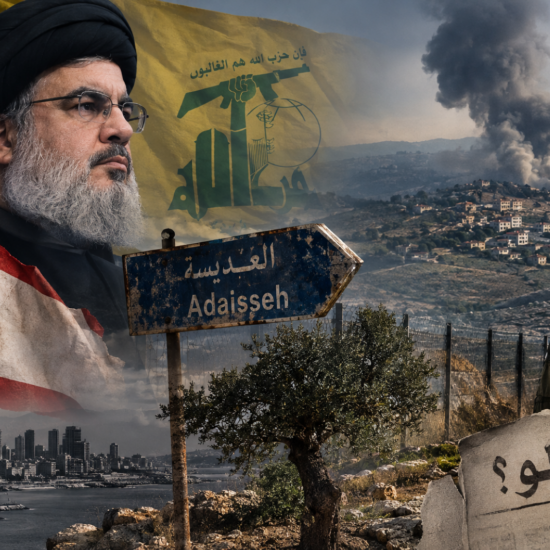
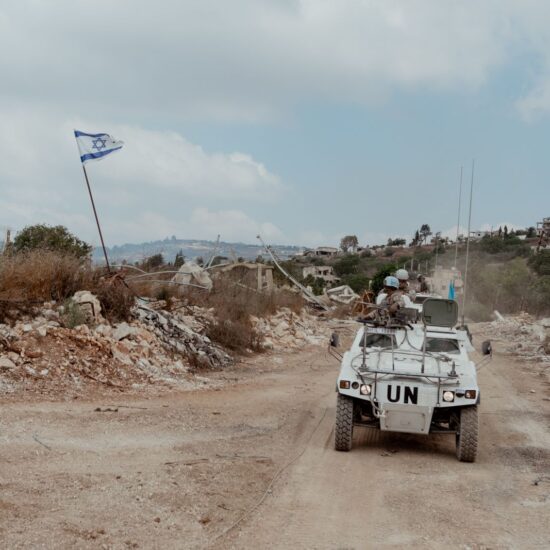
Lebanon is a very instructive cautionary tale in that regard. By allowing Hezbollah to dictate the geostrategic orientation of Lebanon as a forward defense base for the Iranian regime, the Lebanese political class has created the structural conditions for foreign intervention for any aspiring regional power. This failure to isolate Lebanon from regional fires has, thus far, cost us 10% of Lebanese soil occupied by Israel, tens of thousands dead, and hundreds of thousands displaced from their homes. There is no horizon for a people who have been living under the shadow of war and economic crisis for years now.
Those in power today have yet to grasp that if the current regional war has cost them this much, the next one will cost them even more, and will come at the cost of Lebanon’s territorial integrity. The dominant course of action among Lebanese politicians is empty platitudes: a visit here, a statement there, bickering and meaningless gestures designed to assuage the egos of officeholders. What this has led to is a government which has committed itself to political negotiations with Israel while doing nothing to accelerate Israel’s withdrawal and the disarmament of Hezbollah, further undermining Lebanon’s weak international standing.
Why is this the case? Because the wheels of Lebanese politics rely on a “consensus” which is predicated on placating the interests of a handful of political leaders. As such, the average Lebanese citizen does not conceive of an overriding notion of “national interest”, but is rather influenced by what their preferred political leader deems best. There is no scientific or methodical exploration of policies which are best suited for the greatest possible number of Lebanese citizens. You would think that a country which has experienced an internationalized civil war would’ve learned by now that neutrality is the way forward.
In 1958, when the confrontation between Arab monarchies and Arab republics was at a fever pitch, Lebanon was brought to the brink of civil war because Arab nationalist politicians in Lebanon sought to drag the country into the orbit of Abdel Nasser’s United Arab Republic, foreshadowing a pattern that culminated in Lebanon being forced to host the PLO and an assortment of militias. This in turn created the structural basis of government illegitimacy which encouraged and facilitated the Syrian and Israeli occupations in Lebanon, which lasted for decades and destroyed the economic and social fabric of the post-independence Lebanese state.
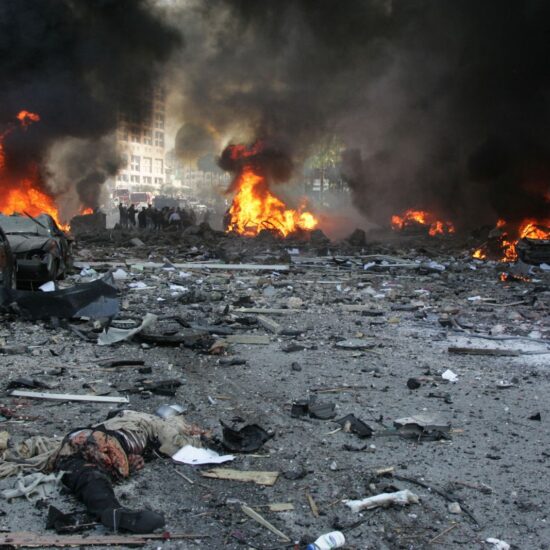
Regional conflict today has the potential to wipe out entire cities and depopulate huge swathes of territory.
This time, the situation is existential. Regional conflict today has the potential to wipe out entire cities and depopulate huge swathes of territory. If previous wars and confrontations have relied on proxies, regional powers today are more willing to directly utilize brute force in pursuit of their interests without a care. What chance does a country like Lebanon stand, a country which is currently under fire by a foreign country and its governance structure hollowed out by a proxy which answers to another foreign power? Is there any reasonable Lebanese patriot who thinks there is a tangible loss in neutrality?
When the civil war ended in 1990, at the behest of a regional compromise, Lebanon had to pay a cost which entrenched Assadist and Iranian influence in every corner of politics, and any challenge to this influence was met with assassination and political violence. Lebanon’s relations with Arab neighbors, Europe, and the United States suffered and continue to suffer from this legacy. Any regional “settlement” that could potentially occur in a future regional war would this time not stop at extracting political concessions and privileges, but will extract territory to be annexed. Such a scenario would end the Lebanese republic.
Imagine a full-scale war that decimates what remains of Lebanese infrastructure, kills even more thousands of people, and this time, the powers that be are not interested in preserving Lebanon’s territorial integrity if it’s not in their interest. Imagine there was no Ta’if Accord, which has already in my opinion caused grave damage, but in the very least prevented the loss of Lebanese territory. The possibilities, all beyond comprehension, are all very real and not as farfetched as some people might think. Territory cut off, annexed, breakaway statelets, and many horrors which are no stranger to weak states and societies.
Lebanon’s foreign policy should follow a very simple maxim: “zero problems”, for no other reason but to preserve this country and its territory, preclude the possibility of future conflict, and begin the hard work of rebuilding a destroyed country
Lebanon’s foreign policy should follow a very simple maxim: “zero problems”, for no other reason but to preserve this country and its territory, preclude the possibility of future conflict, and begin the hard work of rebuilding a destroyed country. We simply cannot afford anything except that because we are at a geographic and economic disadvantage when compared to our neighbors. Otherwise, any hope of fixing the country is gone beyond the possibility of return, and there will be nothing anyone can do to prevent the fracturing of the Lebanese polity as we know it today, war-torn and bankrupt as it is.
Mohammad el-Sahily is a student and activist. He tweets @moesahily.
The views in this story reflect those of the author alone and do not necessarily reflect the beliefs of NOW.