Not every interview leaves a mark. Some end as soon as the screen fades to black; others leave behind questions that refuse to go away.
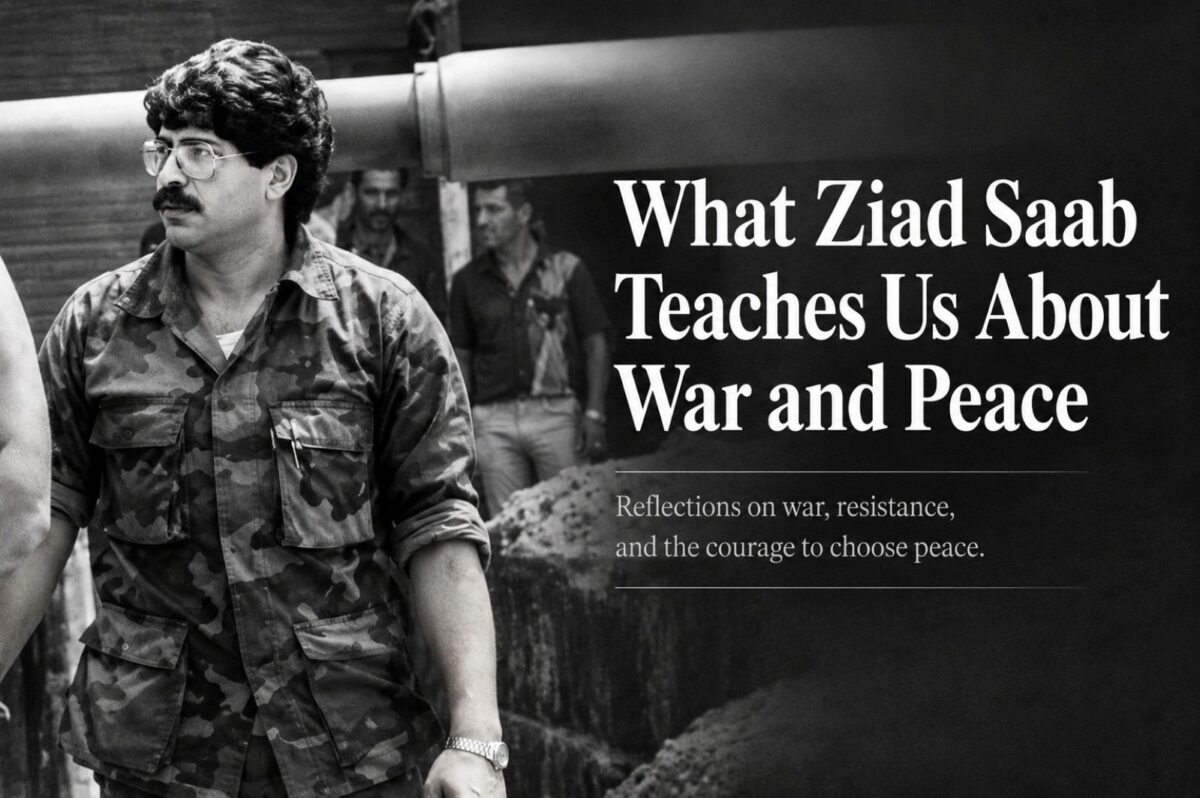
That is exactly how I felt while listening to Ziad Saab, the former commander of the Lebanese Resistance Front and the head of the Lebanese Communist Party Militia. Not because I was searching for a new account of the Lebanese Civil War, but because I encountered a man who no longer seemed interested in defeating anyone—not even his own past.
At a time when glorifying war has become easier than questioning it, Saab appeared to be a rare exception. He did not speak as a hero waiting for polite applause. Nor did he try to give bloodshed a meaning greater than bloodshed itself. He did not boast about the battles he fought, the weapons he carried, or the enemies he confronted.
He spoke instead with the calm of a man who knows that war, whatever its justifications, leaves wounds in the soul that may never fully heal.
For me, this is the essence of his testimony.
A man who took up arms at a young age, trained fighters, and moved between front lines does not speak today of war as though it were a noble destiny. He speaks of it as a moral burden. More importantly, he does not absolve himself of responsibility or hide behind the slogans of his era and the supposed necessities of history.
He acknowledges that he was a product of his time. But he refuses to remain its prisoner.
That is a rare kind of courage.
In Lebanon, we have grown accustomed to victors writing history, the defeated explaining away their losses, and nearly everyone becoming, years later, a hero in the version of the past they choose to tell.
But when a man who actually fought stands before us and declares that building peace is harder than making war, this is more than a political reassessment. It is a moral reckoning. It is an admission that courage is measured not only by one’s ability to fight, but also by one’s willingness to confront oneself.
What struck me most in Ziad Saab’s words was not his description of battles, but his understanding of the human being.
When he recalled operations being cancelled because a street vendor selling kaak or fish might be in the wrong place at the wrong time, he was not merely offering a military detail. He was drawing an ethical boundary around resistance.
There is a profound difference between a resistance that regards the human being as its ultimate purpose and one that consigns human beings to the category of collateral damage. That distinction separates a project that seeks to liberate the land from one that may succeed in liberating it while losing the people who live upon it.
Resistance is not the worship of weapons, nor is it a celebration of death. Its moral value comes from being a means of protecting life, not violating it. Once resistance becomes an end in itself, everything becomes expendable—even the human being for whose sake resistance supposedly existed.
Resistance is not the worship of weapons, nor is it a celebration of death. Its moral value comes from being a means of protecting life, not violating it. Once resistance becomes an end in itself, everything becomes expendable—even the human being for whose sake resistance supposedly existed.
Perhaps Ziad Saab’s words resonate so deeply with me because my knowledge of him did not begin with this interview. For years, I have valued my friendship with him and with several of his colleagues in Fighters for Peace. I have also regularly invited them to speak to my students at the American University of Beirut, where they meet young people who know the war only through history books or the stories of their parents.
Each time, I watch the same scene unfold.
These men enter the classroom without slogans, without claims to heroism, and without attempting to justify what they once did. They do not come in search of applause. Nor do they seek to rewrite history in their own image.
They come, with painful simplicity, to ask the young not to repeat their mistakes.
They speak of war as survivors speak of a great fire—not to glorify the flames, but to warn others against them. They do not present themselves as saints, nor do they conceal their responsibilities. Instead, they try to transform their experiences, with all their pain and ambiguity, into a moral lesson from which a new generation might benefit.
This, in itself, may be one of the noblest forms of resistance: to resist the temptation to absolve oneself, and to find the courage to stand before young people still living at the age of dreams and tell them that the future cannot be built by repeating the mistakes of the past.
What also struck me was that Ziad Saab does not stop at the language of liberating land. He goes further. His entire experience seems to insist that no land remains truly liberated if its people remain captive to hatred, and if society remains incapable of producing a culture of dialogue, tolerance, and recognition of the other.
How simple these words sound—and how difficult they are to practice in Lebanon.
For decades, the Lebanese have mastered the language of resistance. We have not learned the language of peace with the same seriousness. We have treated peace as a truce rather than as a national project, as though the end of a battle automatically marked the beginning of a state.
Building peace requires courage that may exceed the courage of combat itself. War appeals to instinct; peace demands reason. War feeds on fear; peace can be built only through trust.
But building peace requires courage that may exceed the courage of combat itself. War appeals to instinct; peace demands reason. War feeds on fear; peace can be built only through trust.
Therein lies its difficulty.
This is why listening to a man like Ziad Saab carries exceptional value. Not because he possesses the truth, but because he possesses experience. His words do not come from a distant observer. They come from a man who lived war at close range, paid its price, and then found the courage to say that every civil war ends in absurdity, however noble its objectives may have appeared at the beginning.
His testimony is particularly important at this Lebanese moment.
We live at a time when voices glorifying power are often louder than those defending wisdom, when the language of treason overwhelms the language of dialogue, and when peace is treated by some as a form of naivety while moderation is mistaken for weakness.
Yet Ziad Saab reminds us that peace is not the opposite of resistance. It is its purpose.
Yet Ziad Saab reminds us that peace is not the opposite of resistance. It is its purpose.
A resistance that does not ultimately protect the human being will, over time, become an end in itself. And once the continuation of conflict becomes the objective, the human being for whom resistance was supposedly founded disappears.
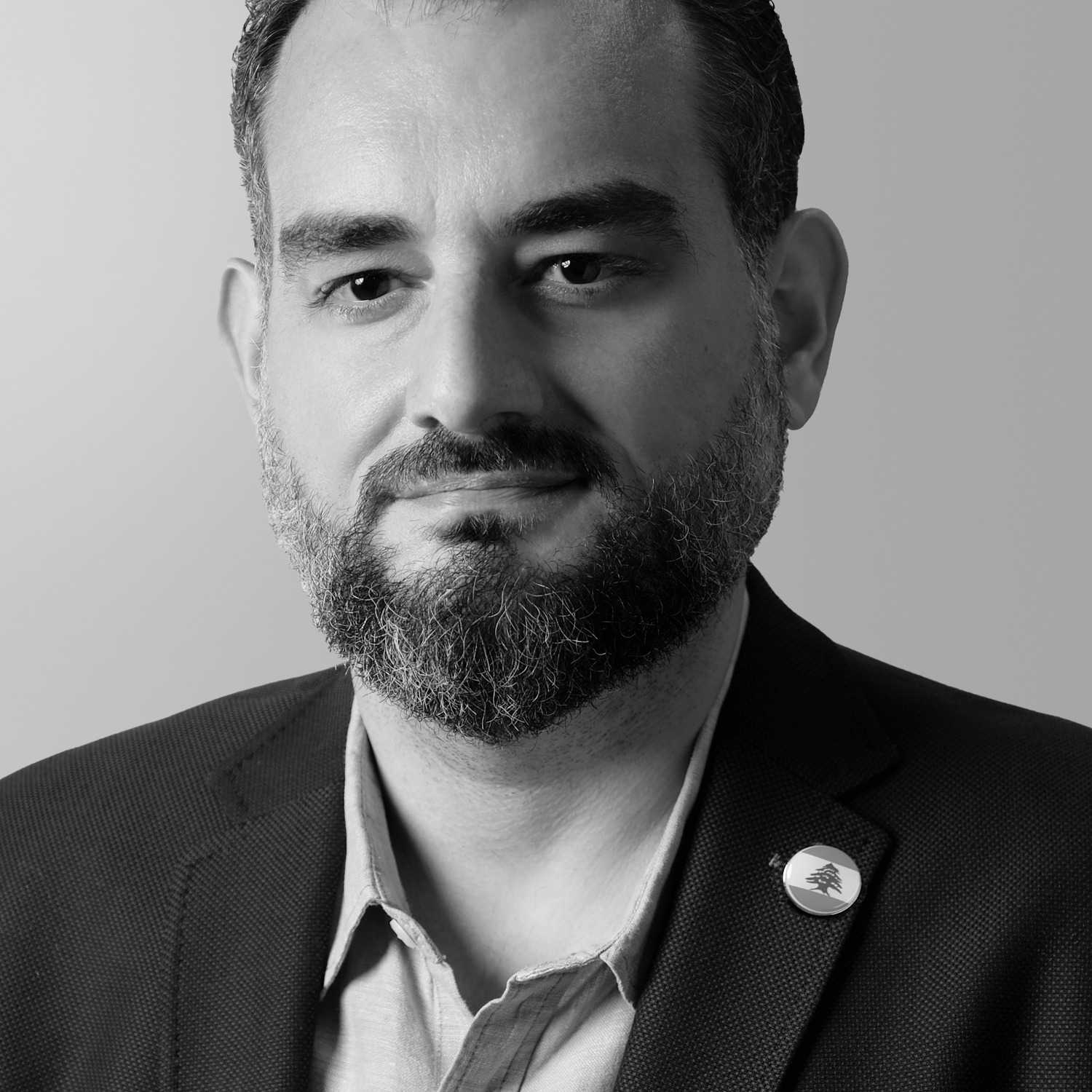
One need only look at his face.
In his eyes, there is neither the exhilaration of the victor nor the bitterness of the defeated. There are long years of exhaustion, and questions that bullets could never answer. There is a man who no longer wishes to prove anything to anyone. He wants only to transform his experience into a lesson for generations that did not know the war, so that they will not have to discover it in the same way.
This, in my view, is the deeper meaning of resistance.
To resist occupation when it imposes itself, yes. But also to resist the seduction of war when war becomes a habit; the seduction of hatred when hatred becomes an identity; and the seduction of revenge when it disguises itself as justice.
To resist everything that strips the human being of his humanity, even when it speaks in the language of slogans we hold dear.
Perhaps this is why, whenever Ziad Saab and his colleagues leave my classroom at the American University of Beirut, I feel that what has taken place was not simply a lecture about war. It was a lesson in humanity.
I see new questions in the faces of my students, and perhaps a measure of reassurance as well. They have not met a man asking them to carry a weapon. They have met a man who once carried one, and who has spent the years since trying to persuade others that they should never have to repeat his experience.
Perhaps this is also why the image of his eyes remained with me after the interview had ended.
They were not the eyes of a fighter searching for delayed glory. They were the eyes of a human being who understands, more than most of us, the cost of war and the value of peace.
And in a country still held captive by its memory, there may be no nobler form of resistance than protecting our children from repeating our tragedy—and teaching them that the greatest victories are not merely those in which land is liberated, but those in which the human being is preserved.
This article originally appeared in Elaph.
Makram Rabah is a lecturer at the American University of Beirut, Department of History. His forthcoming book Conflict on Mount Lebanon: The Druze, the Maronites and Collective Memory (Edinburgh University Press) covers collective identities and the Lebanese Civil War.