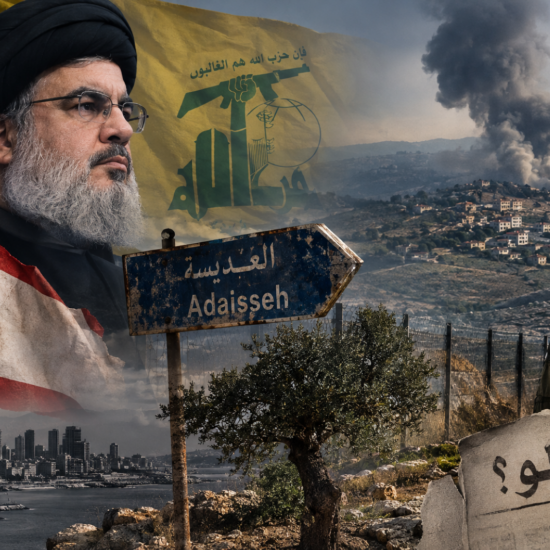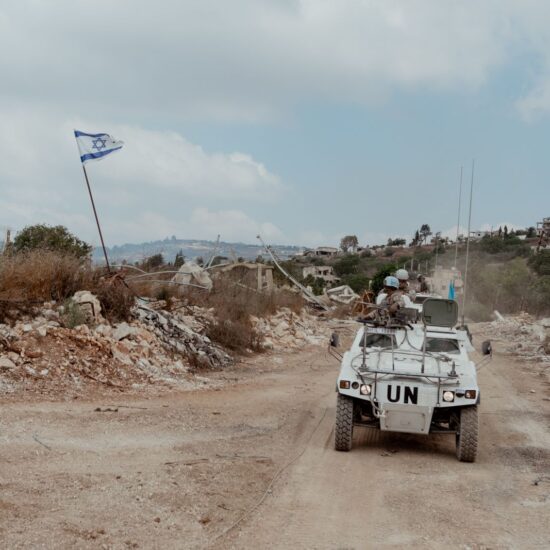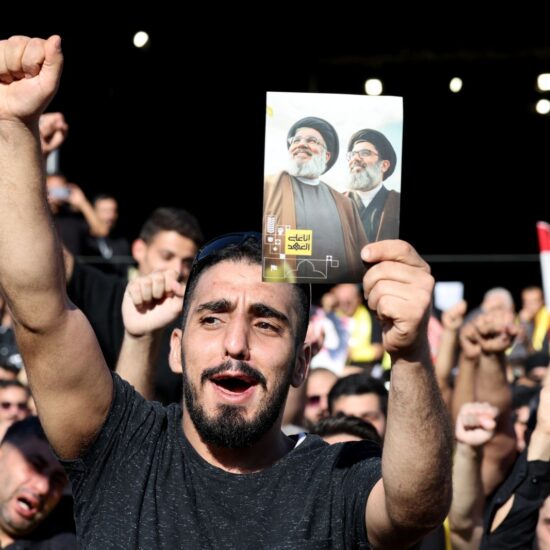
For nearly two decades, Lebanese politics has revolved around one dominant question: Hezbollah and its weapons.
Were these weapons necessary to protect Lebanon from Israel, or had they become a parallel source of power that placed decisions of war and peace outside the exclusive authority of the Lebanese state?
That debate divided the country. It shaped alliances, governments, elections and political identities. Almost every major national question was eventually drawn back into the same confrontation.
But Lebanon is approaching the end of that political era.
This does not mean that Hezbollah will disappear from Lebanese political life. It will remain a political and social force, and those who supported it must remain full participants in Lebanon’s future. Nor does it mean that Lebanon’s security challenges, particularly with Israel, have disappeared.
It means something more precise.
The era in which Hezbollah’s weapons could determine the balance of the Lebanese political system and provide an organization outside the state with strategic authority parallel to that of the state is approaching its end. There should be no way back.
The regional environment that sustained that model has been profoundly shaken. At home, something equally important has changed. President Joseph Aoun placed the state’s monopoly over weapons at the heart of his inaugural commitment. Prime Minister Nawaf Salam’s government subsequently moved that principle toward implementation while placing sovereignty alongside judicial, administrative and economic reform.
Implementation remains difficult and incomplete. But politically, a line has been crossed.
The question is therefore changing.
It is no longer enough to ask:
What happens to Hezbollah?
We must begin asking the more important question:
What happens to Lebanon after the Hezbollah era?
Because the battle over that answer has already begun.
What Changed After 7 May
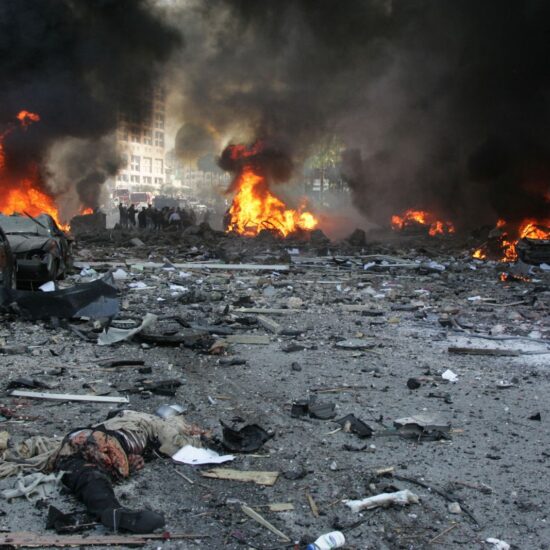
The events of 7 May 2008 represented a fundamental turning point.
The armed confrontation in Beirut was followed by the Doha Agreement, which ended the immediate crisis but also gave the opposition 11 ministers in a 30 member government. The agreement itself committed all parties not to resort to weapons or violence to achieve political gains.
Yet the political lesson was unmistakable. Military power outside the state had demonstrated its ability to alter the balance of political power inside the state.
Over the following years, particularly after 2011, this reality became increasingly entrenched. By the time Michel Aoun was elected president in 2016, Hezbollah had become indispensable to most major political settlements.
But Hezbollah did not invent Lebanon’s political dysfunction.
It inherited it, adapted to it and eventually became its most powerful actor.
Long before Hezbollah reached that position, Lebanon had developed a political culture based heavily on the zaïm, political inheritance, clientelism, nepotism, cronyism, influence over appointments and access to the state through political intermediaries.
Hezbollah’s exceptional armed power and this older establishment eventually learned how to coexist. Sometimes they confronted one another. Sometimes they negotiated. Frequently, interests proved stronger than declared differences.
This is why the end of Hezbollah’s predominance will not automatically produce a stronger Lebanese state.
It could simply allow parts of the political establishment that adapted to the Hezbollah era to adapt once again to whatever comes next.
That is the danger.
Lebanon Has Seen Adaptation Before
Lebanon has repeatedly found itself affected by powers and conflicts larger than itself.
At different moments, Palestinian armed organizations, Syrian tutelage, regional rivalries, Western and Gulf influence and, most recently, Iran’s relationship with Hezbollah affected Lebanon’s political balance in profoundly different ways.
These experiences were not identical and should not be treated as such.
But a recurring Lebanese political behavior survived many of them.
Parts of the political establishment learned how to adapt.
When the external balance changed, alliances changed. When one patron weakened, another relationship was cultivated. When one regional order disappeared, political actors repositioned themselves for the next.
The foreign actors changed.
Many domestic mechanisms of political survival remained.
This is the cycle Lebanon must now try to break.
Lebanon needs international friendships, Arab partnerships and strong relationships with the United States, Europe and the wider international community.
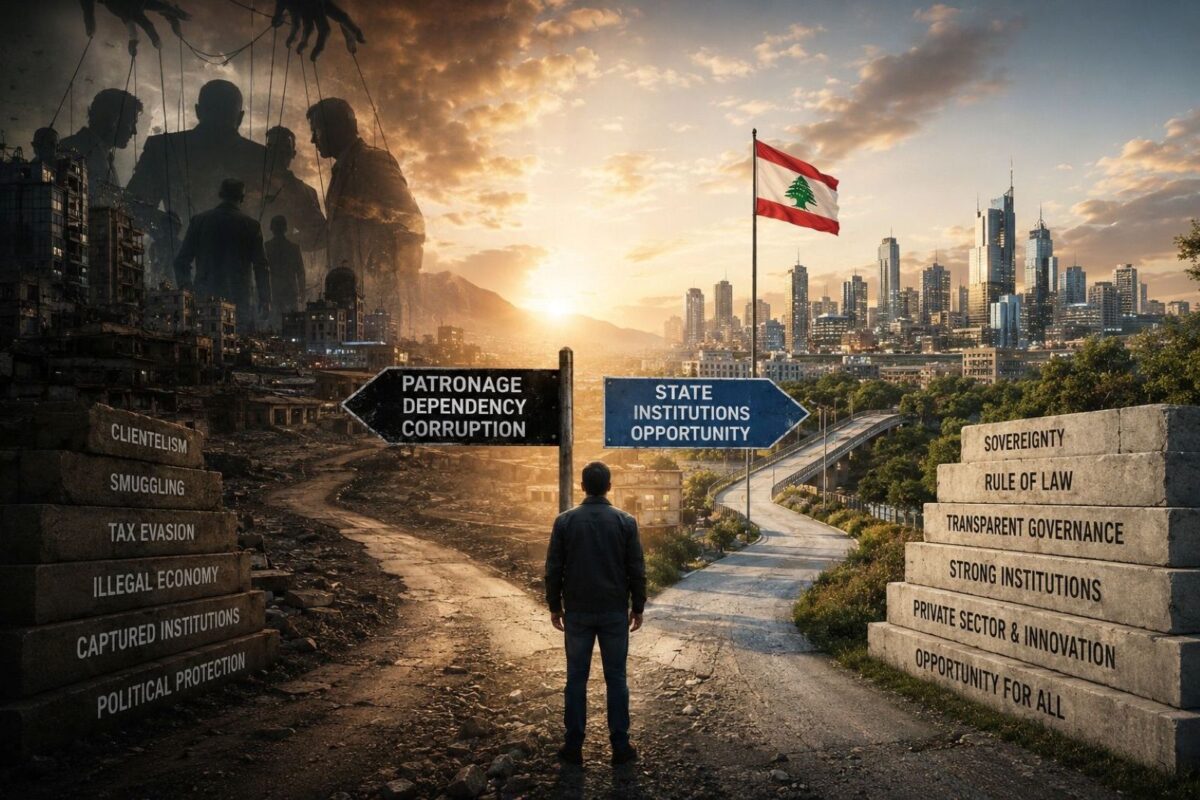
But there is a fundamental difference between having partners and depending upon patrons.
Lebanon needs friends, partners and allies. What it no longer needs are patrons, nor a political class whose relevance depends upon interpreting the wishes of patrons to the Lebanese state.
The objective is not isolation.
It is national decision making.
Two Economies of Dependency
This system was not sustained only politically. It also developed an economic architecture.
Alongside Lebanon’s productive economy, two overlapping systems became increasingly important.
The first operated outside effective state control.
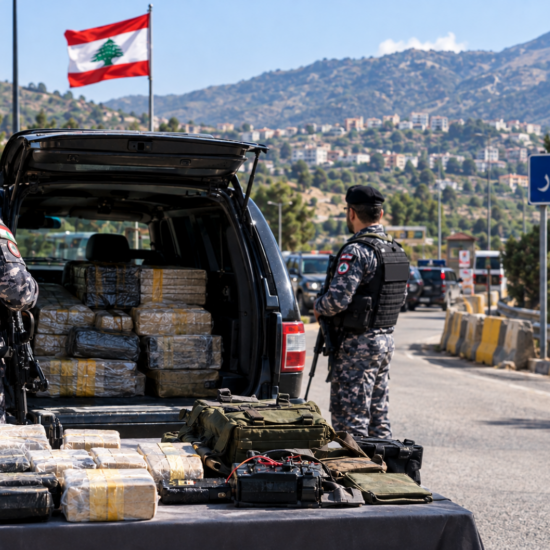
Smuggling, customs leakage, tax evasion and informal economic activity deprived the Treasury of resources and created environments where political protection could become more valuable than compliance with the law.
The second was more sophisticated because it could carry the appearance of legality.
The license existed. The contract existed. The administrative approval existed. The stamp and signature existed.
But political influence could determine who received the license, who won the contract, whose interests were protected and whose file moved.
One economy bypassed the state. The other captured parts of it.
The IMF’s 2026 governance diagnostic describes corruption vulnerabilities in Lebanon as pervasive and systemic, identifying entrenched patronage networks, rent seeking, weak oversight and institutional weaknesses as serious obstacles to recovery.
Then came the financial collapse.
Instead of destroying political dependency, it often increased its value.
When the bank fails, public services fail, healthcare becomes difficult and employment opportunities disappear, the person capable of solving an individual problem becomes more powerful.
The politician becomes more than a representative. He becomes an intermediary, an employment office and sometimes the citizen’s last connection to a failing system.
The weaker the state becomes, the more valuable the patron becomes. When economic survival depends upon political access, political loyalty becomes easier to reproduce.
Political dependency and economic dependency became mutually reinforcing.
Solving the weapons question is therefore essential, but it is not enough.
We Are Not Trying to Reinvent Lebanon
The objective should not be to overthrow Lebanon’s political formula.
It is not to abolish political families, erase traditional parties or impose a theoretical new society upon Lebanese citizens.
Lebanon has experienced enough ruptures.
The challenge is more pragmatic.
We need to change political behavior more than we need to change Lebanon itself.
Political families will remain. Traditional parties will remain. Existing leaders will remain. New leaders will emerge.
The test is whether they can evolve.
The zaïm may remain, but the citizen should need him less.
The politician should move from distributing favors toward developing policy, from finding individual jobs toward creating an economy capable of generating thousands of them, from influencing appointments toward strengthening institutions, and from becoming the gateway to the state toward making that gateway unnecessary.
This is evolution, not revolution.
And Lebanon has attempted something similar before.
The Chehab Lesson
Fouad Chehab’s presidency emerged in another Lebanon under very different circumstances.
We should neither romanticize that period nor attempt to reproduce it.
But there is a lesson worth remembering.
Chehab did not seek to abolish the Lebanese political system. His approach was to strengthen the state within it, expand administrative capacity, invest in neglected regions and make public institutions more capable of reaching citizens directly.
The objective was not to eliminate political representation. It was to reduce the distance between the citizen and the state.
The circumstances today are entirely different.
But the principle remains relevant:
Reform in Lebanon does not require destroying the Republic. It requires making the Republic work.
The Aoun and Salam Opportunity
President Joseph Aoun and Prime Minister Nawaf Salam do not represent a revolutionary regime.
Nor should they.
Their experience contains compromises, contradictions and limitations. They govern inside Lebanon’s existing political system and must negotiate with forces representing very different interests.
But perhaps this is precisely why the opportunity is credible.
Aoun and Salam can represent a bridge from a state constrained by armed power toward one recovering its sovereign authority, from excessive political mediation toward stronger institutions, and from political protection toward institutional protection.
President Aoun’s inaugural program linked the monopoly of arms with preventing smuggling, competence over clientelism, administrative restructuring, regulatory authorities, electronic government, transparency, competition and cooperation between the state and private sector.
That combination matters because sovereignty and reform cannot be separated.
A state cannot reclaim its weapons while leaving its institutions captured.
Aoun and Salam are not the destination. No president and no prime minister should ever become the state.
But the direction they represent offers Lebanon something valuable: the possibility of strengthening the state without destabilizing the Republic.
It deserves a chance.
The Private Sector Cannot Remain a Spectator
Lebanon’s private sector has an enormous stake in this transition.
For decades, businesses compensated for weaknesses of the state. They generated electricity, secured water, trained employees, sought financing abroad and maintained operations through war, paralysis, currency collapse and financial crisis.
The private sector helped keep Lebanon functioning.
But resilience cannot become an excuse for permanent institutional failure.
Businesses need functioning courts, reliable infrastructure, transparent customs, predictable taxation, stable regulations, access to finance and fair competition.
Above all, they need a country in which success depends more upon productivity than political access.
This gives the private sector a political responsibility, although not a partisan one. It should become one of the strongest constituencies for a functioning Lebanese state.
The patronage system distributes favors. The productive private sector creates opportunities. A functioning state must make the second stronger than the first.
But business must evolve too.
Parts of Lebanon’s business establishment have benefited from privileged relationships, protected markets and political access.
The private sector cannot demand an end to political clientelism while practicing economic clientelism.
A modern private sector must choose competition over connections and institutions over privileged access.
The objective is not to transfer influence from politicians to businessmen. It is to create a state where neither stands above the rules.
New Faces, Old Mentalities
The old political establishment understands that Lebanon is changing.
It also knows how to reinvent itself.
The next version of the old system may be young, internationally educated, digitally sophisticated and fluent in the language of reform, entrepreneurship, technology and artificial intelligence.
That does not necessarily make it new.
A modern campaign can still carry an old political mentality.
This is not about age.
The question is not who inherited a political name. The question is whether they also inherited the political behavior.
A young politician who believes citizens should need him for employment, hospitalization or access to an official represents an old political model.
An older politician who believes these should be rights delivered by functioning institutions may represent something far more modern.
In the age of artificial intelligence, this contrast becomes increasingly striking.
Lebanese entrepreneurs compete globally. Professionals work across borders. Businesses operate digitally. AI is transforming economies and governments.
Yet part of Lebanese politics continues to operate according to an old proposition:
Come to me and I will obtain from the state what should already be yours.
The modern state offers the opposite:
You should not need me to obtain your rights.
Lebanon does not simply need one generation to replace another.
It needs one political mentality to evolve into another.
The Election Has Already Begun
This is why the next parliamentary election matters.
Whatever its final timing, the political battle around it has already started.
And the next election should not become another referendum on Hezbollah.
That referendum belongs to an era that is closing. The next election should become a referendum on what comes after it.
The political establishment understands what is at stake.
It will organize, finance, negotiate new alliances, recruit new faces and borrow the vocabulary of reform.
Some political actors will genuinely evolve.
Others will simply reposition themselves for the next balance of power.
The question should therefore no longer simply be:
Where did you stand on Hezbollah?
The more important question is:
Where will you stand on the Lebanese state?
Will you accept an independent institution when its decision goes against you?
Will you support the most competent appointee when that person is not yours?
Will you accept fair competition when the winning business is not connected to you?
Will you defend the judiciary when it investigates an ally?
Will you accept an administration where citizens no longer require your telephone call?
And when the regional balance changes again, will your loyalty remain with the Lebanese state?
These are the tests of the next political era.
Sovereignty Is the First Battle
Lebanon cannot become a normal state while decisions of war and peace exist outside its constitutional institutions.
There must be one state, one legitimate armed authority and one national decision.
But sovereignty is the first battle.
The state is the second.
The first asks who carries the weapons.
The second asks who controls the institutions.
Winning the first while losing the second would leave Lebanon only halfway to its destination.
The next political divide should therefore not reproduce yesterday’s alliances.
It is not young against old. It is not traditional politicians against independents. It is not political families against civil society. And it is not about destroying Lebanon’s political formula.
Traditional leaders willing to evolve can participate in Lebanon’s future.
New politicians reproducing old practices should not automatically be considered reformers.
Those who previously supported Hezbollah but genuinely accept exclusive state sovereignty must have a place in the transition.
And those who spent years opposing Hezbollah should not automatically inherit Lebanon’s future merely because the Hezbollah era is ending.
The standard must now be higher.
Who Will Inherit Lebanon?
Lebanon is approaching another transition.
The Resistance Order is approaching the end of its historical cycle.
There should be no return to it.
But the answer cannot simply be the restoration of the political practices that preceded it.
Lebanon has spent too much of its modern history adapting itself to the power of others.
The next chapter should be different.
Not because Lebanon must abandon its identity.
Not because its political system must be demolished.
Not because every traditional leader must disappear.
But because the Lebanese state must finally become the reference point around which political power adapts.
President Joseph Aoun and Prime Minister Nawaf Salam represent an opportunity to move in that direction.
The private sector has an interest and responsibility in supporting that direction.
Citizens ultimately have the power to demand it.
And political leaders, old and new, should be invited to evolve with it.
Lebanon needs friends, partners and international support.
But it no longer needs patrons.
It needs a state strong enough that citizens no longer require politicians to obtain their rights.
It needs an economy productive enough that young Lebanese no longer require political patrons to imagine their future.
It needs a private sector that competes through innovation rather than connections.
And it needs political leaders whose influence comes from what they can build for Lebanon, not from their ability to adapt Lebanon to whoever holds power outside it.
The Hezbollah era is approaching its end.
The old political establishment is already preparing for what comes next.
The state has begun, imperfectly but visibly, to reclaim the space between them.
This time, Lebanon should not simply change patrons.
It should change the political behavior that made patrons possible.
The next battle is therefore not simply about who inherits Hezbollah’s power.
It is about who inherits Lebanon.
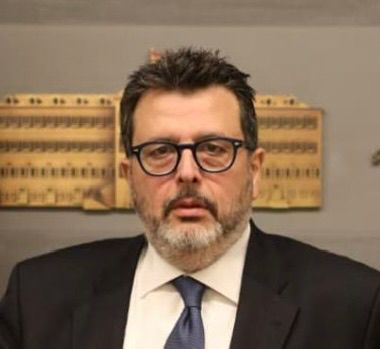
Farid Fakherddin is a Lebanese businessman and Board Member of the Lebanese Private Sector Network (LPSN).
The views in this story reflect those of the author alone and do not necessarily reflect the beliefs of NOW.