The behavior of the Iranian regime today exposes something deeply alarming: Tehran no longer functions as a unified state actor with coherent strategic direction. It is schizophrenic in action, sending contradictory messages while its power structures collide internally. What we are witnessing is not mere confusion but the collapse of centralized authority, the result of the killing of Supreme Leader Ali Khamenei, the fragmentation of Iran’s chains of command, and the unresolved struggle over succession under the shadow of U.S. pressure to influence or even prevent it.
This breakdown is not contained within Iran’s borders. It has already spilled outward and is now being reflected with dangerous clarity in Lebanon.
After the death of Khamenei during the opening strikes of the U.S.-Israeli campaign, a temporary leadership council chaired by President Masoud Pezeshkian, alongside senior judicial and clerical figures, was installed to manage the state amid war and uncertainty. In practice, this arrangement has only exposed deeper fractures inside the Iranian system.
Authority in Tehran is now divided by design. One arm of the state offers diplomacy and reassurance to neighboring countries, while another, the increasingly empowered Islamic Revolutionary Guard Corps, continues missile launches, drone strikes, and threats of regional escalation.
President Pezeshkian speaks of restraint and dialogue. Within hours, rockets are launched and warnings of wider confrontation follow.
One Iranian institution claims the Strait of Hormuz will remain open; another openly threatens to close it to Western shipping. Diplomatic signals are issued while military escalation continues uninterrupted.
Across the Gulf, neighboring states have scrambled air defenses to intercept incoming missiles and drones. The sirens that wake residents in major GCC cities are a stark reminder that diplomacy from Tehran carries little meaning when the military reality on the ground follows a different command structure entirely.
This contradiction reflects a regime splitting at the seams: political leadership attempting rational engagement, military commanders acting on ideological and survival instincts, and a vacuum at the symbolic apex of Iran’s theocratic hierarchy.
It is chaotic. It is dangerous.
Yet even as Iran projects power outward, a fundamental strategic reality is emerging. Wars fought with missiles and drones depend on stockpiles that are finite. Each launch, each interception, and each escalation consumes resources that cannot be replaced indefinitely under the pressure of sanctions, isolation, and wartime attrition.
Iran’s arsenal is being depleted with every passing day. When those reserves begin to diminish significantly, the fractures already visible inside the regime will intensify. The contradictions between political leadership and military actors will no longer be manageable.
The implosion that currently appears gradual could become sudden.
What is unfolding inside Iran is now mirrored in Lebanon.
Here too, authority is divided and contradictory messages are paralyzing the state.
On one side stand Lebanon’s constitutional leaders, President Joseph Aoun and Prime Minister Nawaf Salam, insisting that decisions of war and peace must remain within the sovereign framework of the Lebanese state.
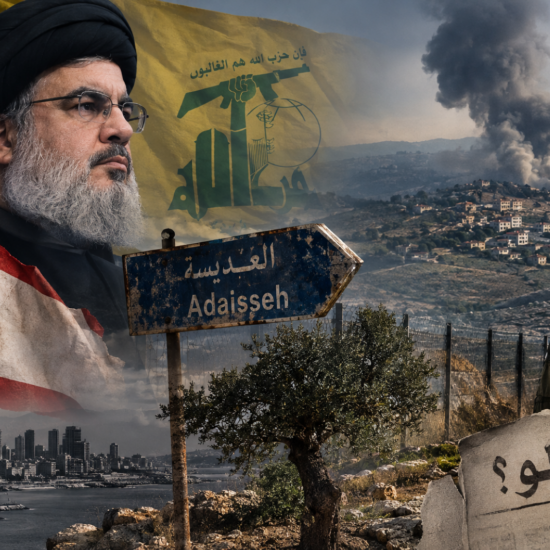
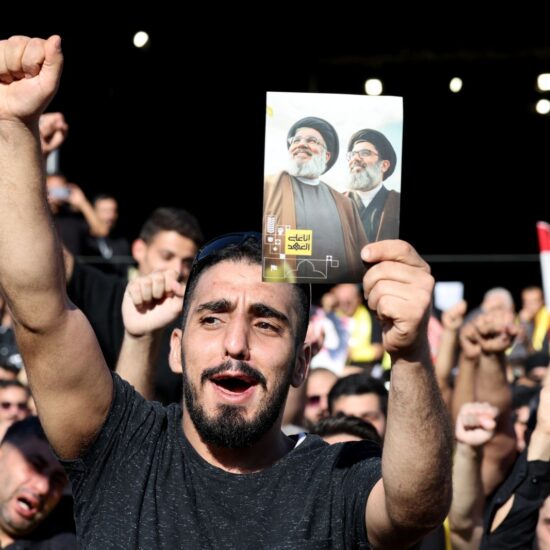
On the other stands Hezbollah, operating as a state within a state, openly defying that authority while pursuing military actions tied far more closely to Tehran’s ideological project than to Lebanon’s national interest.
The president calls for diplomacy and restraint. Hezbollah’s leadership calls for martyrdom and escalation.
Government ministries remain influenced by Hezbollah’s political weight. The cabinet is immobilized by competing loyalties. Even the role of the Lebanese Armed Forces is constrained by the same internal contradictions.
This is not governance.
It is paralysis.
Meanwhile, the external pressure surrounding Iran and its regional allies is intensifying rapidly.
President Donald Trump issued a stark warning, declaring:
“Today Iran will be hit very hard. Under serious consideration for complete destruction and certain death, because of Iran’s bad behavior, are areas and groups of people that were not considered for targeting up until this moment in time.”
At the same time, Israeli Defense Minister Israel Katz delivered a direct message to Lebanon’s leadership: Lebanon must honor its commitments and ensure that Hezbollah no longer threatens Israel, otherwise Israel will expand its operations and finish the job.
These statements reflect a strategic reality Lebanon cannot ignore. The confrontation with Iran is widening, and Hezbollah remains one of its central operational fronts.
Let us be clear: the trajectory of this conflict is unsustainable for both Iran and Hezbollah.
A fragmented Iranian regime cannot sustain a coherent regional strategy indefinitely. Its military resources are being steadily consumed, and its internal divisions deepen as the war continues.
Hezbollah, dependent on Iranian funding, weapons, and strategic direction, is tethered to the fate of that same weakening system. As Iran’s capacity erodes and its internal fractures grow, Hezbollah will inevitably face the consequences of that collapse.
For Lebanon, the implications are existential.
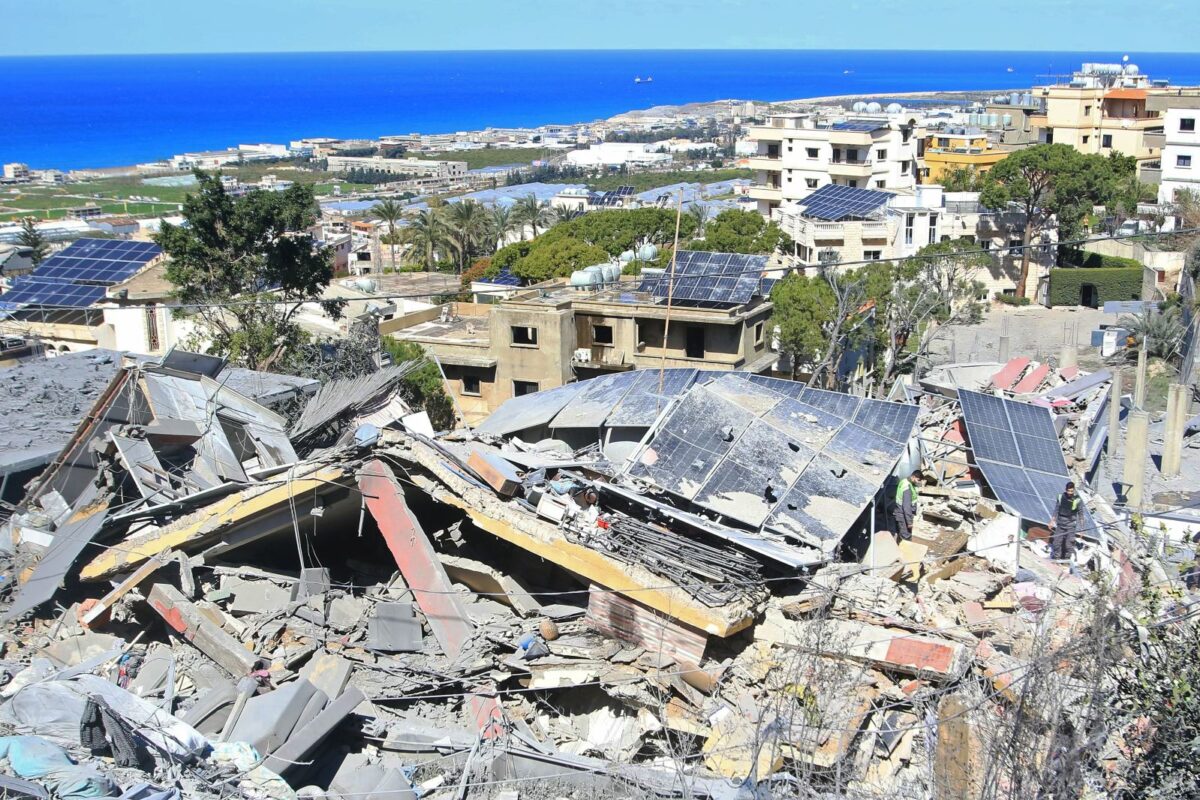
The country has already suffered immense damage, economically, politically, and socially. Each additional day of hesitation deepens national collapse and compounds the suffering of its population.
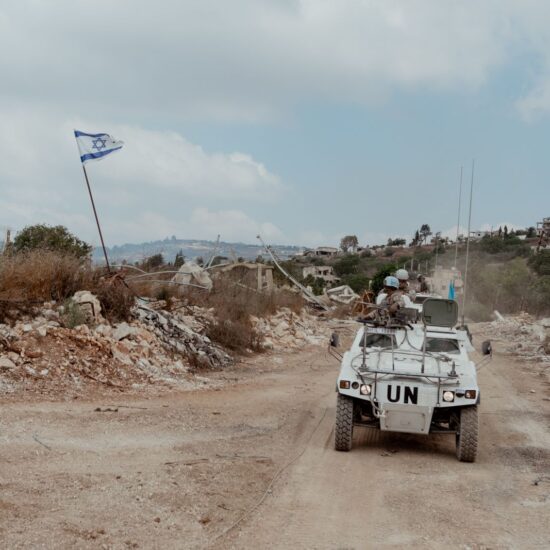
War has already entered Lebanese airspace and land.
It has entered Lebanese politics.
It has entered Lebanese homes.
To President Joseph Aoun and Prime Minister Nawaf Salam, this moment demands boldness and action.
Reduce the agony. Limit the losses. Act now.
Lebanon must align with those capable of securing stability, the United States and Arab States and also Israel, not out of allegiance, but out of responsibility to its own people and its own survival.
The choice before the Lebanese state is not between resistance and appeasement.
It is between prolonged national destruction and the strategic preservation of the state.
Hezbollah’s defiance will not save Lebanon. It will destroy it. Iran’s internal fragmentation and leadership vacuum ensure that its regional project is already weakening, but Lebanon must not allow itself to be dragged down with it.
The illusion of permanence surrounding Iran’s regional power is beginning to fracture. Missile stockpiles shrink, drone arsenals are consumed, and each escalation accelerates the internal tensions already tearing at Tehran’s governing structure.
When the moment of exhaustion finally arrives and it will, the collapse will not stop at Iran’s borders. Hezbollah, built, armed, and sustained by that same system, will face the same reckoning.
The only unanswered question is whether Lebanon will still be standing when that moment comes, or whether it will have allowed itself to fall alongside it.
This is not analysis.
This is a warning.
Elissa E Hachem is a journalist and political writer specializing in regional affairs and governance. Former Regional Media Advisor at the U.S. State Department’s Arabic Regional Media Hub, with broad experience in strategic communication across government and private sectors.
The views in this story reflect those of the author alone and do not necessarily reflect the beliefs of NOW.