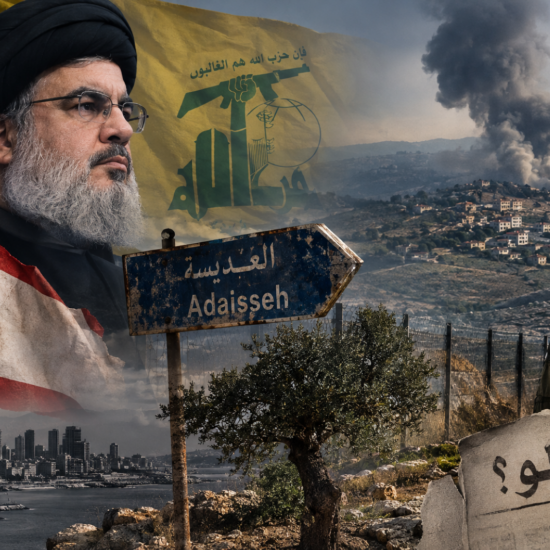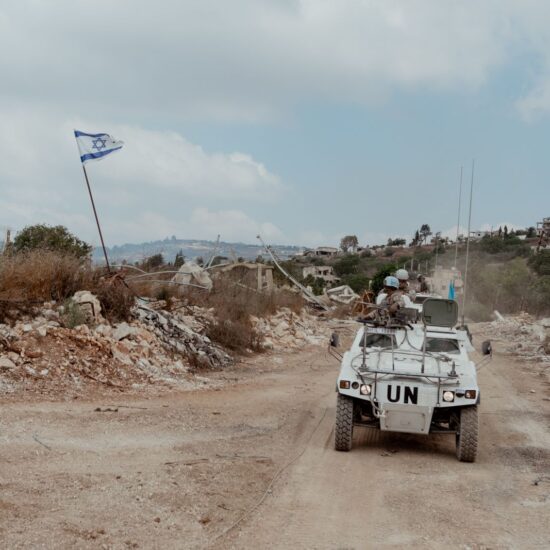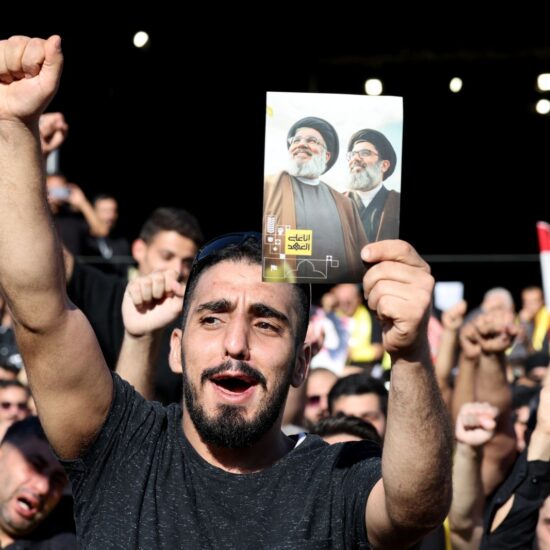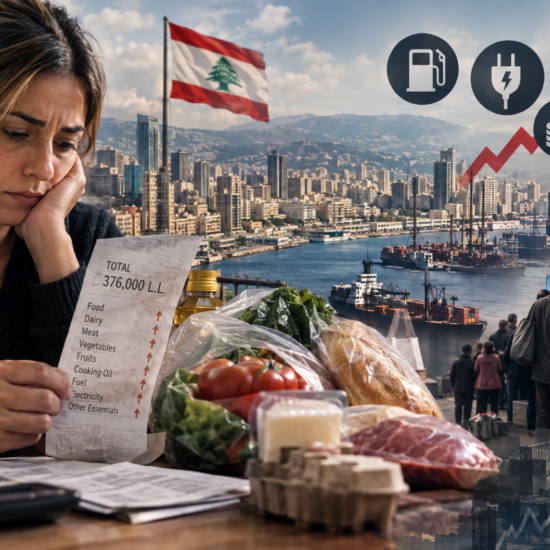
For more than half a century, Lebanon has lived in the shadow of other people’s wars. Its territory has been used, its sovereignty diluted, and its future postponed in the name of causes that were never truly its own. Today, as renewed discussions emerge around potential Lebanese–Israeli negotiations under U.S. mediation, a familiar pattern reappears: resistance not from declared adversaries, but from supposed allies.
Why are certain Arab states, alongside France and segments of Europe, working so strenuously to obstruct any pathway that could lead Lebanon toward peace, recovery, and sovereignty? Why is Lebanon repeatedly pushed back into the orbit of regional conflicts, particularly those aligned with Iran, instead of being supported in reclaiming its independence?
The answer lies in a hard truth: a stable, sovereign, and peaceful Lebanon disrupts entrenched geopolitical arrangements. For some actors, Lebanon functions more usefully as a battlefield than as a nation, more valuable as leverage than as a living state. A Lebanon at peace is a Lebanon that can no longer be instrumentalized.
“We are told this is stability. We are expected to accept it as destiny. We refuse.”
“We are told this is stability. We are expected to accept it as destiny. We refuse.”
This obstruction is not passive, it is active, deliberate, and strategic. It manifests through political pressure, diplomatic interference, economic leverage, and the continued legitimization of armed non-state actors, most notably Hezbollah. By sustaining this model, these states are not protecting Lebanon, they are ensuring its permanent fragility.
“Lebanon is not being protected, it is being preserved in weakness.”
“Lebanon is not being protected, it is being preserved in weakness.”
“We refuse to accept that a weakened state is the price of regional alignment.”
“We refuse to accept that a weakened state is the price of regional alignment.”
Equally alarming is the deafening silence of those who claim friendship with Lebanon when it comes to Iran’s conduct on Lebanese soil. There is no condemnation of repeated violations of sovereignty, no serious reaction to what has become an increasingly visible, structured, and undeniable form of external control.
Senior Iranian officials openly issue threats against Lebanon’s leadership without consequence. State-affiliated media platforms circulate deeply offensive portrayals of the Lebanese presidency. Diplomatic norms are disregarded with open defiance, while officials publicly challenge the authority of the Lebanese state and attempt to impose external negotiating tracks that bypass it entirely. Not a single meaningful reaction follows from those who claim to stand by Lebanon.
“We see it, we hear it, and we are told to normalize it. We will not.”
“We see it, we hear it, and we are told to normalize it. We will not.”
Even more troubling is what is not said. No outrage when Lebanese sovereignty is openly disregarded. No protest when national institutions are bypassed. No solidarity when Lebanon’s leadership is publicly threatened. Silence has become policy.
“When sovereignty is violated and silence follows, that silence becomes complicity.”
“When sovereignty is violated and silence follows, that silence becomes complicity.”
This silence is not neutrality, it is alignment. It signals that Lebanon’s stability is secondary to regional calculations, and that its institutions can be weakened without consequence. It also sends a dangerous message to the Lebanese people: that their state can be compromised without triggering even the most basic diplomatic reaction from those who claim to stand by them.
Meanwhile, many in Lebanon, and across the Gulf, watch with growing disbelief. Countries that chose stability, reform, and forward-looking policies are witnessing Lebanon being denied the same opportunity. Why is Lebanon the exception? Why is it expected to remain trapped in a permanent state of confrontation?
“We are not the exception by choice, we are being made the exception by design.”
“We are not the exception by choice, we are being made the exception by design.”
Consider the precedents. The Egypt–Israel Peace Treaty was signed on March 26, 1979. The Israel–Jordan Peace Treaty followed on October 26, 1994. Decades later, the Abraham Accords began on September 15, 2020 with the United Arab Emirates and Bahrain, opening a new regional chapter.
These agreements did not erase identity, nor did they diminish sovereignty. They reinforced state authority, secured borders, and created the conditions for economic growth and national resilience. They were not acts of surrender, they were acts of decision.
“Peace in the region did not weaken states, it strengthened those who chose it.”
“Peace in the region did not weaken states, it strengthened those who chose it.”
So, the question must be asked plainly: who decided that Lebanon must remain outside this path? Who determined that its people should inherit an endless conflict?
Lebanon has lived under armistice since 1949. Generations have grown up between wars, rebuilding only to see destruction return. Entire futures have been delayed, diverted, or lost.
“How many generations must pay the price of wars that are not theirs?”
“How many generations must pay the price of wars that are not theirs?”
Enough.
Lebanon’s path forward requires a decisive shift in orientation. It must redefine its alliances based on outcomes, not slogans. It must move toward partnerships that reinforce sovereignty, stability, and economic recovery. This includes deepening ties with Jordan, the Gulf Cooperation Council states, Cyprus, Greece, and the United States, countries that have demonstrated the value of pragmatic diplomacy and strategic clarity.
At the same time, Lebanon must exit the circle of false allies, those who speak the language of solidarity while enabling its paralysis.
France’s role must also be reassessed. Its influence, often presented as supportive, has too frequently aligned with preserving a system that resists reform and sustains dependency. What is described as protection can, in practice, function as containment.
“Lebanon cannot recover while others decide the limits of its sovereignty.”
“Lebanon cannot recover while others decide the limits of its sovereignty.”
Peace is not surrender. Neutrality is not weakness. Strategic partnership is not betrayal.
“Choosing peace is not abandonment, it is an act of national survival.”
“Choosing peace is not abandonment, it is an act of national survival.”
The Lebanese people are not asking for privilege. They are asking for parity, the same right exercised by others in the region: to secure their borders, stabilize their state, and build a future beyond war.
“We have waited, adapted, and endured. We will not wait indefinitely.”
“We have waited, adapted, and endured. We will not wait indefinitely.”
After decades of endurance, one conclusion is no longer avoidable:
Lebanon does not need another truce. It needs Peace.
Lebanon does not need another truce. It needs Peace.
Elissa E Hachem is a journalist and political writer specializing in regional affairs and governance. Former Regional Media Advisor at the U.S. State Department’s Arabic Regional Media Hub, with broad experience in strategic communication across government and private sectors.
The views in this story reflect those of the author alone and do not necessarily reflect the beliefs of NOW.