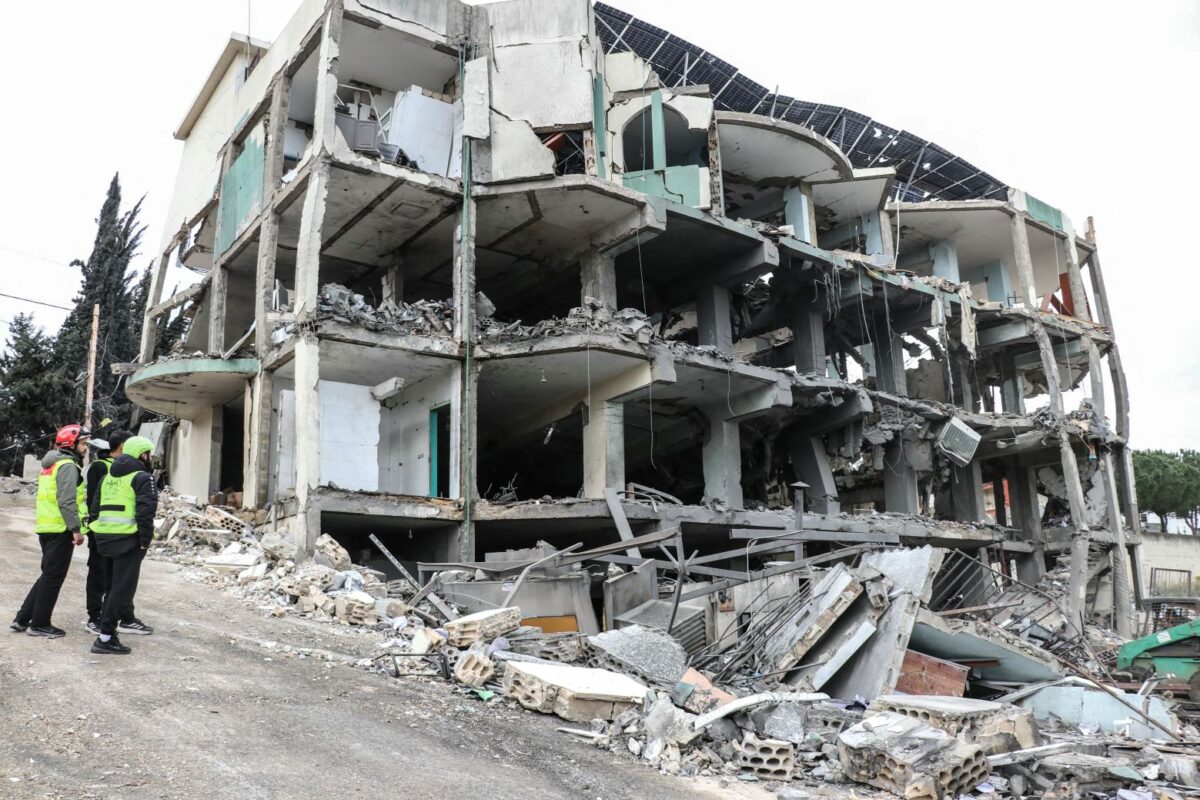
As war expands across Lebanon and now strikes the heart of Beirut, the Lebanese state appears increasingly detached from the reality unfolding around it. Political leaders continue to speak the language of negotiations, diplomatic initiatives, and future frameworks, while on the ground the country faces one of the most dangerous moments in its modern history.
Lebanese officials are attempting to promote the idea that a diplomatic path remained possible, that Lebanon could get the United States support to pressure Israel and reach a ceasefire.
Washington is making it clear that it is not prepared to mediate under the current conditions. Israeli officials have delivered a similar message. What Beirut had hoped would become a diplomatic track is, in reality, a closed door.
Washington is making it clear that it is not prepared to mediate under the current conditions. Israeli officials have delivered a similar message. What Beirut had hoped would become a diplomatic track is, in reality, a closed door.
From their perspective, the problem is not the absence of dialogue. The problem is the absence of a functioning state capable of enforcing any agreement it signs.
Diplomacy cannot replace sovereignty.
Washington’s framework is now based on several clear requirements that Lebanese officials are well aware of but remain unable or unwilling to address.
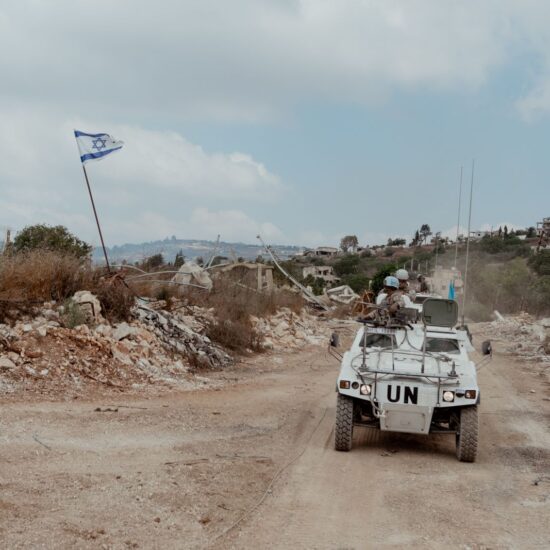
First, the Lebanese state must hold the monopoly of arms on its territory. Second, Hezbollah’s military infrastructure must be dismantled. Third, United Nations Security Council Resolution 1701 and annexed ceasefire agreement must be fully implemented. And finally, the Lebanese Army must execute the Cabinet’s decisions.
Until movement begins on these fronts, Washington sees little reason to pursue negotiations.
The message coming from American policymakers is blunt: the international community will not negotiate security arrangements with a state that cannot enforce them.
For years, Lebanon has relied on diplomatic language to postpone confronting this reality. Today that strategy is reaching its limits.
For years, Lebanon has relied on diplomatic language to postpone confronting this reality. Today that strategy is reaching its limits.
Israel’s position is even more direct.
Israeli officials have repeatedly warned that if Lebanon fails to stop attacks originating from its territory, Israel is expanding military operations and imposing its own security arrangements to secure its borders.
Recent statements from Israeli Defense Minister Israel Katz reinforced that message. If Beirut cannot enforce sovereignty, Israel is prepared to secure the territory itself.
In practical terms, this means striking Hezbollah infrastructure wherever it exists, and potentially maintaining long-term military control over areas necessary to guarantee Israeli security.
From Israel’s perspective, the logic is simple: security first, diplomacy later.
For Lebanon, however, this represents a direct challenge to the very concept of sovereignty.
At the beginning of this round of war, Beirut was already part of the battlefield, but in a limited and geographically contained way.
Israeli strikes were largely confined to the southern suburb of Dahiyeh, Hezbollah’s well-known stronghold. That distinction allowed many in the capital to believe that the war remained distant, contained within specific neighborhoods tied to Hezbollah’s military infrastructure.
That distinction no longer exists.
The battlefield has expanded, and with it the rules of engagement.
Today the targeting logic is simple: wherever Hezbollah operatives or commanders from Iran’s Islamic Revolutionary Guard Corps are operating, coordinating, or hiding becomes a legitimate military target.
The result is a profound shift in the war’s geography. Beirut itself is no longer insulated by geography or political assumptions. The capital is now fully exposed to the realities of the conflict.
The message is unmistakable: the war has entered the national space.
Yet perhaps the most troubling aspect of this crisis is the political contradiction at the heart of the Lebanese government itself.
Hezbollah ministers still sit in Lebanon’s cabinet.
This fact alone reveals the structural paralysis of the state.
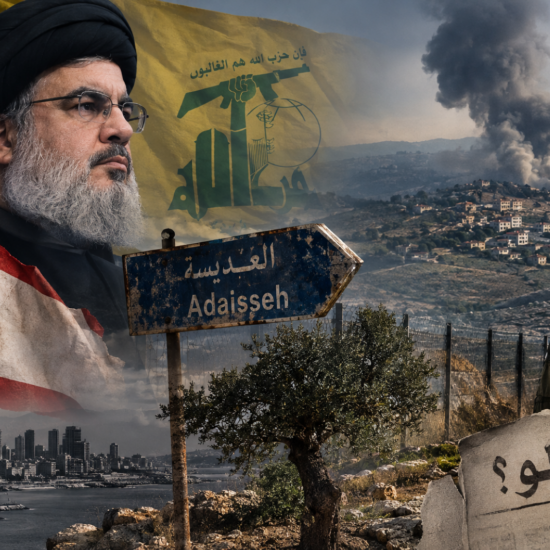
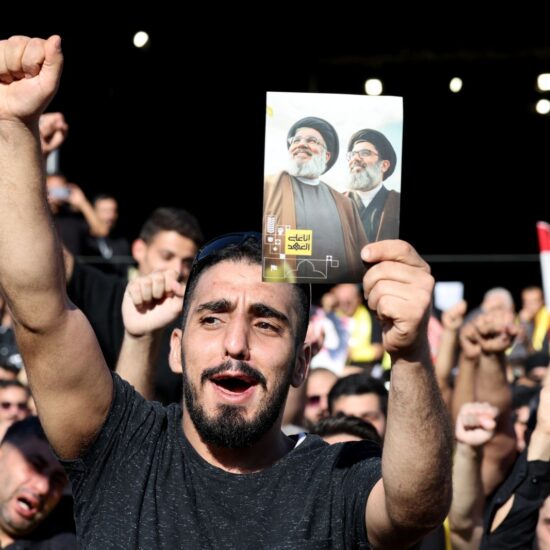
Hezbollah is not merely a political party competing within Lebanon’s democratic system. It is an armed organization operating outside the authority of the Lebanese state, maintaining its own military structure, intelligence apparatus, and strategic command.
More importantly, Hezbollah openly acknowledges its role as part of Iran’s regional military network.
It was Hezbollah’s decision to enter the war in support of Iran’s broader confrontation with Israel that helped trigger the current escalation.
In other words, Lebanon has been dragged into a devastating war not by a decision of the Lebanese state but by the strategic calculations of an armed actor aligned with a foreign power.
And yet that same actor remains part of the government.
For any functioning state, this situation would be inconceivable.
No serious international actor can treat such a system as a credible negotiating partner.
At the center of the crisis lies a fundamental truth that international actors increasingly acknowledge: Lebanon no longer functions as a fully sovereign state.
Strategic decisions affecting war and peace are not made exclusively within official institutions. Armed actors operate outside state authority. Security policies are shaped by forces beyond the control of the government.
The Lebanese Army remains one of the country’s most respected national institutions, yet it operates under severe political constraints that limit its ability to assert authority over all Lebanese territory.
This fragmentation has severely damaged Lebanon’s credibility abroad.
Foreign governments increasingly see Lebanon not as a fragmented political landscape where competing power structures coexist.
In such an environment, diplomacy loses its foundation.
Negotiations require a state capable of enforcing its commitments. Lebanon today struggles to meet that basic requirement.
Negotiations require a state capable of enforcing its commitments. Lebanon today struggles to meet that basic requirement.
Yet despite the severity of the moment, much of Lebanon’s political class continues to behave as if time and circumstances remain negotiable.
Statements still speak of dialogue.
Political leaders still talk about frameworks, understandings, and diplomatic opportunities while International patience is fading.
External powers are increasingly setting the terms.
And that is the essence of the problem: a nation facing one of the most serious crises in its history while its leadership continues to behave as if it were living in another reality – a political bubble detached from the consequences of its own paralysis.
In the end, sovereignty is not defended through speeches or negotiations.
It exists only where a state can enforce its authority.
Today Lebanon needs saving from its own failing leadership.
Elissa E Hachem is a journalist and political writer specializing in regional affairs and governance. Former Regional Media Advisor at the U.S. State Department’s Arabic Regional Media Hub, with broad experience in strategic communication across government and private sectors.
The views in this story reflect those of the author alone and do not necessarily reflect the beliefs of NOW.