Every time one of Hezbollah’s senior operatives emerges to preach about “resistance,” “dignity,” and “preventing strife,” Lebanese should remember a simple and painful truth: Hezbollah—and those who speak in its name—have long highjacked the state while claiming to represent it, suppressed society while posing as its protector, and built their authority on fear, smuggling, and coercion. Men who have done precisely that do not become statesmen simply by sitting in front of a camera and reciting the lingo of endurance and resistance.
Wafiq Safa’s latest interview was not just another media appearance by a party official trying to rally his base. It was, at its core, an unfiltered display of a worldview that treats Lebanon as a mere arena, the state as a secondary function, and society—across all its components—as something that must live under the ceiling of “resistance” as defined by the party, not by law, constitution, or national interest. More troubling still, it exposed once again how a figure like Safa insists on presenting himself as a symbol of “resistance,” while his actual record places him squarely in another category altogether: that of parallel security networks, black-market economies, and the systematic hollowing out of the state.
Safa, who speaks confidently about “preventing internal strife,” is himself one of the clearest embodiments of how Lebanon has been turned into a hostage security state.
Safa, who speaks confidently about “preventing internal strife,” is himself one of the clearest embodiments of how Lebanon has been turned into a hostage security state. His logic is not that of a sovereign state that monopolizes violence and safeguards its citizens, but that of a militia that claims exclusive ownership of arms and brands any objection to those arms as “treason” or “betrayal of the resistance.” In this upside-down order, the Lebanese citizen who aspires to a functioning state becomes suspect; the government is deemed “deficient” for not surrendering entirely to the party’s will; and the army is reduced to a bystander—watching the erosion of sovereignty rather than guaranteeing it.
The most glaring contradiction in Safa’s rhetoric is that he attacks the state while thriving under its cover, accuses the government of fueling division while his own party has spent years systematically undermining and humiliating state institutions. He demands that the government retreat, issues implicit threats, and speaks of a “post-war phase” in the language of settling scores—yet expects Lebanese to believe that Hezbollah is the guardian of civil peace. What kind of “peace” is this, built on a simple equation: submit to the party’s arms or be accused of incitement? What logic claims that May 7 was meant to avoid confrontation with the army, when it was, in reality, an armed coup against the city, the state, and its people?
What is most dangerous in Safa’s discourse is not only what he says, but what he assumes as an inherent right. He speaks of the South as if it were private property, of weapons as if they were an ordinary feature of daily life, and of armed movement and deployment as if they required no justification. In this narrative, Lebanon as an independent political entity ceases to exist. Instead, there is only the “environment,” the “resistance,” the “long battle,” and an explicit or implicit partnership with Iran woven into every sentence. Even when he claims that Hezbollah entered the war in defense of Lebanon, he quickly reveals the deeper motive: avenging the “wali” and the “marja‘”—a confession that the primary loyalty is not to Lebanon, but to a transnational ideological authority.
It is precisely here that the façade of “resistance” collapses.
Resistance is not turning an entire population into a human shield for a regional project.
Resistance is not turning an entire population into a human shield for a regional project. It is not the destruction of what remains of a country’s institutions while demanding applause because rockets are still being fired. It is not equating a fragile state struggling—however imperfectly—to preserve its legitimacy with an armed organization that boasts of rebuilding its military capabilities beyond the reach of that state. This is not resistance. It is a pathological insistence on abducting Lebanon once more and offering it as a sacrifice to calculations that have nothing to do with the interests of its people.
Wafiq Safa is not merely a political spokesperson whose words can be treated as one opinion among many. His name has long been associated—by widely circulated and documented accounts—with networks of security coordination, illicit crossings, facilitation operations, smuggling, and the exploitation of ports, the airport, and border crossings. He also openly threatened Judge Tarek Bitar, the lead investigator into the Beirut port explosion of August 4, 2021—without consequence.
This is not a strategic thinker offering analysis. It is a stark example of how “resistance” has been transformed into a cross-border security and financial structure operating above the law—if we accept, for the sake of argument, that it was ever a resistance movement to begin with. When such a figure lectures Lebanese on ethics, dignity, and sovereignty, the insult lies not only in what he says, but in the assumption that people’s memory is so easily erased.
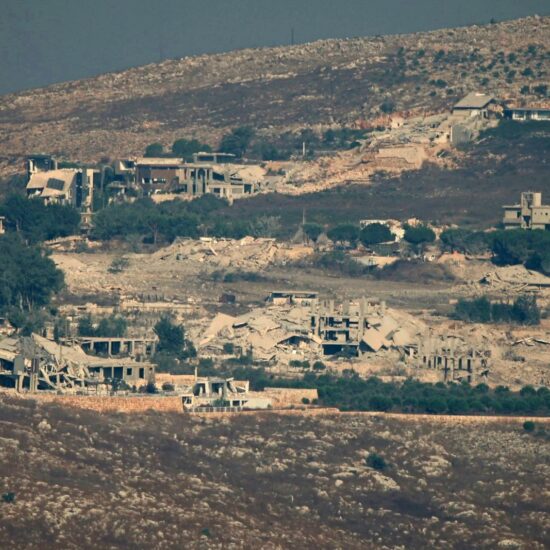
The obscenity deepens when this rhetoric is placed alongside reality. While Safa and his inner circle continue to enjoy the spoils of power—privilege, protection, and wealth accumulated at the expense of the state and its citizens—the party’s own constituency, which believed these slogans of “honor” and “dignity,” is left humiliated in tents and shelters, enduring displacement and surviving on hollow slogans that neither rebuild homes nor restore lives.
Those asked to applaud “resistance” are the very people who paid its price—in their lives, livelihoods, and the future of their children—while the architects of this system remain insulated within their networks of power. “Dignity,” as they preach it, becomes nothing more than a tool to keep people exposed, waiting for a miracle that will never come. Those who traded in their blood do not know the tent except as a staged image, nor the land except as a platform for producing yet another speech built on illusion.
The truth is that Safa’s logic is not one of resistance, but of extortion and coercion. His message to the Lebanese is brutally clear: accept our weapons, our narrative, and our authority—or be branded agents of discord. Remain silent about the hijacking of the state—or be accused of conspiracy. This is not the language of liberation. It is the language of those who have grown accustomed to ruling through intimidation and threat.
Lebanon does not need more mobilizing speeches from men of the shadows. It needs to liberate itself from those who have turned the very idea of resistance into a marketplace of blood, ruin, and stolen sovereignty.
Lebanon does not need more mobilizing speeches from men of the shadows. It needs to liberate itself from those who have turned the very idea of resistance into a marketplace of blood, ruin, and stolen sovereignty. As for Wafiq Safa, no matter how hard he tries to cloak himself in the image of a “strongman,” he remains a reflection of a deeper political and moral decay—a moment in which the smuggler lectures on statehood, the violator of the state demands trust, and destruction is sold as heroism.
This is not resistance. It is a criminal project that speaks the language of victory because it cannot admit that it is, at its core, the very cause of defeat.
This article originally appeared in Elaph.
Makram Rabah is the managing editor at Now Lebanon and an Assistant Professor at the American University of Beirut, Department of History. His book Conflict on Mount Lebanon: The Druze, the Maronites and Collective Memory (Edinburgh University Press) covers collective identities and the Lebanese Civil War. He tweets at @makramrabah