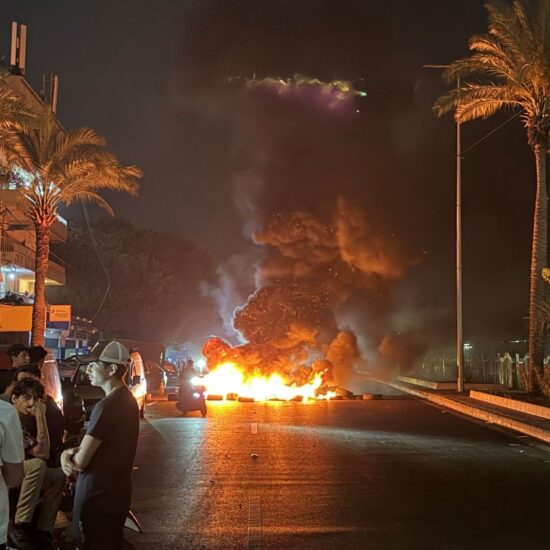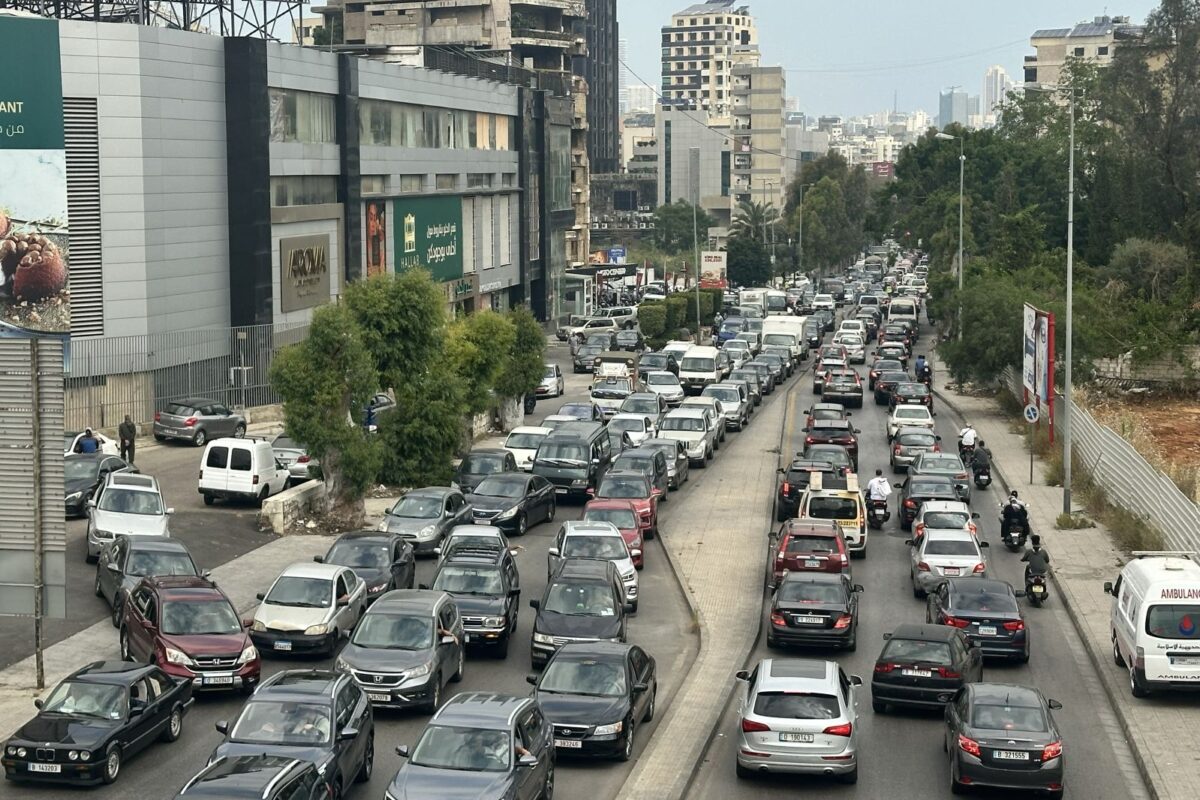
BEIRUT, LEBANON – JUNE 1: A view of traffic congestion as people leave the Dahiyeh district in southern Beirut, Lebanon, on June 1, 2026. Traffic congestion formed on major roads leading out of the area after Israeli Prime Minister Benjamin Netanyahu ordered the military to launch airstrikes targeting the district. Houssam Shbaro / Anadolu (Photo by Houssam Shbaro / ANADOLU / Anadolu via AFP)
The new US proposal came days after direct Lebanese-Israeli security talks at the Pentagon yielded no significant breakthrough on a comprehensive ceasefire despite Washington describing the discussions as constructive, as Israel expanded operations beyond the Litani River, seized Beaufort Castle, and heightened fears of a prolonged military presence in southern Lebanon while ordering strikes on Beiruts suburbs.
The past week was dominated by renewed diplomatic efforts to halt the war in Lebanon and a simultaneous escalation of Israeli military operations on the ground. On Monday, Washington unveiled a new proposal aimed at gradually reducing hostilities, beginning with a halt to Hezbollah attacks against Israel in exchange for Israeli restraint and a pathway toward a broader ceasefire. The initiative followed intensive contacts conducted by US Secretary of State Marco Rubio with Lebanese President Joseph Aoun and Israeli Prime Minister Benjamin Netanyahu and comes ahead of a new round of US-mediated negotiations scheduled for June 2 and 3 in Washington.
The proposal emerged days after direct security talks between Lebanese and Israeli military delegations at the Pentagon. While US officials described the discussions as constructive, Lebanese sources reported no significant breakthrough, particularly regarding a comprehensive ceasefire. Lebanese officials reiterated that any sustainable arrangement must begin with an end to Israeli military operations and a withdrawal from occupied Lebanese territory, while Israel appeared determined to maintain military pressure and advance its plans for a security zone in southern Lebanon.
The diplomatic push came amid a sharp escalation on the ground. On Monday, Israeli Prime Minister Benjamin Netanyahu and Defense Minister Israel Katz instructed the Israeli military to carry out strikes on Beirut’s southern suburbs, arguing that Israel would no longer tolerate what it described as continued Hezbollah violations of the ceasefire while Hezbollah infrastructure remained untouched in Beirut. The threat triggered renewed displacement from parts of the capital’s southern suburbs and intensified concerns that the conflict could expand beyond southern Lebanon.
The next round of negotiations is expected to take place in Washington on June 2 and 3, as international efforts continue to prevent a further widening of the conflict.
Developments on the battlefield increasingly overshadowed diplomatic efforts. Israeli forces expanded their operations beyond the Litani River and seized the strategic Beaufort Castle (Qalaat al-Shaqif), one of the most symbolically and militarily significant sites in southern Lebanon.
Military analysts noted that Beaufort Castle provides commanding oversight of Nabatieh, the Litani corridor, and key routes linking southern Lebanon to the western Bekaa. Israeli officials openly indicated that the position would form part of a broader security belt, while experts warned that continued advances between the Litani and Zahrani rivers could strengthen Israel’s leverage in ongoing negotiations.
Meanwhile, Israeli airstrikes and evacuation orders continued across southern Lebanon, parts of the Bekaa and sharp escalation on the ground as on Monday, Israeli Prime Minister Benjamin Netanyahu and Defense Minister Israel Katz instructed the Israeli military to carry out strikes on Beirut’s southern suburbs, arguing that Israel would no longer tolerate what it described as continued Hezbollah violations of the ceasefire while Hezbollah infrastructure remained untouched in Beirut. The threat triggered renewed displacement from parts of the capital’s southern suburbs.
The war’s economic impact also continued to mount, with mounting damage to infrastructure, agriculture, housing, and commerce adding to the burden on a country already grappling with one of the worst financial crises in its modern history.
With diplomacy struggling to keep pace with developments on the ground, attention now turns to Washington, where upcoming negotiations may determine whether a ceasefire remains within reach or whether the conflict is headed toward a new and more dangerous phase.
In Lebanon
Israel’s seizure of Beaufort Castle: The Israeli army’s capture of Beaufort Castle marked one of the most significant military developments since the war began in March. Analysts warned that the move could signal Israeli intentions to establish a broader security zone extending beyond the Litani River, while reviving memories of the pre-2000 occupation of southern Lebanon.
The fortress, which overlooks the Litani basin and dominates large parts of Nabatieh and the eastern sector of southern Lebanon, has historically been considered a key military vantage point. During the 1970s, it was subjected to repeated Israeli airstrikes after Palestinian factions used the site for cross-border fire. It later became the scene of one of the fiercest confrontations of the 1982 invasion, before remaining under Israeli control until the withdrawal in 2000.
Military analysts say its renewed capture carries both operational and symbolic significance. The site provides extensive line-of-sight coverage over key towns and routes in southern Lebanon, including areas in the Nabatieh district and adjacent valleys, making it a critical observation and fire-control position in any wider campaign.
Israeli forces expanded operations beyond the Litani River: Israeli troops pushed deeper into southern Lebanon and consolidated control over new areas north of the Litani. By extending reach beyond the Litani line, Israeli forces are believed to be strengthening surveillance capabilities and control over key movement corridors, while also increasing pressure ahead of any potential diplomatic or military negotiations over post-conflict arrangements.
Washington talks yielded no breakthrough: Security talks between Lebanese and Israeli military delegations at the Pentagon ended without tangible progress on a comprehensive ceasefire. Lebanon maintained that ending Israeli attacks and securing a withdrawal from occupied territory remain essential for stability. While the discussions focused on technical military coordination, including de-escalation measures along the border and monitoring arrangements, they did not translate into any concrete political progress toward ending the war.
Economic costs continued to mount: The conflict deepened Lebanon’s financial crisis, with damage to infrastructure, homes, agriculture, and businesses adding to an already severe economic collapse. Reconstruction needs continued to grow as the country remained heavily dependent on external assistance and donor support.
In the Region
Kuwait intercepted Iranian missile and drone attacks: Kuwaiti air defenses intercepted what authorities described as Iranian missile and drone attacks targeting the country. The incident prompted strong condemnations from Saudi Arabia and the Gulf Cooperation Council, both of which denounced the attacks as violations of Kuwaiti sovereignty and warned against further regional escalation.
Syrian President Ahmed al-Sharaa and Donald Trump discuss sanctions and regional developments: Syrian President Ahmed al-Sharaa and US President Donald Trump held a phone call focused on bilateral relations, regional developments, and Syria’s economic recovery. Al-Sharaa stressed the importance of lifting remaining US sanctions to revive Syria’s economy, while Trump emphasized support for stability and reconstruction efforts.
Former Assad-era officials go on trial in Austria: Two former Syrian security officials accused of overseeing the torture of anti-government protesters between 2011 and 2013 appeared before a court in Vienna. The trial is being closely watched by human rights organizations as one of the most significant European cases involving former officials linked to the Assad regime. The defendants face charges related to torture, coercion, and severe physical abuse committed during the early years of the Syrian uprising.
Iran blames Washington for stalled diplomacy: Iranian Foreign Ministry spokesman Esmail Baghaei said a lack of trust and what he described as contradictory US positions were delaying diplomatic efforts to end the conflict. Tehran also linked progress in talks with Washington to achieving a lasting ceasefire in Lebanon, arguing that Israeli military operations in the country remain a central obstacle to broader regional de-escalation.
Bahrain expands investigation into alleged Iran-linked network: Bahraini authorities announced new findings in an investigation into a group allegedly linked to Iran’s Islamic Revolutionary Guard Corps. Prosecutors said 41 suspects face accusations ranging from terrorism financing and financial crimes to promoting Iran’s Wilayat al-Faqih ideology. Authorities also alleged that funds were transferred to organizations in Iran, Iraq, and Lebanon.
UN Security Council convenes emergency session on Lebanon: The UN Security Council held an emergency meeting at France’s request following Israel’s seizure of the strategic Beaufort Castle and the expansion of military operations north of the Litani River. French President Emmanuel Macron said nothing justified the current escalation in southern Lebanon, as diplomats sought to address mounting concerns over the widening conflict and its implications for regional stability.
What We’re Reading
“Liberation Day — or Displacement Day?”
Tin this article, Makram Rabah, NOW’s managing editor examines the stark contrast between the symbolism of May 25, traditionally celebrated as the anniversary of Israel’s withdrawal from southern Lebanon in 2000, and the current reality of mass displacement and renewed conflict. The author argues that what was once considered a national victory has become overshadowed by war, destruction, and the consequences of Hezbollah’s decision to engage in regional confrontations.
“Lebanese or Syrian? The Pen League Monument Controversy and the Burden of Anachronism”
This article by Charles Al-Hayek explores the debate surrounding the identity and historical legacy of members of the Pen League (Al-Rabita Al-Qalamiyya), focusing on contemporary attempts to categorize them through modern national identities that did not exist during their lifetime. The author argues that applying present-day political boundaries to historical figures distorts both history and cultural memory.
“Washington Isn’t Throwing Lebanon Under the Bus, Hezbollah Is”
This opinion piece by Elissa El Hachem challenges the narrative that the United States is abandoning Lebanon amid ongoing regional negotiations and shifting geopolitical priorities. Instead, the author contends that Hezbollah’s continued alignment with Iranian strategic interests has deepened Lebanon’s isolation and exposed the country to escalating military and economic consequences. The article argues that Lebanon’s current predicament stems less from international neglect than from the state’s inability to reclaim sovereign decision-making over war and peace.
“Lebanon’s Real Battle Begins After the War”
Focusing on the long-term consequences of the conflict, this article by Mostafa Geha argues that the end of military operations will not mark the end of Lebanon’s crisis. The author highlights the enormous challenges of reconstruction, economic recovery, institutional reform, and restoring public trust after years of collapse and war. The piece conveys that rebuilding damaged infrastructure will be easier than rebuilding state institutions and governance, emphasizing that Lebanon’s greatest struggle may emerge once the fighting stops rather than while it continues.