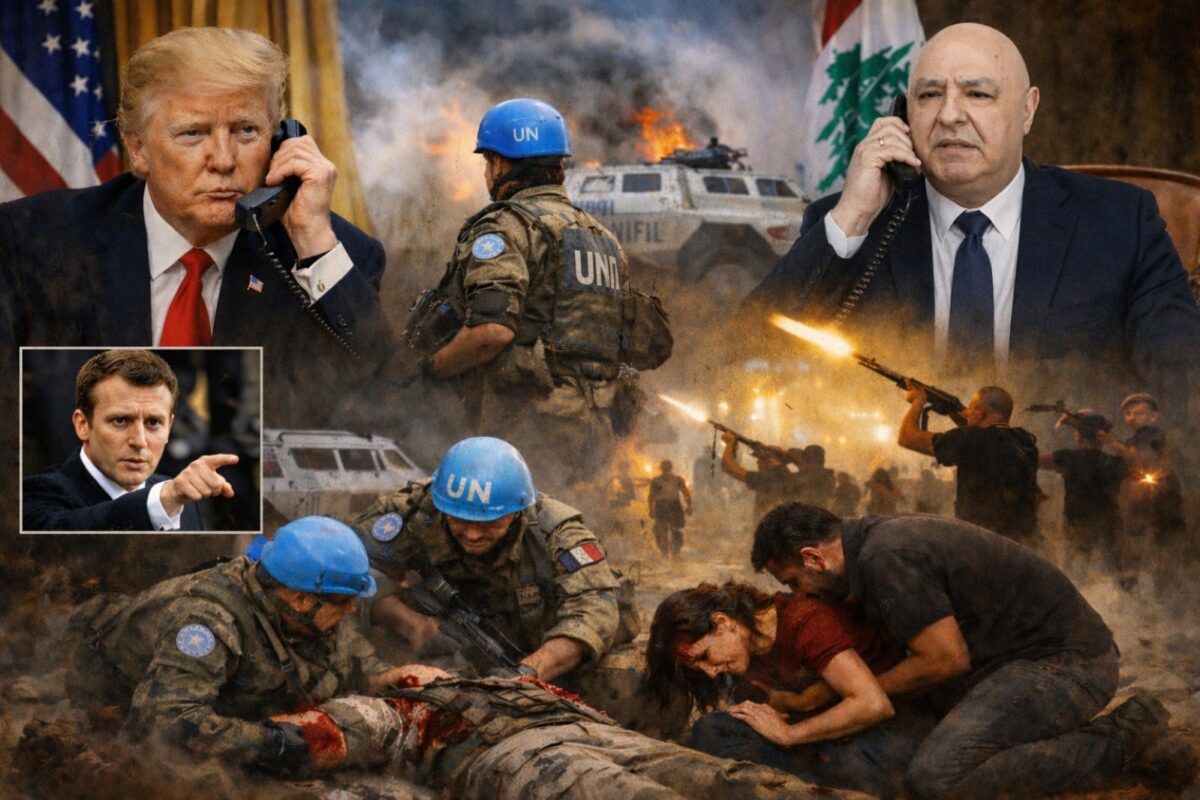
Lebanon’s week was shaped by a mix of high-level diplomacy and persistent instability on the ground. A direct phone call between President Donald Trump and President Joseph Aoun resulted in a US-backed 10-day ceasefire, with Aoun securing a temporary halt to Israeli strikes while avoiding political concessions that could draw Lebanon into direct normalization dynamics.
The calm was quickly shaken by the killing of a French soldier serving with the United Nations Interim Force in Lebanon (UNIFIL) in southern Lebanon. Emmanuel Macron directly blamed Hezbollah, prompting sharp diplomatic fallout and raising serious concerns about the safety of peacekeepers and the group’s conduct during a supposed ceasefire.
At the same time, scenes of celebration turned deadly. In Beirut’s southern suburbs, particularly Dahye, gunfire by Hezbollah supporters marking the ceasefire led to civilian casualties from stray bullets. Despite arrests by the Lebanese Army, the incidents once again exposed the dangers of normalized armed displays and the state’s limited ability to enforce order.
In Lebanon:
Crackdown on celebratory gunfire: In areas such as Beirut’s southern suburbs, the announcement of a truce quickly turned into scenes of armed “celebration,” where bursts of automatic weapons and even heavier firepower filled the air, transforming a moment meant for relief into one of renewed danger. The Lebanese Army moved to contain the situation, arresting suspects and seizing weapons in Beirut and Baalbek. Yet the recurrence of such incidents points to a deeper issue. Celebratory shooting reflects a broader culture in which weapons are normalized as tools of expression with stray bullets claiming lives, while some are left injured or traumatized.
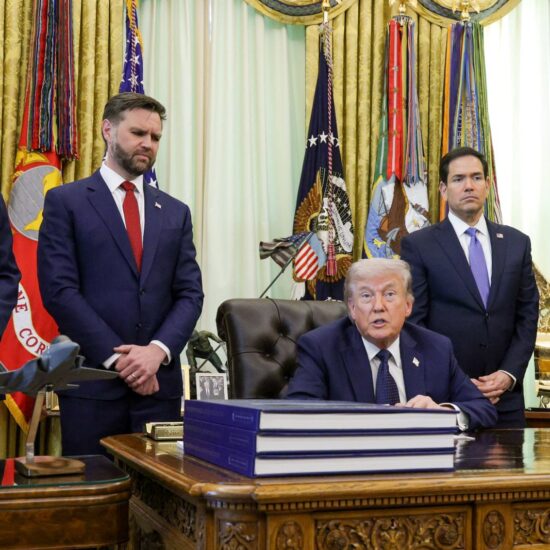
High-level “phone diplomacy,” in a direct call between Donald Trump and Joseph Aoun that helped secure a US-backed 10-day ceasefire: During the call, Aoun outlined Lebanon’s position and stressed the urgency of halting Israeli strikes, while Trump reaffirmed his commitment to pushing for an immediate ceasefire and broader regional stability. The call followed earlier discussions with US Secretary of State Marco Rubio, reflecting a significant escalation in Washington’s direct engagement with Beirut.
The diplomatic momentum, however, was accompanied by internal sensitivities. Reports of a potential direct call between Aoun and Benjamin Netanyahu sparked political concern in Lebanon, amid fears of domestic backlash over any step toward direct engagement with Israel. Lebanese officials moved quickly to clarify that Beirut had informed Washington in advance of its refusal to engage in any direct communication with Netanyahu, even within a proposed trilateral framework involving Trump.
Return to rubble: As the 10-day ceasefire came into effect, displaced residents began making their way back to southern Lebanon and Beirut’s southern suburbs and the Beqaa region, returning to neighborhoods heavily damaged by months of Israeli strikes. Entire districts were reduced to rubble, with homes destroyed and basic infrastructure severely compromised. Despite the scale of destruction, many families felt they had little choice but to return, driven by exhaustion after weeks of displacement and constant movement.
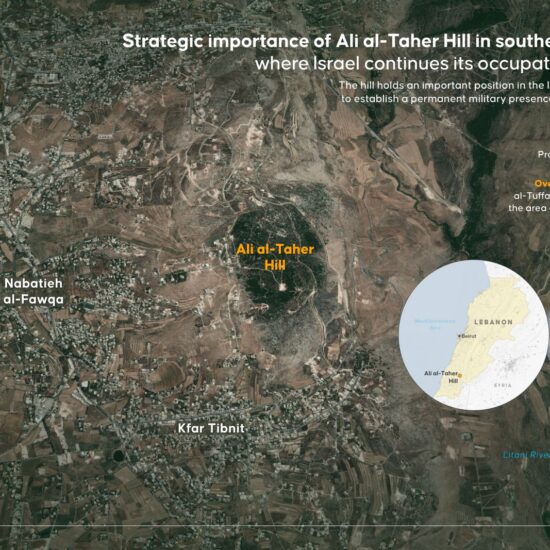
Ceasefire violations persist: Israeli artillery fire and military activity were reported within hours of the truce coming into force. These early breaches reinforced skepticism about the agreement’s durability and highlighted how quickly escalation could resume. Reports of Israeli fire and drone activity surfaced shortly after it took effect, prompting the Lebanese Army to urge civilians to delay their return due to ongoing violations and safety risks, including unexploded ordnance. At the same time, Israel signaled it would maintain its military presence in parts of the south and warned residents against moving beyond certain areas, further complicating the return process.
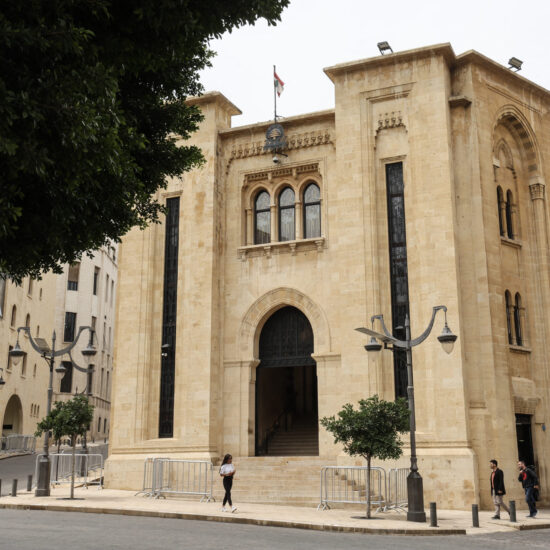
Beirut MPs back government plan to declare weapons-free capital: Calls for exclusive state control over arms gained renewed momentum this week, as Beirut MPs and political parties convened in support of declaring the capital a “weapons-free city.” The move follows recent Israeli strikes on Beirut and a government decision aimed at reinforcing state authority, particularly in the aftermath of escalating security risks. Notably, the initiative excluded MPs from Hezbollah and the Islamic Group, signaling a direct political challenge to the party’s military role.
The meeting also called for a stronger and more visible deployment of the Lebanese Army and security forces across Beirut to enforce these decisions and ensure public safety.
Demolitions in border areas: Reports indicated Israeli forces carried out demolitions in towns such as Bint Jbeil, further damaging already devastated areas. Recent images from the Israeli side of the border, published by international agencies, show extensive destruction in at least two Lebanese border villages, with bulldozers and engineering vehicles seen demolishing remaining structures. Bint Jbeil, located around five kilometers north of the border, witnessed intense fighting between Israeli forces and Hezbollah fighters in the days leading up to the ceasefire.
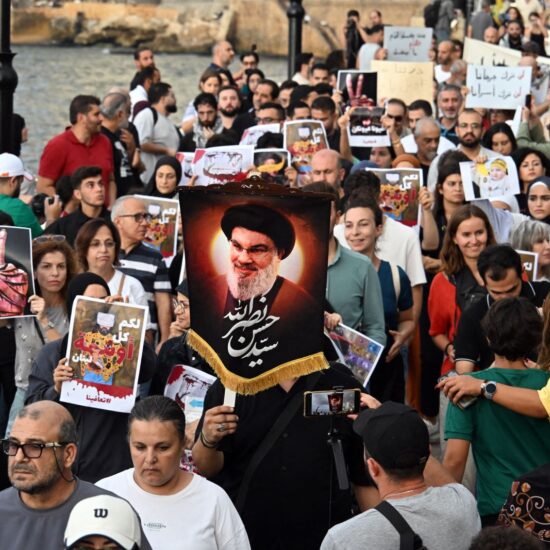
The town also carries strong symbolic weight in Hezbollah’s history, after the group’s late leader Hassan Nasrallah delivered his “speech of liberation” there in May 2000 following Israel’s withdrawal from southern Lebanon after a 22-year occupation. Nasrallah, who was later killed in the 2024 war with Israel, famously described Israel as “weaker than a spider’s web” in that address.
Talks on potential indirect negotiations: Lebanon has entered an intensified phase of political and diplomatic activity following the ceasefire, with discussions increasingly focused on preparing the ground for possible indirect negotiations with Israel. The aim, according to officials, is to transform the temporary truce into a more structured diplomatic process that could lead to longer-term stability.
Internal coordination has been led by President Joseph Aoun in cooperation with Prime Minister Nawaf Salam, who held meetings to assess the post-ceasefire phase and outline Lebanon’s preliminary negotiating position.
In the region:
Iran leaves door open on US talks as diplomatic uncertainty deepens: Iran said it has not yet made a decision on whether it will attend the next round of negotiations with the United States, underscoring continued uncertainty over the future of the fragile diplomatic process between the two sides.
The announcement came from the Iranian foreign ministry, which stressed that discussions remain under review and no final position has been taken regarding participation.
US seizes Iranian-flagged vessel near Hormuz amid escalating tensions: US President Donald Trump announced that American naval forces seized an Iranian-flagged cargo ship attempting to bypass a US-enforced blockade in the Strait of Hormuz, marking the latest escalation in already heightened US–Iran tensions. The operation reportedly involved a US Navy destroyer which intercepted the vessel after repeated warnings, as part of a broader maritime enforcement campaign targeting ships linked to Iranian trade routes.
Security spillover from Syria: Syrian authorities said they foiled a cross-border attack involving a cell linked to Hezbollah operating near the Israeli frontier in the Quneitra area, in what Damascus described as part of a broader attempt to destabilize the country. According to the Syrian Interior Ministry, the group had prepared a disguised civilian vehicle carrying concealed rocket launch equipment intended for a surprise strike across the border, but was intercepted following surveillance and a coordinated security operation.
UAE markets slip as renewed US–Iran tensions weigh on sentiment: Stock markets in the United Arab Emirates closed lower at the start of the week as renewed tensions between the United States and Iran rattled investor confidence across the Gulf region. The downturn followed reports of escalating maritime and military friction, including recent US actions targeting Iranian-linked shipping in the region, which have revived fears of broader disruption to energy routes.
What we’re reading:
“Killing a French UN peacekeeper: Hezbollah’s message to France” examines the killing of a French soldier serving with UNIFIL in southern Lebanon and interprets the incident as carrying a broader political and strategic message beyond the immediate battlefield. The author argues that the attack widely blamed by French officials and UNIFIL on Hezbollah, though denied by the group should be read in the context of escalating tensions along the Lebanese–Israeli border and the fragile ceasefire environment.
“The man who wanted to be king of Lebanon” written by Charles H. Al-Hayek and is a character-driven political profile that examines the figure of a man who has long presented himself as a self-styled “king” or would-be ruler of Lebanon. The author uses this figure to explore how personal ambition, myth-making, and political delusion can emerge in Lebanon’s fractured political system, where weak institutions and recurring crises sometimes allow unconventional or fringe actors to gain attention.
“Leftist Melancholia in Lebanon: External Dependency, Fragmentation, and the Possibility of Renewal” is written by Boghos Boghossian. The piece is a political and theoretical reflection on the condition of the Lebanese left, arguing that it is trapped in a state of “melancholia”—a sense of defeat shaped by historical failures, fragmentation, and dependence on external forces. The author traces how the Lebanese left has struggled to maintain coherence in a context marked by sectarian division, economic collapse, and regional geopolitical interference. This fragmentation has weakened its ability to present a unified political project or alternative vision for the state.
“The Second Attempt” written by Edward Tashjian reflects on the current moment in Lebanon as a potential “second chance” or renewed opportunity to address long-standing political and security crises, particularly in relation to Hezbollah’s role, state authority, and Lebanon’s relationship with regional and international actors.
“Gouraud’s Prophecy: Why Federalism or Separation Offer a Brighter Path” by Franck Salameh revisits the legacy of French General Henri Gouraud, the French Mandate figure often associated with the modern borders and political structure of Lebanon. It uses his historical role as a starting point to argue that Lebanon’s current unitary system has become structurally unworkable.