Photo by JOSEPH EID / AFP
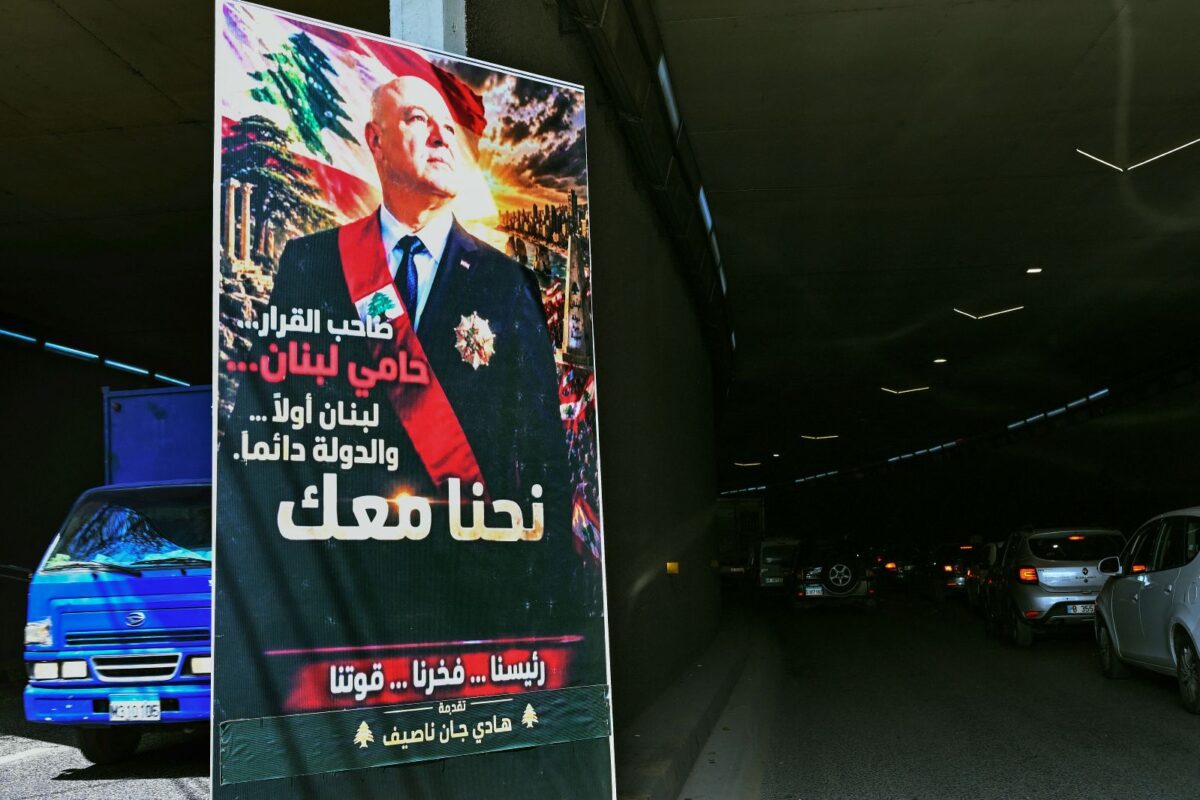
A poster depicting the portrait of Lebanon's President Joseph Aoun that reads "The decision-maker, the protector of Lebanon, Lebanon first...
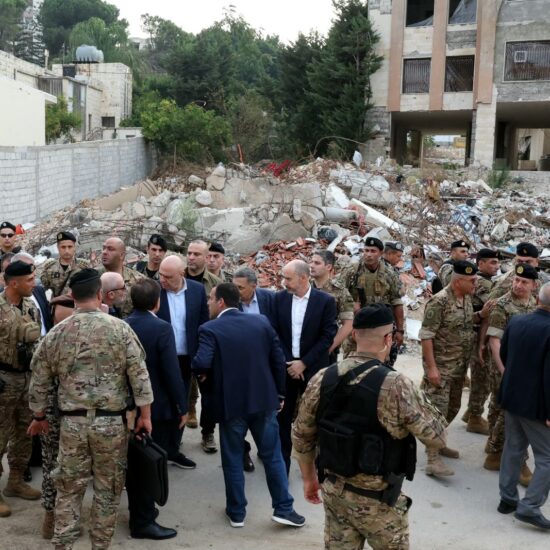
Israeli Prime Minister Benjamin Netanyahu said Hezbollah's rockets and drones were a key threat demanding military action, as Israel's army expanded strikes on Lebanon where authorities reported four dead on April 27 despite a ceasefire.
When Lebanon and Israel sit down in Washington on May 14th and 15th for their third round of talks, the world will be told a story about diplomacy. About sovereignty restored, about states choosing dialogue over destruction, about a rare window of opportunity in a region consumed by fire. It is a compelling story. It is also, in important ways, a fiction, and understanding what is actually happening requires looking not at what is being said across the table, but at the structure of the table itself.
Start with the names. Israel sent Ron Dermer.
Dermer is not a diplomat in any conventional sense, he is Benjamin Netanyahu’s political brain, the architect of Israeli-American elite relationships, a man who does not get deployed to procedural exercises. His presence signals that Israel is treating these talks as a high-stakes political track, not a technical security conversation.
Dermer is not a diplomat in any conventional sense, he is Benjamin Netanyahu’s political brain, the architect of Israeli-American elite relationships, a man who does not get deployed to procedural exercises. His presence signals that Israel is treating these talks as a high-stakes political track, not a technical security conversation. The question his presence immediately raises is: what is Israel actually negotiating for? The answer, almost certainly, is not peace with the Lebanese state. It is a legitimized framework witnessed by Washington for either permanent Israeli presence in the south or Hezbollah’s disarmament. Dermer’s job is to extract maximum strategic gain while Rubio provides the international cover.
Karam faces a structural problem no personal skill can resolve. He is negotiating on behalf of a state that does not control the military reality it is being asked to speak for. He can be the most capable negotiator in the room and still be negotiating with an empty hand.
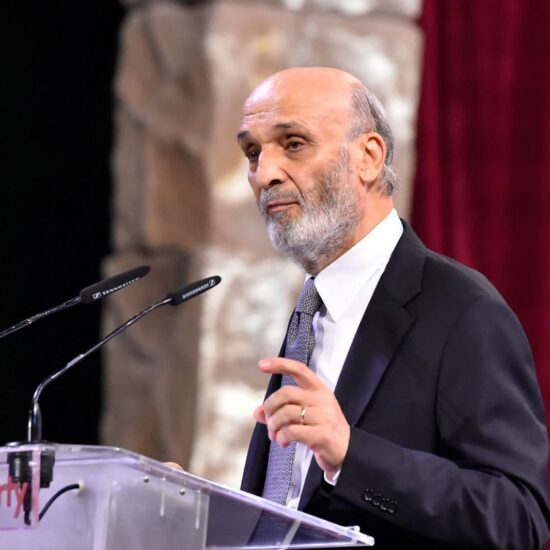
Lebanon sent Simon Karam, a credible, respected figure, a former ambassador to Washington who commands cross-sectarian legitimacy. His appointment projects exactly what President Aoun needs to project: institutional seriousness, civilian authority, sovereign statehood. But Karam faces a structural problem no personal skill can resolve. He is negotiating on behalf of a state that does not control the military reality it is being asked to speak for. He can be the most capable negotiator in the room and still be negotiating with an empty hand.
Which brings us to the contradiction that sits at the heart of this entire process: Hezbollah has stated, explicitly, that these talks do not represent them and that they are not bound by any outcomes. This is not a political statement. It is a military fact. The Lebanese army cannot disarm Hezbollah. The Lebanese government cannot compel Hezbollah’s compliance with whatever Simon Karam signs. Any agreement regarding southern Lebanon, non-state armed groups, or security arrangements is therefore, by definition, a document that describes a desired reality rather than an enforceable one.
We have been here before in May 1983, when Lebanon negotiated a peace agreement with Israel that Syria and the resistance movements rejected, and which collapsed within a year. The structural flaw is identical.
We have been here before in May 1983, when Lebanon negotiated a peace agreement with Israel that Syria and the resistance movements rejected, and which collapsed within a year. The structural flaw is identical.
And yet the talks proceed. Why? Because all parties have something to gain from the process, regardless of whether the outcome is enforceable. For Trump, a diplomatic achievement to offset the chaos of the Iran front. For Aoun and Salam, international legitimation of state authority and a gradual political squeeze on Hezbollah’s room to maneuver. For Israel, either a committed Lebanese partner, or, more valuably, a documented trail of Lebanon’s inability to deliver.
That last point deserves to be stated plainly. There is a coherent reading of this entire process in which the destination was never a bilateral agreement. It was a Chapter 7 United Nations Security Council resolution authorizing international enforcement of Hezbollah’s disarmament. The sequence would run as follows: Lebanon comes to the table in good faith, articulates what it wants, and then hits the wall of Hezbollah’s veto. At that moment, Lebanon has not failed the negotiations. It has demonstrated, before international witnesses, that it is a willing sovereign actor constrained by a non-state military force impervious to Lebanese state authority. That demonstration becomes the legal and political predicate for escalating to Chapter 7.
Here is the deeper twist: Aoun and Salam may not simply be falling into this trap. They may be walking toward it willingly. Chapter 7 would give them precisely the cover they cannot generate domestically, externalizing the cost and the responsibility of disarming Hezbollah to the international community. You do not have to own politically what the world mandates. For a Lebanese government that wants to consolidate state authority but cannot bear the civil cost of confronting Hezbollah directly, international enforcement is not a threat. It is a lifeline.
The variable that could disrupt this entire trajectory is Nabih Berri. If Berri reads the sequence – and he is sharp enough to – he will attempt to engineer a middle outcome: enough compliance from Hezbollah to prevent the Chapter 7 pretext, but not enough to actually disarm. He buys time, reduces the temperature, keeps the structure intact in modified form. It is his historical move. The question is whether Washington and Tel Aviv accept that this time, or whether they have decided that managed survival is no longer acceptable and they need the enforcement architecture regardless.
If it is the latter – if Chapter 7 is the destination, not the contingency – then these talks are not negotiations. They are a procedural trail of evidence, assembled in Washington conference rooms, building toward a predetermined legal escalation. Lebanon is being invited to document its own incapacity in front of international witnesses.
Whether Aoun and Salam know this, and are complicit, or know it and are cynically using it – or genuinely do not see it – is the most consequential political psychology question in Lebanon today. The answer will determine not just what happens in May, but what kind of country Lebanon becomes on the other side of it.
Ramzi Abou Ismail is a Political Psychologist and Senior Research Fellow at the Institute for Social Justice and Conflict Resolution at the Lebanese American University.
The views in this story reflect those of the author alone and do not necessarily reflect the beliefs of NOW.