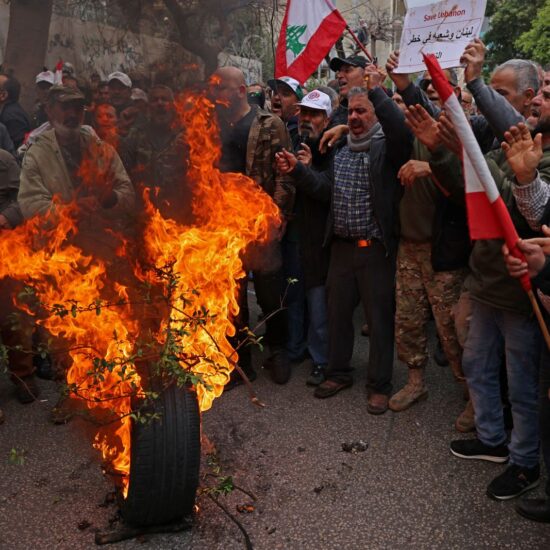
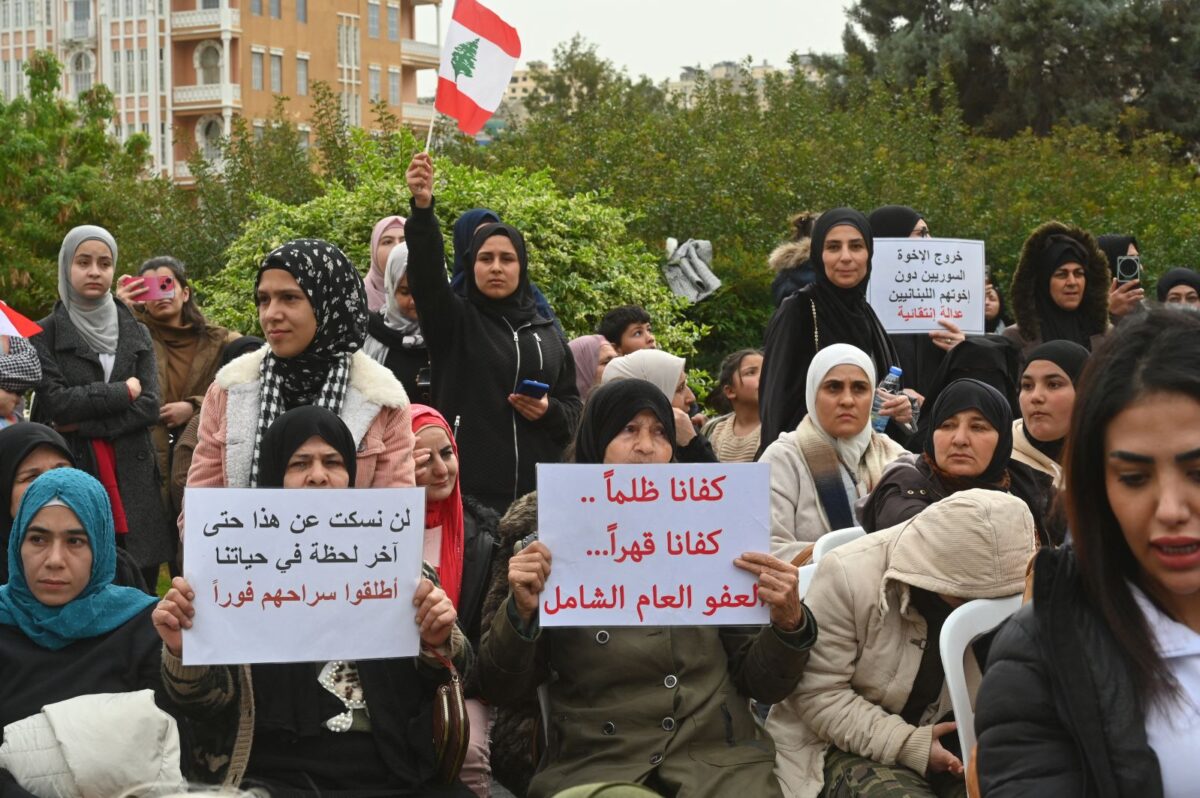
Relatives and families of Islamist prisoners at Roumieh prison carry pictures of their loved ones during a protest outside the Government Palace in downtown Beirut, Lebanon, on January 30, 2026. Some of the families of Syrians and Lebanese held in jails gather to protest after a group of prisoners at Roumieh prison announces an open-ended hunger strike. (Photo by Fadel Itani/NurPhoto) (Photo by Fadel Itani / NurPhoto / NurPhoto via AFP)
Lebanon’s prisons are severely overcrowded, holding thousands of detainees, many of whom have been imprisoned before receiving a fair trial. A new General Amnesty Law seeks to ease pressure on the justice system, but the legislation has become a battleground for sectarian infighting.
On Sunday, President Joseph Aoun held a meeting in the Baabda Palace on the matter with Defense Minister Michel Menassa, alongside several parliamentarians involved in the file. According to news reports, the meeting in the presidential palace upset parliament speaker Nabih Berri, who says the law is supposed to be dealt with in parliament. Inside parliament however, the law has been delayed over fights about specific amendments. Now Lebanon spoke to Ghada Ayoub, one of the MPs present at the negotiation table with Aoun.
A justice system under pressure
“What we are witnessing today is not simply a prison crisis; it is the result of the gradual collapse of the Lebanese justice system over decades,” Ayoub, a member of the Lebanese Forces party, said. Years of political interference — under previous Syrian influence and external-backed actors — contributed to a slow and inefficient judicial system, overburdened courts, and the normalization of pretrial detention, she argued.
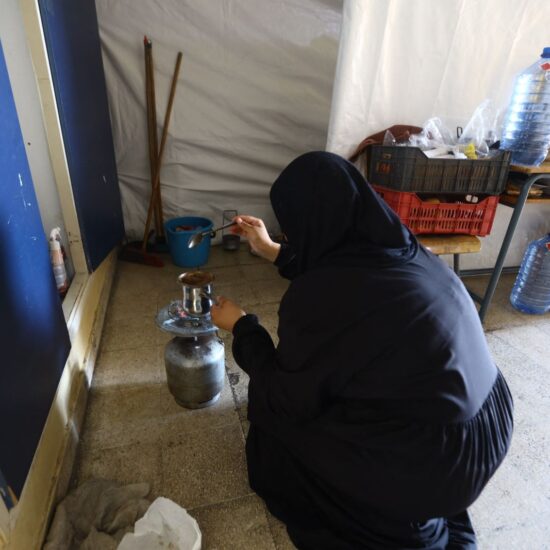
Covid-19 and Lebanon’s economic collapse have further worsened the situation. The shortage of funding and resources left courts understaffed and prison conditions dire. “Thousands of people have remained imprisoned for years without receiving final verdicts,” Ayoub warned. Lebanon’s prisons in 2023 held around 8,500 prisoners, according to Human Rights Watch. The conditions inside are horrible — with food supply low and the facilities overcrowded.
According to parliamentarian Mark Daou, from the Taqaddom party, the justice system is flawed. “This is a humanitarian issue because 80 percent of people in Lebanese prisons have not been tried so far”, he told Now. Only the remaining 20 percent have actually received a trial — meaning that the judicial system is facing an immense backlog in terms of outstanding sentences.
Humanitarian concerns in prisons
In April, parliament debated the draft law aimed at reducing prison overcrowding through a General Amnesty covering offenses committed before March 1. The proposal excluded a number of serious crimes from eligibility.
“The latest compromise moved away from broad amnesty toward limited sentence reductions with strict exclusions for terrorism, corruption, financial crimes, and major trafficking offenses,” Ayoub explained.
Lawmakers also debated reducing sentences from the death penalty to life imprisonment, and from life imprisonment to fixed terms of 20 or 25 years. The details are still being debated, Daou said on Saturday. The proposal further considered releasing detainees who had already spent longer in pre-trial detention than the sentence they would likely receive upon conviction.
A law shaped by sectarian tensions
Lebanon’s political and institutional system is deeply influenced by sectarian haggling, with different groups fighting to protect their own interests in most legislative decisions. This dynamic has also been at play during the negotiations about the General Amnesty Law, as various political actors have lobbied for the inclusion or exclusion of specific categories of crimes. Politician and journalist Paula Yacoubian told Al-Modon that the law has become a way for every group to “defend its own criminals.”
Patriarch Boutros Rai on Sunday called for Lebanese individuals who fled to Israel in the early 2000s to be included in the law. In the past, some Christians and Shias fought alongside the South Lebanon Army together with Israel, later fleeing out of fear of retaliation from militias such as Hezbollah. Several Christian MPs have also lobbied for the same cause.
Drug-related offenses have also become central to the debate, particularly cannabis cultivation in the Bekaa and Hermel regions, which predominantly affect Shia communities, Daou said. This issue affects a large part of the prisoners, approximately 1000 people, he estimates.
According to Daou, users, addicts, and individuals who promoted cannabis without engaging in sales could be included in the Amnesty Law. Opium however was a bigger debate in parliament and should be excluded. The trafficking related to this drug according to Daou requires more criminal organisations and planning than cannabis production does and therefore will be trialed differently.
Meanwhile, Gebran Bassil, head of the Free Patriotic Movement, has opposed the release of individuals involved in drug trafficking, financial scams, and the killing of Lebanese army personnel. The Syrian Social Nationalist Party (SSNP), in turn, has called for the release of Habib Shartouni, the assassin of former President Bachir Gemayel, who was killed in 1982.
The controversy surrounding Islamist detainees
The potential release of Sunni Islamist detainees remains another major point of contention. According to the latest draft of the law, terrorism-related crimes are supposed to be excluded from receiving amnesty.
Mark Daou said that debates often reference incidents such as those in the Dinniyeh District in the early 2000s, when clashes broke out between an armed group known as the Takfir wa al-Hijra group and the Lebanese army. Another case relates to spillover from the Syrian civil war in Arsal during the 2010s, when militants linked to ISIS and Jabhat al-Nusra entered Lebanese territory, triggering clashes with the Lebanese army.
Currently, there are several problems with the detention of Islamists. Some of the cases that led to the imprisonment were “fabricated files for Islamists during the Assad regime or Hezbollah’s influence over the military tribunal,” he argued. Many of those have been “falsely accused, some were politically motivated and some were arrested but not convicted”.
According to news reports, Lebanon currently holds 2,500 Syrians in prison, while more than a hundred were already transferred to Syrian custody this year. After the fall of the Assad regime and with Syria’s new president Ahmed al-Sharaa there is now a new dynamic. Last weekend, Lebanese Prime Minister Nawaf Salam traveled to Damascus for a meeting. Al-Sharaa underlined that he seeks the return of the prisoners to Syrian custody.
If terrorists were to be part of the Amnesty Law, this would also include individuals involved in attacks against the Lebanese Armed Forces. “The biggest problem we have is what do you do with those terrorists who actually killed the Lebanese army,” Daou said. Families of fallen soldiers have strongly opposed any release of those convicted in such attacks, he added. Joseph Aoun, the current President of Lebanon formerly served in the army. According to Al-Modon he also opposed letting any attackers against the army walk free.
Debates over Hezbollah and legal inconsistencies
Only a few years ago, Syria’s Assad regime was an ally of Hezbollah and enabled the illegal trade of weapons to Lebanon. The Shia militia also engaged in warfare in Syria, fighting alongside the Assad regime against rebel groups, including Sunni Islamist factions.
Hezbollah is not considered a terrorist organization in Lebanon. In March, the Lebanese government ruled the military wing of the militia to be illegal, but the law only focuses on crimes committed before March — and Hezbollah-related offenses do not fall under terrorism charges. Some lawmakers have pointed to this inconsistency, especially given that some Hezbollah members fought alongside Assad in Syria but do not face legal consequences.
The legacy of Lebanon’s previous amnesties
Despite the law increasingly being discussed through a sectarian lens, Ayoub warned about interpreting criminality through religious or communal identity. “Terrorism, drug trafficking, murder, or fleeing to Israel do not belong to one religion or one community,” she said. “Crime has no sectarian identity.”
It is not the first time Lebanon has used such a measure. After Lebanon’s civil war, Beirut passed a similar law in 1991 to pardon all crimes committed between 1975 and 1990 — except attacks against religious leaders and continuous threats.
At the time, the law helped alleviate pressure on the justice system, but it also contributed to the lack of prosecution against militia leaders and warlords, many of whom later entered politics with impunity. Similar laws that followed were often focused on specific crimes such as drugs or financial offenses and were later criticized for protecting elites without ensuring broader justice and accountability.
Given the history of previous amnesties, Ayoub emphasized that the measure should not become routine policy but rather remain an exceptional step aimed at restoring justice, improving public safety, and addressing humanitarian concerns.