
A view of the U.S. Embassy in Rome on August 4, 2026. Lebanon and Israel began the seventh round of U.S.-mediated direct negotiations, scheduled to run through Thursday, August 6. Riccardo De Luca / Anadolu (Photo by RICCARDO DE LUCA / ANADOLU / Anadolu via AFP)
The Israeli and Lebanese delegations finished the seventh round of the U.S.-brokered negotiations in Rome on Thursday, with reportedly no progress towards expanding the pilot zones. The talks took place during a tense time — with the Israeli military bombing Lebanese territory and issuing an evacuation order for the town of Mansouri on Wednesday.
The baseline of the talks is the framework deal agreed upon by Israel and Lebanon during the U.S.-brokered discussions in June. They decided upon the gradual withdrawal of the Israeli military in certain declared pilot zones, where the Lebanese military ought to take over control.
During Monday’s cabinet meeting, Lebanese Prime Minister Nawaf Salam said that Beirut was in favor of the “successive Israeli withdrawals from Lebanese territory, leading to a full withdrawal”. But according to media sources, there was no breakthrough with regard to expanding the pilot zone model. Lebanon had allegedly pushed for one more area to be added to the mechanism, which Israel opposed. The next round of talk is set for the beginning of September.
Increase hostilities amid the talks
The talks in Rome started on Tuesday, a day later Israel intensified its attacks on Lebanon. On Wednesday, more than 113 projectiles were fired by the Israeli army into South Lebanon, which is a record since late June, UNIFIL reported. Israel said the strikes on Wednesday were retaliation for a Hezbollah ceasefire violation. The attacks killed one person and wounded 11 others, according to the Lebanese health ministry. On Thursday, Israel said it attacked Hezbollah infrastructure in South Lebanon in response to the two killed Israeli soldiers in South Lebanon.
Those attacks might build pressure on Beirut, but a more complex dynamic might be at play. “Technically, escalating hostilities always complicate a diplomatic track, but viewing the military action as the primary threat gets the dynamic backward”, General Brigadier Maroun Hitti told Now. Until recently he worked as the special defense and military advisor for the Lebanese government. There are certain “key Lebanese sovereign political elements [that] do not want negotiations to reach a final solution until Hezbollah surrenders its military power,” he argued.
At the onset of this week’s talks, a U.S. State Department official told AFP that several points were on the negotiations agenda. The goal was to discuss “expanding the pilot zone process, resolving all outstanding border issues, and working on a comprehensive peace and security agreement”.
According to other media sources, Washington also aimed at broadening the scope of the talks to include political, security and economic issues — such as the reconstruction of the South, the return of the residents as well as potential economic cooperation in the future. “For Lebanon, this expanded mandate offers a crucial opportunity to rebuild international confidence, secure financial relief, and reclaim its full sovereign authority”, Hitti said. Similarly, there is also a big risk and immense pressure related to this, as the failure to meet the commitments might expose Lebanon to prolonged military action, he added.
The pilot zones
For Lebanon, the most important topic is regaining sovereignty over its territory. Israel’s continued occupation of the self-declared security zone in South Lebanon is creating several problems — such as the thousands of displaced and the destruction of homes and infrastructure.
Without agreeing upon new pilot zones, progress towards the withdrawal of the Israeli army seems to move slowly. Ahead of the talks, U.S. Ambassador to Lebanon Michel Issa made similar comments in that direction. On Monday, he said that “it is better to take the time needed to get this right the first time.” This would allow “subsequent pilot zones to move forward more efficiently”.
So far, Lebanon and Israel have agreed upon a first phase of pilot zones which include the villages of Froun, Srifa and Zawtar al-Gharbiyeh. Israel’s military has however, only operated in the surroundings of Zawtar al-Gharbiyeh during this war. The Lebanese army therefore said in late July that they “continue to carry out their mission” in these areas, while they will deploy to Zawtar al-Gharbiyeh once the Israeli military withdraws.
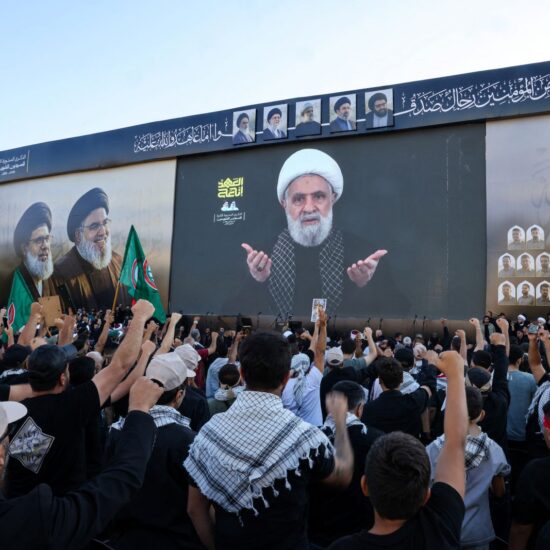
Hezbollah, in turn, has strongly opposed the Lebanese government talks with Israel. Hezbollah’s leader Naim Qassem said on Tuesday that the negotiations would bring “nothing but shame, humiliation, and successive compromises” to Lebanon. On Thursday, Italian Foreign Minister Antonio Tajani called with Iranian Foreign Minister Abbas Araghchi and discussed the situation in Lebanon. He said that Iran’s role is vital in ending the military actions of Hezbollah.
General Brigadier Maroun Hitti said that Hezbollah’s disagreement with the talks was to be expected. “For Hezbollah and its patrons, contention is total and ideological; even if every boundary or border issue were resolved tomorrow, they would immediately invent new pretexts for conflict to serve their broader regional agenda.” But there is also another part of Lebanese society that has a different perspective on the topic. “For free, sovereign Lebanese citizens, there are few genuine points of contention,” he argued.
The relationship between Trump and Netanyahu
For Israel, Washington’s political and military support is vital, but U.S.-Israeli relations are not as rosy as they used to be. Last week, Israeli Prime Minister Benjamin Netanyahu paid U.S. President Donald Trump a visit in Washington. But according to media reports, it took Netanyahu some time to secure a meeting. Trump reportedly was reluctant and recently expressed criticism of the Israeli leader. Only after Netanyahu made concessions in the Gaza war, did Trump agree to a meeting, Israeli media reported.
After the meeting, both Trump and Netanyahu hailed their meeting as positive and productive. But beyond the warm public relationship, “strains remain beneath the surface”, Abbas Dahouk, a former senior military adviser for Middle East affairs at the U.S. State Department, told Now. “Reports suggest that some figures within Trump’s circle worry that a hardline Netanyahu government would obstruct regional integration, given concerns over Israeli actions in Gaza, the West Bank, Lebanon, and Syria”, he explained.
Both leaders seem to disagree as to how to continue the war in Iran. “Netanyahu has repeatedly stated that Israel would respond if Iran initiated hostilities but would otherwise defer to Trump’s judgment on how to proceed”, Dahouk said. This suggests that the Israeli leader “effectively ceded the initiative on Iran policy to Trump” — this is “a notable development that may help explain the unusual level of secrecy surrounding the talks.”
Netanyahu might be relying more on soft power, than on military decision making. Nevertheless ahead of his visit he might have built up pressure on Trump. According to reports, he wanted to present intelligence about Iran rebuilding its nuclear program to Trump. When Trump was asked about the plan by Fox News, he said that Netanyahu “wants me to stay involved” in the war with Iran. He also criticized the Israeli leader for sharing this information with the world, rather than only with the U.S. President.
What this means for Lebanon
Israel’s upcoming parliament elections in October are also affecting the dynamic. Before the elections, Netanyahu is not likely to be soft on Hezbollah’s presence in Lebanon.
A big part of his voter base lives in North Israel, which is located in proximity to Lebanon. This area is most heavily hit by Hezbollah’s rockets and daily life is often interrupted by sirens. According to the May poll by Agam Labs at Israel’s Hebrew University, those residents are more likely to oppose Netanyahu’s Likud Party than in any other areas, Reuters reports. Some of the North Israelis are hoping for a harder stance on Hezbollah and an end to its threat to their lives.
“Israeli leadership is heavily disincentivized from accepting a soft diplomatic deal that allows Hezbollah to rebuild its capabilities along the border”, General Brigadier Maroun Hitti said. This pushes the country’s military “toward decisive, high-intensity strikes designed to degrade Hezbollah’s infrastructure and force strict, long-term security terms before considering a withdrawal.”
The U.S. and Israel seem to currently have slightly different interests in the Middle East. In June, Trump said that Netanyahu should be “more responsible with respect to Lebanon”. But ahead of the elections, Netanyahu is not likely doing major concessions in Lebanon. According to Abbas Dahouk, “It may be the clearest area of disagreement between Trump and Netanyahu at present.” Nevertheless, Netanyahu is still likely broadly following Washington’s lead, as the U.S. is Israel’s most important ally.