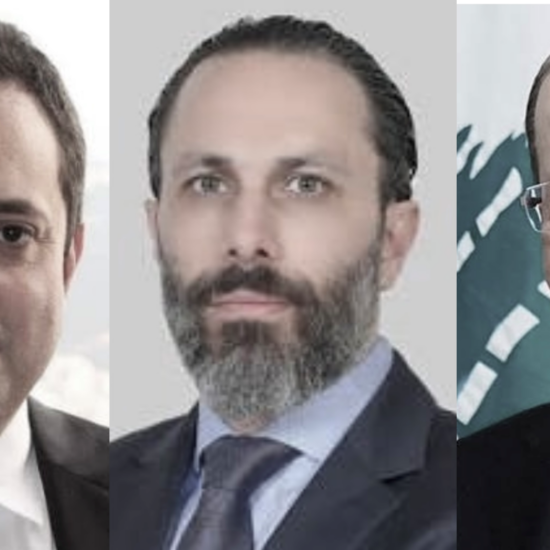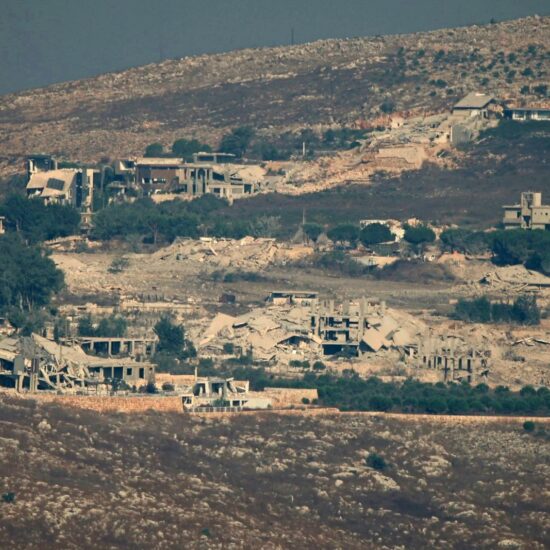
Is sovereignty a speech at the United Nations, or a calendar, a budget and a monopoly on arms? This week, at the 81st General Assembly in New York, Prime Minister Nawaf Salam said, “The Lebanon that stands before you today does not evade its responsibilities and does not ask others to do what it has to do.” He met Secretary-General Guterres and the heads of the UN’s humanitarian agencies, while Foreign Minister Youssef Raggi joined a ministerial meeting on safeguarding UNRWA. As Salam spoke, an Israeli explosion shook Taybeh and Deir Siryan. Earlier this month, Hezbollah’s Naim Qassem set out another Lebanon when he said, “There is no military parity at all with the enemy, but we must resist whatever the price.” And a bus left Chtaura carrying about 100 Syrians home.
Is sovereignty a speech at the United Nations, or a calendar, a budget and a monopoly on arms?
Salam then set out a bargain. “We shoulder our responsibility for reform and for extending state authority over all our territory. But we have the right to ask the international community to shoulder, in turn, its responsibilities.” It is a fair bargain, and one that can be measured on both sides in money, buses and weapons.
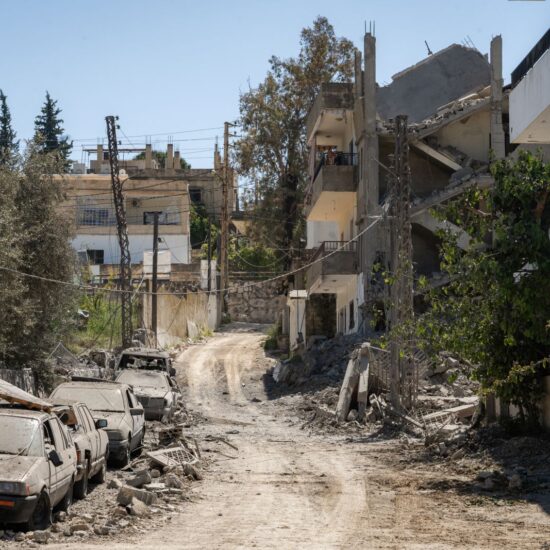
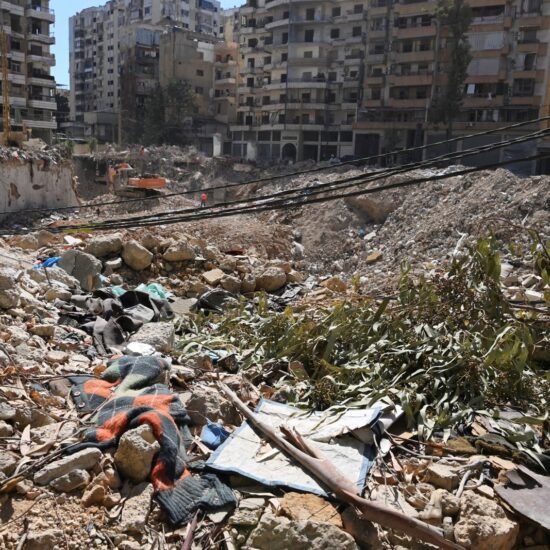
Donors have paid about half of what the UN asked for. The UN’s Flash Appeal for the war sought $639.9 million. By mid-August it was roughly 48 percent funded, and that money was stretched across 1.4 million people, vulnerable Lebanese, Syrians, Palestinians and migrants, across sectors for food, health, shelter and schooling. Nearly half a million people received general cash assistance by late April, but by mid-June shelter partners had given just 652 families $250 each for housing. Meanwhile, 134,800 displaced people crowded into 642 collective shelters, most of them schools. Alongside the appeal runs the regular $1.62 billion response plan for 1.5 million people, plus a $385.9 million addendum through December. How much of all this reaches the south? The published figures track donors, agencies and sectors, not governorates. So who is meeting their commitments? And who is tracking them?
The return of Syrians is the one file the state fully owns, with its own committee and its own cabinet decision. By January, UNHCR counted some 552,000 Syrians who had gone home from Lebanon since the fall of Assad. Nine in ten went on their own. The official program is another story. Led by Deputy Prime Minister Tarek Mitri’s committee, it is run by General Security, UNHCR and the International Organization for Migration. Its first convoy, in July 2025, was three buses carrying 71 people, against a target of 200,000 to 400,000. Fourteen months later, the convoy from Chtaura was three buses and about 100 people. No one has yet published a return calendar, and the state and the UN cannot agree on how many Syrians remain. The UN said about one million in December, while the government says about 1.5 million. Half a million people unaccounted for is a scandal in itself. A state that cannot count who lives on its territory, or run its own buses, is not yet exercising sovereignty.
No weapons handed over, no serious money to rebuild the south. The state must disarm. That is the job Salam told the world Lebanon will not hand to others. The war may explain the delay, but nothing explains the silence on where phase two stands.
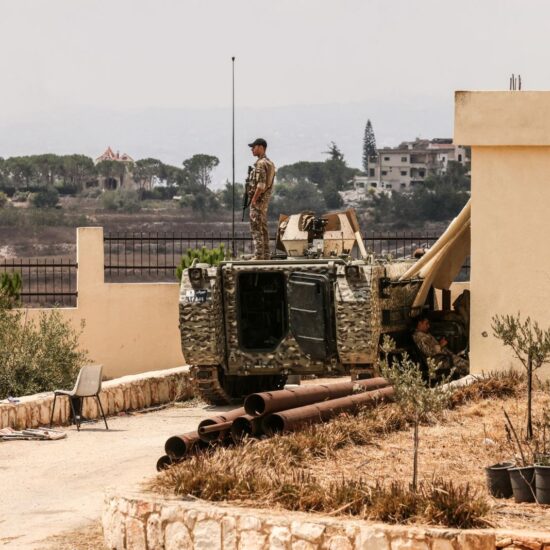
UNIFIL’s mandate ends on December 31, and no one can move that date. Lebanon asked for six more months, but New York has not granted them. Salam asked the Assembly to “avert the vacuum” that a withdrawal without a successor would leave. The request comes with barely three months left, and Lebanon’s answer for the south is still to ask others to do its job.
And the weapons. On August 5, 2025, cabinet ordered a state monopoly on arms, starting south of the Litani by the end of the year. On January 8, the army declared that phase complete, except where Israel still occupies. Less than two months later, Hezbollah took Lebanon to war, again, anyway. A monopoly declared in a statement is not a monopoly. In February, cabinet gave phase two, between the Litani and the Awali, four months, extendable to eight. The outer limit falls in October. In June, Beirut signed a US-brokered framework tying Israeli withdrawal to Hezbollah’s disarmament. Its implementation has stalled, and Qassem wants it scrapped. The donors’ deal is unwritten, but everyone knows it. No weapons handed over, no serious money to rebuild the south. The state must disarm. That is the job Salam told the world Lebanon will not hand to others. The war may explain the delay, but nothing explains the silence on where phase two stands.
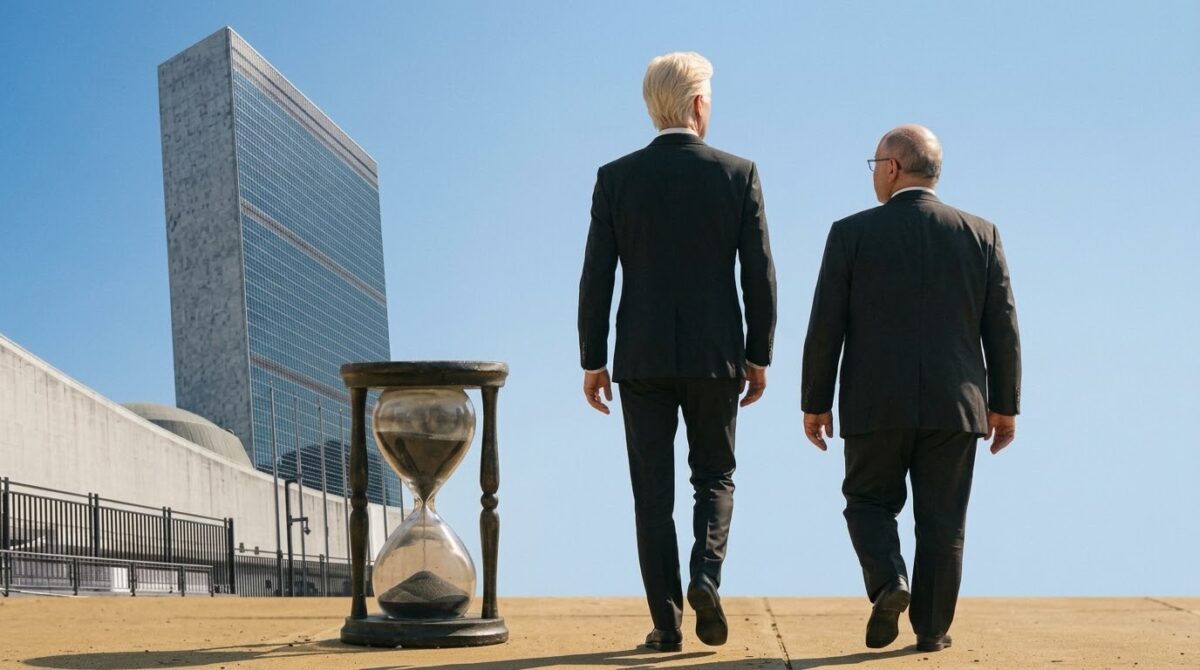
The deadlines are piling up. Disarming the Palestinian camps started two months late, an appeal closed half-funded in August, 2026 was supposed to close the Syrian file, phase two’s outer limit falls in October, and the UN force leaves on December 31. The bargain Salam offered in New York can still be kept, but only if both sides come clean on the numbers. The government should publish where every file and every phase stands, and keep publishing. The Ministry of Social Affairs and OCHA should show what was received and spent, governorate by governorate. Mitri’s committee, with UNHCR and IOM, should publish a return calendar and one agreed count. Donors should fund what was asked before convening another conference. And the Security Council should name a successor to UNIFIL, or say clearly that there will be none.
Until then, the measure of Lebanon’s sovereignty is three buses leaving Chtaura, and families still sleeping in schools.
Cathryn Papadopoulo is the Secretary of Foreign Affairs and The Diaspora, in Lebanon’s National Liberal Party, called Ahrar.
The views in this story reflect those of the author alone and do not necessarily reflect the beliefs of NOW.