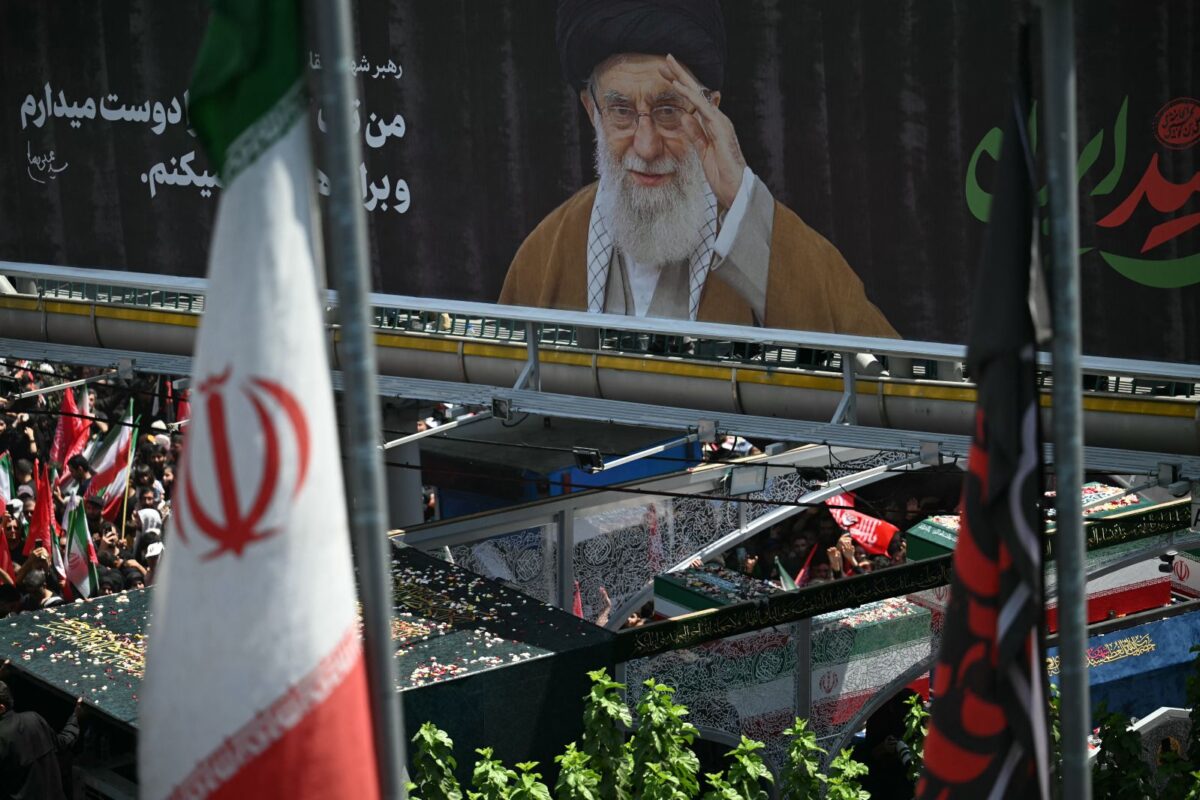
Tehran, Iran. Photo by OZAN KOSE / AFP
The convoy carrying the coffins of Iran's slain supreme leader Ali Khamenei and members of his family passes beneath a banner bearing a portrait of Khamenei during a funeral procession in Tehran on July 6, 2026.
Iran has entered a third day of the ceremony to mourn the death of the former Iranian supreme leader Ali Khamenei, who was killed at the onset of the U.S.-Iran war by a joint Israeli-U.S. attack. Millions have attended the ceremony.
The Iranian ceremony began on the 4th of July, which marked precisely the day in which the U.S. celebrated its 250th Independence Day. During the U.S. Independence Day celebrations, Trump said that his administration had given Tehran “a week off for a funeral because we’re nice”. He also said that Iran was “dying to settle”.
Since the attack, the current Iranian Supreme Leader Mojtaba Khamenei has not made a public appearance — sparking rumors about his wellbeing. While his brothers have publicly mourned the death of their father during the ceremony, Mojtaba Khamenei did not appear. He was declared the successor, after his father’s death. But according to media reports, he was also hurt during the attack and sustained injuries to his face and to one or both of his legs.
In Lebanon
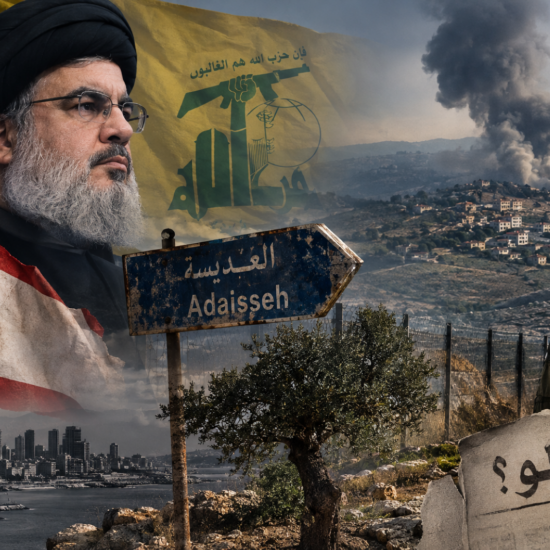
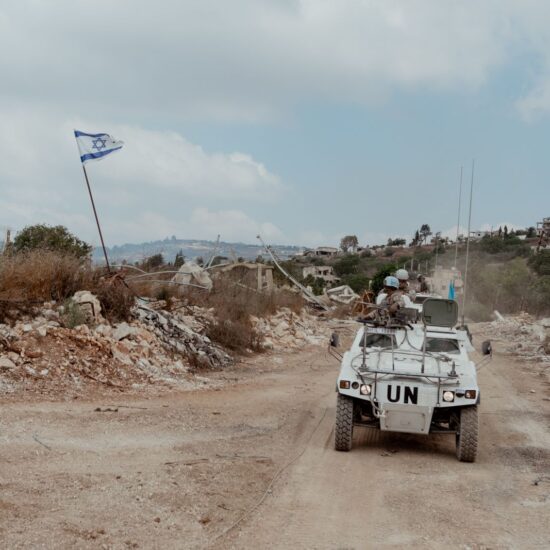
Israel set to withdraw from Lebanese ‘pilotzones’: Israeli Prime Minister Benjamin Netayahu said on Sunday that his military is preparing the withdrawal from the two “pilotzones” in the South of Lebanon. The Lebanese army is expected to take over the control of these areas as well as ensure the disarmament in the territory. This was set out in the agreement between Lebanon and Israel.
Israel vows ‘rapid attack’ in case of ceasefire violations: Israel’s army chief, Eyal Zamir, told soldiers that his army “is prepared to move to a rapid attack if the ceasefire is violated.” He also said that the Lebanese military needs to comply with the terms of the agreement, while claiming that Hezbollah has been building tunnels in Lebanon. According to media reports, Trump had asked Israeli Prime Minister Benjamin Netanyahu to refrain from targeting those tunnels in Lebanon, but the Israeli leader denied this and called it “fake news” on Sunday during a cabinet meeting.
Lebanese mufti against Israeli army proposal: Mufti Ahmad Kabalan, who is said to be close to Hezbollah, warned on Sunday of “the temptation to create an army within the army, or to grant Israel even the slightest concession on matters of security or sovereignty,” according to Lebanese media reports.
Patriarch hopes for peace in Lebanon: Patriarch Béchara Raï in turn welcomed the agreement between Israel and Lebanon during his Sunday prayer. Lebanon should not become the battleground for international players, nor should the country have to witness conflict.
Hezbollah talks with Araghchi in Tehran: Iran’s foreign minister Abbas Araghchi talked to Hamas and Hezbollah leaders ahead of the commemoration ceremony for Iran’s killed Supreme Leader Ali Khamenei. Former Lebanese MP Muhammad Fneish was part of the delegation and traveled to Iran to convey the condolences of Hezbollah’s Secretary-General Naim Qassem, Iran’s state-run news agency reported.
In The Region
Infighting between Trump and Netanyahu: Trump told Axios that Netanyahu “knows who the boss is” on Saturday. He also raised the possibility of a meeting in the U.S. between the two leaders. Netanyahu rebuked the statement about who has more power. “We are working according to our own considerations,” the Israeli leader said.
Macron to travel to Syria: The French President Emmanuel Macron is set to travel to Syria, according to the Syrian presidency. The date of the travel has not yet been confirmed, but the visit would be the first one by a Western leader since the new government took over.
Escalations on the coast of Yemen: A cargo ship was targeted, according to the United Kingdom Maritime Trade Operations center. It is, however, not clear yet who is responsible for the attack.
What We’re Reading
Fouad Bawarshi and the Spirit of Ras Beirut. Now’s managing editor Makram Rabahn is remembering Fouad Bawarshi and his legacy at the American University of Beirut as well as in Ras Beirut. Not only was he one of the earliest presidents at the AUB Student Council, he would later also build one of Lebanon’s most respected shipping and freight companies. His interest, intellectual curiosity, and lively presence has left a lasting impression — living on in those who met and cherished him.
Syria’s message to Beirut: More than a diplomatic visit. Now’s Rodayna Raydan examines the visit of Syrian Foreign Minister Asaad al-Shaibani to Lebanon. Prior to the visit, Trump’s remarks about a possible Syrian role in fighting Hezbollah created fear among some Lebanese regarding a strong Syrian influence in the country. The former Syrian leader Hafez al-Assad exercised his power over Beirut in the Higher Lebanese-Syrian Council. During al-Shaibani’s visit, this institution was replaced with the Lebanese-Syrian Higher Committee — a symbol for the mutual cooperation between the two countries, Raydan argues. According to the author, the Syrian Foreign Minister wanted to send the message that Beirut and Damascus are equal partners. How long the ties last and how strong they are will, however, depend on the challenges that lie ahead.
Your Son Should Live, Not Die. Now’s Elissa El Hachem examines how the concept of martyrdom is perpetuated in Lebanon through the parent-child relationship. She argues that there is a divide, with some mothers teaching their sons to build a future, while others are glorifying revolutionary movements as well as death. El Hachem says that instead of sacrificing themselves, these sons should live.
When Tokyo fell. Now’s managing editor Makram Rabah remembers the Tokyo Restaurant and how it shaped the realities of some of Beirut’s residents. The restaurant brought sushi to the Lebanese capital long before it was popular and fashionable, at a time when it was neither affordable nor appealing for most people. But even after its closing, the building remained standing, like a moment of its past legacy. For Rabah it would become part of his daily life. Without ever having been inside the restaurant, he would pass it on his way to work. Seeing it being demolished saddened him but also triggered a thought process about urban planning. He argues that Beirut should not stop changing — but it should take into account which parts of the city made it meaningful.
Bilad al-Sham: Between Fact and Fiction. Charles H. Al-Hayek examines the meaning of Bilad al-Sham and argues that modern political claims portraying Lebanon as naturally part of a unified Syrian state are based on a misunderstanding of history. Originally, Bilad al-Sham was meant to be the “land of the North”, indicating a geographical location rather than a political entity like a sovereign state. The concept of “Greater Syria” in turn was transformed and instrumentalized into a political doctrine, Al-Hayek argues. While both Syria and Lebanon share heritage, Lebanon does not belong to the Syrian state, he says.